There is something deeply comforting about a single-level log home when it is done with honesty, patience, and a good eye for proportion, and this one has all of that in spades. Wrapped in warm shortleaf pine logs and settled behind a welcoming porch, the house carries the steady, reassuring presence of an old Midwestern homestead, yet it feels polished in a way that makes everyday living seem a little sweeter. Even before stepping inside, I can imagine the scent of sun-warmed wood, the creak of a porch board, and the easy rhythm of a home built to gather people in.
Inside, the rooms unfold with the kind of quiet beauty that never needs to show off, shaped by timeless Amish craftsmanship and a thoughtful, concept design approach that favors substance over spectacle. The mood is soft, grounded, and deeply livable, with natural wood, sturdy joinery, practical layouts, and handmade details that remind me of the homes I have admired all my life: places where the table is always ready, the light is gentle by late afternoon, and every surface seems to hold a story.
Exterior
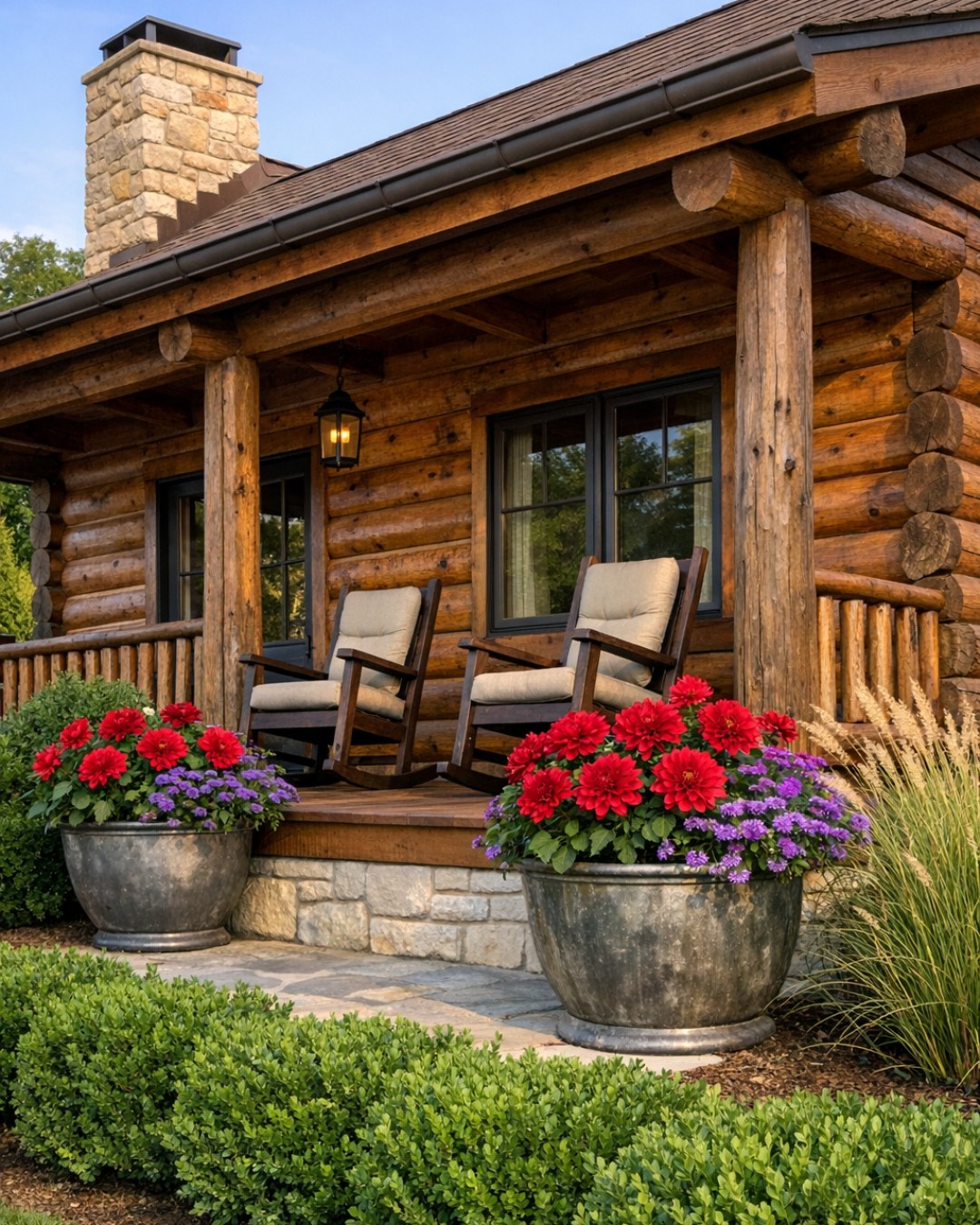
The exterior is all about warmth and welcome. The shortleaf pine logs have a honeyed tone that glows against the daylight, their rounded profiles giving the house a gentle, handcrafted character rather than anything overly rugged. A broad front porch stretches across the facade, anchored by stout timber posts and simple railings that feel faithful to rural building traditions. I especially like the way the roofline stays modest and low, reinforcing the single-level silhouette and making the home feel approachable from the very first glance.
What makes the outside so successful is its restraint. The stone skirting at the base adds weight and texture, while deep eaves cast soft shadows that temper the richness of the wood. Windows are trimmed simply, allowing the beauty of the materials to do the talking, and the front door reads as sturdy and handmade, likely with visible grain and forged iron hardware. It is the sort of exterior that does not chase trends; it settles into the landscape with the confidence of something built to last, and I find that awfully appealing.
Living Room
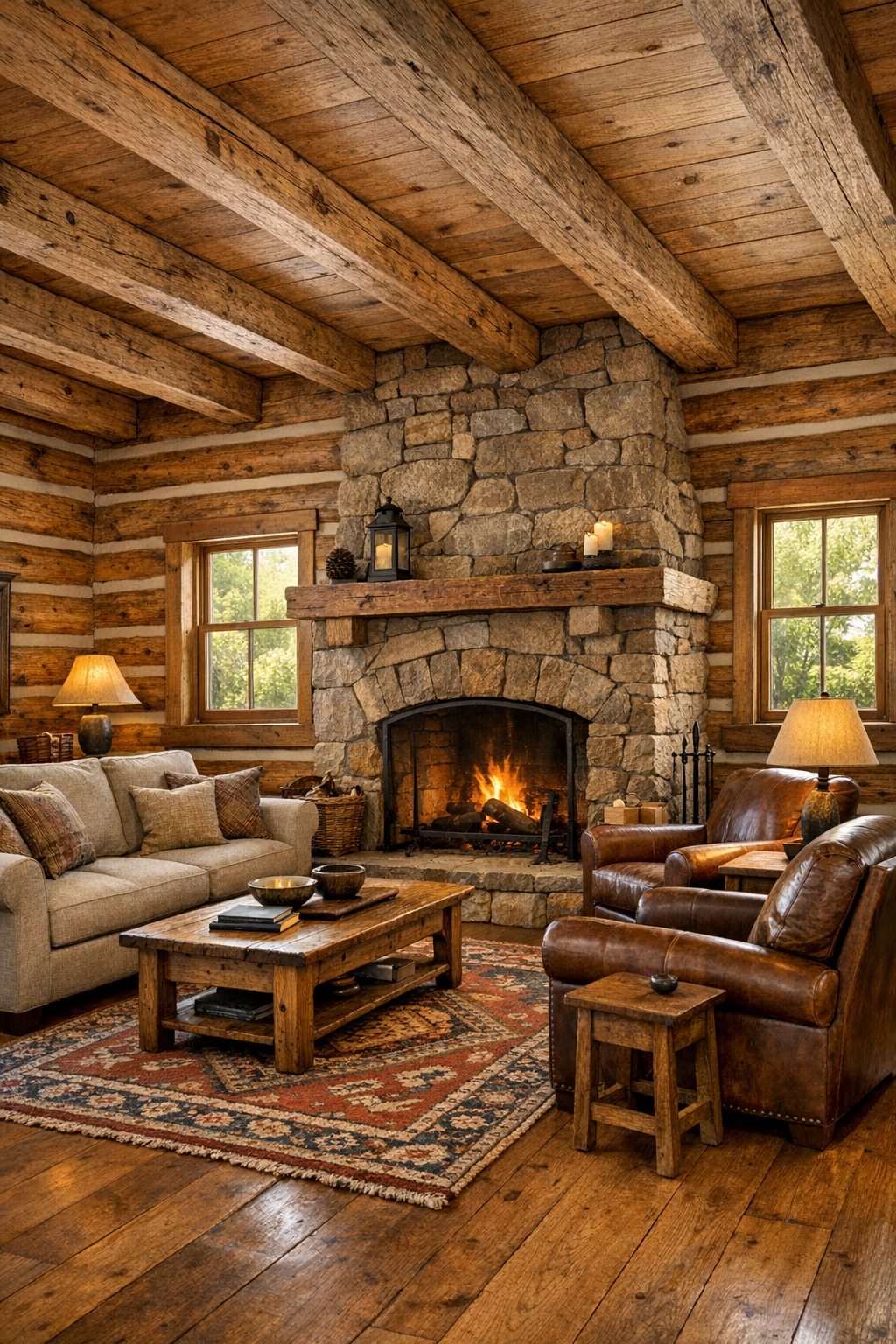
The living room centers on comfort, but not the fussy kind. Exposed log walls set a warm envelope around the space, while a plank ceiling with heavy beams draws the eye across the room and adds a feeling of shelter. I picture wide oak floorboards underfoot, softened by a wool area rug in muted rust, cream, and moss. The furniture is substantial and well-made, with a deep sofa in oatmeal linen, a pair of leather armchairs that will only improve with age, and a solid wood coffee table showing off careful joinery rather than ornament for ornament’s sake.
Lighting here feels especially important, and this room handles it beautifully with a mix of natural and lamplight warmth. Daylight pours in through generously scaled windows, catching on the satin finish of the wood and keeping the room from feeling heavy. In the evening, iron sconces and a simple central fixture cast an amber glow that makes the space feel as cozy as a quilt pulled up on a cold night. If there is a stone fireplace, as I suspect there should be, it would serve as the room’s steady heart, grounding all that wood with rougher texture and giving the whole setting a natural place to gather.
Dining Room
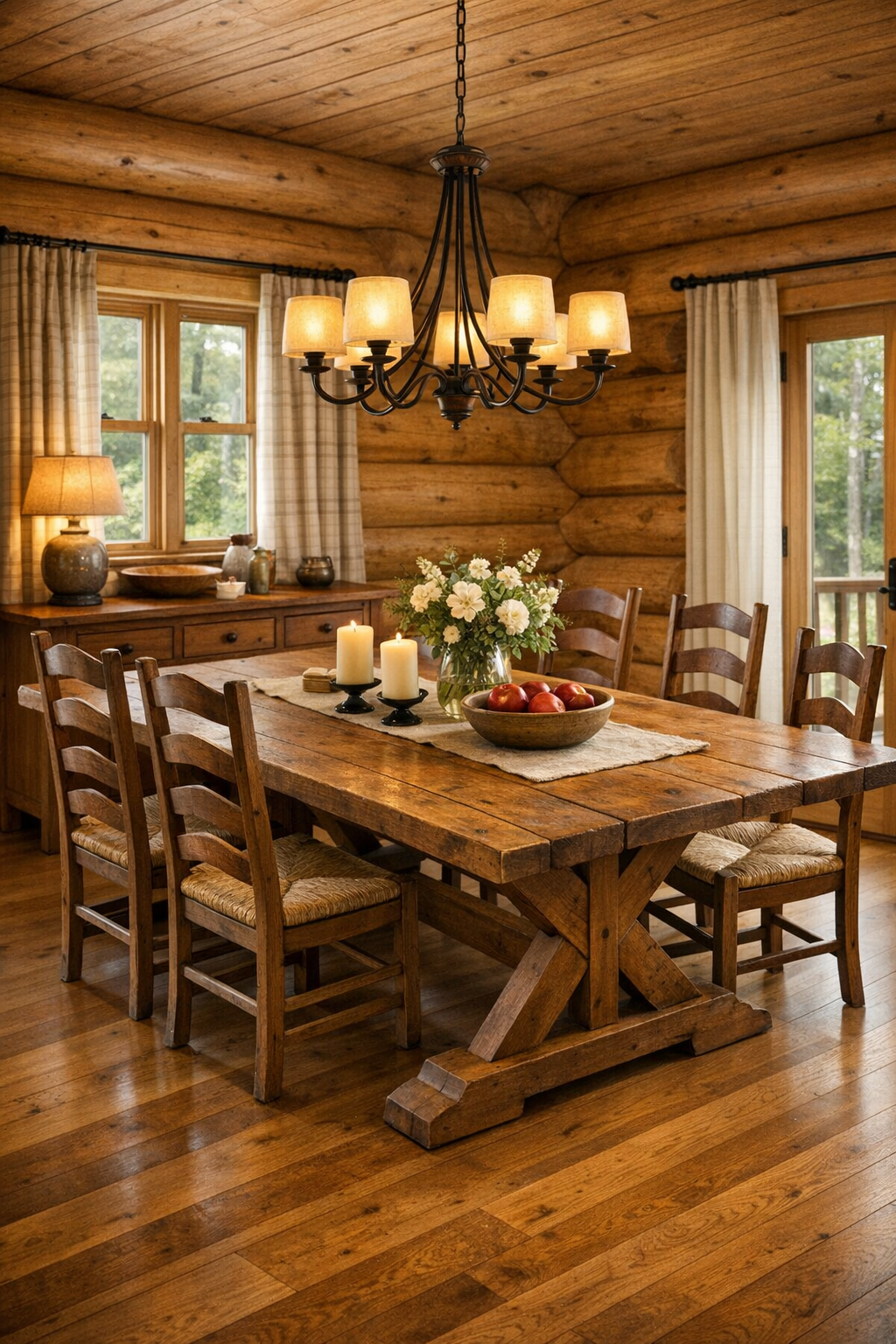
The dining room feels like the soul of the house to me, and perhaps that is my kitchen-minded heart talking. Amish craftsmanship shines brightest here in a large trestle table made from thick, beautifully finished wood, paired with ladder-back chairs that look sturdy enough to host generations of holiday meals. The palette stays rooted in nature: amber wood tones, creamy walls where visible, and touches of charcoal or black in metal hardware and light fixtures. Nothing feels decorative for its own sake; everything feels chosen because it is useful, enduring, and handsome.
What I love most is the room’s sense of readiness. A sideboard with paneled doors offers practical storage for linens, serving dishes, and the everyday pieces that make a home run smoothly. Overhead, a simple iron chandelier or a row of warm pendant lights keeps the atmosphere intimate without dimming the craftsmanship below. The space likely sits with an easy relationship to both the living room and kitchen, making conversation and movement feel natural. It is exactly the sort of dining room where a roast, a pie, and a long story after supper would all feel equally at home.
Kitchen
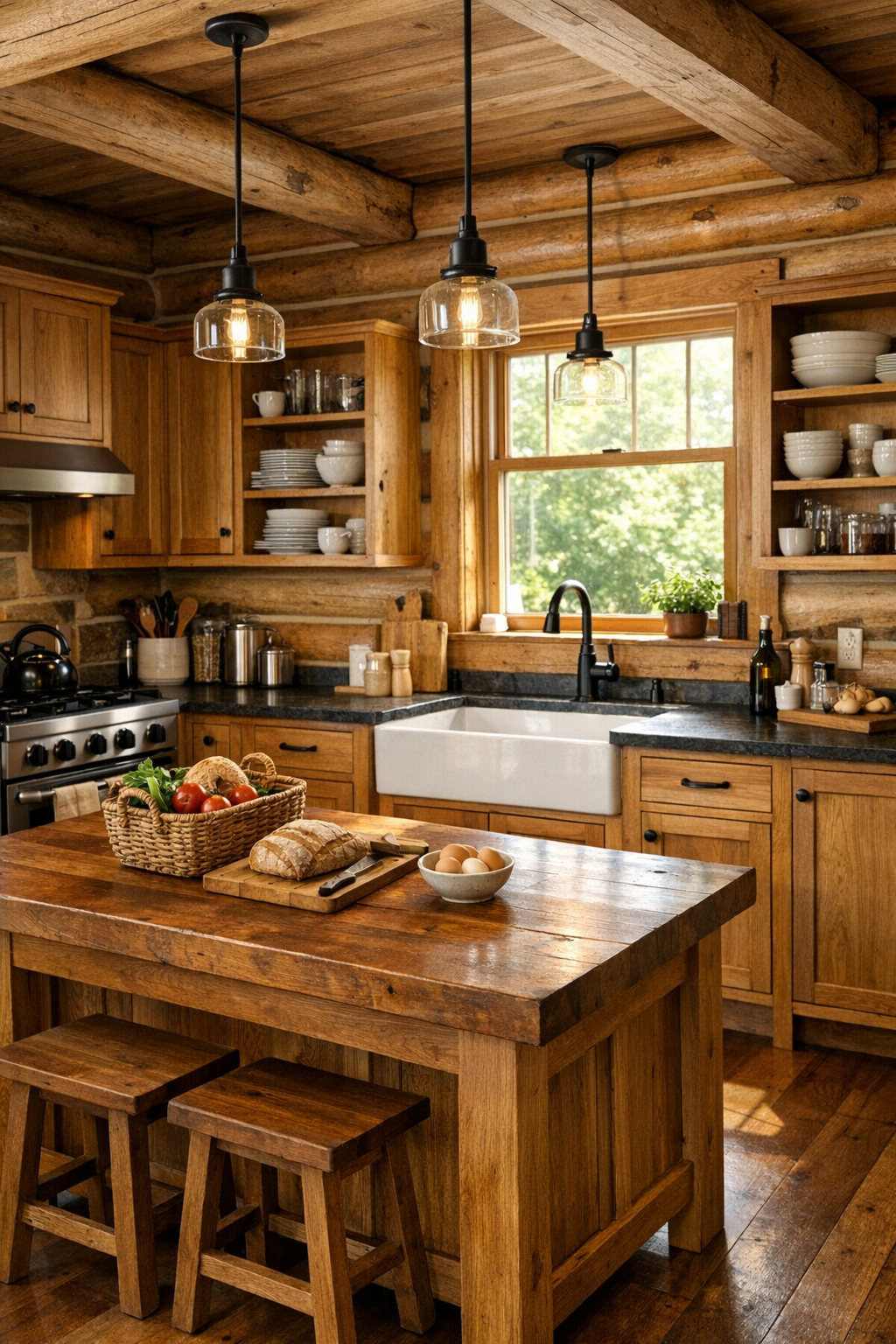
This kitchen understands that beauty and hard work belong together. Custom cabinetry, likely in stained oak or maple, brings a fine-grained richness that complements the log shell without competing with it. Doors are simple and well-proportioned, with inset panels, solid drawer fronts, and hardware that feels forged and practical. I can imagine soapstone or honed granite counters introducing a deeper note to the room, while a classic farmhouse sink and a substantial work island make the space feel ready for real cooking, not just passing admiration.
The best kitchens always have layers, and this one does. Open shelves or a glazed hutch could display mixing bowls, crocks, and everyday dishes, softening the stronger lines of the cabinetry. Under-cabinet lighting would brighten work surfaces, while pendants over the island would create a friendly pool of light in the evenings. The floor might continue in wood for continuity, or shift subtly to stone or brick for durability and texture. Either way, the room would feel deeply rooted in the traditions I know well: preserving, baking, simmering soup, and making enough for whoever might come through the door.
Bedroom
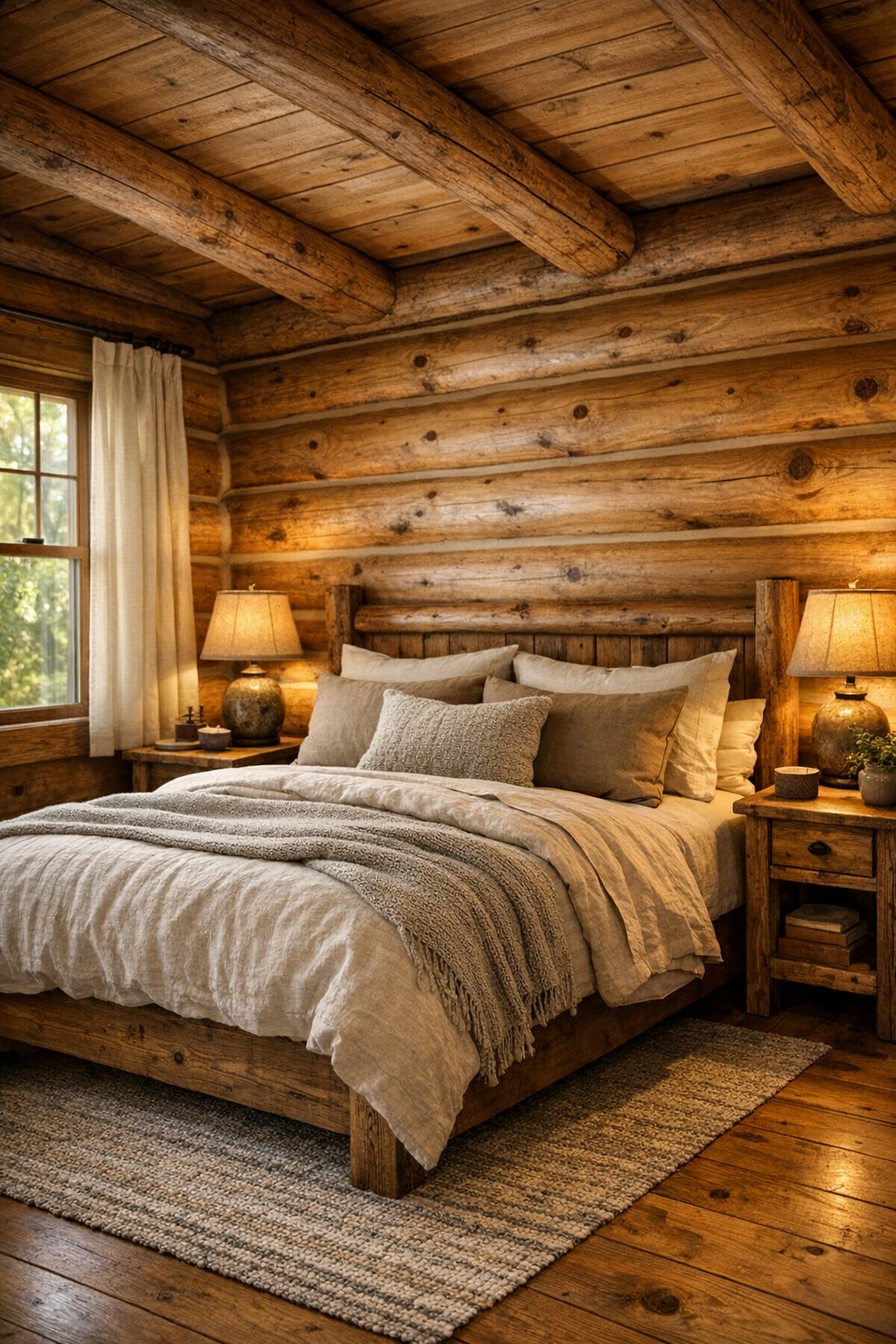
The bedroom carries the home’s rustic language into a quieter, softer register. Log walls and timber ceilings remain, of course, but they are balanced by gentler materials: a padded upholstered headboard in flax or cream, layered bedding in washed cotton and quilted textures, and perhaps a bench at the foot of the bed in worn leather or woven fabric. The furniture feels spare but solid, with matching nightstands and a dresser made from the same careful hardwood construction found throughout the home.
I appreciate a bedroom that knows how to rest the eye, and this one seems to do just that. The color palette settles into oatmeal, pine, soft sage, and weathered brown, with blackout drapery or lined curtains adding both privacy and softness to the windows. Bedside lamps cast a low, golden light that flatters the wood grain and makes the room feel cocooning rather than dark. It is not flashy, but it is deeply reassuring, and that can be far harder to achieve.
Bathroom
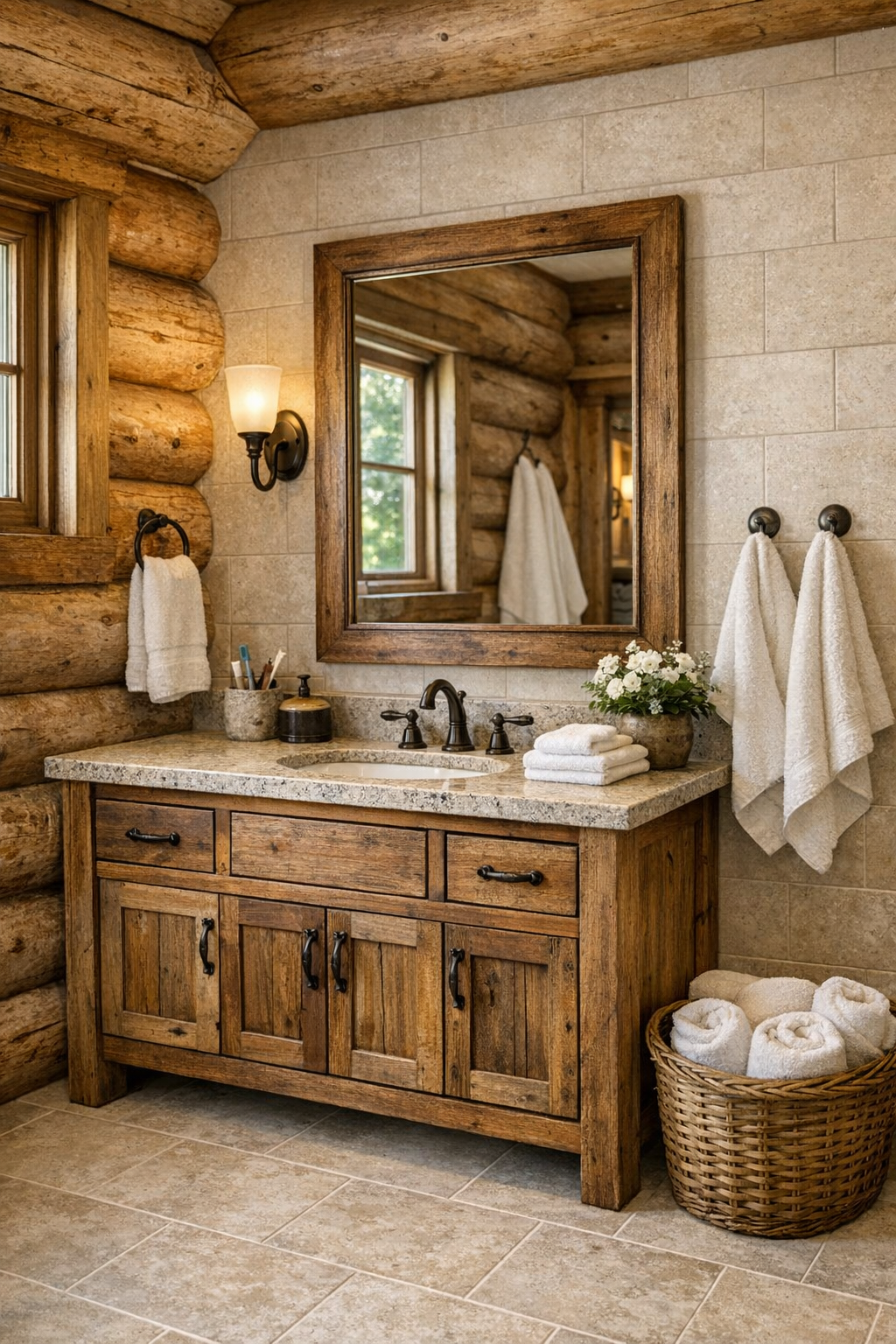
The bathroom takes the home’s handmade spirit and gives it a cleaner, more refreshed expression. A substantial wood vanity with paneled doors anchors the room, topped with stone or composite counters that are easy to care for and quietly elegant. The warmth of the wood is balanced by pale tile, perhaps in cream, soft gray, or muted sandstone, helping the room feel bright and open. I could see a framed mirror in matching wood above the sink, with iron or bronze fixtures adding a little visual weight.
Texture matters especially in a bathroom, and this one would benefit from a thoughtful mix: smooth counters, matte tile, clear glass, woven baskets, and thick cotton towels. If there is a walk-in shower, I imagine it with simple tilework and a built-in niche rather than anything too ornamental, while a soaking tub near a window would bring a slower, quieter mood. The result is practical and gracious all at once, with the same steady craftsmanship that defines the rest of the house.
Other Areas
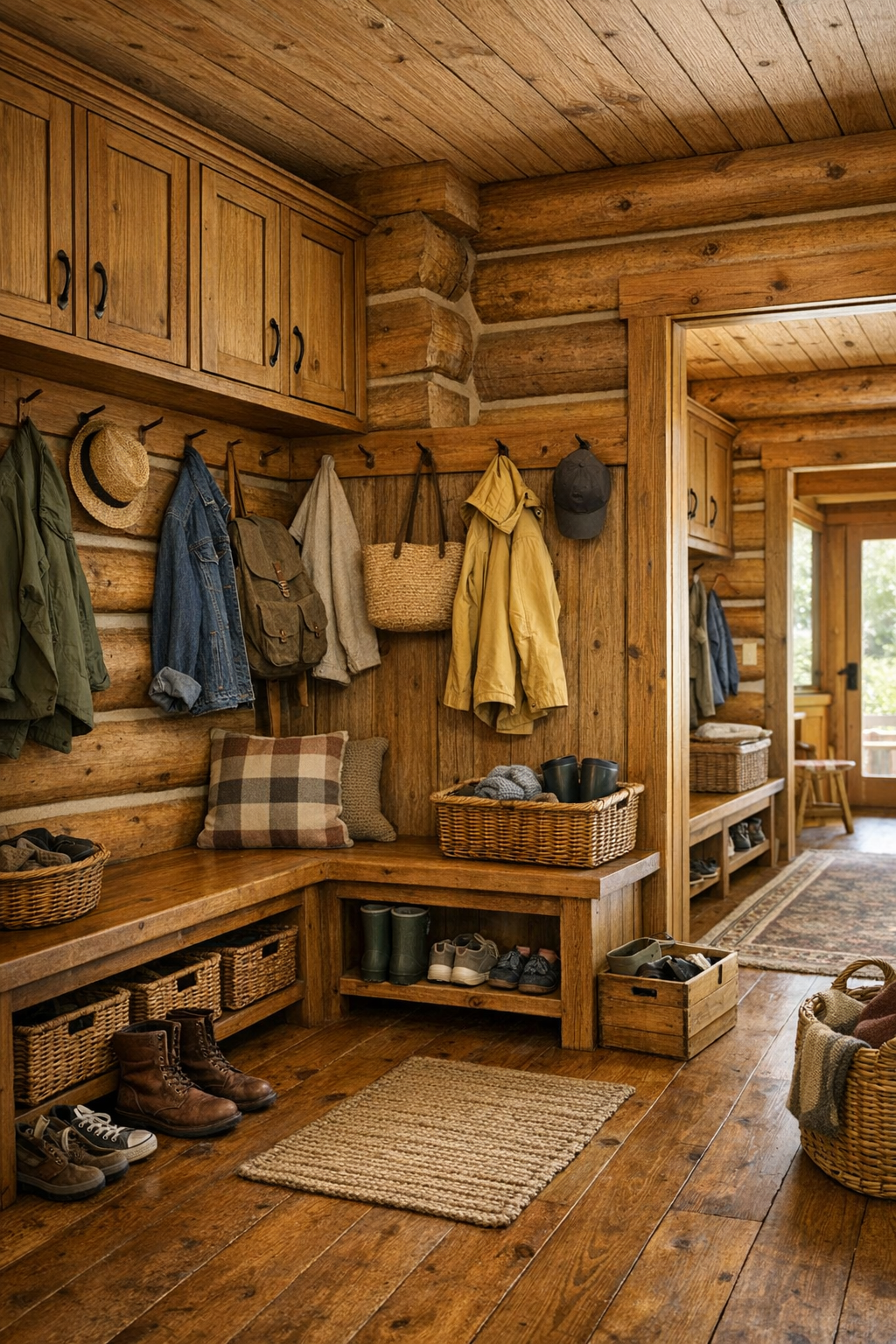
In a house like this, the supporting spaces matter just as much as the main rooms. A front porch, of course, acts like an outdoor sitting room, with sturdy rocking chairs, planters, and enough depth for slow mornings and muddy boots alike. Inside, a mudroom or utility passage would be nearly essential, fitted with built-in benches, pegs, and closed storage that keep country life tidy. Hallways would not be wasted space here; they would likely carry the same careful millwork, warm plank flooring, and understated lighting that make even the transitions feel considered.
I also imagine a small reading nook, office corner, or multipurpose room where the home’s craftsmanship can be appreciated up close. Built-in shelving, a simple writing desk, and a well-placed window could turn an ordinary corner into one of the most beloved spots in the house. Even the laundry area, if given matching cabinetry and honest materials, would feel integrated rather than hidden away. That consistency is what gives a home real dignity, and this one seems to understand that every square foot deserves the same care.
Why You'd Live Here
You would live here because it offers something many homes have forgotten how to give: ease. The single-level plan promises comfort and practicality, while the shortleaf pine logs, deep porch, and handmade detailing create an emotional warmth that reaches far beyond style alone. This is a house that respects craft, routine, and the beauty of useful things, and I think that speaks to people more than ever now.
More than that, you would live here because it feels trustworthy. The Amish craftsmanship brings integrity to every room, the materials are honest, and the spaces are arranged for real life rather than display. It is cozy without being cramped, rustic without being rough, and refined without ever losing its plainspoken charm. To my eye, that is the kind of home that ages beautifully right alongside the people who love it.