There’s a certain kind of home that feels as though it has been waiting patiently for its second life, and this barn-turned-farmhouse is exactly that sort of place. Set against what I imagine as open fields and a windbreak of old trees, it carries the plainspoken honesty of agricultural architecture while softening every edge with comfort, light, and a deep sense of welcome. Even as a concept design, it feels rooted in something real to me: the kind of place where muddy boots line up by the door, a pie cools on the counter, and the day naturally gathers around the kitchen.
What makes this home special is the way it honors the sturdy bones of the original structure without turning rustic charm into a costume. The old barn proportions remain generous and airy, but the interiors are thoughtful and calm, layered with warm wood, hardworking stone, soft neutral paint, and those little practical details that matter more with every passing year. It has the soul of a Midwestern homestead, only refined just enough to make retirement living feel easy, gracious, and deeply satisfying.
Exterior
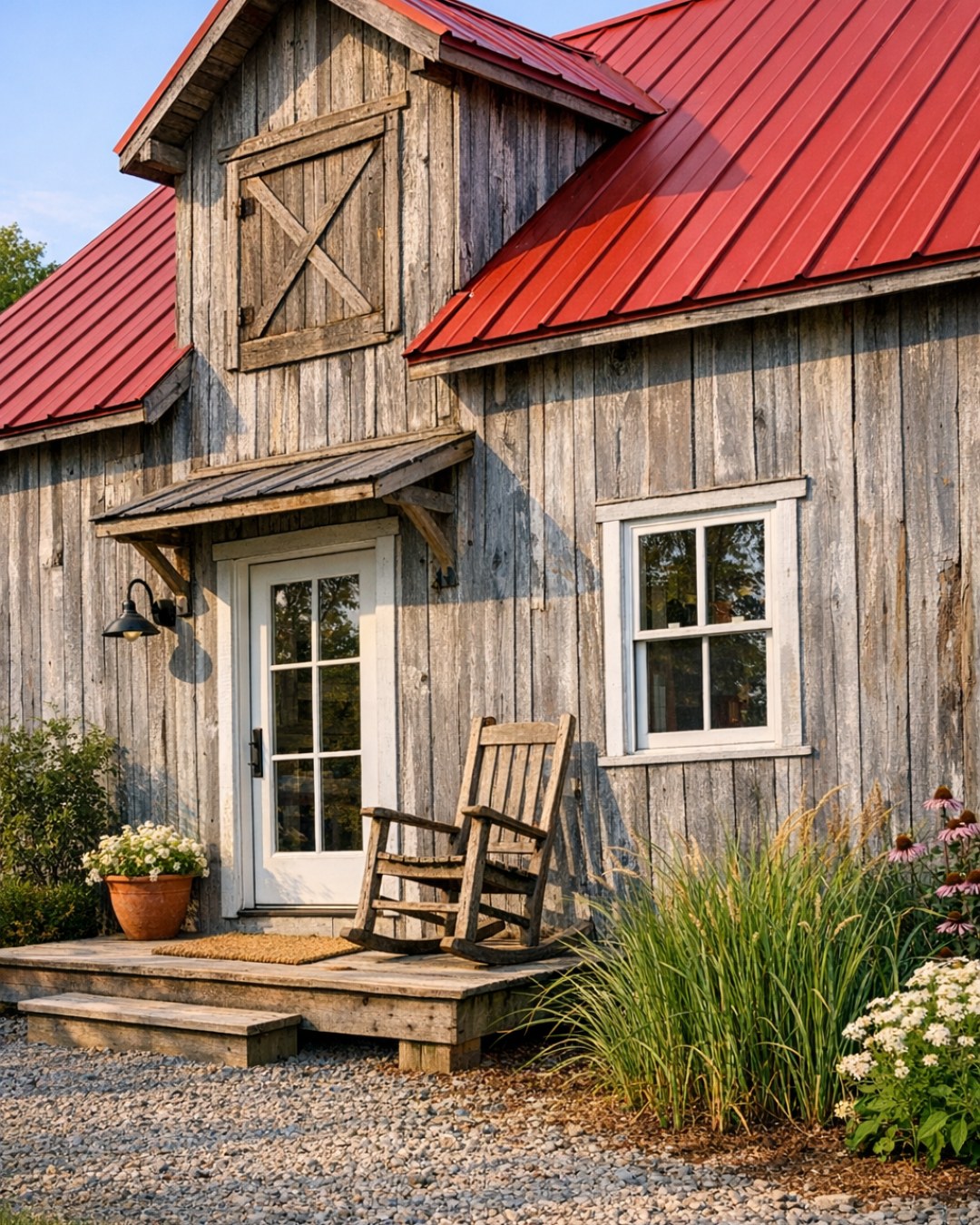
From the outside, the home keeps much of the barn’s familiar silhouette, and I’m glad for that. The roofline is tall and simple, the massing broad and reassuring, with vertical board-and-batten siding painted a weathered soft white that glows gently in morning and evening light. Natural cedar trim around the doors and windows adds warmth without fuss, while a fieldstone foundation gives the whole composition a sense of permanence, as if it belongs to the land the way an old fence row or grain bin does. Large black-framed windows punctuate the facade, bringing in daylight and adding a quiet modern note, but they never overpower the humble strength of the form.
The entry is handled with the kind of restraint I admire: a covered porch with chunky timber posts, a sturdy wood front door, iron hardware, and just enough room for a bench and a pair of planters full of seasonal greens. I can picture galvanized tubs of geraniums in summer and bundles of dried cornstalks in fall. Gravel crunches underfoot, native grasses soften the edges, and the landscaping feels intentionally rural rather than manicured. Nothing here is flashy. It’s handsome, serviceable, and deeply comforting, which is often the best kind of beauty a country home can offer.
Living Room
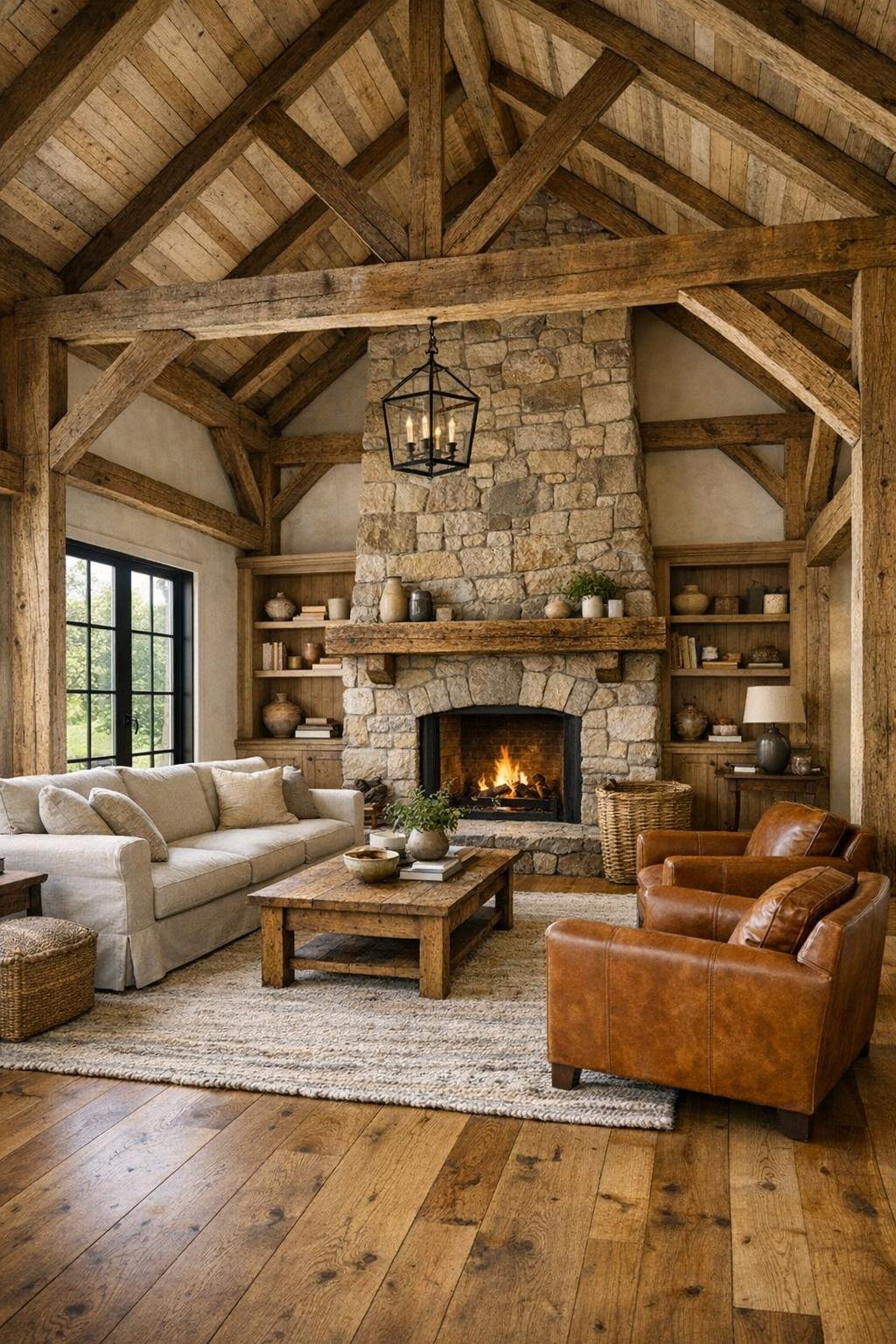
The living room takes full advantage of the barn’s soaring volume, with a double-height ceiling crossed by exposed timber trusses that immediately draw the eye upward. Instead of feeling cavernous, though, the space is grounded by wide-plank white oak floors, a substantial wool area rug, and a generous seating arrangement built for lingering. I imagine a deep, slipcovered sofa in oatmeal linen, a pair of caramel leather armchairs with softened edges, and a solid reclaimed wood coffee table bearing the small nicks and scratches that make a room feel lived in. The palette is gentle and familiar: cream, warm taupe, saddle brown, charcoal, and the occasional faded blue, like old enamelware on a kitchen shelf.
One of the smartest choices here is the fireplace wall, done in hand-laid stone with a thick reclaimed timber mantel that gives the room a proper heart. Built-in shelves on either side keep things practical and personal, with baskets, books, pottery, and family photographs rather than anything too staged. Lighting comes from a mix of iron sconces, shaded table lamps, and a simple wagon-wheel chandelier overhead, all casting a mellow evening glow. It feels like a room made for reading seed catalogs, shelling peas, watching snow collect at the windows, or simply sitting together at the end of the day in companionable quiet.
Dining Room
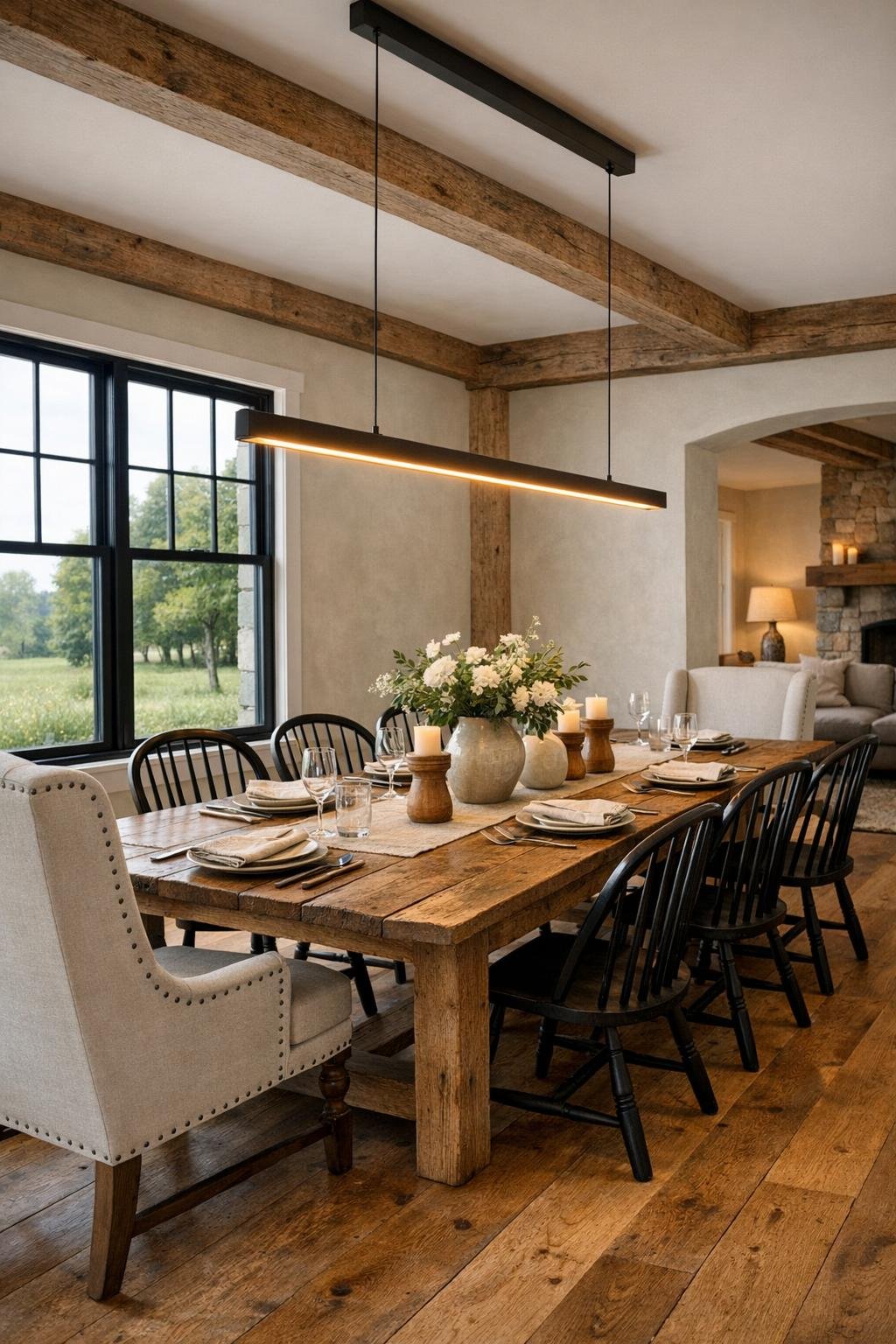
The dining room sits in easy conversation with the rest of the main living space, likely open but still clearly defined by scale and lighting. At its center is a long farmhouse table in thick, lightly distressed wood, the sort that looks better the more suppers, coffee cups, and holiday platters it holds. Windsor-style chairs painted in a soft black or muted olive bring a bit of contrast, while two upholstered host chairs at the ends add comfort and a touch of softness. Underfoot, I’d expect either the continuation of oak flooring left bare and honest or a flatwoven rug in a quiet stripe that nods to old grain sacks and utility textiles.
Above the table, a linear iron-and-brass fixture keeps the proportions in check beneath the lofty ceiling, giving the room a warm pool of light without stealing the show. The nearby wall might hold a vintage hutch or shallow built-in storing everyday dishes, stoneware pitchers, and stacks of linen napkins, all close at hand for regular use. I love that this room does not feel precious. It feels ready for roast chicken on Sunday, grandchildren elbow to elbow over pancakes, or an afternoon spent snapping beans into a bowl while sunlight moves across the table.
Kitchen
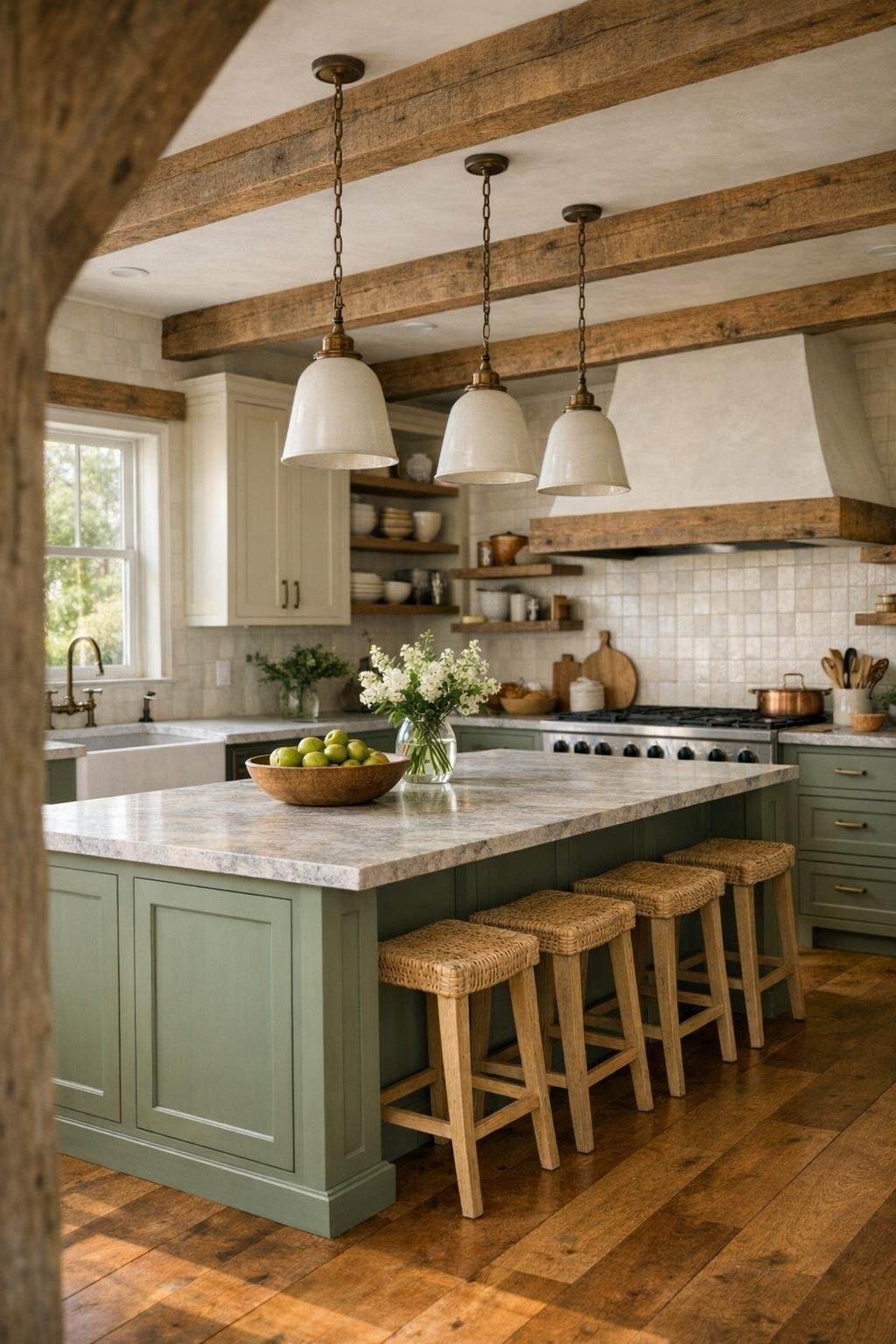
This kitchen is, without question, the crown jewel of the house, and I say that as someone who has always believed a good kitchen tells you everything worth knowing about a home. The room is expansive but not showy, anchored by a large painted island in a muted sage or creamy putty tone, topped with honed quartzite or soapstone that can stand up to real cooking. Around the perimeter, custom cabinetry reaches generously upward, with a mix of drawers, glass-front uppers, open shelves, and practical pantry storage that keeps the room efficient. The cabinet color is likely paired with unlacquered brass or aged iron hardware, and the backsplash might be simple handmade tile in a soft off-white, with just enough variation to catch the light.
What makes it “the best kitchen ever,” at least in my book, is the way beauty and usefulness seem to shake hands. There’s room for two people to cook without bumping elbows, perhaps with a proper range set into a plaster or shiplap hood wall, double ovens, deep apron-front sinks, and broad counters for rolling biscuit dough or setting out canning jars. Pendant lights over the island give task lighting with a little grace, while under-cabinet lighting keeps the work surfaces bright and clear. I can almost smell coffee brewing here before dawn and hear the low hum of a refrigerator full of garden produce, leftovers, and pie crust waiting its turn.
Bedroom
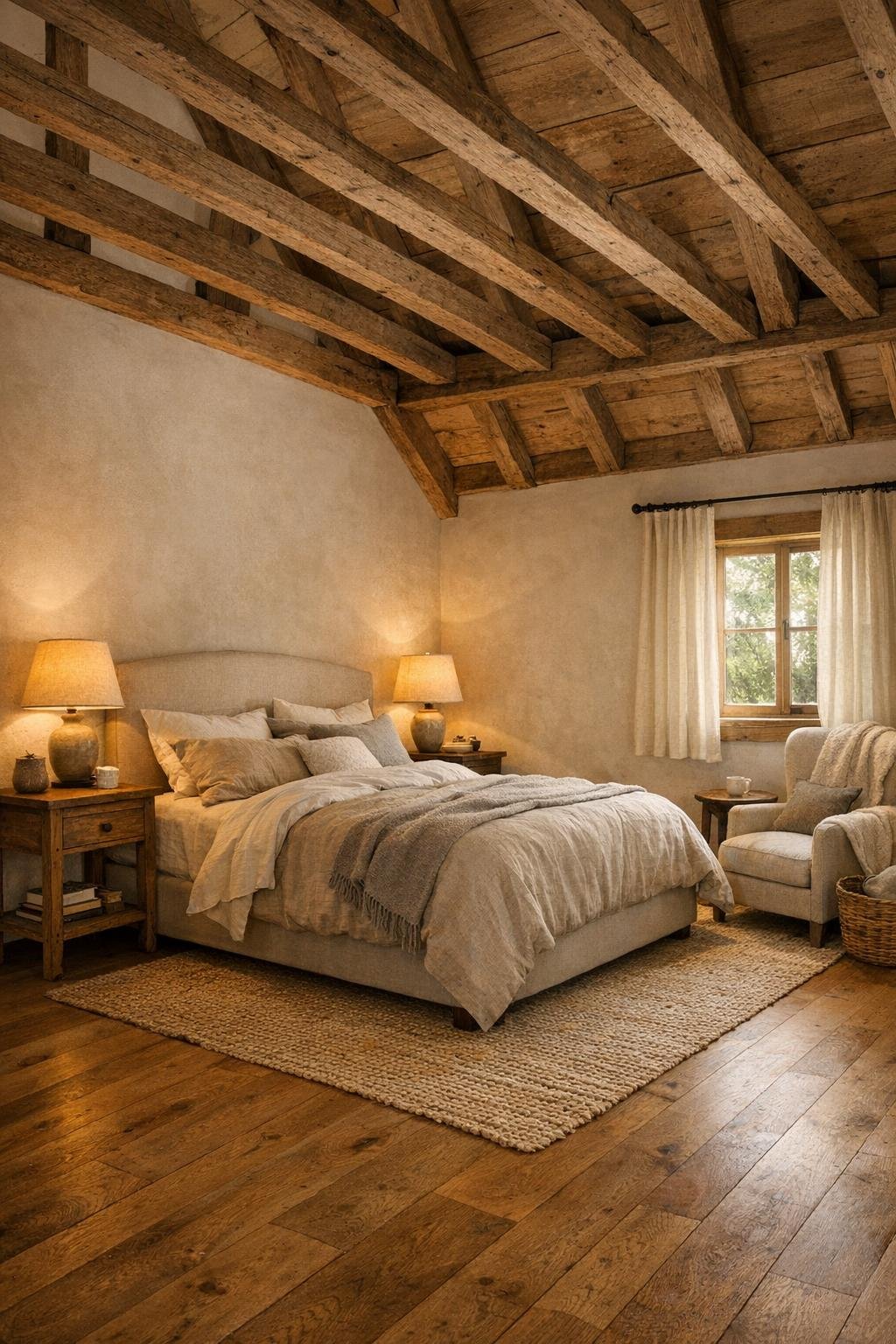
The bedroom feels quieter than the public spaces, as it should, but it still carries the barn’s architectural character in a softer voice. Sloped ceilings or exposed rafters might remain visible overhead, painted or lightly washed to keep the room bright, while the walls stay in restful shades like warm ivory, pale mushroom, or the faintest gray-green. A substantial bed with an upholstered headboard or a simple wooden frame anchors the room, dressed in layered natural linens, a quilt folded at the foot, and a mix of sleeping pillows that invite an early bedtime after a long day outdoors. Nothing flashy, nothing overdone—just comfort, proportion, and materials that age kindly.
I imagine matching nightstands with turned lamps, woven shades or soft drapery framing the windows, and perhaps a vintage bench or cedar chest adding both storage and memory. The flooring remains warm wood, softened by a braided or wool rug underfoot so the first step in the morning doesn’t feel harsh. There may be a reading chair in one corner, set beside a lamp and a small table for tea, devotionals, or a stack of well-thumbed cookbooks. It’s the kind of bedroom that lowers your shoulders the moment you walk in, which is a gift in any season of life.
Bathroom
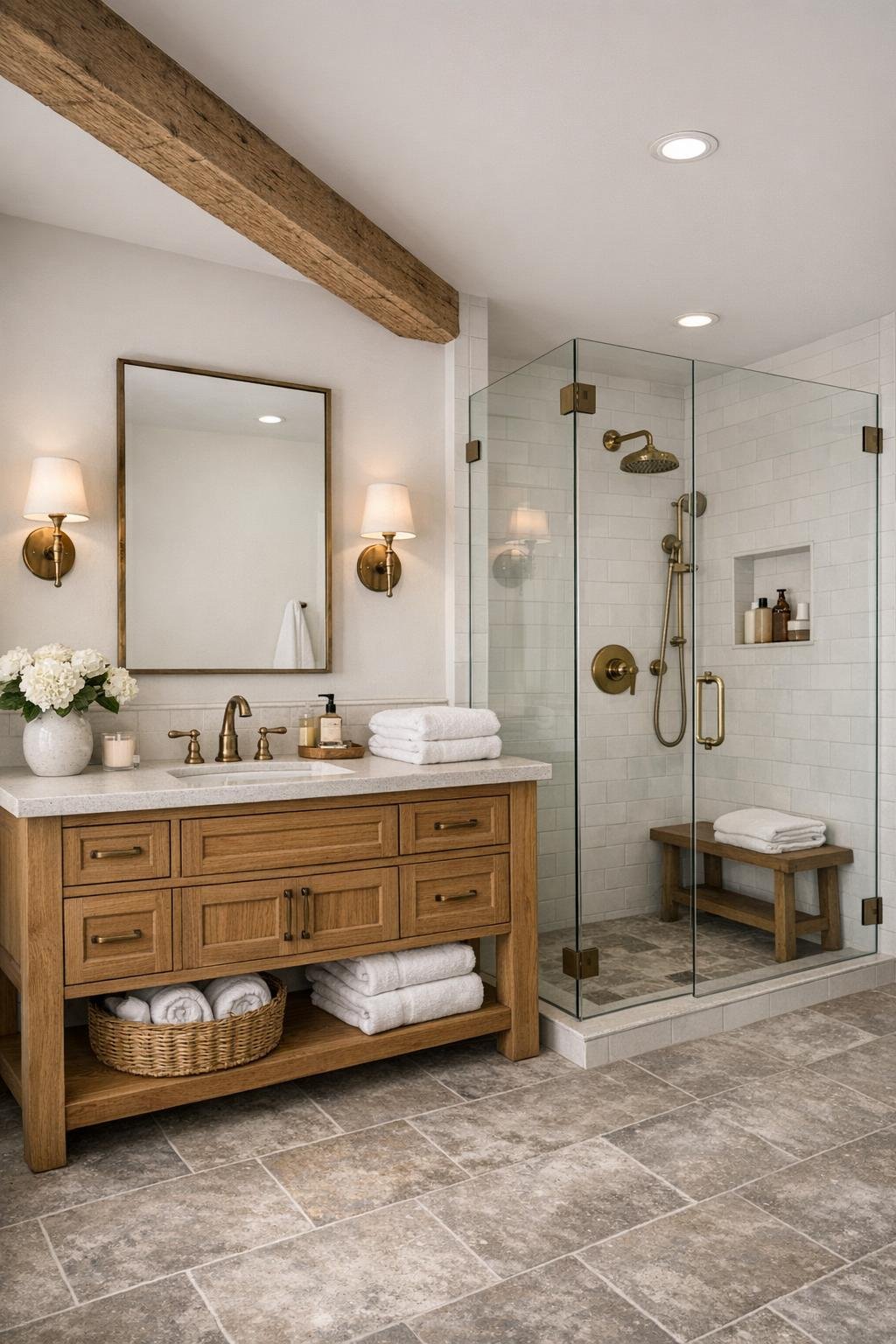
The bathroom continues the home’s steady, unfussy elegance with a material palette that feels both durable and soothing. I see a wide oak or painted vanity with plenty of drawers, topped in pale stone, with classic bridge faucets in aged brass or polished nickel. The walls may be finished in moisture-friendly limewash, beadboard, or a soft matte paint, while the floor is laid in stone or porcelain tile that resembles old limestone. A walk-in shower with clear glass, simple white tile, and a built-in bench makes the room feel accessible and gracious without looking clinical.
If there’s a soaking tub, it would sit near a window with a view of trees or fields, giving the room a little poetry without losing its practical footing. Good lighting matters here, and the sconces on either side of the mirror would cast a flattering, even glow, while overhead fixtures keep everything crisp and usable. Plush cotton towels, a woven hamper, a small wooden stool, and a vase of clipped branches would be enough to finish it. Like the rest of the house, the beauty lies in restraint and in choosing materials that hold up to daily life while still feeling special.
Other Areas
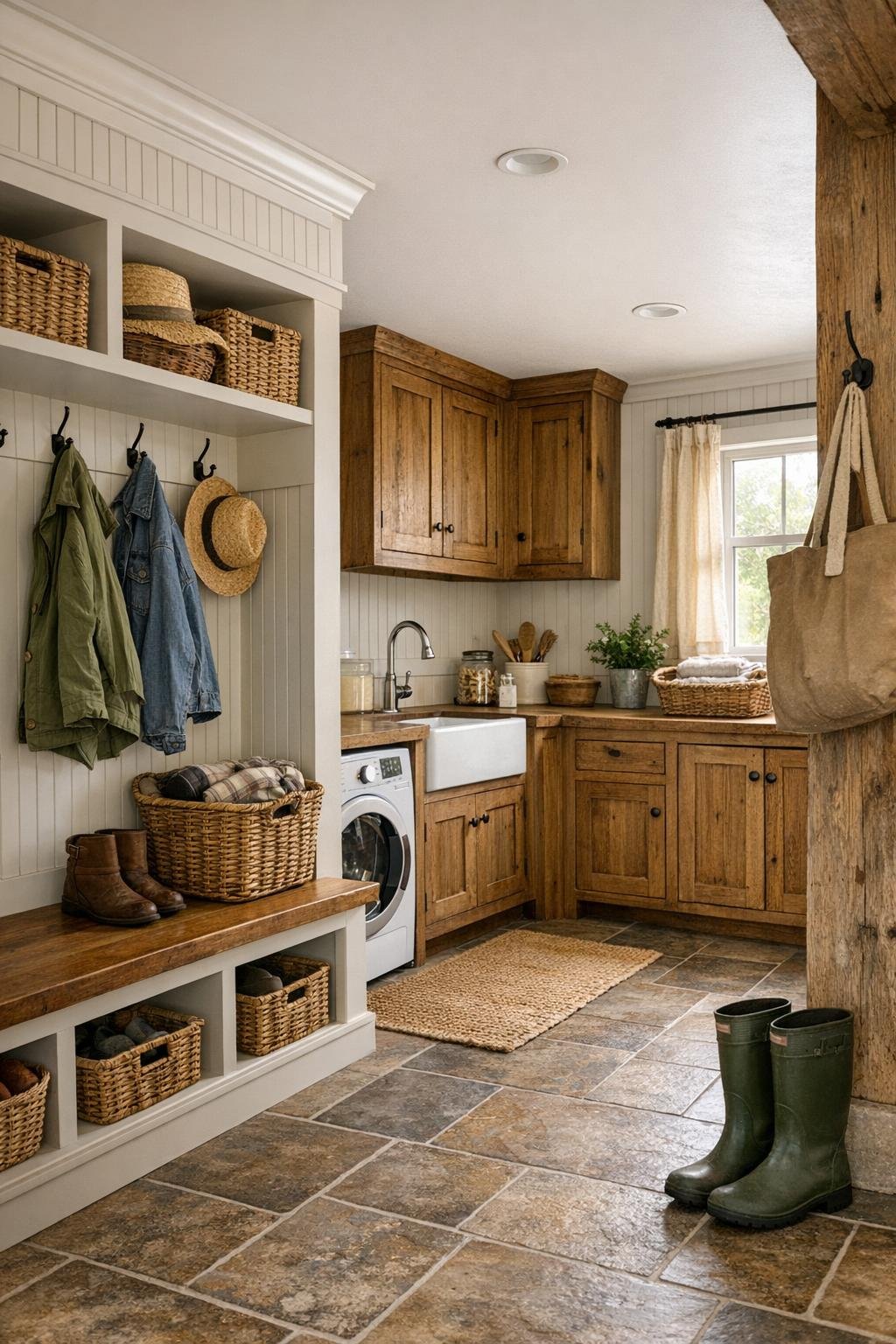
What really completes a home like this are the hardworking in-between spaces, and this design seems to understand that beautifully. A mudroom near the entry would be essential, fitted with built-in cubbies, closed cabinets, beadboard walls, a bench sturdy enough for pulling on boots, and flooring that can take a little weather without complaint. I’d also expect a laundry room that is more than an afterthought, with a deep utility sink, drying rail, folding counter, and perhaps cheerful checked curtains or a practical runner that keeps the room from feeling purely utilitarian. These are the spaces that make country life manageable, and I never think they should be skimped on.
There may also be a lofted sitting area or small library tucked beneath the upper reaches of the barn frame, where the old structure can really be appreciated at close range. A desk for household paperwork, a puzzle table, or a narrow hall lined with framed family photos would add that lived-in dimension no amount of expensive finish can replace. I can also imagine a screened porch or back sitting room opening toward the landscape, furnished simply with rocking chairs and a small table for iced tea. In a home like this, every extra corner has a purpose, and every purpose is made a little more beautiful than strictly necessary.
Why You'd Live Here
You’d live here because it understands the difference between impressing people and truly taking care of them. This home has presence, yes, but its real success lies in the daily comforts: rooms that flow sensibly, finishes that can handle honest wear, generous light, and a kitchen designed for somebody who actually cooks. It preserves the dignity of the old barn while turning it into a place where retirement doesn’t feel like a slowdown so much as a settling in, the way bread dough settles into a pan before rising into what it was meant to be.
And maybe that is what I like best. This farmhouse doesn’t chase perfection; it chases usefulness, warmth, and the kind of beauty that grows richer with time. It feels like a home for people who know who they are, who have fed others for years, who value a good chair, a deep drawer, a strong roof, and a window placed exactly where the morning light can do some good. In my mind, that makes it not only beautiful, but wise.