From the road, this white farmhouse has the kind of quiet presence I’ve always loved: simple lines, a pitched roof, black-framed windows, and a porch that feels as though it was made for watching weather roll across open land. It sits in my mind like so many good country homes do, with a kind of modesty that never asks for attention and yet holds it all the same. Inside, though, the story changes beautifully. This concept design pairs farmhouse familiarity with a more refined, deeply layered interior, where pale oak, limewashed walls, aged brass, and soft textiles make every room feel settled and thoughtful.
What makes this home special to me is the way it honors restraint without ever feeling spare. There’s warmth in every finish, comfort in every proportion, and a sense that daily life has been carefully considered, from muddy boots at the door to candlelight at supper. It reminds me of the best old Midwestern houses I’ve known, the ones that looked plain from the outside but opened into rooms full of grace, usefulness, and unexpected beauty.
Exterior
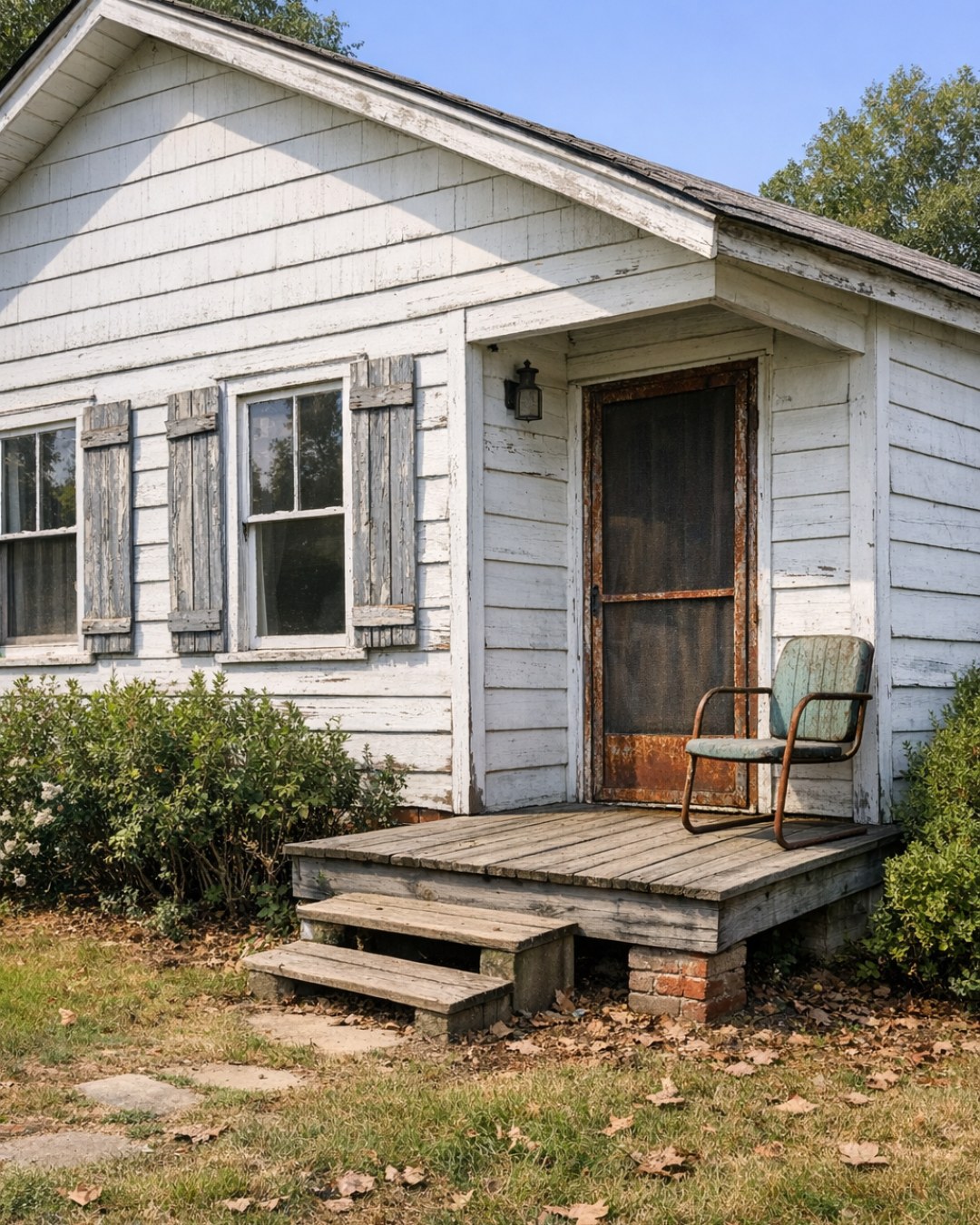
The exterior is intentionally straightforward: white-painted board-and-batten siding, a dark charcoal metal roof, and a covered front porch held up by square posts with just enough heft to ground the facade. Black window frames sharpen the whole composition and keep the farmhouse from drifting into sweetness. I like the balance here. Nothing feels fussy, and that restraint gives the materials room to speak for themselves. A gravel drive, native grasses, clipped hydrangeas, and broad stone steps lend the home a rooted, weather-wise character that feels right at home in an open rural setting.
What I find especially effective is the scale. The house doesn’t loom; it welcomes. The porch ceiling, finished in warm natural wood, introduces the interior palette before you even step inside, and that little gesture makes the transition feel gracious. The lighting is simple and classic, with matte black barn-style sconces and a lantern at the entry, all chosen more for atmosphere than display. It’s a plain white farmhouse in the best sense, confident enough not to overdecorate.
Living Room
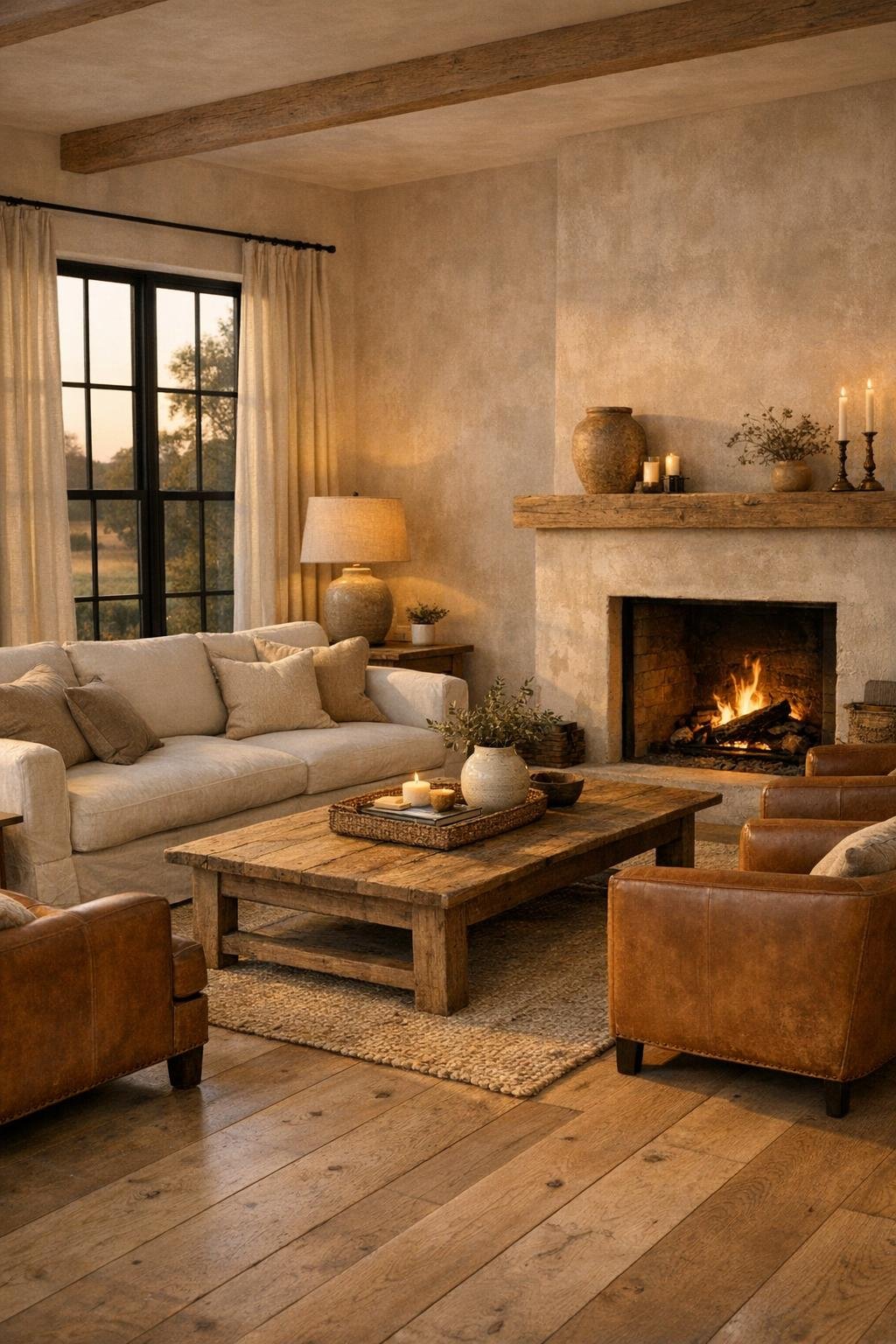
The living room opens with a calm, collected palette of oatmeal, flax, soft clay, and weathered brown, all layered over wide-plank pale oak floors that carry a gentle matte finish. A substantial slipcovered sofa anchors the room, joined by deep club chairs in warm caramel leather and a pair of spindle side chairs that feel almost heirloom in spirit. At the center sits a low, oversized coffee table in scrubbed oak, its surface ready for books, a pie plate, or a vase of garden branches. The fireplace wall, finished in hand-applied limewash, adds just enough movement and age to keep the space from feeling too polished.
Light does beautiful work here. Black-framed windows pull in the landscape, while linen draperies soften the edges and move just a bit in the breeze. In the evening, shaded sconces and a generous ceramic lamp turn the room honey-warm, the kind of light that makes everyone settle in and stay awhile. I can almost imagine the quiet clink of coffee cups and the sound of an old quilt being folded over the arm of a chair. The layout is conversational and easy, with furniture pulled inward rather than pushed to the walls, which gives the room both intimacy and purpose.
Dining Room
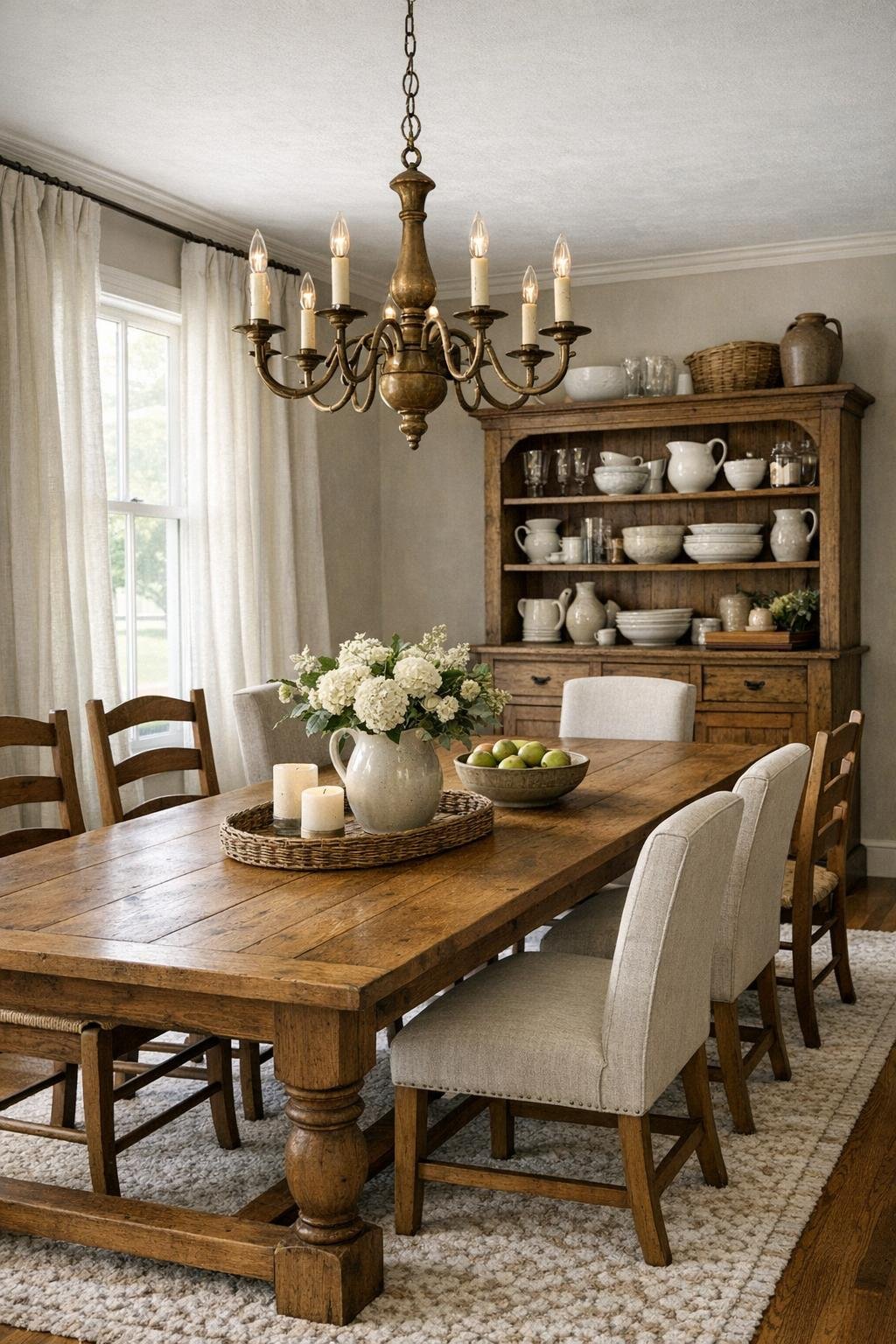
The dining room carries a bit more formality, though it never loses the home’s easy country grace. A long solid oak table with a softly worn finish runs nearly the length of the room, surrounded by a mix of ladder-back and upholstered dining chairs in muted natural tones. That blend keeps the room from feeling staged, and I’ve always thought a dining space looks better when it feels collected over time. The walls are finished in a warm chalky neutral, and a large vintage-style hutch in a smoked wood tone adds depth while offering a place for ironstone, serving platters, and everyday glassware.
Overhead, a linear aged-brass chandelier brings a lovely glow without overpowering the room. There’s texture everywhere you look: a nubby wool rug underfoot, linen curtains, pottery on the sideboard, and the slight grain of old-looking wood catching the light. I appreciate how the room is scaled for real gatherings, the sort where someone brings an extra pan of rolls and another chair somehow appears. It has dignity, certainly, but also generosity, and that’s my favorite combination in a dining room.
Kitchen
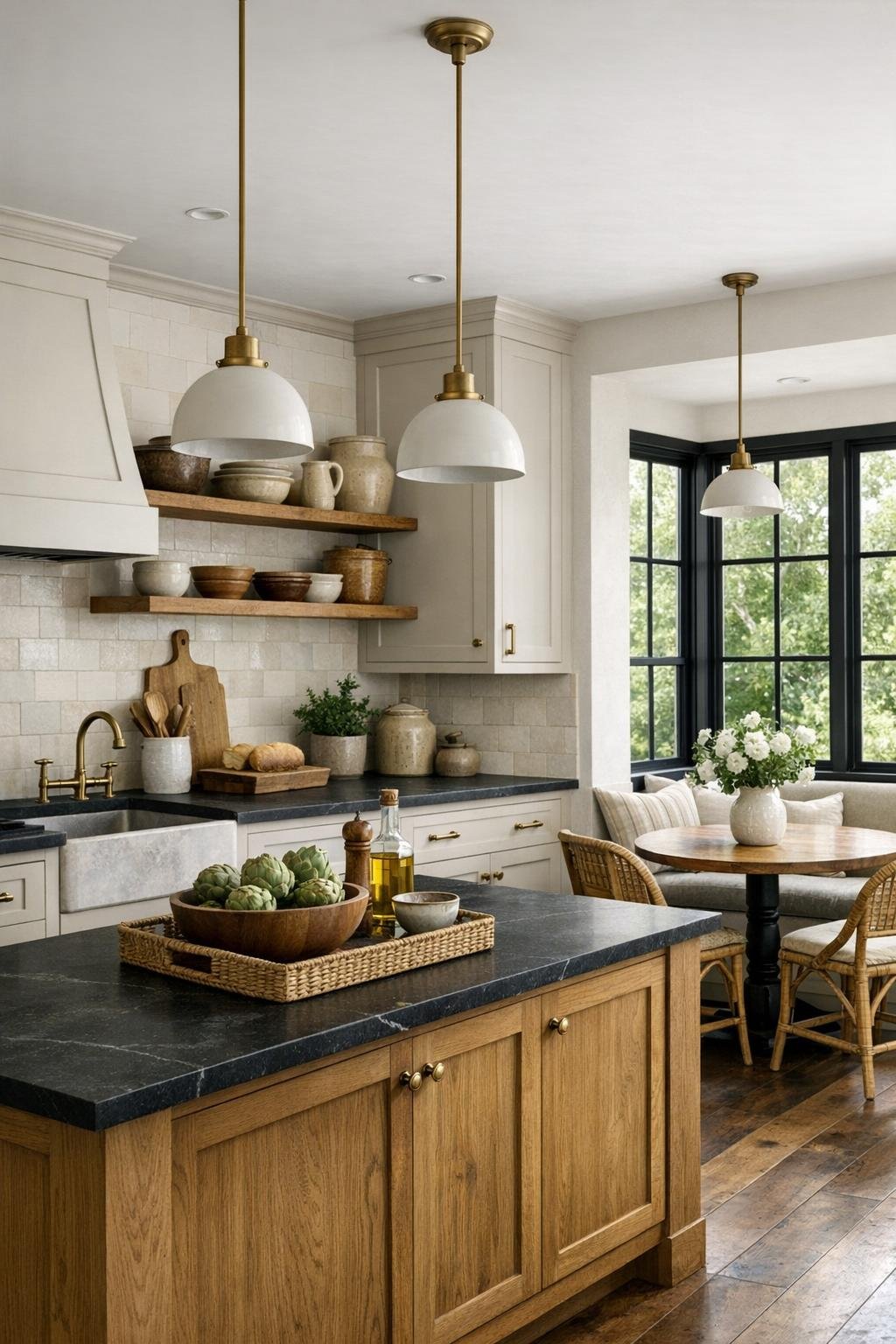
The kitchen is where this home truly wins me over. It blends hardworking practicality with a kind of understated beauty that any good cook would appreciate. The cabinetry is painted a soft mushroom-white, not stark but creamy and forgiving, paired with unlacquered brass hardware that will age with use. Honed soapstone counters add a beautiful, grounded darkness, and the backsplash is done in handmade off-white tile with slight variation from piece to piece. At the center, a broad oak island brings in warmth and gives the room a furniture-like quality, almost as if it has always been there.
There’s room here for real life: deep drawers, a proper range alcove, open shelving for crocks and mixing bowls, and pendant lights with simple metal shades casting a clean pool of light over the work surface. I’m especially fond of the breakfast nook tucked near the windows, where a built-in bench and a round pedestal table make an inviting spot for morning coffee or peeling apples in the afternoon. The whole room feels honest and useful, but also deeply comforting, which is exactly what a kitchen ought to be.
Bedroom
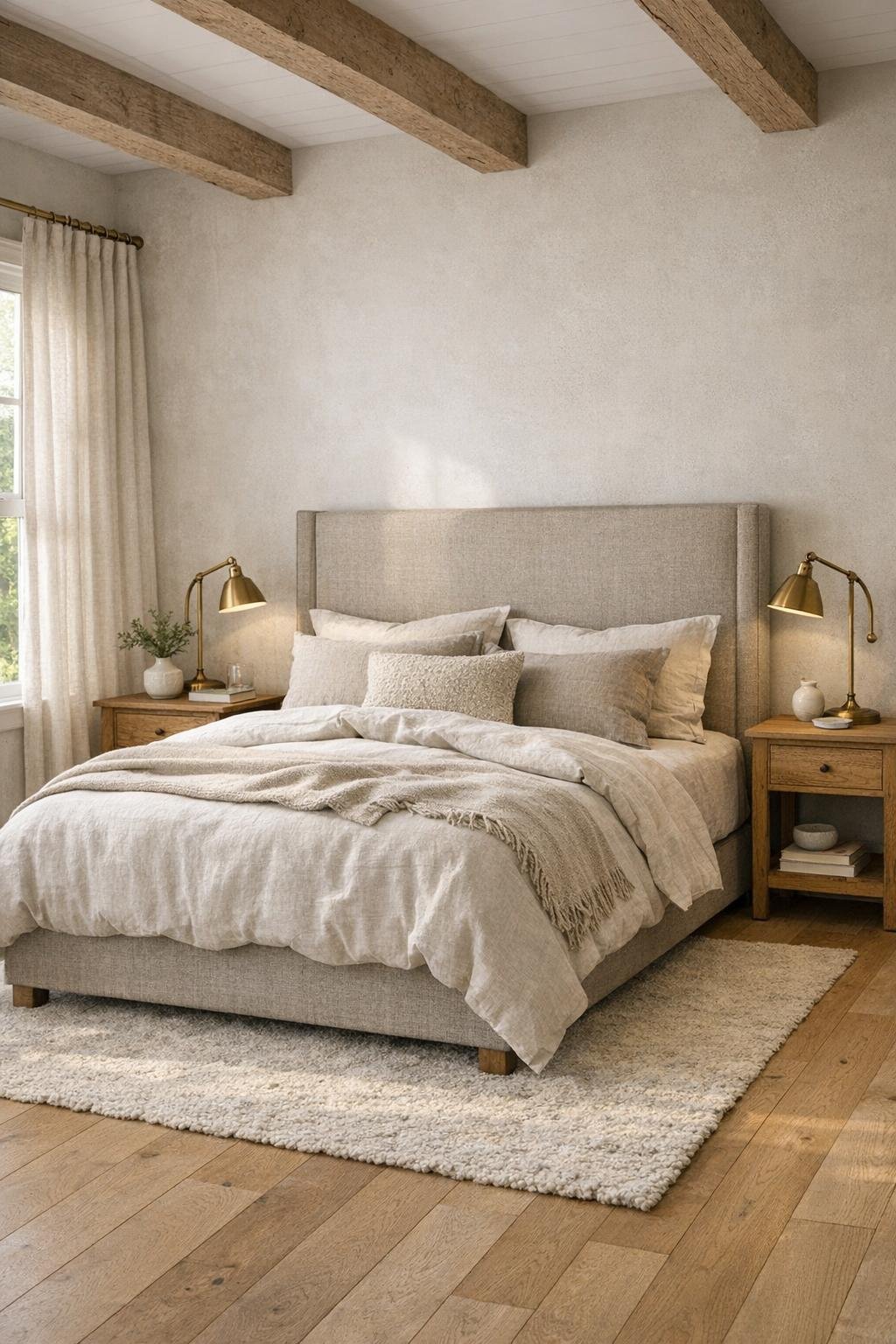
The bedroom steps away from busyness and leans fully into quiet. Walls in a soft mineral white, pale oak floors, and a tall upholstered bed in a warm flax tone create a restful base that feels both airy and grounded. Layered bedding in washed linen and cotton gives the room that well-loved softness I always notice first in the nicest homes. At either side of the bed, simple oak nightstands and aged brass reading lamps keep the composition balanced, while a vintage bench at the foot adds a touch of usefulness and history.
What makes the room memorable is its restraint. There may be only a few pieces, but each one contributes to a mood of calm. Full-length drapery in natural linen frames the windows, a muted wool rug softens the floor, and a quiet landscape painting above the bed ties the whole scene back to the countryside outside. This is not a bedroom trying to impress anybody. It’s trying to let you rest, and I think that’s far more beautiful.
Bathroom
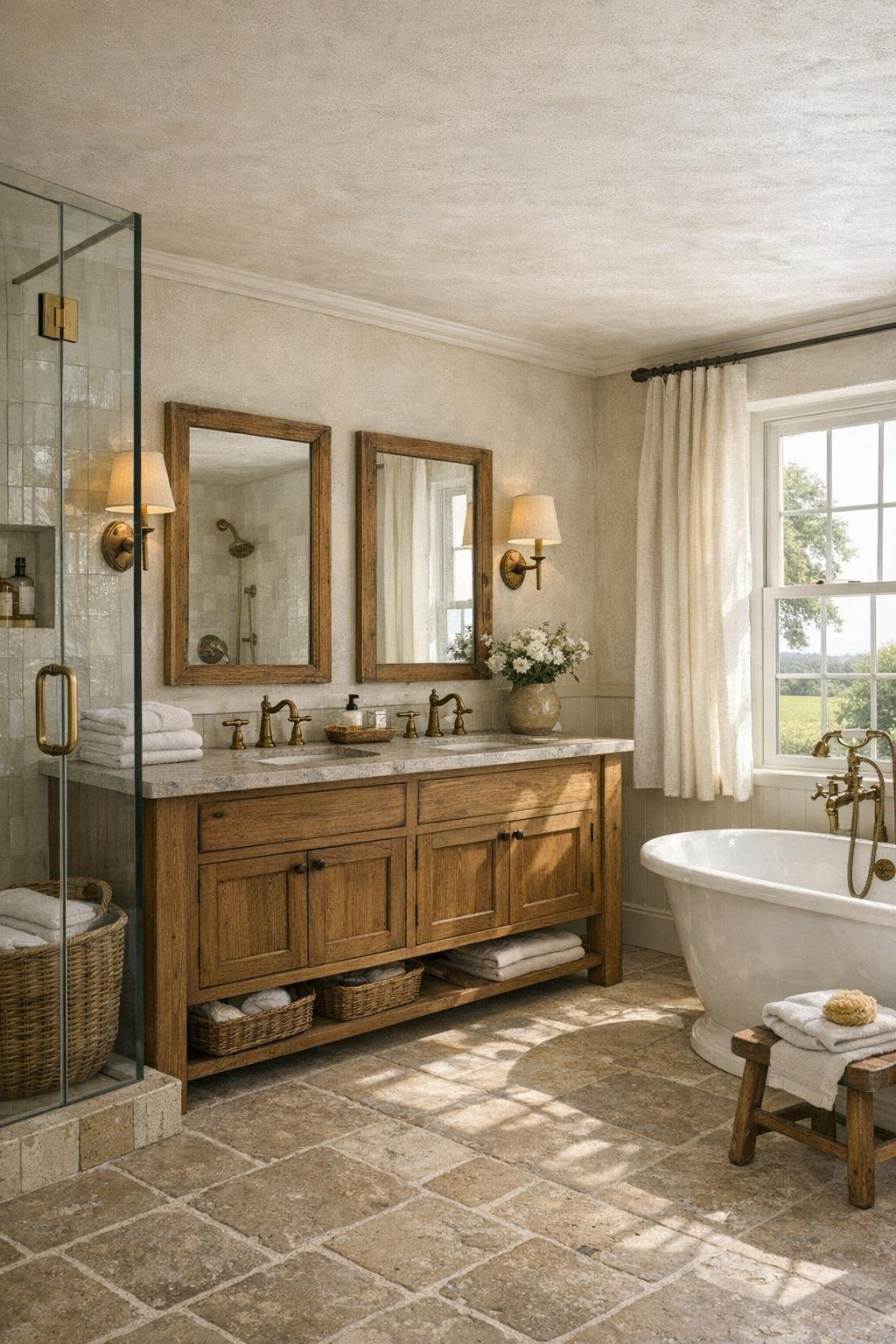
The bathroom is one of the loveliest surprises in the house, balancing cleanliness with warmth in a way many modern baths miss. The floor is laid in small tumbled limestone tile, while the walls combine painted paneling with creamy plaster for a finish that feels substantial and soft at once. A double oak vanity with a hand-rubbed finish supports pale stone countertops and classic under-mount sinks, and the unlacquered brass fittings bring that same living patina we saw in the kitchen. Nothing is too shiny, which helps the room feel settled rather than showroom-new.
A freestanding tub sits near the window like an invitation to slow down, and the glass-enclosed shower behind it is lined with lightly varied zellige-style tile that catches the light with a quiet gleam. Sconces with pleated shades flank the mirrors and cast the most flattering glow. I also love the practical touches: woven baskets, thick cotton towels, and just enough open space to breathe. It feels gracious but not grand, and that proportion makes all the difference.
Other Areas
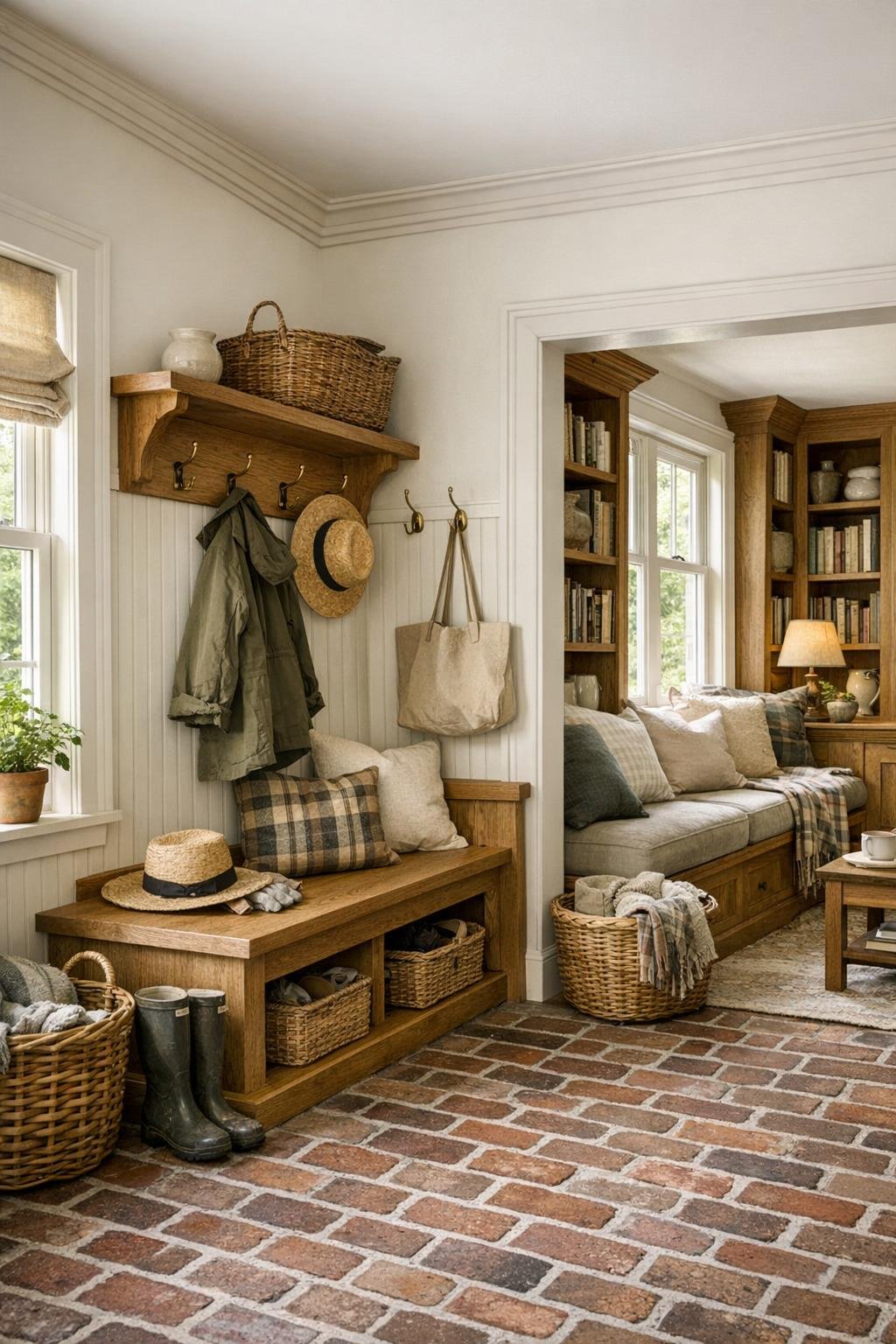
The secondary spaces are where the home’s thoughtfulness really shows itself. A mudroom just off the side entry is fitted with built-in oak benches, beadboard walls, sturdy hooks, and a brick floor that can take all the dirt and damp a country life brings in. Nearby, a compact laundry room continues the same palette of warm whites, oak, and brass, making even chores feel a touch more civilized. Hallways are kept simple but not empty, with framed botanical prints, a narrow runner, and just enough lighting to create a gentle passage from one room to the next.
There’s also a tucked-away reading nook under a window seat that I find especially charming, the sort of place where a cookbook, a basket of mending, or an afternoon nap could all seem equally appropriate. Upstairs landing space has been used wisely, with a small writing desk and open shelves that keep the home feeling lived-in rather than purely decorative. These in-between places matter more than people sometimes realize. They shape the rhythm of a house, and here, they do it with warmth, order, and a little bit of everyday grace.
Why You'd Live Here
You’d live here because it understands something many homes forget: beauty has to be livable to be lasting. Every room offers comfort without laziness, refinement without stiffness, and a strong sense of place without turning rustic into a costume. It feels connected to the land outside and attentive to the daily habits inside, which is a rare and wonderful balance.
For me, the best homes are the ones that seem to hold memory before memory has even been made in them. This farmhouse does exactly that. Its plain white exterior promises simplicity, and its interior delivers depth, warmth, and a kind of steady hospitality that never goes out of style. I can picture muddy shoes by the door, supper on the table, and lamplight in the windows at dusk, and honestly, that is reason enough.