I love a home that doesn’t try too hard, and this log house has that kind of easy confidence. Set against a quiet, wooded backdrop, it takes the humble idea of a former hunting shack and turns it into something warm, grounded, and deeply livable. The style leans rustic, of course, but not in the overly themed way that can sometimes happen with cabin-inspired spaces. Here, the rough-hewn structure is balanced with soft light, practical planning, and the kind of finishes that make everyday life feel calm.
What makes this place special to me is how thoughtfully it seems to honor its past while stepping fully into a more comfortable chapter, even as a concept design. I can picture a retired couple settling into a slower rhythm here: coffee at sunrise, soup simmering on the stove, grandkids visiting on weekends, and plenty of quiet evenings in between. It feels personal and unpretentious, with each room designed to work hard without losing that sense of retreat.
Exterior
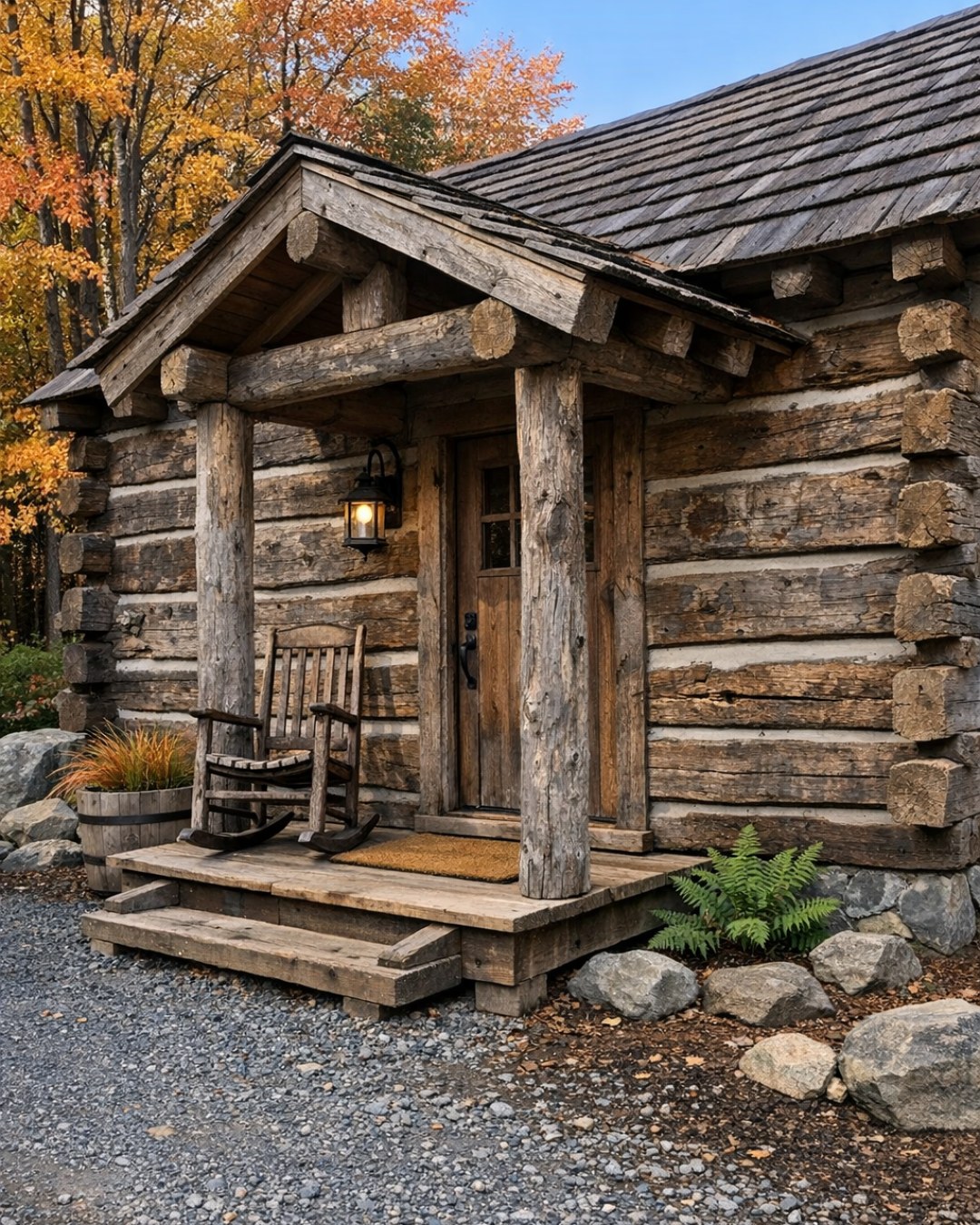
The exterior has all the character you’d hope for in a log home, with stacked timber walls weathered to a warm honey-brown and chinking that gives the facade definition without making it feel too polished. A deep front porch stretches across the face of the house, supported by thick log posts and finished with a simple railing that keeps the look traditional. I especially like the dark metal roof here; it adds contrast and gives the whole structure a sturdier, updated profile while still feeling right at home in the landscape.
Stone skirting at the base anchors the house visually and helps bridge the gap between rugged and refined. The windows are generous but not oversized, trimmed in a deep bronze tone that disappears nicely into the wood and lets the glass reflect the trees. Instead of dressing up the outside with too many decorative touches, the design keeps things straightforward: lantern-style sconces, a solid wood front door, a few porch rockers, and room to sit outside and actually enjoy the setting. It’s exactly the kind of exterior that makes you exhale a little when you pull into the drive.
Living Room
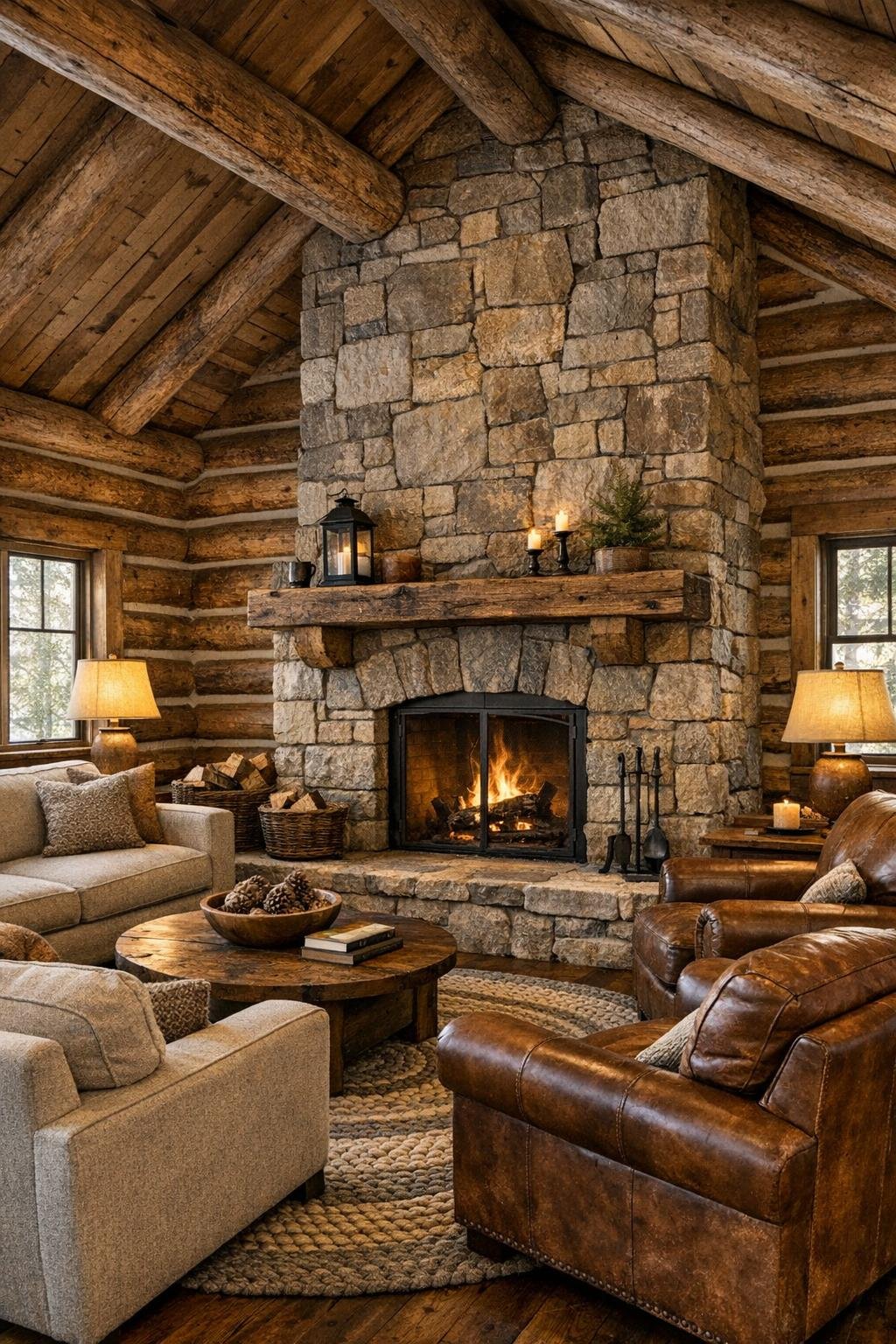
The living room feels like the heart of the house, and I can instantly imagine it being the spot where everyone naturally gathers. Exposed log walls wrap the room in warmth, while a vaulted ceiling with chunky beams keeps it from feeling heavy. At the center, a floor-to-ceiling stone fireplace gives the space real presence, with a thick reclaimed wood mantel that looks like it has its own story. The furniture is comfortably scaled rather than oversized: a deep oatmeal-colored sofa, a pair of worn leather armchairs, and a plaid accent chair that adds just enough cabin personality without tipping into cliché.
The palette stays close to nature, which I think is exactly right here—mossy greens, charcoal, warm cream, and weathered brown. A large braided wool rug softens the wood floor underfoot, and woven baskets tucked beside the hearth make storage feel effortless. Lighting comes from an iron chandelier overhead, table lamps with linen shades, and the glow of the fire itself, so the room would transition beautifully from bright afternoon reading to cozy evening conversation. It has that layered, lived-in look that feels welcoming instead of staged.
Dining Room
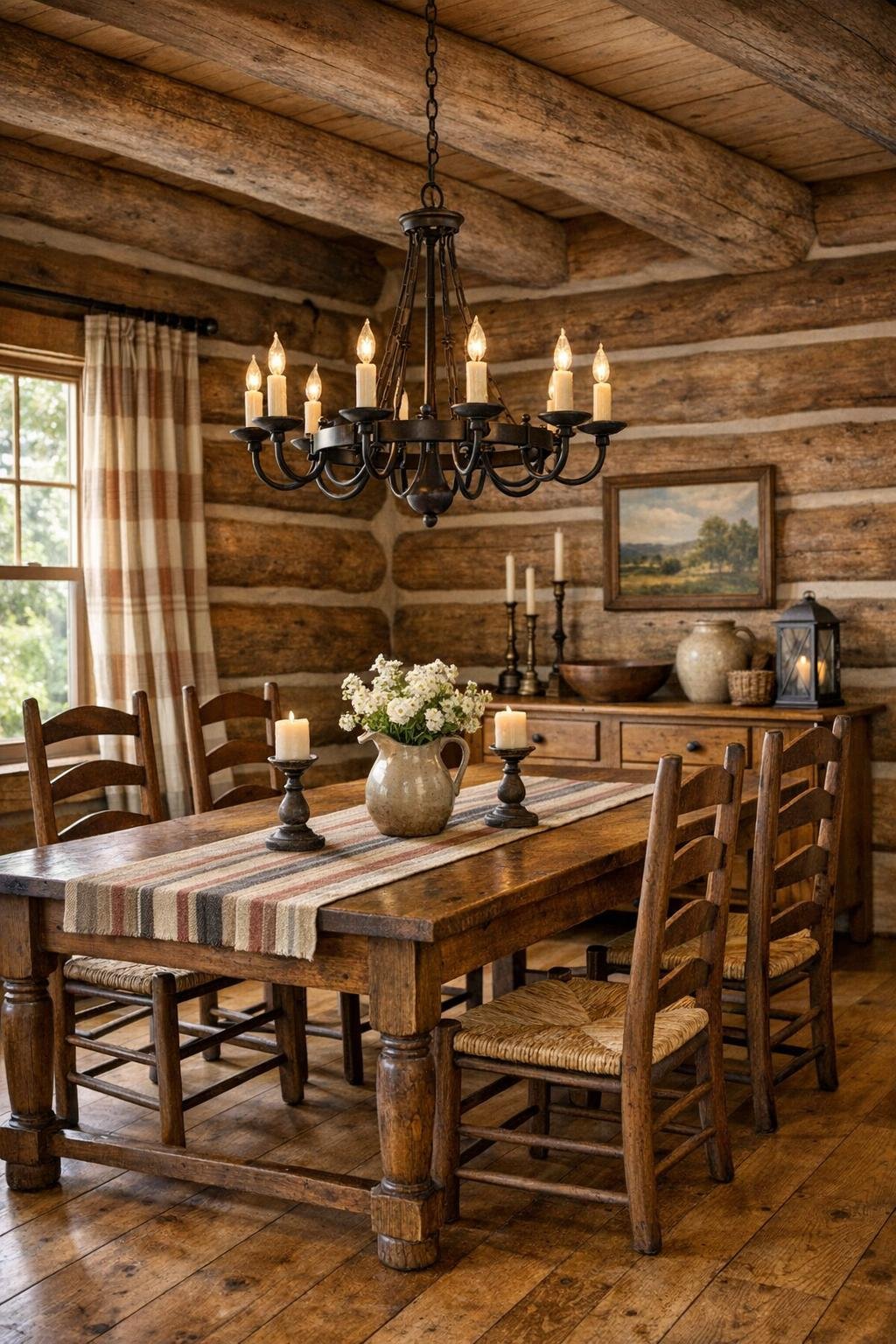
The dining room carries the same sense of warmth but feels a touch more gathered and intimate. I picture a solid wood farmhouse table at the center, long enough for holiday meals and casual weeknight dinners alike, surrounded by ladder-back chairs with simple seat cushions in a muted stripe. There’s no need for anything fancy here because the materials do the work: visible grain, hand-finished surfaces, and enough variation in the wood tones to make the room feel collected over time instead of ordered all at once.
Overhead, a wrought-iron chandelier with candle-style bulbs brings in a little structure and glow, and I’d absolutely keep dimmers on it for flexible lighting. One wall might hold a low hutch or sideboard for dishes, linens, and the kind of serving pieces you only pull out when family comes over. A softer textile moment—maybe a flatweave runner under the table or linen curtains at the windows—keeps all the wood from feeling too visually dense. It’s the type of room that would make even takeout feel a little more special.
Kitchen
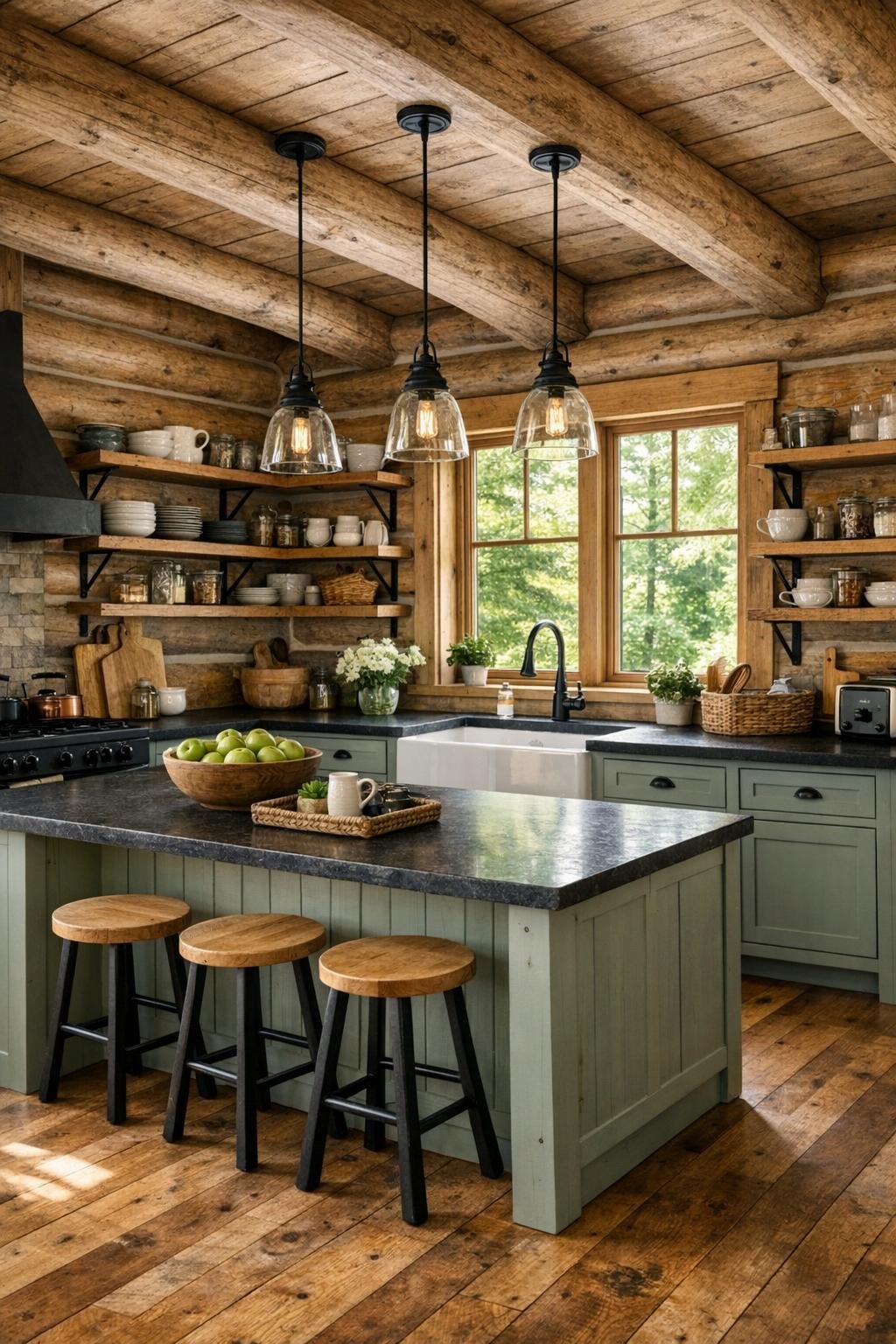
As someone who spends a lot of time thinking about how a kitchen really functions on a busy day, this one stands out for being practical without losing character. The cabinetry feels intentionally simple—painted lower cabinets in a soft sage or creamy taupe, paired with open wood shelving or natural wood uppers to keep the room from feeling boxed in. Soapstone or honed granite counters would be such a smart choice here, especially with their slightly matte finish and forgiving wear. A large apron-front sink under a window is almost a must in a house like this, and I can already imagine washing up while looking out at the trees.
The layout seems built for ease, with a generous island for prep, casual breakfasts, and maybe a grandkid perched on a stool “helping” stir muffin batter. A black or brushed bronze faucet, simple hardware, and understated pendant lights tie the room back to the rustic envelope without making it feel old-fashioned. I’d want plenty of drawers, a tall pantry cabinet, and good task lighting under the shelves—those practical touches matter so much in daily life. This is the kind of kitchen where soups, casseroles, and Sunday pancakes would all feel equally at home.
Bedroom
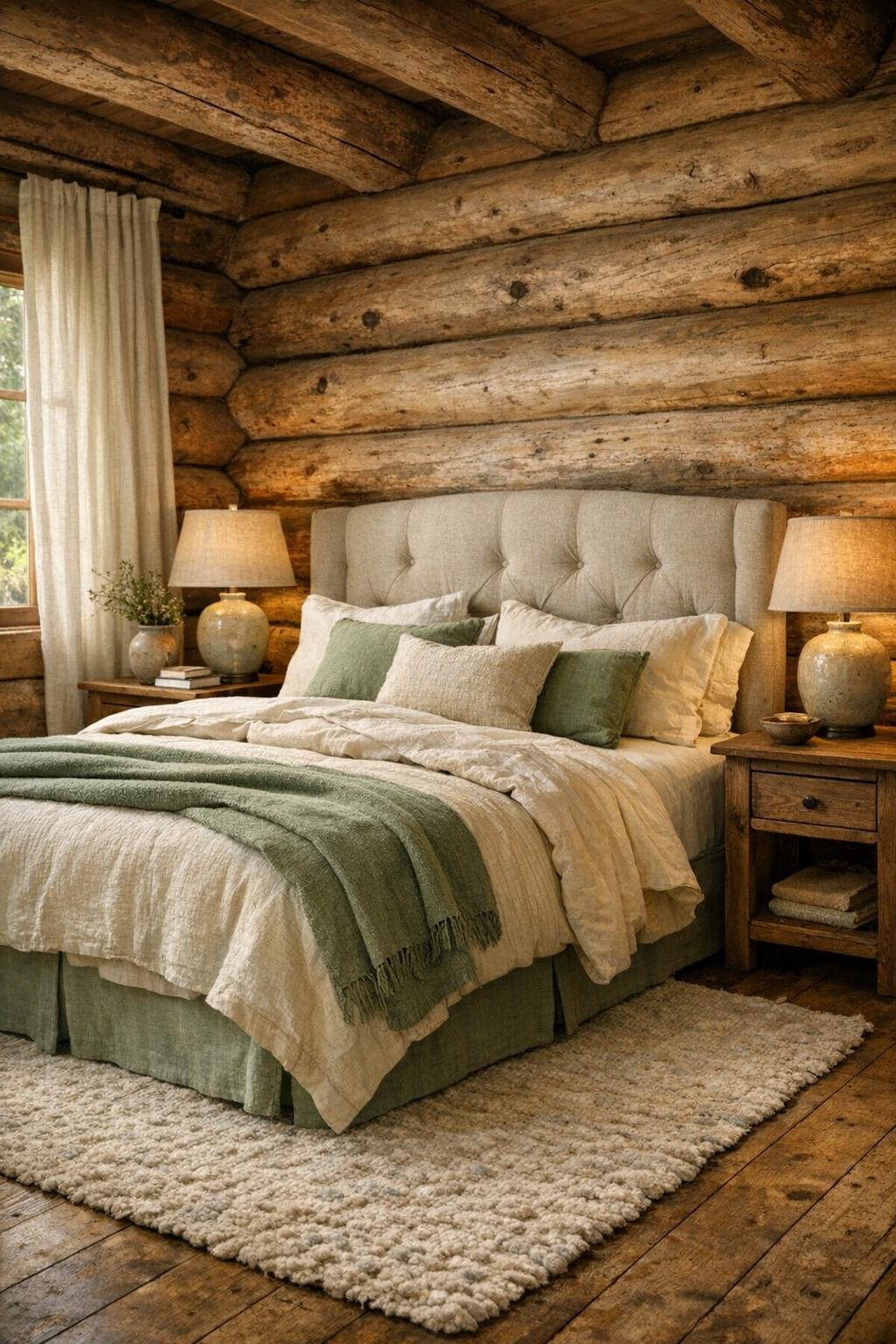
The bedroom takes the rustic shell of the home and softens it in all the right ways. Log walls remain visible, but the bed becomes the visual anchor with an upholstered headboard in a warm neutral fabric that breaks up the wood beautifully. Layered bedding in cream, oatmeal, and faded green keeps the palette restful, while a quilt folded at the foot adds that familiar, homey touch I always love in a retreat-like room. The furniture would be simple and sturdy: a wood dresser, matching nightstands, and maybe a bench at the end of the bed for extra function.
What really makes the room work is the balance of texture. Linen drapes, a wool rug, ceramic lamps, and maybe one vintage landscape print help the space feel settled rather than stark. If there’s a sloped ceiling or exposed rafters, even better—it adds character without needing additional decoration. I also appreciate a bedroom that doesn’t overfill itself, especially for this stage of life; leaving room to move, breathe, and rest is part of the luxury here. It feels peaceful in a very honest way.
Bathroom
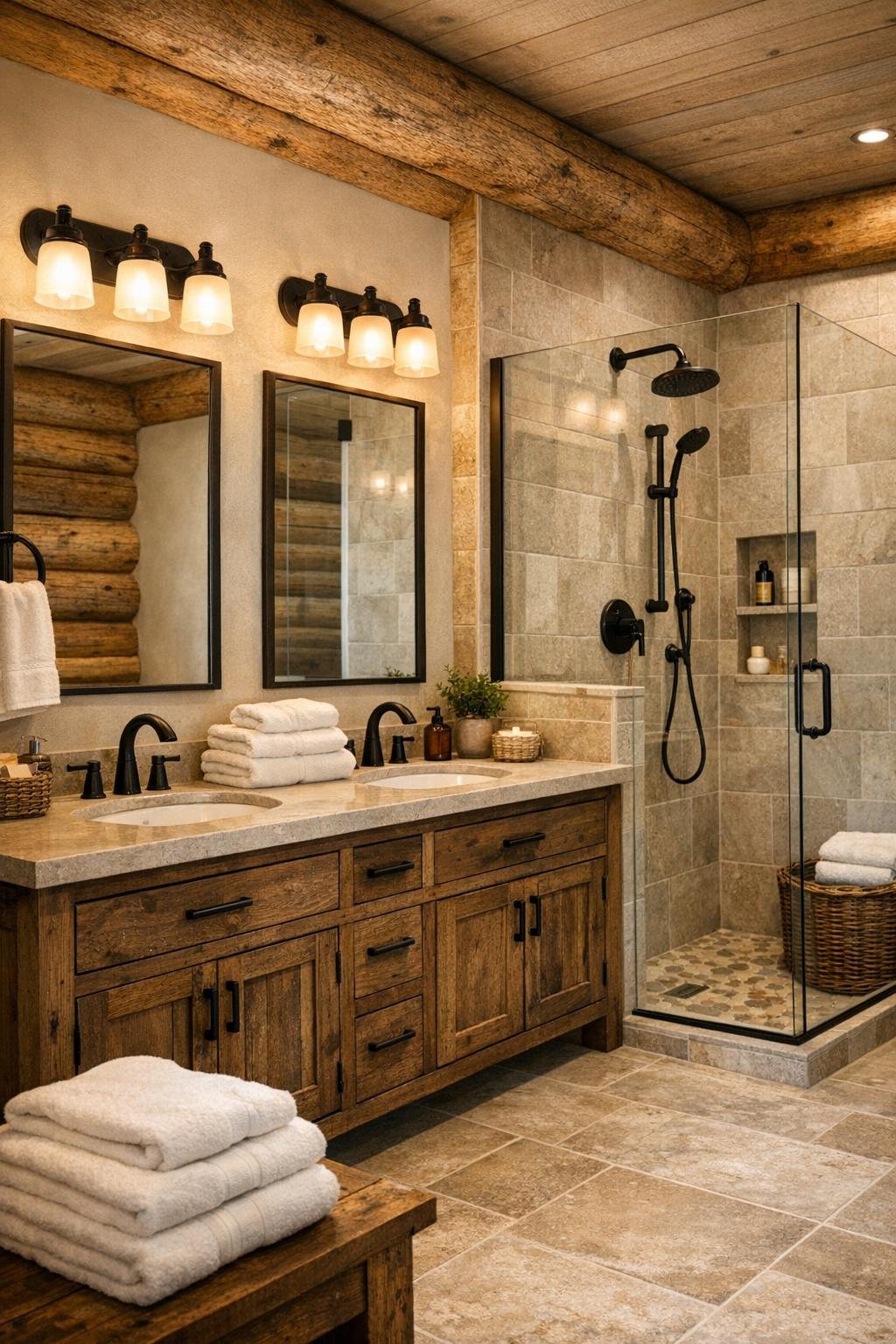
The bathroom feels like a smart extension of the home rather than an afterthought, which honestly makes such a difference. I’d expect to see a wood vanity with a slightly timeworn finish, topped with a pale stone counter that brightens the room and bounces light around. Fixtures in matte black or oil-rubbed bronze give the space definition, and a pair of framed mirrors or one larger mirror over the sink helps keep things open. Because log walls can be visually busy, I like the idea of using quieter materials here—simple tile, soft paint, and clean lines—to create some contrast.
A walk-in shower with clear glass and stone-look tile would make the room feel accessible and current, while a freestanding soaking tub, if there’s space, would be a lovely nod to slower living. Plush white towels, a woven hamper, and maybe a small stool for bath essentials add comfort without clutter. Lighting should be warm and flattering, ideally with a mix of sconces and overhead illumination, so the room works just as well on a dark winter morning as it does during a bright afternoon. It has that practical coziness I think a forever home needs.
Other Areas
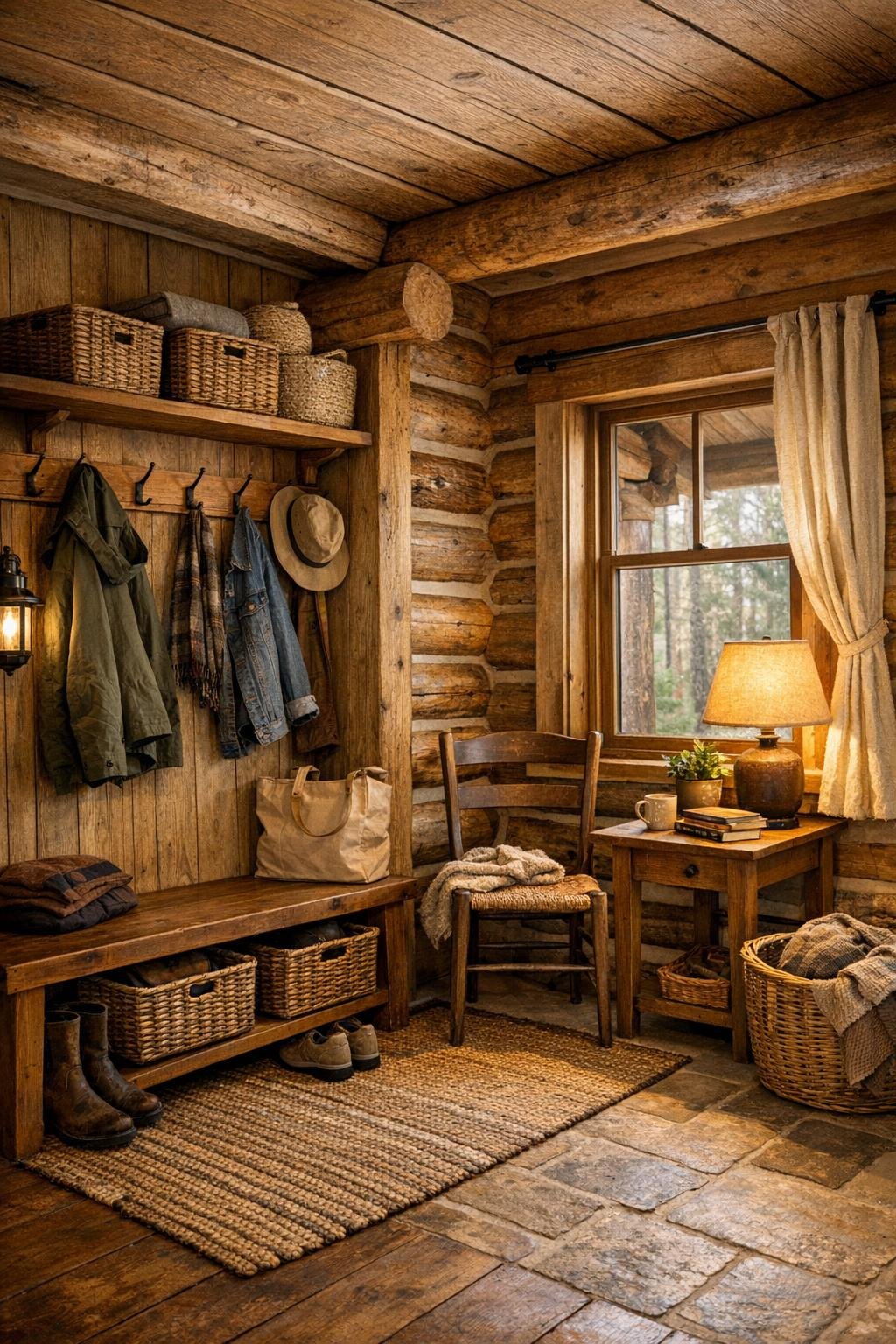
What rounds out this home for me are the in-between spaces that make daily routines easier. A mudroom or entry nook would be essential in a wooded setting like this, with beadboard or durable wall paneling, hooks for coats, a bench for boots, and maybe cubbies underneath for baskets. I can also imagine a compact laundry area tucked neatly behind doors or built into a hallway alcove, designed to be efficient rather than sprawling. In a home rooted in practicality, those spaces matter just as much as the showier rooms.
If there’s a loft, reading corner, or enclosed porch, even better—that’s where the house really starts to tell a fuller story. A small den with bookshelves, a puzzle table, or a writing desk by a window would give the homeowners a place to enjoy quiet hobbies without needing a lot of square footage. These secondary spaces don’t need elaborate finishes; they just need good light, smart storage, and the same steady material palette of wood, stone, iron, and soft textiles. They make the house feel complete, comfortable, and ready for real life.
Why You'd Live Here
You’d live here because it offers something a lot of homes chase but don’t always achieve: comfort with character. Every room seems shaped around the idea of living well, not impressing from a distance. The rustic materials are real and tactile, but they’re paired with sensible layouts, manageable scale, and details that support daily routines. I think that combination is especially appealing if you’re entering a season of life where home should feel simpler, softer, and more intentional.
More than anything, this house feels like a fresh start that doesn’t erase where it came from. It turns a modest structure into a place of warmth, memory, and ease, which is probably why it lingers in my mind. I can picture hearty meals in the kitchen, blankets by the fire, muddy boots by the door, and a life that feels connected to the landscape outside. For me, that’s the real beauty of it: not just how it looks, but how naturally it seems built to be lived in.