From the road, this farmhouse keeps its secrets close. The siding is a faded white, softened by weather and time, and the silhouette is as straightforward as a good pie crust: pitched roof, steady porch, windows set with practical symmetry. But step a little closer, and the whole place begins to tell a richer story. It stands in a rural setting that feels deeply Midwestern to me, with open sky, working land, and that quiet kind of beauty that never asks for attention yet always earns it.
Inside, the house opens into something far more layered and soulful than its plain exterior suggests, a concept design imagined with remarkable sensitivity. What makes it special is the way it honors farmhouse tradition without turning stiff or overly polished. I see honest materials, gentle light, and rooms that feel lived-in before a single coat is hung by the door—spaces that balance refinement with the comforting, familiar spirit of a home where people gather, cook, linger, and stay awhile.
Exterior
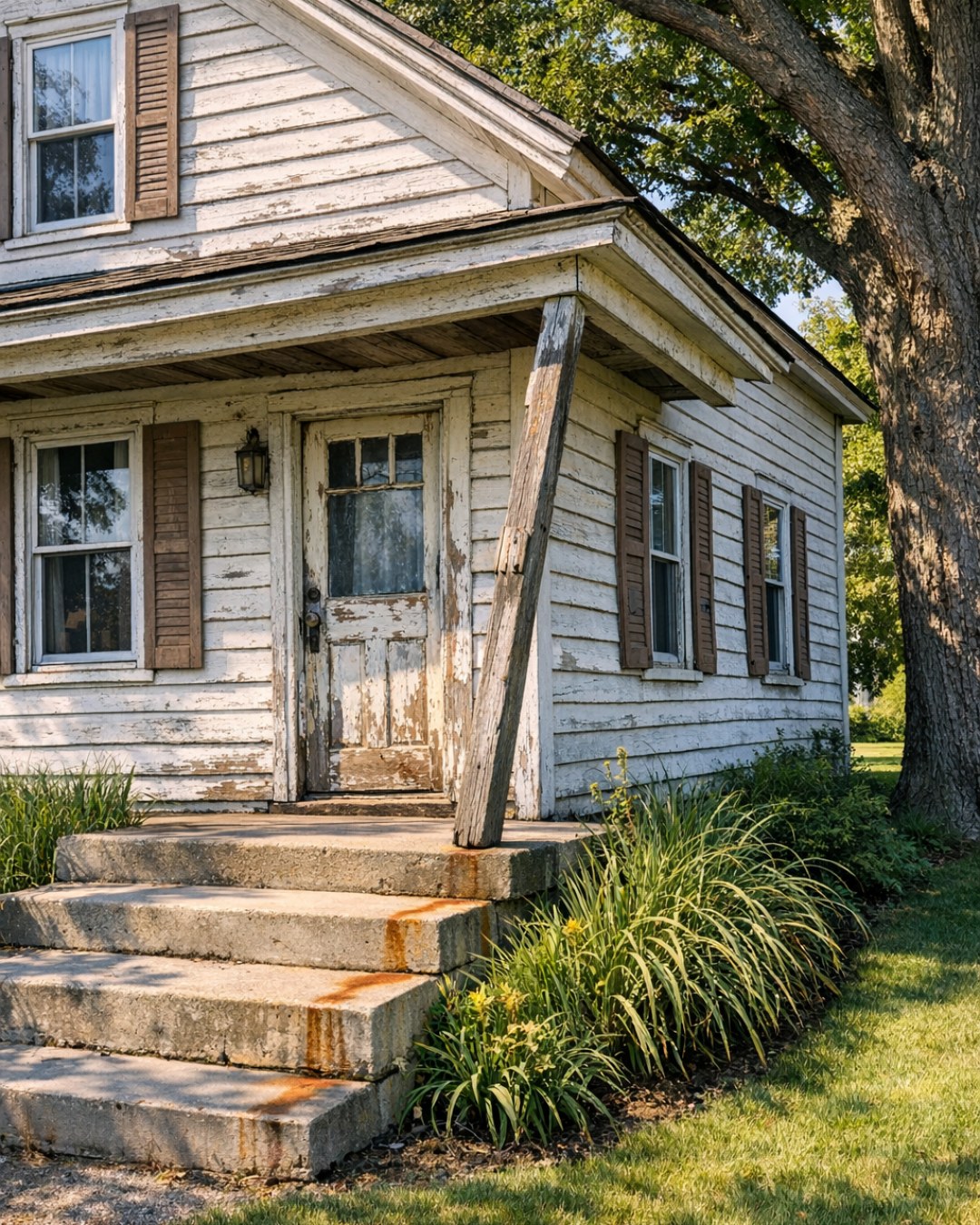
The exterior is restrained in the best possible way. Faded white clapboard gives the house its modest character, while a galvanized metal roof and simple black-framed windows lend just enough contrast to sharpen the lines. I especially like the deep front porch, which stretches across the facade with square posts, a painted wood floor, and the sort of ceiling that would glow beautifully at dusk under a pair of uncomplicated lanterns. Nothing feels fussy. The landscaping follows the same hand: gravel, native grasses, clipped hedges, and a few old-fashioned flowering shrubs that look as though they might have been passed down with stories attached.
What keeps the exterior from feeling too plain is the texture. The chalky finish of the siding, the slight sheen of the roof, the grain of porch decking underfoot, and the stone foundation all work together quietly, like ingredients in a dish that does not need showing off because every part is doing its job. There is a practical grace here that I admire. It feels rooted, wind-tested, and welcoming, with the kind of front approach that invites muddy boots, grocery sacks, and somebody pausing a minute to take in the evening air.
Living Room
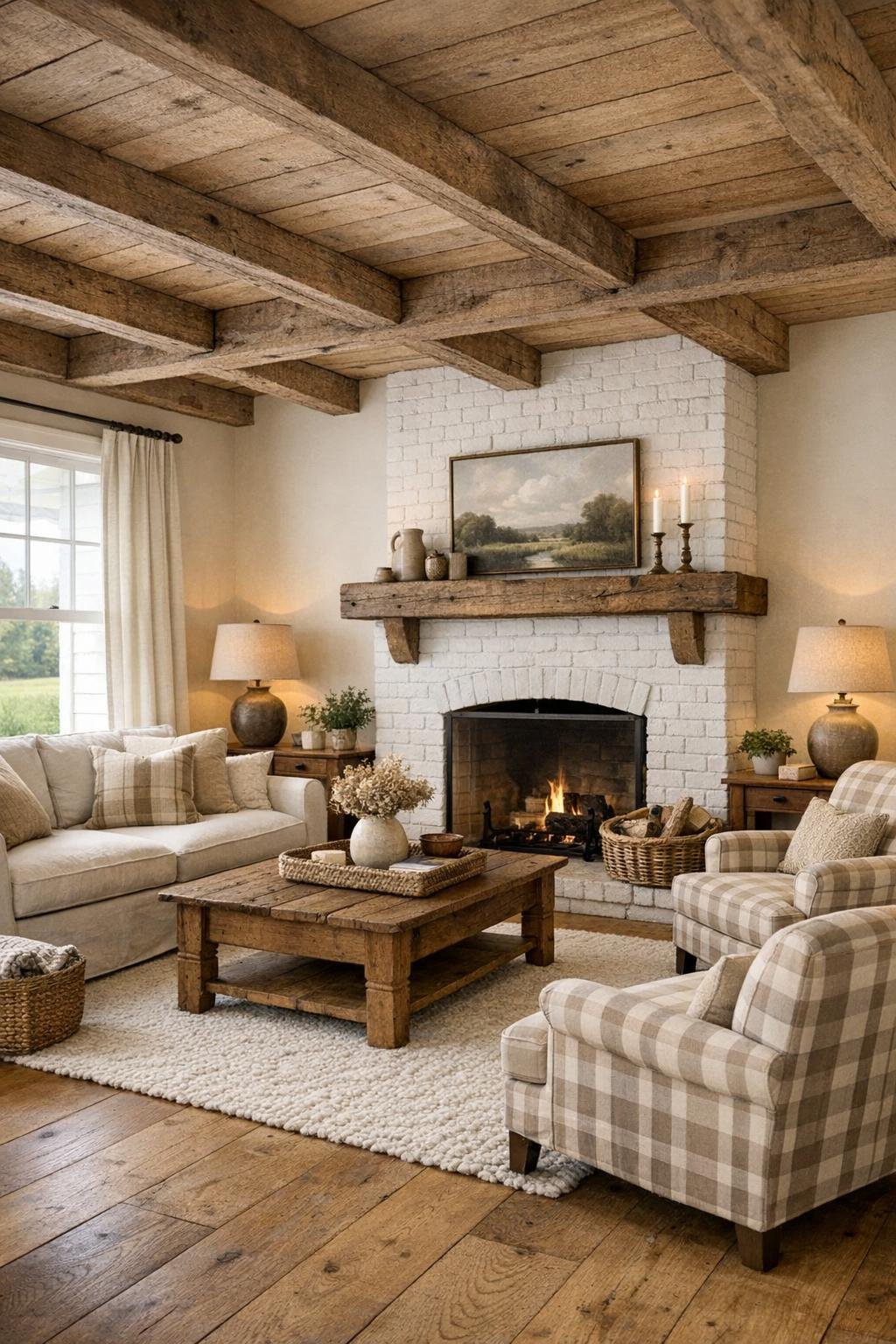
The living room carries the farmhouse spirit indoors, but with a lighter, more carefully layered hand than one might expect. Wide-plank oak floors in a warm matte finish ground the space, while walls in a soft limewashed cream bounce daylight around without turning stark. Exposed ceiling beams, aged to a weathered brown, add depth overhead. The seating arrangement is generous and relaxed: a slipcovered sofa in oatmeal linen, two spindle-back lounge chairs with muted plaid cushions, and a broad upholstered ottoman in place of a formal coffee table. It all feels chosen for comfort first, then beauty, which is usually the right order if you ask me.
Texture does much of the work here. There is a nubby wool rug underfoot, washed linen drapery, a worn leather side chair tucked near the fire, and old wood case pieces that bring in a little history without making the room feel staged. The fireplace itself is simple but handsome, with painted brick, a thick reclaimed timber mantel, and sconces that cast a low amber glow in the evening. I can imagine a rainy afternoon here as clearly as anything—lamplight on, a quilt over the arm of the sofa, and enough breathing room in the layout that conversation comes easy.
Dining Room
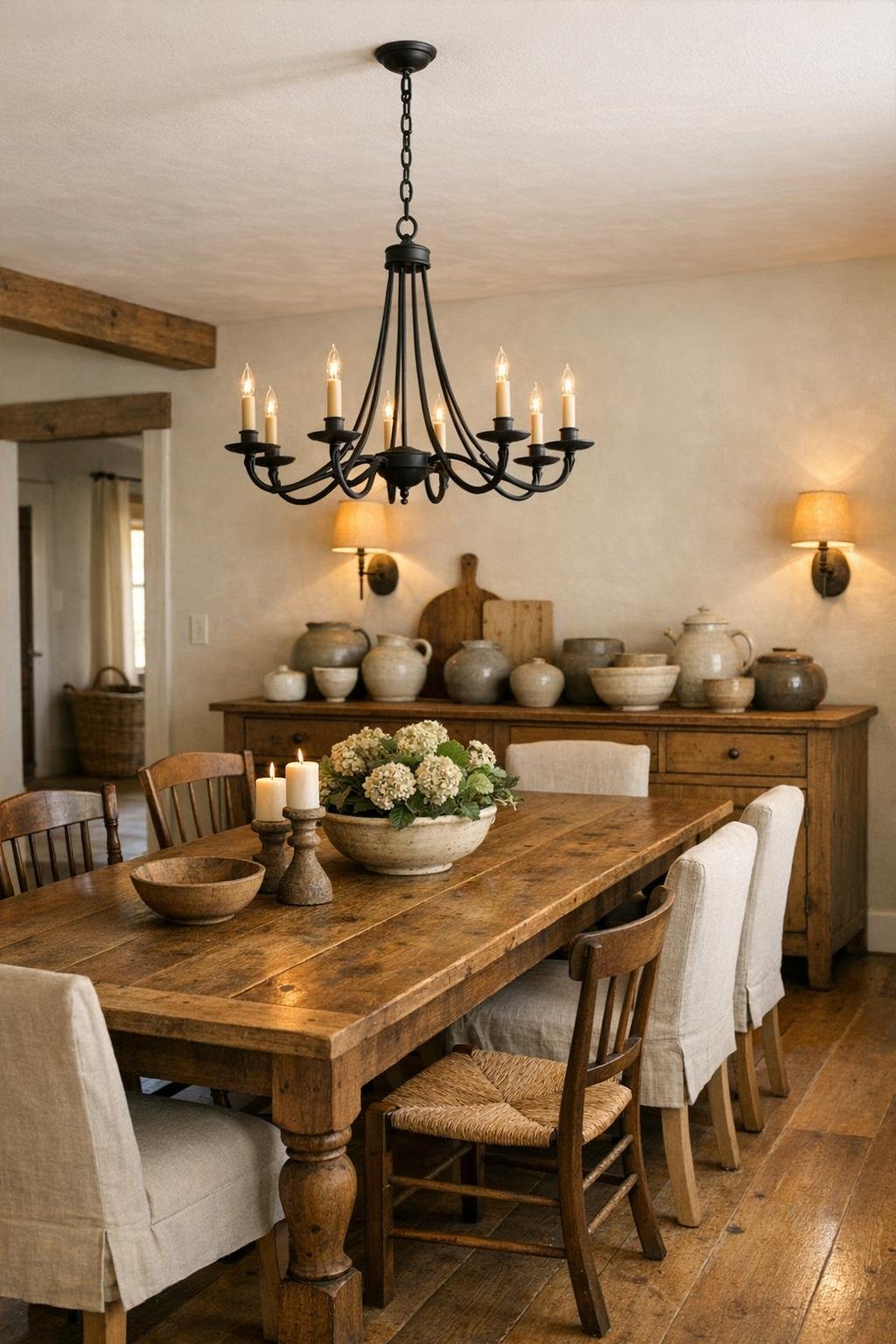
The dining room feels like the heart of shared time, and I was immediately taken with its balance of utility and grace. At the center sits a long solid-wood table, likely white oak or ash, with a hand-rubbed finish that shows every lovely bit of grain. Around it, a mix of seating keeps the room from becoming too formal: straight-backed wooden chairs on the sides and an upholstered host chair at each end. Overhead, a linear iron chandelier hangs low enough to shape the room without crowding it, and the scale is just right—substantial, but not heavy.
The palette stays quiet and grounded, built from creamy walls, warm timber, black metal accents, and a whisper of muted green in the curtains or seat cushions. A large hutch or sideboard provides storage and presence, displaying stoneware, glass pitchers, and perhaps a few inherited pieces that make a house feel human. I like that the room seems ready for both Sunday dinner and an ordinary Tuesday supper. There is enough polish to make a gathering feel special, but enough softness in the finishes and lighting that no one would hesitate to pull up a chair and ask for seconds.
Kitchen
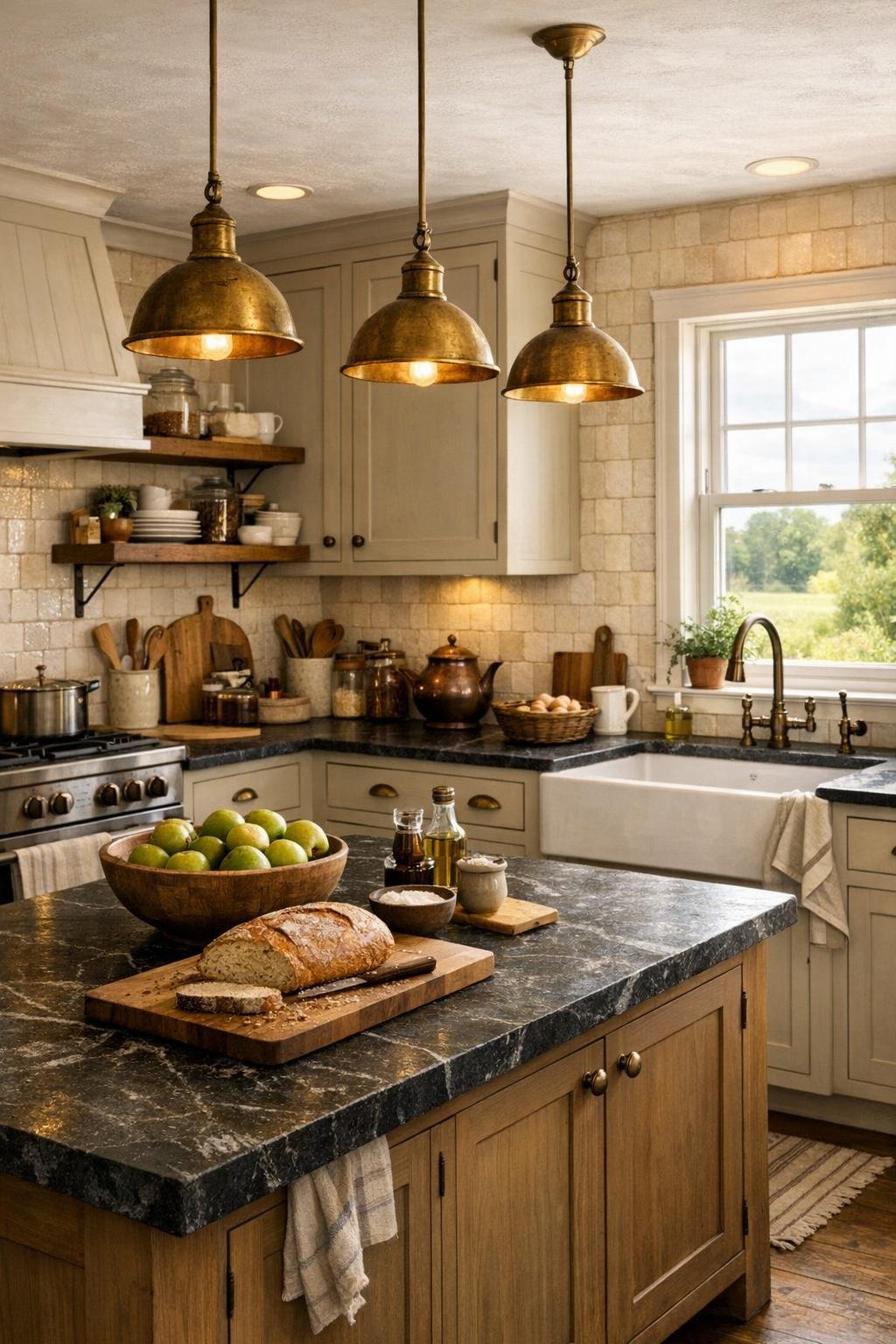
The kitchen is where this home truly shines, and perhaps that is where my own heart lingers longest. It is spacious without feeling grand, built for real work as much as for admiration. Cabinetry in a warm painted putty tone reaches nearly to the ceiling, paired with aged brass latches and cup pulls that catch the light gently. The island is substantial, topped in honed soapstone, with enough room for rolling biscuit dough, setting out pies to cool, or letting a grandchild sit and chatter while supper comes together. Along the perimeter, creamy zellige-style tile and open oak shelving soften the harder-working surfaces.
What makes the room remarkable is its understanding of rhythm. There is likely a proper range with a plaster or painted wood hood, a deep apron-front sink set beneath a window, and thoughtful task lighting in the form of shaded sconces and small pendants over the island. The materials are tactile and forgiving: stone, wood, unlacquered metal, and painted cabinetry that will only improve with wear. I appreciate a kitchen that does not seem afraid of being used. This one feels ready for canning jars, bread boards, simmering stock, and all the small domestic rituals that turn cooking into a kind of memory-making.
Bedroom
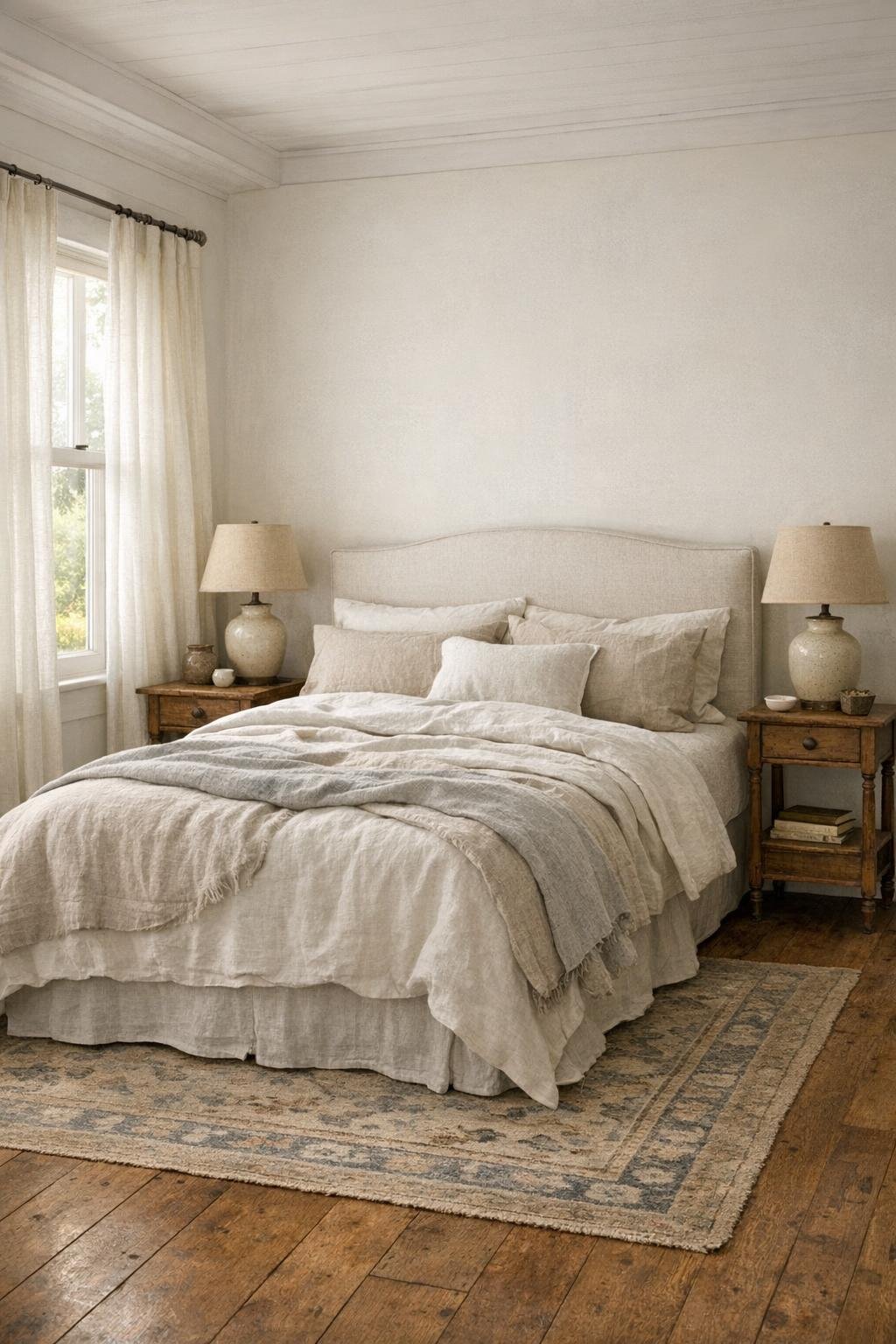
The bedroom steps away from the busy heart of the house and settles into something softer and more restorative. The palette leans pale and hushed—warm white walls, weathered wood, flax linen, and perhaps the faintest touch of dusty blue or sage. A simple bed with a tall upholstered or wooden headboard anchors the room, dressed in layered natural bedding that looks inviting rather than overly arranged. On either side, mismatched bedside tables lend a collected feeling, each topped with a ceramic lamp that gives off a low, buttery light at night.
I am especially fond of bedrooms that do not try too hard, and this one understands restraint. The floors remain wood, partly covered by a vintage-style rug with softened pattern and color. Window treatments are light and airy, enough for privacy but still kind to morning sun. An old bench at the foot of the bed, a painted wardrobe, and a quiet reading chair in the corner make the room feel complete without crowding it. The overall effect is deeply restful, like fresh sheets dried outside and folded by practiced hands.
Bathroom
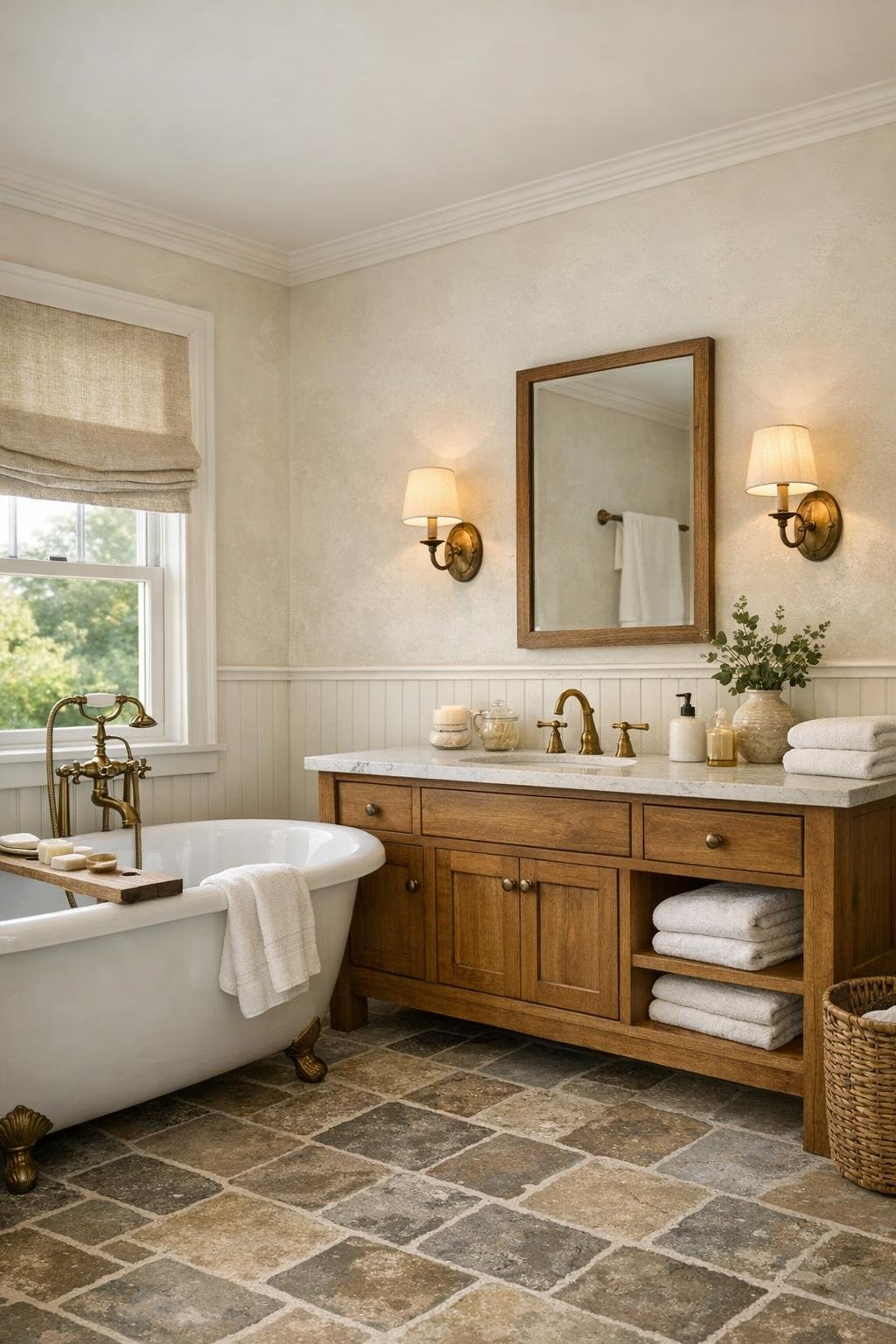
The bathroom continues the home's gentle conversation between practicality and beauty. A freestanding tub sits as the focal point, likely near a window where daylight can wash across its curved surface. The walls may be finished in painted beadboard or plaster, while the floor shifts to stone or small-format tile in a pattern that feels traditional without becoming precious. A wood vanity, either stained medium brown or painted in a softened earth tone, adds warmth beneath a countertop of marble or soapstone, with bridge faucets in unlacquered brass completing the picture.
What I like most is that the room seems designed for lingering. The lighting is layered with care—sconces flanking a simple framed mirror, overhead light that stays understated, and enough softness in the finish choices that the room feels calm from the moment you enter. Plush cotton towels, a small stool for folded linens, and perhaps a sprig of green in a crock by the sink keep things grounded and domestic. Even with its polished details, it still belongs to the farmhouse, speaking the same language of honest materials and quiet comfort.
Other Areas
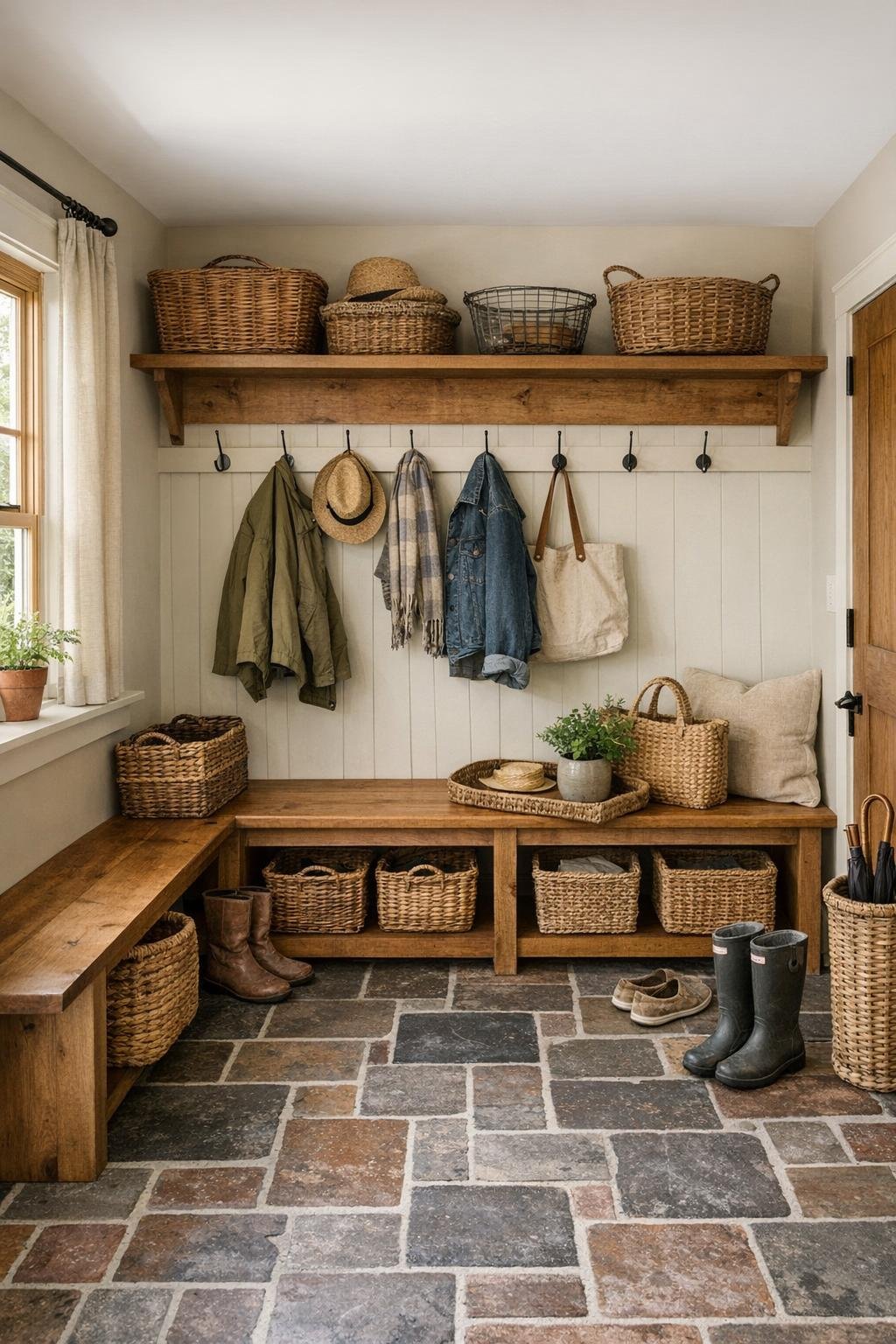
The in-between spaces are often what convince me a home has been thoughtfully considered, and this farmhouse handles them beautifully. A mudroom near the back entrance is outfitted with built-in benches, pegs for coats, woven baskets, and durable brick or slate flooring that can take a season's worth of dirt without complaint. I can just picture boots lined up by the door and a basket waiting for garden clippings or market produce. Hallways are kept simple but not bare, with framed landscapes, runner rugs, and wall colors that flow easily from one room to the next.
There is also room, I suspect, for a small office nook, upstairs landing, or reading alcove tucked under the eaves—those humble bonus spaces farmhouse homes do so well. A laundry room might carry the same handsome utility as the kitchen, with shaker cabinets, a deep sink, and countertop space for folding. Nothing is wasted, and nothing feels ornamental for its own sake. Even the transitional zones have warmth, function, and a bit of soul, which is often what makes a house feel not just beautiful, but dependable.
Why You'd Live Here
You would live here because it understands something many homes forget: comfort is not the enemy of beauty. This farmhouse does not rely on flashy gestures or perfection. Instead, it offers proportion, warmth, and material honesty—the sort of things that grow more appealing the longer you live with them. Every room seems to support real life, from cooking and gathering to resting and working, and that usefulness gives the whole home a dignity I find deeply appealing.
More than that, you would live here for the feeling. It has the plainspoken confidence of rural architecture and the interior richness of a home that has been thoughtfully, lovingly composed. To my eye, that is a powerful combination. It feels connected to the past without being trapped there, polished without losing its manners, and welcoming in a way that is hard to fake. In short, it is the kind of place that makes everyday life feel a little fuller, a little calmer, and a good deal sweeter.