From the road, this faded white farmhouse has the kind of quiet presence I always notice a beat late. The exterior is modest, a little weather-softened, and deeply familiar in the best Midwestern way, but once I moved mentally past that first humble impression, the house opened up into something far more layered: a warm, edited blend of rural architecture and polished contemporary living. This concept design leans into restraint rather than spectacle, and that is exactly what gives it its staying power.
What makes the home special is the way it handles contrast. There is old-soul character in the lime-washed surfaces, plank floors, and simple forms, but the interiors are composed with a cook’s sense of usefulness and a designer’s eye for balance. Nothing feels overdone. Every room seems to understand proportion, natural light, and the tactile pleasure of honest materials, creating a home that feels grounded, calm, and deeply livable.
Exterior
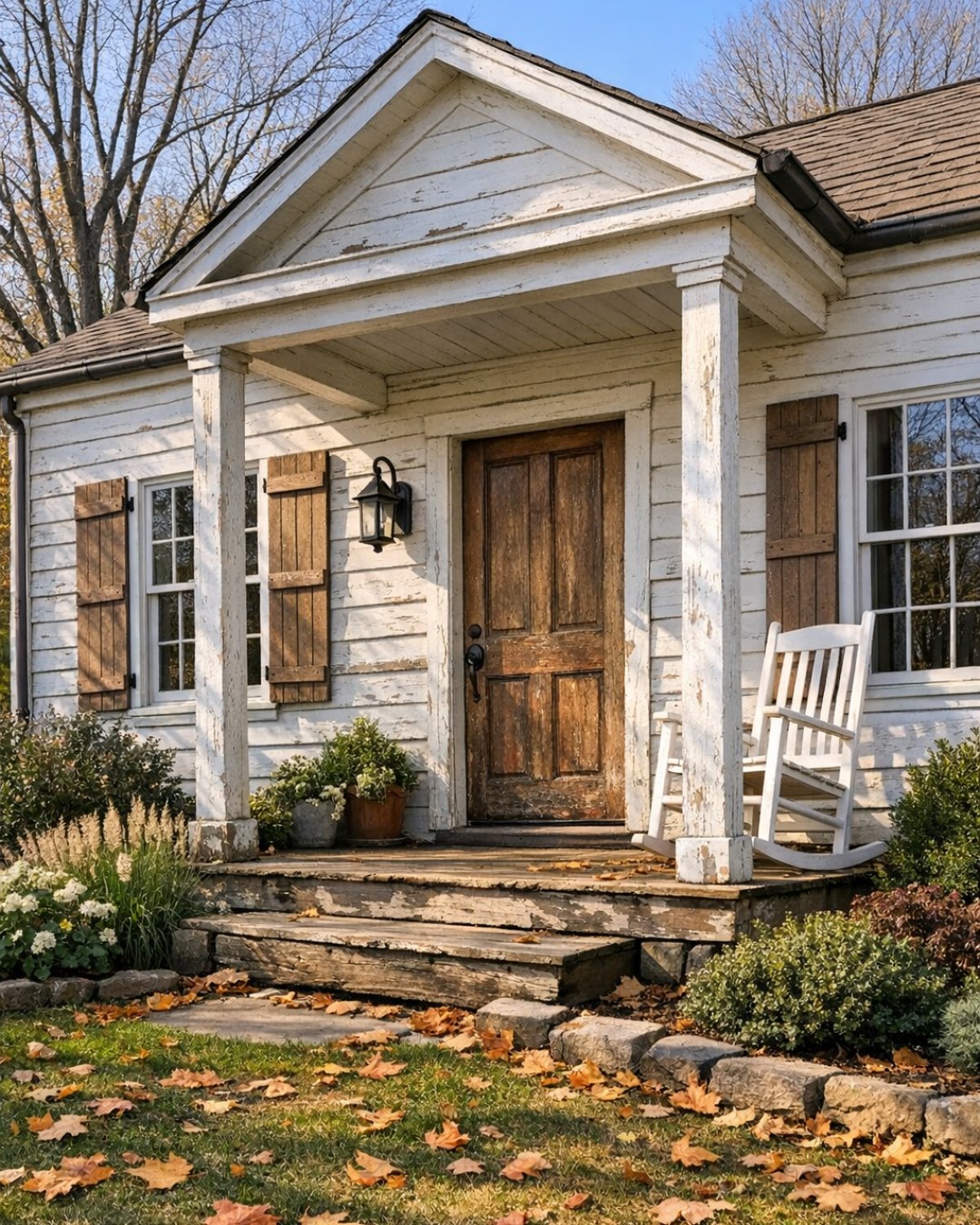
The farmhouse exterior keeps its original language simple: faded white siding, a dark metal roof, and a front porch that stretches just enough to cast a forgiving shadow across the façade. I like that the palette does not try too hard. The white is slightly chalky rather than crisp, the trim is subdued, and the weathered finish gives the home the kind of visual depth newer builds often have to manufacture. Black-framed windows sharpen the composition and keep the house from drifting into nostalgia.
What really works here is the site relationship. Low native grasses, gravel paths, and restrained foundation plantings let the house remain the focus without feeling isolated. A few worn stone steps and simple porch lighting give the approach a practical, welcoming rhythm. It feels like a place where muddy boots are expected, dinner might already be simmering inside, and beauty comes from use, not from fuss.
Living Room
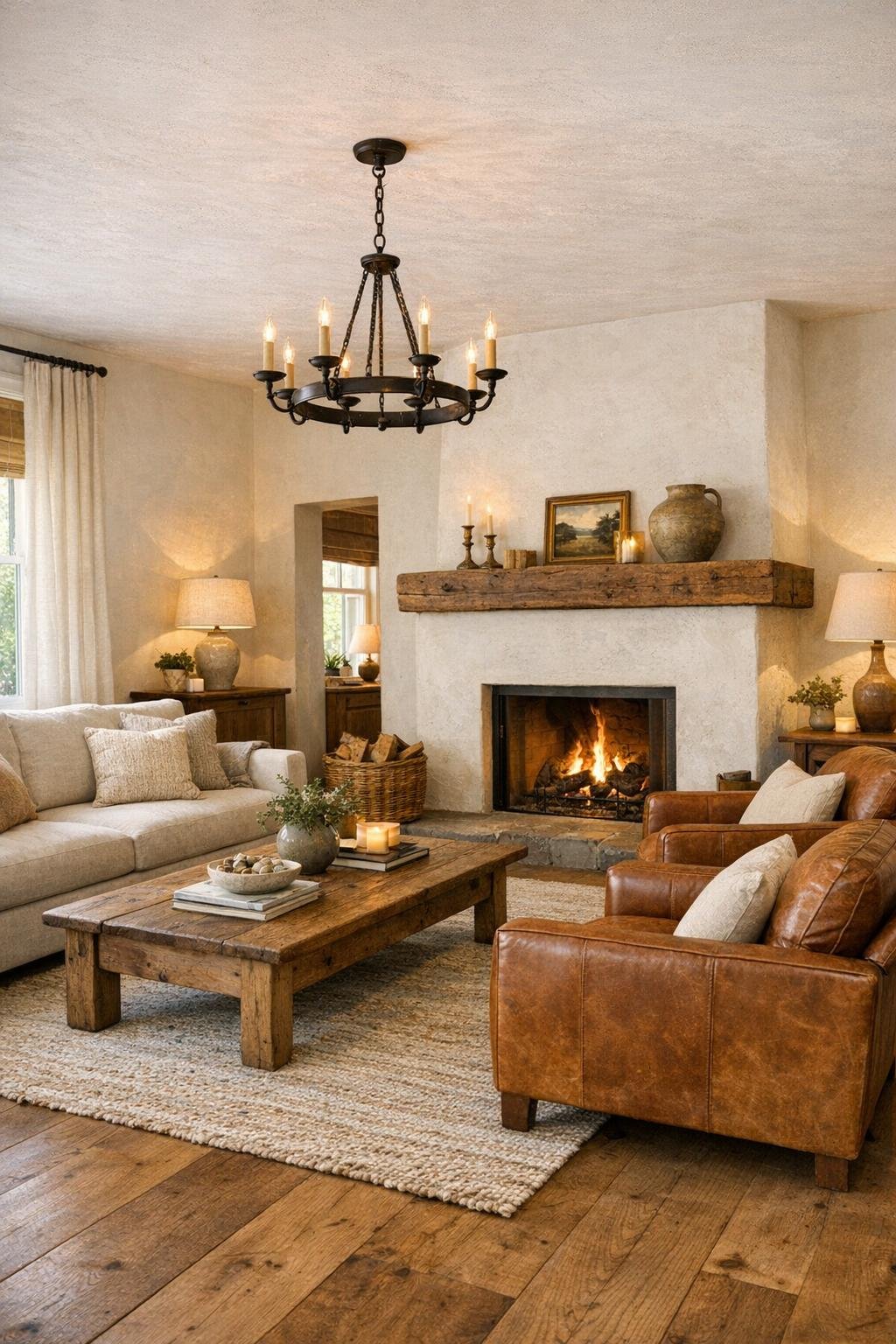
The living room is where the farmhouse softness becomes more intentional. Wide-plank oak floors in a muted natural finish anchor the space, while warm white walls and a lightly textured ceiling bounce daylight around without turning stark. The furnishings stay close to the architecture: a deep linen sofa in oatmeal, two caramel leather chairs with clean lines, and a substantial wood coffee table that looks as though it could survive years of coffee cups, board games, and heavy cookbooks. I especially like the mix of finishes here—matte black metal, aged brass, and pale wood—because it keeps the room from feeling too precious.
Lighting is handled in layers, which always makes a room feel more intelligent to me. A pair of ceramic lamps adds a low evening glow, while a sculptural iron chandelier quietly marks the center of the seating area. The fireplace surround is simple plaster, with a reclaimed timber mantel that introduces a little roughness against the tailored upholstery. The overall effect is deeply comfortable, but not sloppy; it feels edited in the same way a well-tested recipe does, with nothing extra and nothing missing.
Dining Room
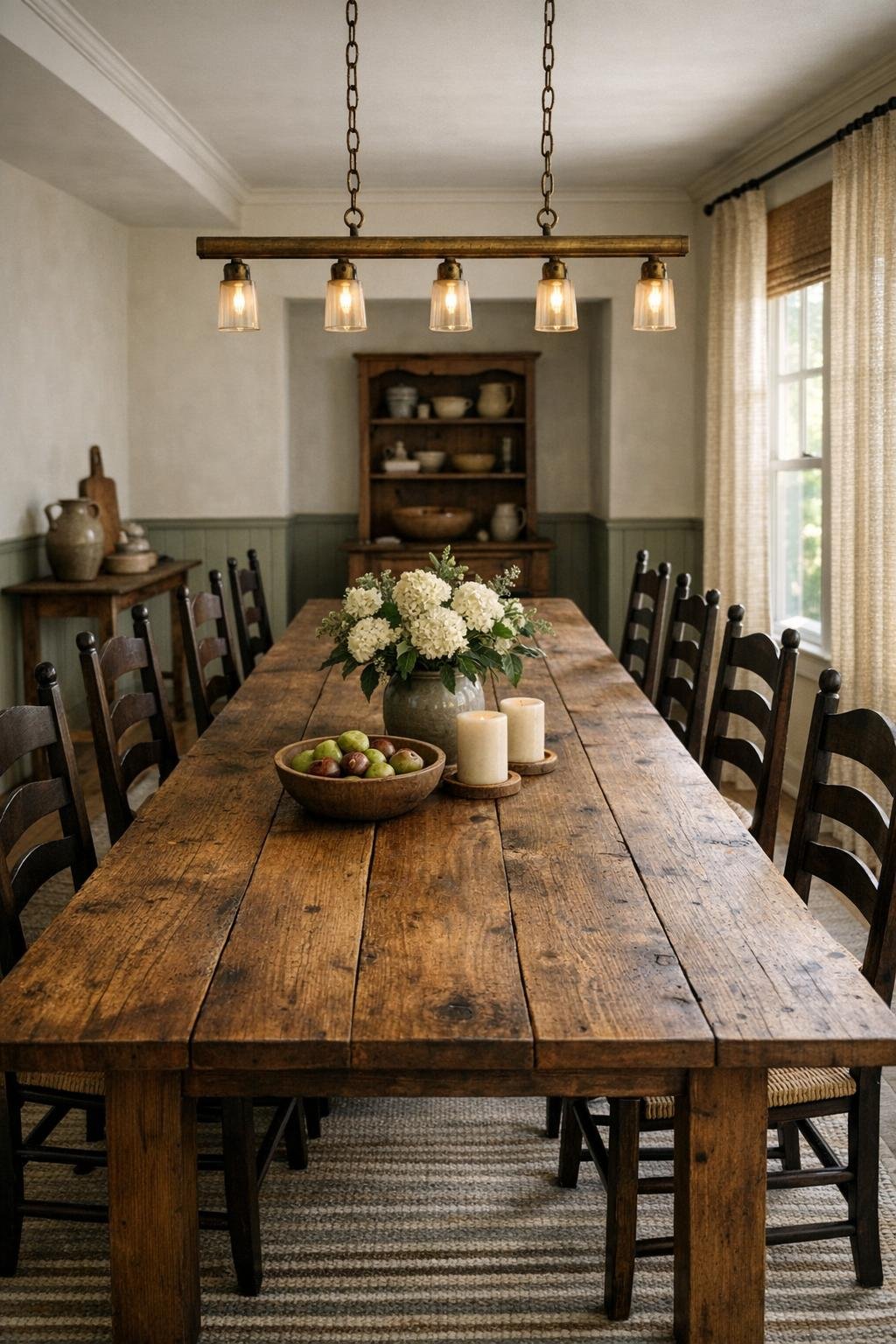
The dining room carries more formality, but only just enough. A long solid-wood table with visible grain runs nearly the length of the room, surrounded by ladder-back chairs in a dark stained finish that grounds the lighter envelope. I can easily picture this table carrying anything from a loaf of rye and a bowl of soup to a full holiday spread. The walls are kept pale and quiet, but a lower band of painted paneling adds structure and gives the room a sense of permanence.
Overhead, a linear fixture in aged brass introduces a cleaner, more current line, and that contrast is what keeps the room from reading as purely rustic. Soft woven curtains filter the light rather than blocking it, and a flatwoven wool rug in a faded brick and flax pattern brings in a little muted color underfoot. The room feels generous without being grand, which is often the sweet spot for dining spaces: enough polish to make a weeknight feel elevated, but enough ease that nobody worries about setting down a serving dish.
Kitchen
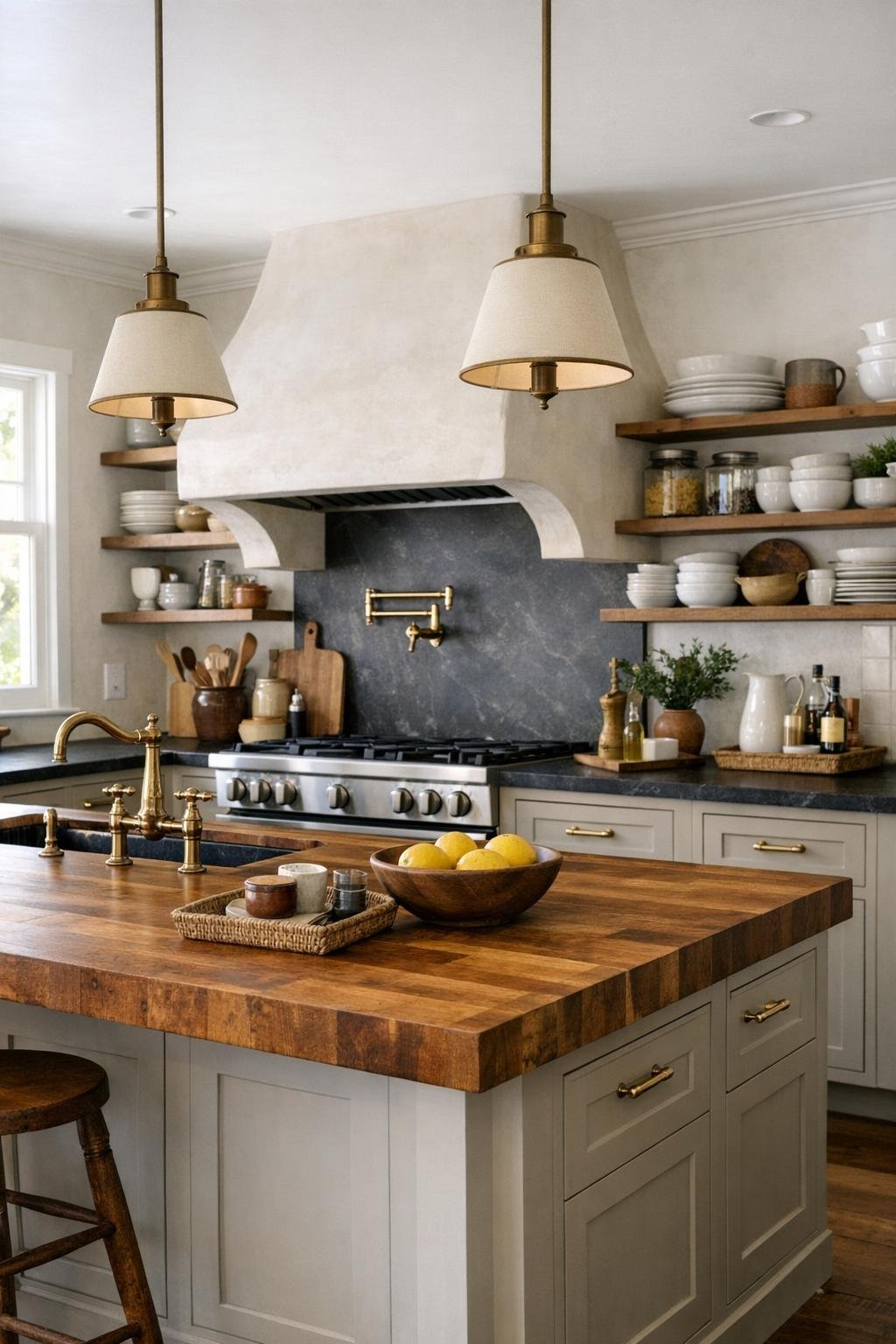
The kitchen is, not surprisingly, the room I studied most closely. It is beautifully planned for someone who actually cooks. The cabinetry is painted a soft putty color, which sits comfortably against creamy walls and prevents the room from feeling either too white or too heavy. Soapstone countertops bring a quiet depth, and the slight matte texture is exactly right in a house like this. A broad central island, topped in thick butcher block, introduces warmth and utility at once; it is the kind of surface that invites pie dough, chopped herbs, and a tray of cooling biscuits without ceremony.
Open shelving is used sparingly, which I appreciate, and the storage appears thoughtful rather than decorative. A substantial range sits beneath a plaster hood, while unlacquered brass hardware and bridge faucets add just enough glow. Under-cabinet lighting keeps the work surfaces practical, and a pair of shaded pendants over the island softens the room after dark. The whole kitchen feels seasoned and competent, like a favorite cast-iron pan: handsome, reliable, and improved by use.
Bedroom
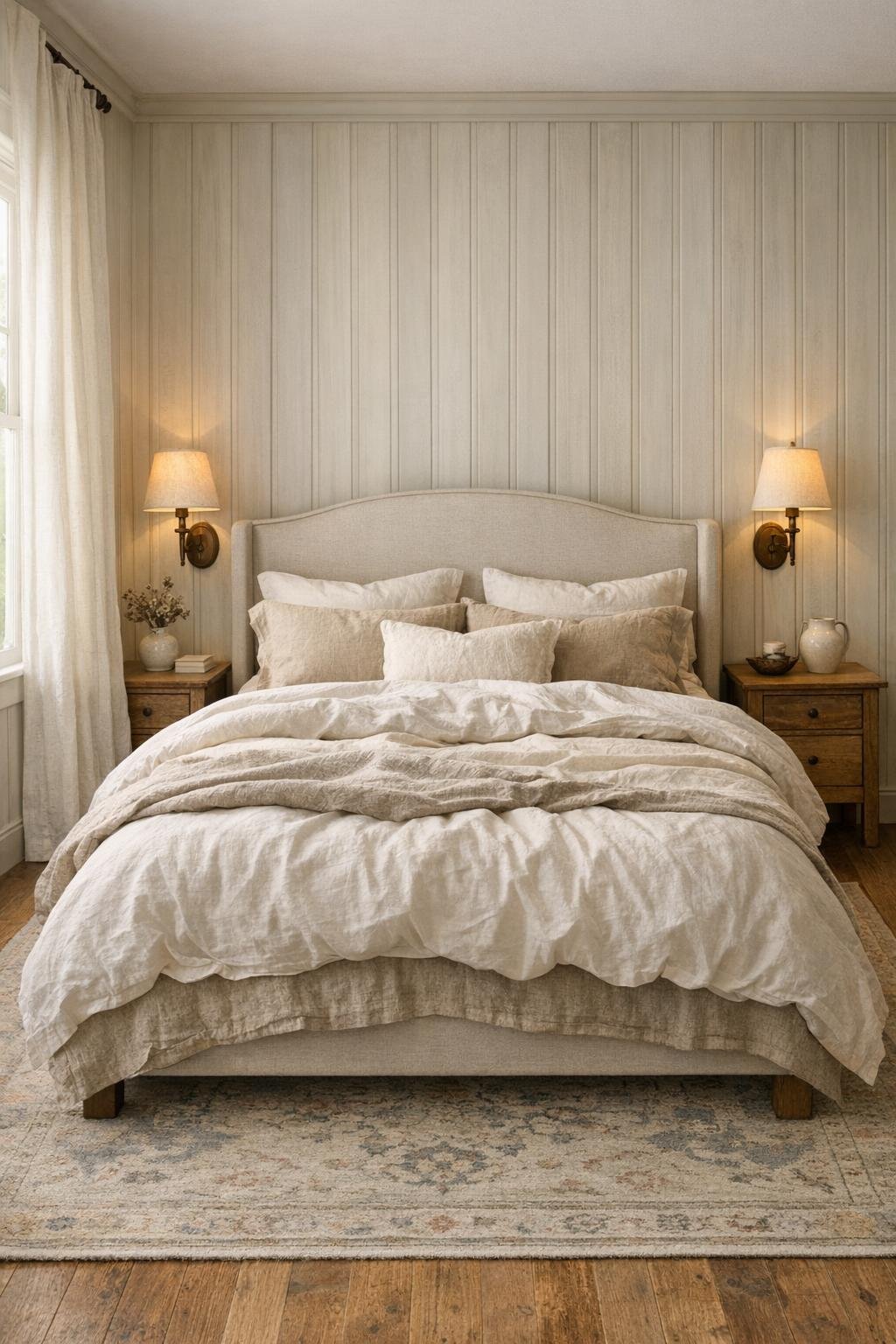
The bedroom is quieter than the main living spaces, and that change in tempo feels deliberate. The palette shifts toward softer tones—warm ivory, weathered flax, and gentle taupe—with layers of natural linen and cotton that make the room feel breathable and unforced. A simple upholstered bed in a neutral fabric sits against a paneled wall, and the symmetry of matching nightstands and shaded sconces gives the room a settled, restorative order.
What I like most is the restraint. There is no clutter of accent furniture, just a well-proportioned bench at the foot of the bed, a vintage-inspired area rug with muted pattern, and window treatments that fall in easy folds. The wood tones remain natural and matte, tying the room back to the rest of the house. It feels like a room meant for genuine rest, not performance, and that distinction always matters more than people think.
Bathroom
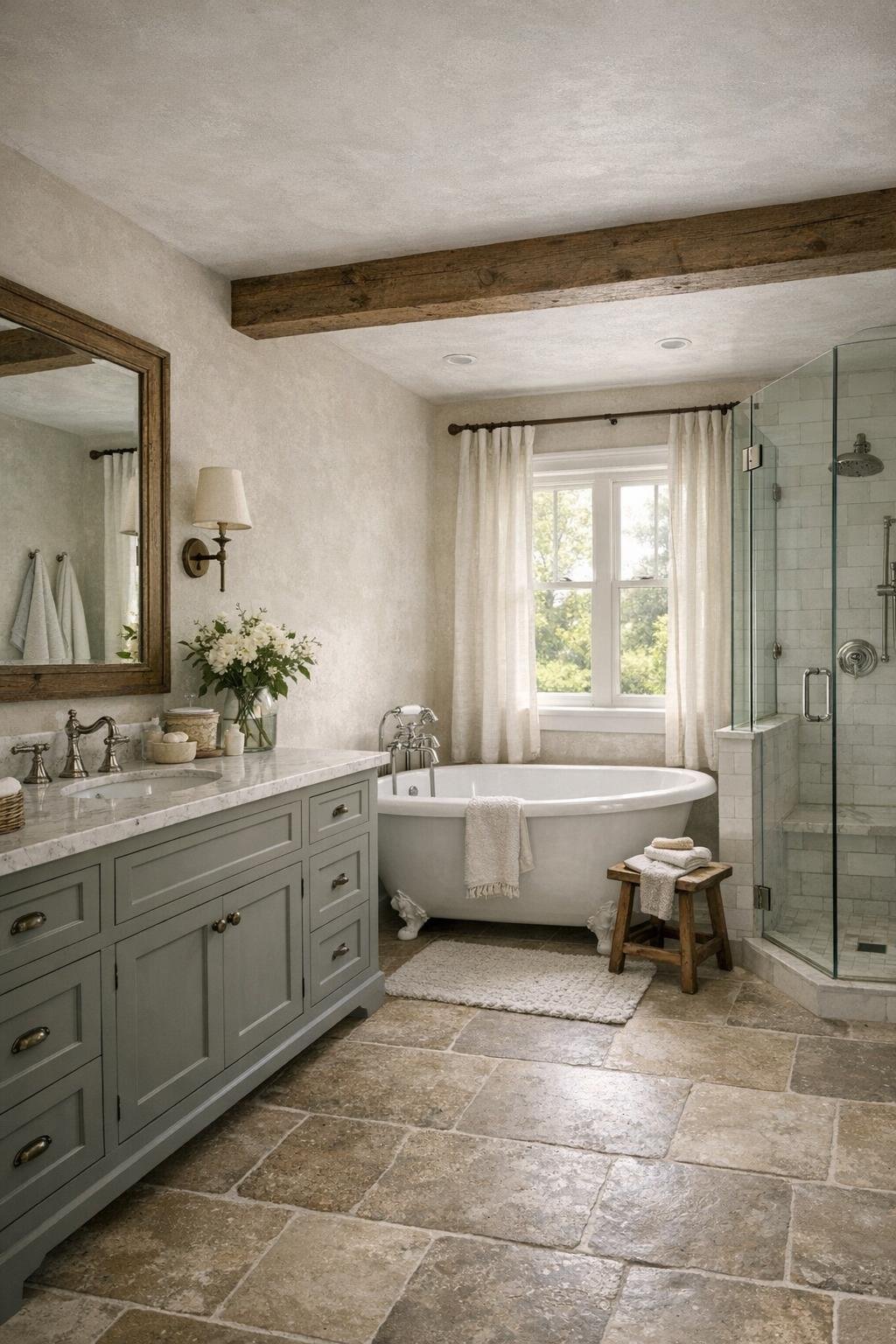
The bathroom takes the same farmhouse language and pares it down even further. I can see honed stone floors here, a painted wood vanity in a dusty neutral, and countertops in pale marble with delicate veining. The fixtures are classic but not fussy—bridge faucets, simple cross handles, and metal finishes that feel slightly lived-in rather than shiny. A freestanding tub near a window becomes the visual pause in the room, while a glass shower enclosure keeps the overall composition light.
Texture does a great deal of work in this space. The walls might be finished in a soft plaster or moisture-friendly limewash, giving them a cloudy, hand-worked appearance that is far more inviting than flat paint. Thick cotton towels, a woven stool, and a vintage-style runner prevent the room from feeling clinical. It has the same appeal as a well-made pantry staple: straightforward on the surface, but elevated by quality and care.
Other Areas
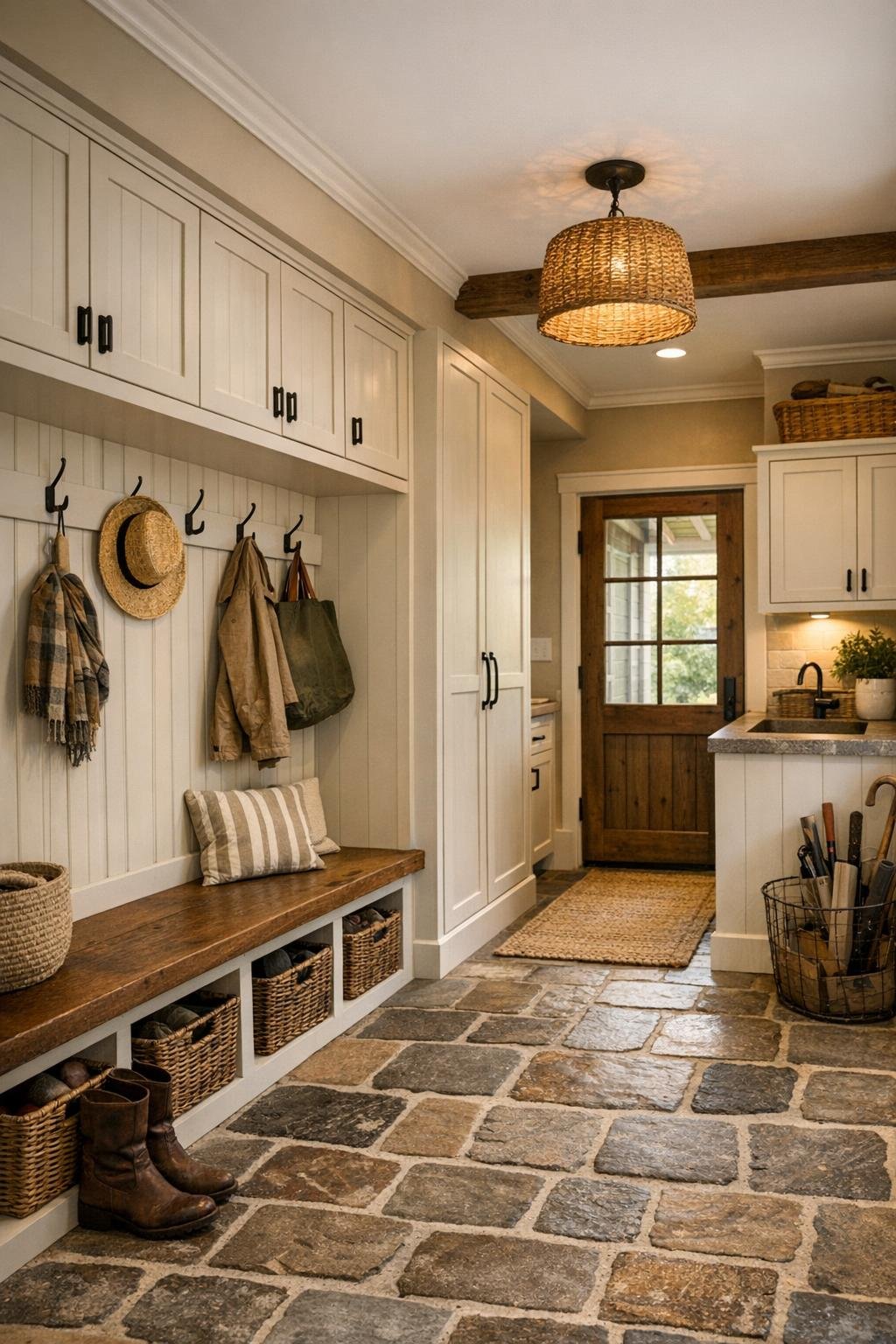
The secondary spaces are where this house proves it understands daily life. A mudroom with built-in benches, closed storage, and durable stone or brick flooring acts as a proper transition zone, which in a farmhouse setting is not a luxury but a necessity. I also imagine a compact pantry with open wood shelves and deep drawers, organized for actual cooking rather than display. These areas may not headline the tour, but they are often what make a home function gracefully day after day.
Upstairs hallways and small reading corners seem to have been treated with the same care as the main rooms. A narrow console, a shaded table lamp, framed botanical prints, and a runner in a faded earthy palette can make even a passageway feel finished. If there is a laundry room tucked somewhere off the kitchen or near the bedrooms, I would expect the same mix of practicality and charm: hardworking surfaces, good light, and just enough warmth in the materials to keep utility from feeling cold.
Why You'd Live Here
You would live here because it understands that comfort is not the same thing as excess. This farmhouse offers beauty through proportion, material honesty, and rooms that support real routines. It is polished enough to feel special, but never so styled that it becomes untouchable. I find that especially compelling in a home that draws on rural architecture, because the best versions of that tradition always remember usefulness first.
You would also live here for the mood: calm, capable, and quietly generous. There is space to gather, space to cook, space to rest, and space to come in from the day without ceremony. In a world full of homes trying hard to impress at first glance, this one earns admiration more slowly, and in my experience, that is usually the kind that lasts.