There’s a kind of comfort in a home that still remembers what it used to be, and this barn-turned-log house carries that feeling in every beam and board. Set against a quiet rural backdrop, it blends sturdy farmhouse roots with the warmth of a lodge, creating rooms that feel grounded, useful, and deeply welcoming. I’m especially taken with the way rough-hewn timber, stone, and aged metal are balanced by soft upholstery, lamplight, and the sort of lived-in details that make a place feel settled from the start.
What makes this home special is that it doesn’t chase polish for its own sake; it honors the honest materials that came first and lets them lead the design. As a concept design, it imagines a retired couple shaping an old barn into a gracious next chapter, with wide-open gathering spaces, practical storage, and quiet corners meant for reading, cooking, and watching the seasons change. The whole mood feels familiar to me, like the best kind of Midwestern home: hardworking, generous, and warm clear through.
Exterior
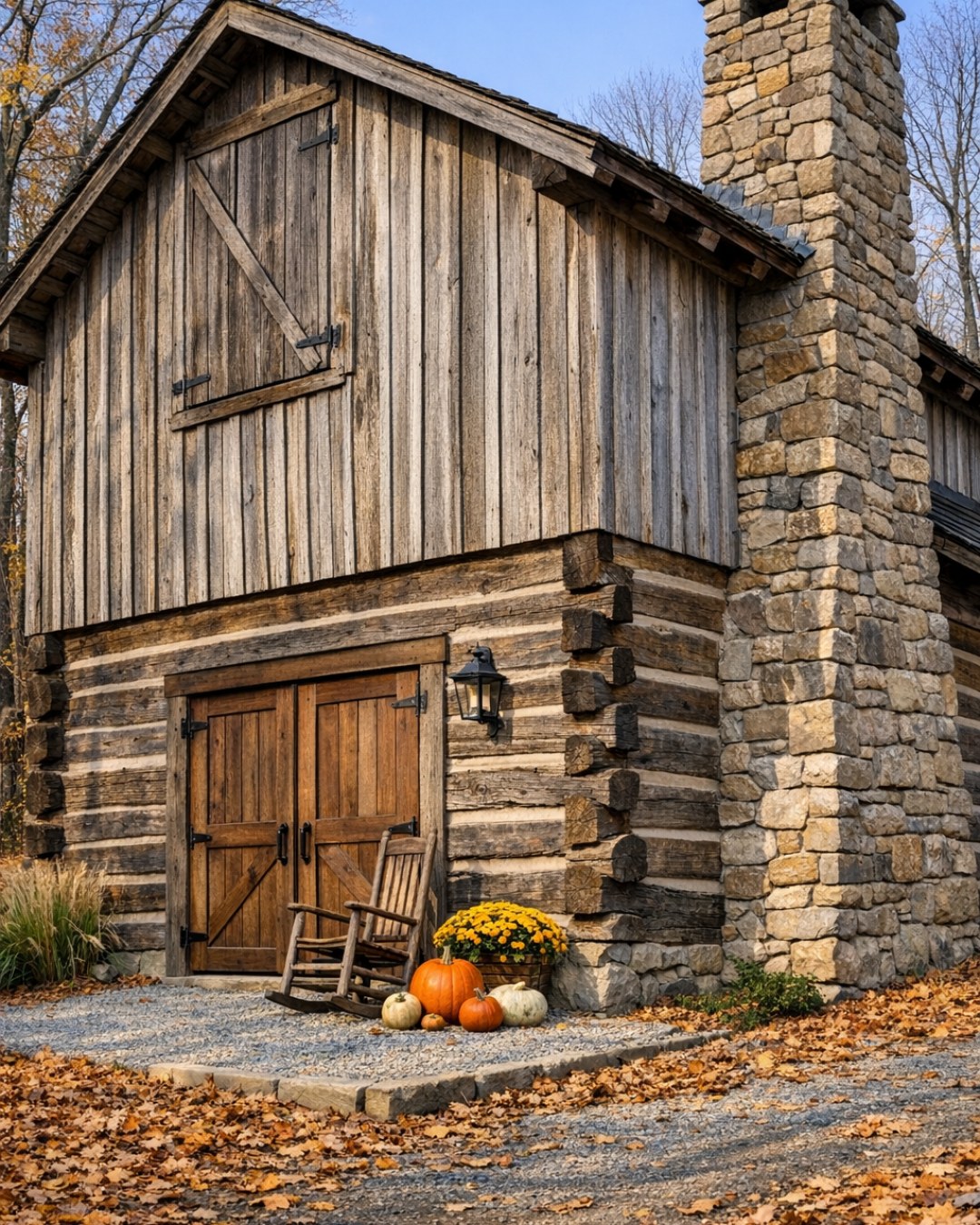
From the outside, the home keeps much of the barn’s original silhouette, and that decision gives it its strong character right away. The roofline remains broad and simple, with a gambrel-inspired form that nods to the building’s agricultural past, while the new log cladding brings a handsome, honey-brown richness to the walls. Fieldstone skirts the base, anchoring the structure to the land, and blackened steel hardware on the large sliding barn doors adds just enough contrast to keep the facade from feeling too sweet. I like the way the wood appears weather-touched rather than glossy, as if the house has already seen a few good winters and come through them beautifully.
The porch is where the transformation really softens the old barn profile into a true home. Thick timber posts support a covered sitting area fitted with simple rocking chairs, galvanized planters, and warm lantern-style sconces that cast a buttery glow at dusk. Window trim in a muted cream brightens the log exterior and gives the openings a more domestic scale, while gravel paths, native grasses, and split-rail fencing keep the setting natural and unforced. It feels exactly right for retired life: easy to maintain, welcoming to guests, and tied closely to the landscape around it.
Living Room
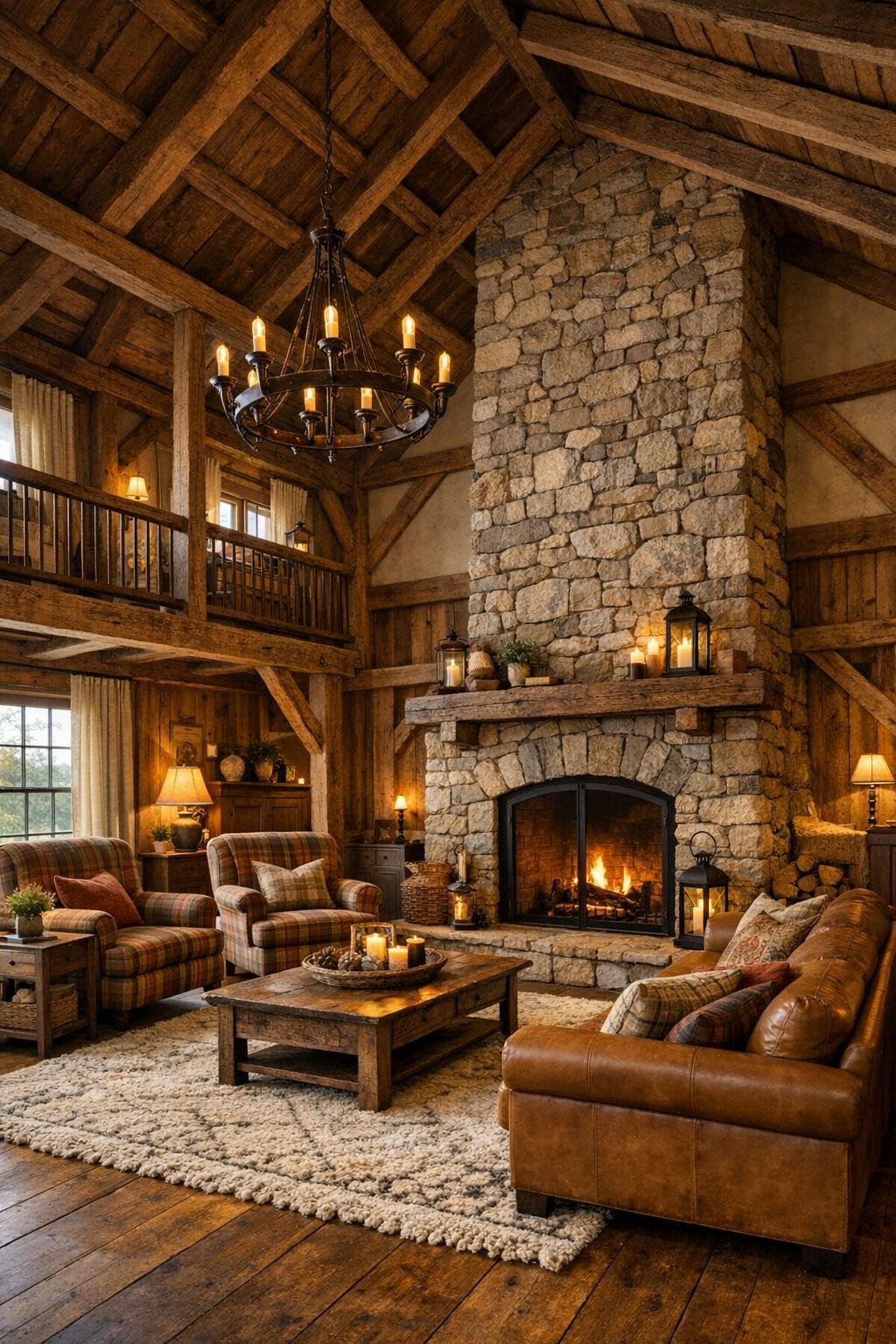
The living room takes full advantage of the old barn’s volume, with a soaring double-height ceiling crossed by exposed beams that still show their age and grain. A floor-to-ceiling stone fireplace serves as the heart of the space, its broad hearth making room for stacked firewood, a kettle-shaped iron screen, and the kind of easy arrangement that invites people to pull up close on cold evenings. The palette stays rooted in warm earth tones—oatmeal, rust, deep brown, moss, and weathered red—while a large wool rug softens the plank floor and gathers the furniture into a proper conversation circle.
Seating is generous without feeling overstuffed: a camel leather sofa, two plaid armchairs, and a slipcovered settee that lightens the room near the windows. I can picture a quilt folded over the sofa arm and a basket of knitting by one chair, because this room asks for such things. Iron chandeliers and shaded table lamps layer the light gently, so even with the tall ceiling the room never feels cavernous. It’s rustic, yes, but carefully so, with enough softness in the textiles and enough order in the layout to make everyday living feel easy.
Dining Room
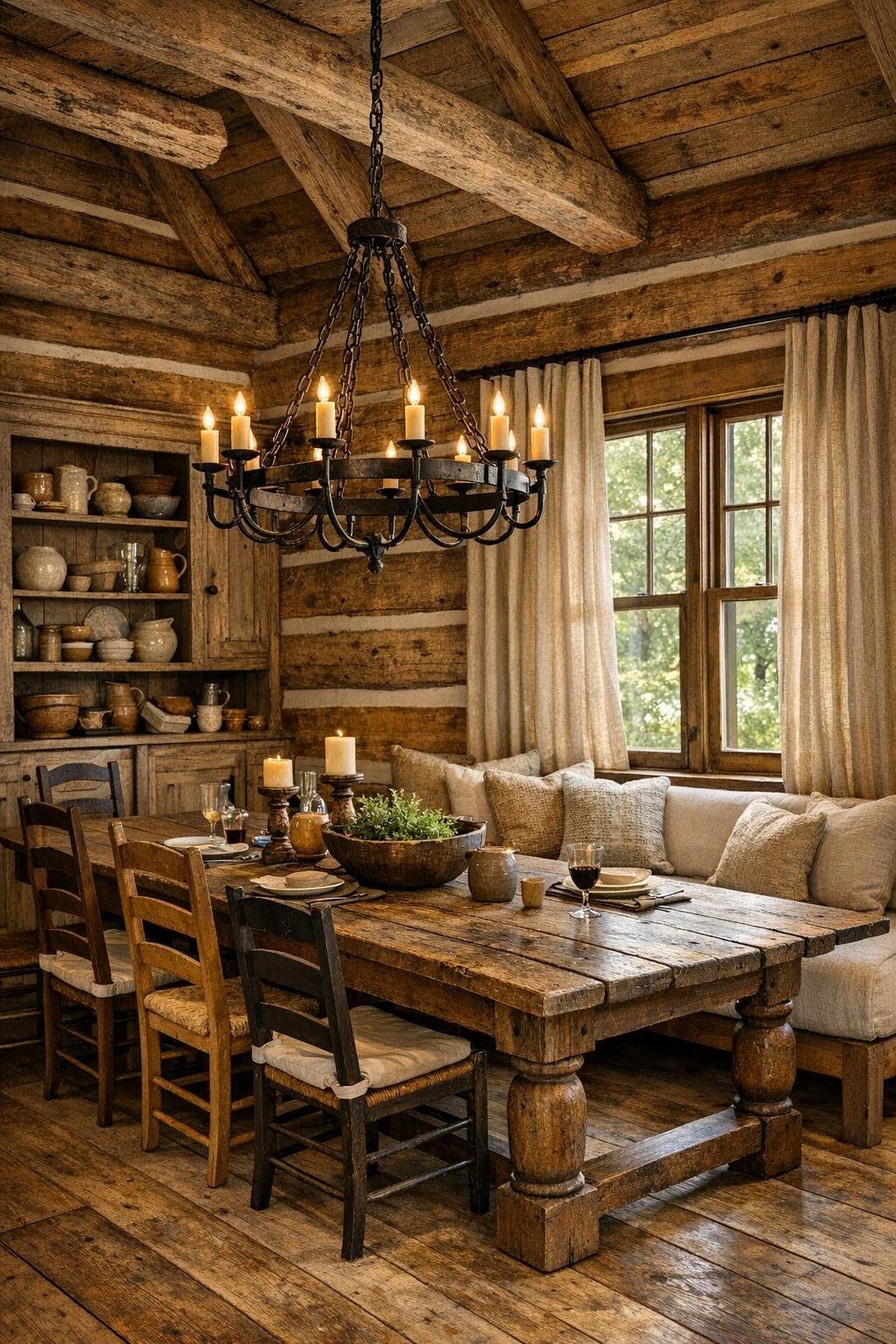
The dining room sits in easy conversation with the living space, but it has its own sense of ceremony thanks to a long farmhouse table positioned beneath a substantial iron chandelier. The table is made from thick reclaimed planks, full of knots and saw marks, and paired with a mix of ladder-back chairs and a cushioned bench that keeps the arrangement from feeling too matched. I always think a dining room should make a meal feel a little special before a plate ever hits the table, and this one does that through texture alone—wood against linen, iron against candlelight, and simple pottery set against the sturdy grain of the tabletop.
A built-in hutch along one wall provides both storage and display, with open shelves for creamware, glass jars, and a few old serving bowls that look as if they might have held generations of Sunday suppers. The palette here shifts a touch lighter than the living room, with soft flax-colored curtains, muted sage accents, and whitewashed wall sections that bounce light around the room. Even in daylight, it feels intimate, the sort of place where coffee lingers after dessert and nobody is in a hurry to stand up. That’s always the mark of a successful dining room to me.
Kitchen
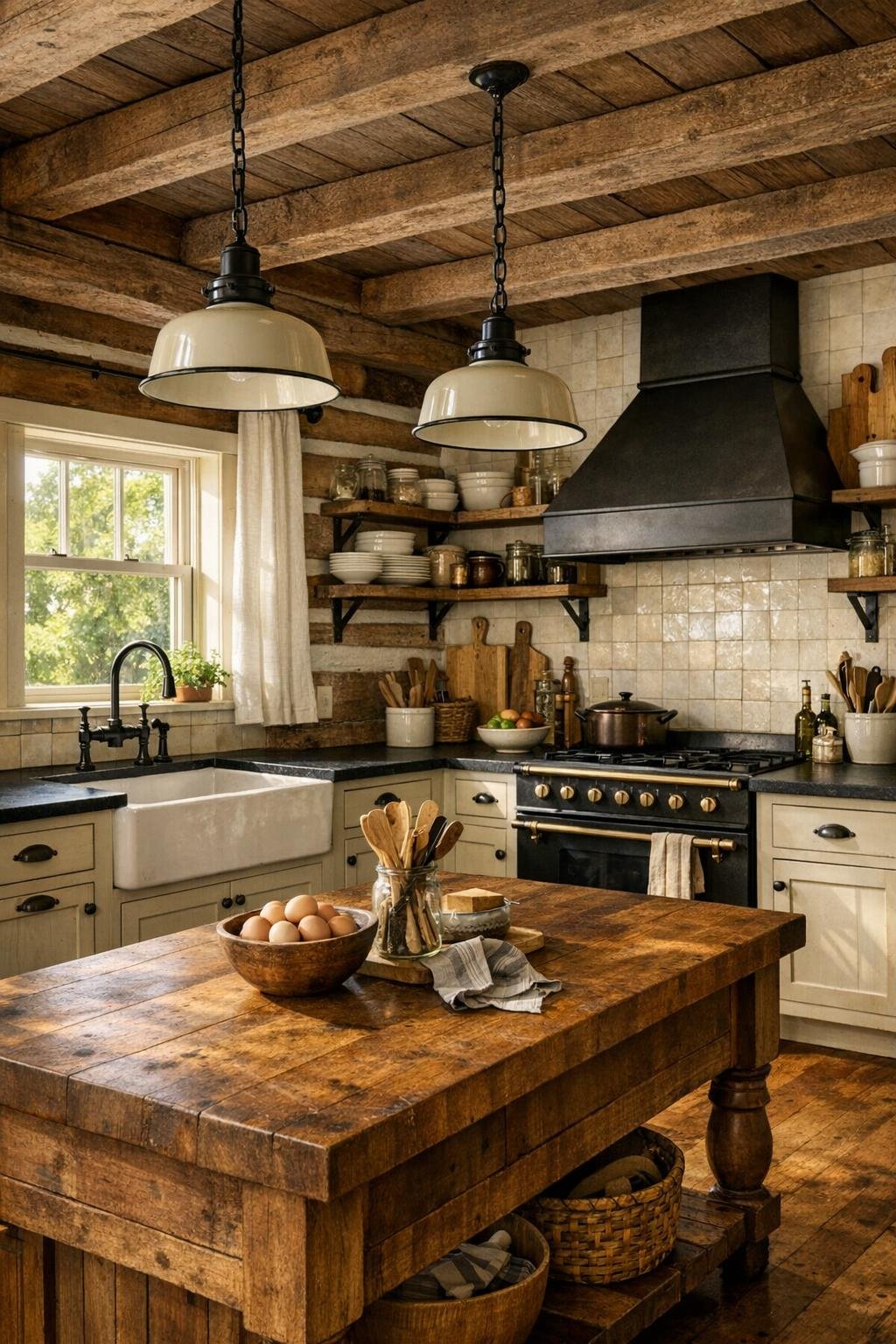
The kitchen is, to my eye, the soul of the home, and it’s designed with a cook’s real habits in mind rather than just appearances. Cabinetry in a muted cream keeps the room bright against the heavier log walls, while soapstone counters and a deep apron-front sink add a pleasing old-house practicality. At the center sits a broad island topped with butcher block, sturdy enough for rolling pie dough, shucking corn, or lining up dishes before supper. I appreciate that the finishes aren’t precious—aged brass pulls, beadboard panels, open shelving, and a backsplash of pale handmade tile all suggest a room meant to be used every day.
Overhead, pendant lights with enamel shades cast focused pools of light on the work surfaces, while windows above the sink bring in views of the property and keep the whole room feeling connected to the outdoors. A vintage-style range in matte black grounds one wall, flanked by built-in pantry storage and a tall cabinet for small appliances, preserving the room’s calm and order. There’s even space for a small breakfast table tucked near the corner, just right for a pot of oatmeal in the morning or a late slice of pie with coffee. It’s a kitchen with common sense and heart, which is about the finest compliment I can give.
Bedroom
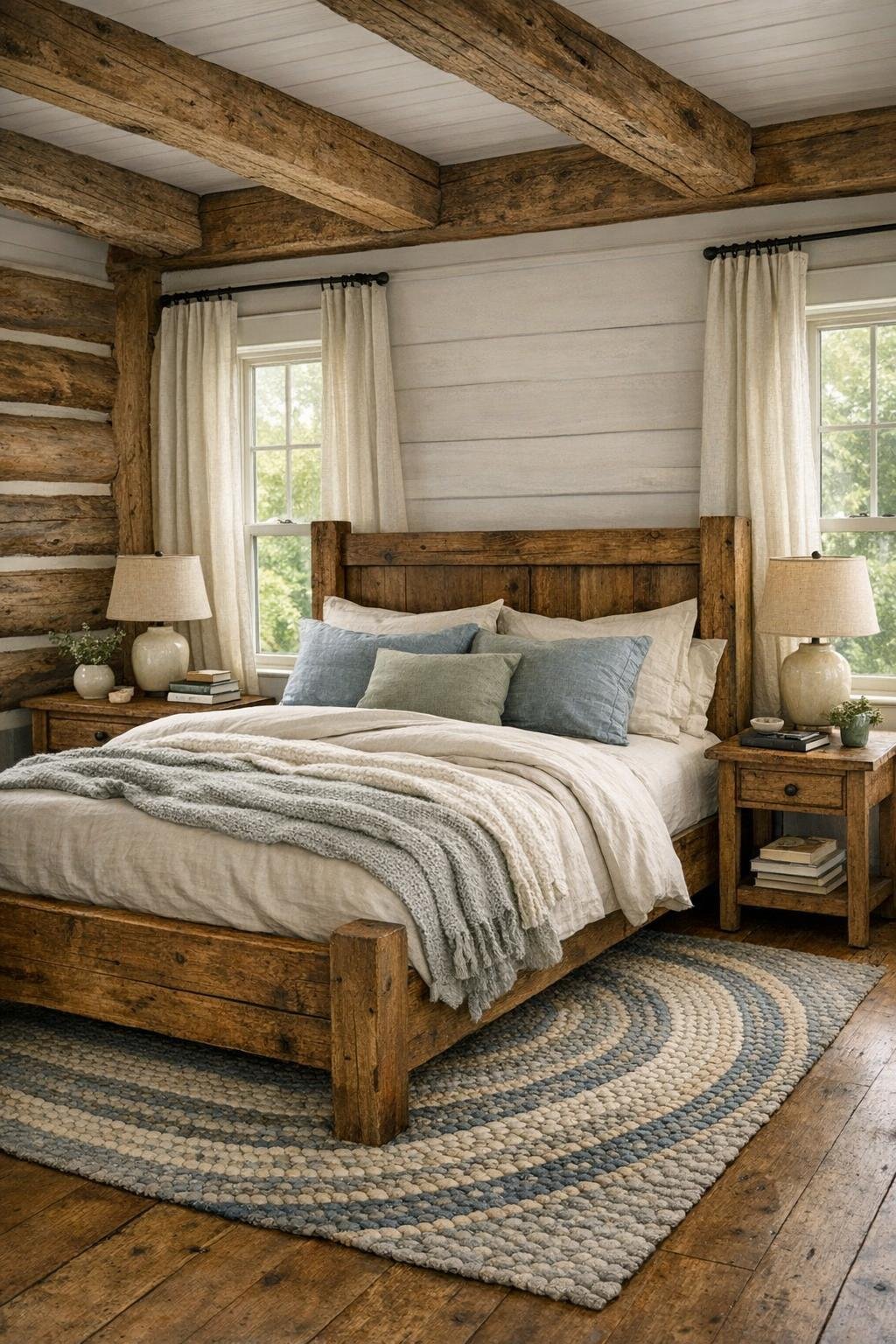
The bedroom takes a quieter, gentler turn, proving that rustic design does not have to feel heavy. Here, the log walls are softened by painted trim, layered neutral bedding, and gauzy linen curtains that filter the light into a mellow glow. A substantial wood bed frame anchors the room, but the color story keeps it restful: warm ivory, faded blue, mushroom, and soft gray, with just a little deep green in a folded blanket at the foot of the bed. I like how the room resists clutter and instead relies on well-chosen essentials that feel calm and enduring.
A braided rug underfoot adds texture, while mismatched bedside tables make the space feel personal rather than staged. One side holds a ceramic lamp and stacked books; the other, perhaps, a small crock of dried grasses and a simple reading light. The ceiling follows the roofline slightly, reminding you of the barn structure overhead, but the lighting and textiles make everything feel tucked in and serene. This is a bedroom made for early nights, open windows in spring, and the deep kind of rest that comes after a day spent doing useful things.
Bathroom
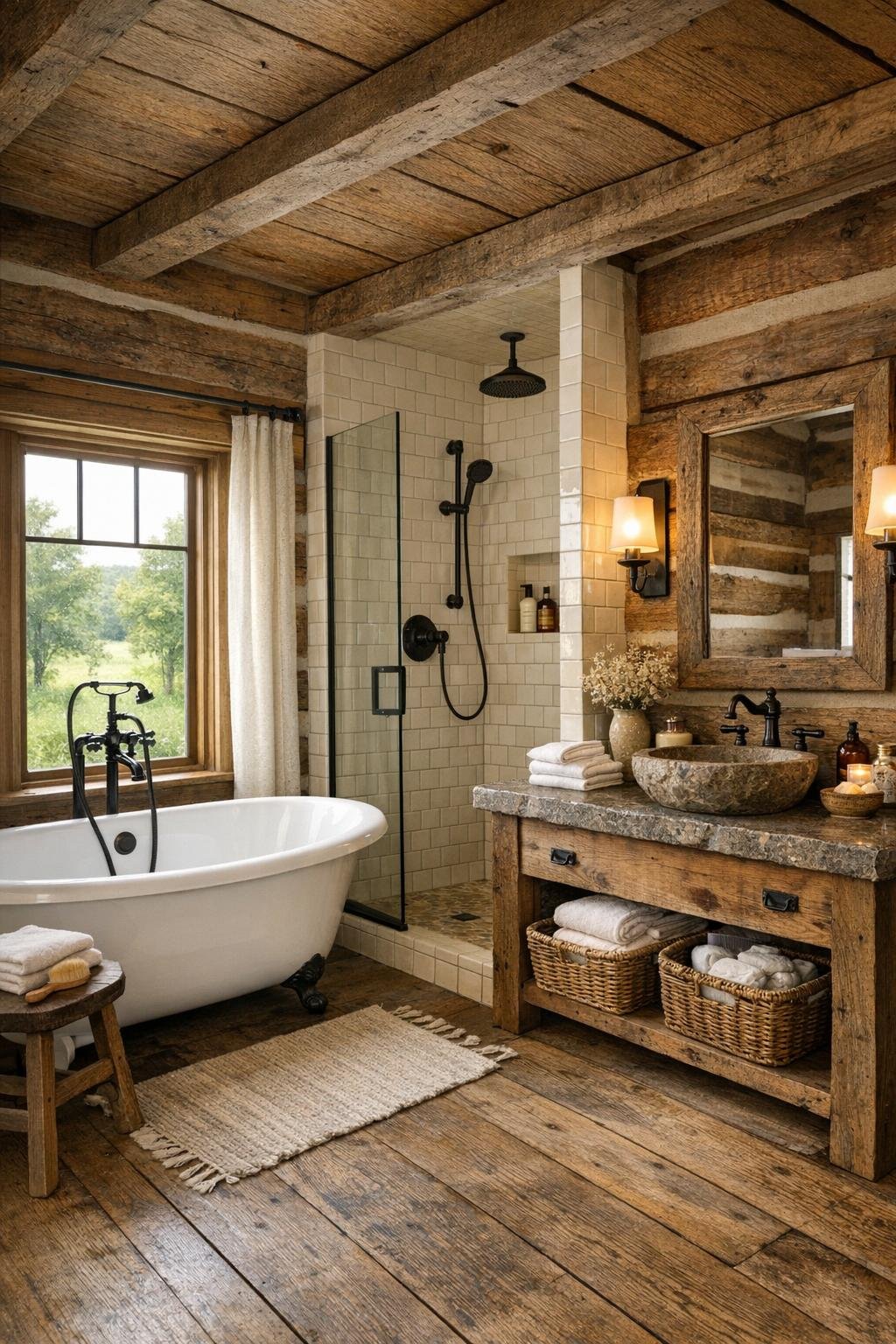
The bathroom is one of the loveliest surprises in the house because it blends utility and comfort so gracefully. A freestanding soaking tub sits near a window, positioned to catch both daylight and views, while a walk-in shower lined in creamy subway tile brings in a cleaner, brighter note against the rustic shell. The vanity is built from a repurposed wood cabinet topped with stone, and that mix of refinement and salvaged charm feels exactly right here. I’ve always believed bathrooms should feel straightforward but a little indulgent too, and this one strikes that balance beautifully.
Black iron fixtures provide crisp definition, and warm brass wall sconces soften the room with a flattering glow in the evening. The floor, done in small stone-look tile, is practical underfoot and ties back to the home’s use of natural materials throughout. Plush cotton towels, a wooden stool, and woven baskets keep the room from feeling cold or overly finished. It has that rare quality of seeming both freshly renovated and deeply settled, as if it belongs completely to the life unfolding around it.
Other Areas
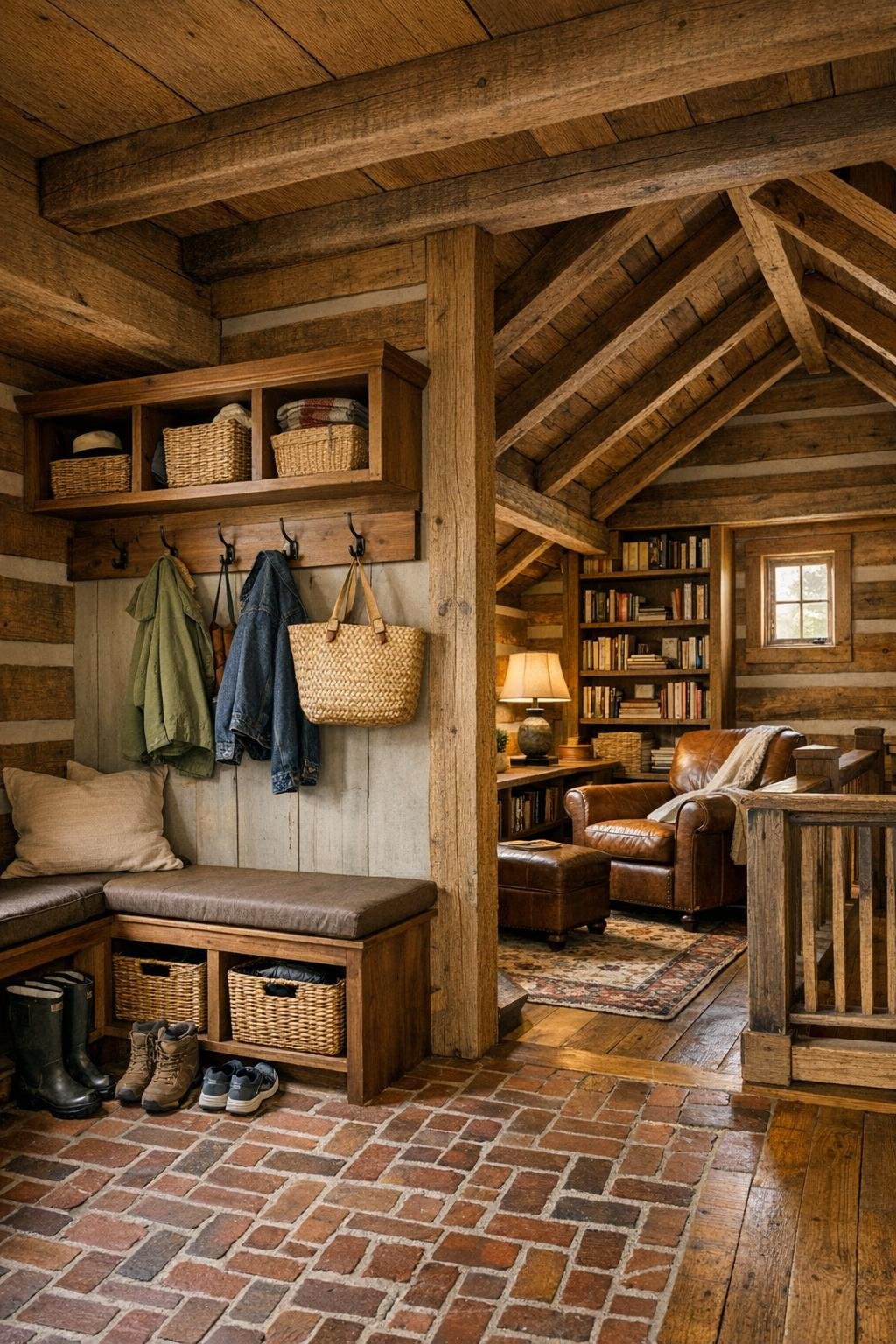
What elevates the home beyond its main rooms are the transitional spaces that make daily life feel thoughtful and easy. A mudroom near the entry is fitted with built-in benches, pegs, cubbies, and a durable brick floor that can handle boots, coats, and a little honest mess without complaint. There’s also a lofted reading nook tucked beneath the rafters, furnished with a worn leather chair, a small side table, and bookshelves built neatly into the eaves. Those kinds of spaces matter more and more, I think, because they support the rhythms of ordinary days instead of merely decorating them.
A small laundry room continues the home’s practical charm with shaker-style cabinets, a utility sink, folded linens, and room for baskets without crowding the walkway. Hallways are kept wide and warm with plank walls, framed landscape prints, and runner rugs that soften the long sightlines. Even the stair railings, made of dark-stained wood and simple iron spindles, feel in keeping with the house’s humble strength. Nothing here is flashy, but everything has been considered, and that kind of quiet care is what makes a house truly livable.
Why You'd Live Here
You’d live here because it understands that beauty and usefulness belong together. This home takes the honest bones of an old barn and reshapes them into rooms that are generous, calm, and fit for the long haul. The materials are sturdy, the palette is soothing, and the layout supports both companionship and solitude, which feels especially right for a retired couple settling into a new season of life. It offers charm without fuss and rusticity without roughness.
More than that, you’d live here because it feels like a place where memory can gather. It’s easy to imagine grandchildren dropping boots by the mudroom bench, soup simmering in the kitchen, lamplight warming the beams at dusk, and the quiet satisfaction of a home made from something old and worthy. To me, that is the real promise of good design: not just that a house looks lovely, but that it welcomes the life you hope to live inside it.