From the outside, this home keeps its cards close. The faded tan log exterior sits quietly against its setting with a kind of weathered ease, and I honestly love that it doesn’t try too hard. Then you step inside and the whole mood shifts into something warmer, softer, and much more layered than you’d expect from a quick drive-by. It has that rare mix of cabin character and polished everyday comfort that makes a space feel both grounded and surprisingly current.
This concept design leans into that contrast beautifully, pairing rustic structure with clean-lined interiors, thoughtful lighting, and a palette that feels easy to live with through every season. I can picture coming home after a long workday, setting down my bag, and immediately exhaling. What makes this place special is not one dramatic gesture, but the way every room builds on the same inviting idea: natural materials, practical layout, and just enough refinement to make daily life feel a little more special.
Exterior
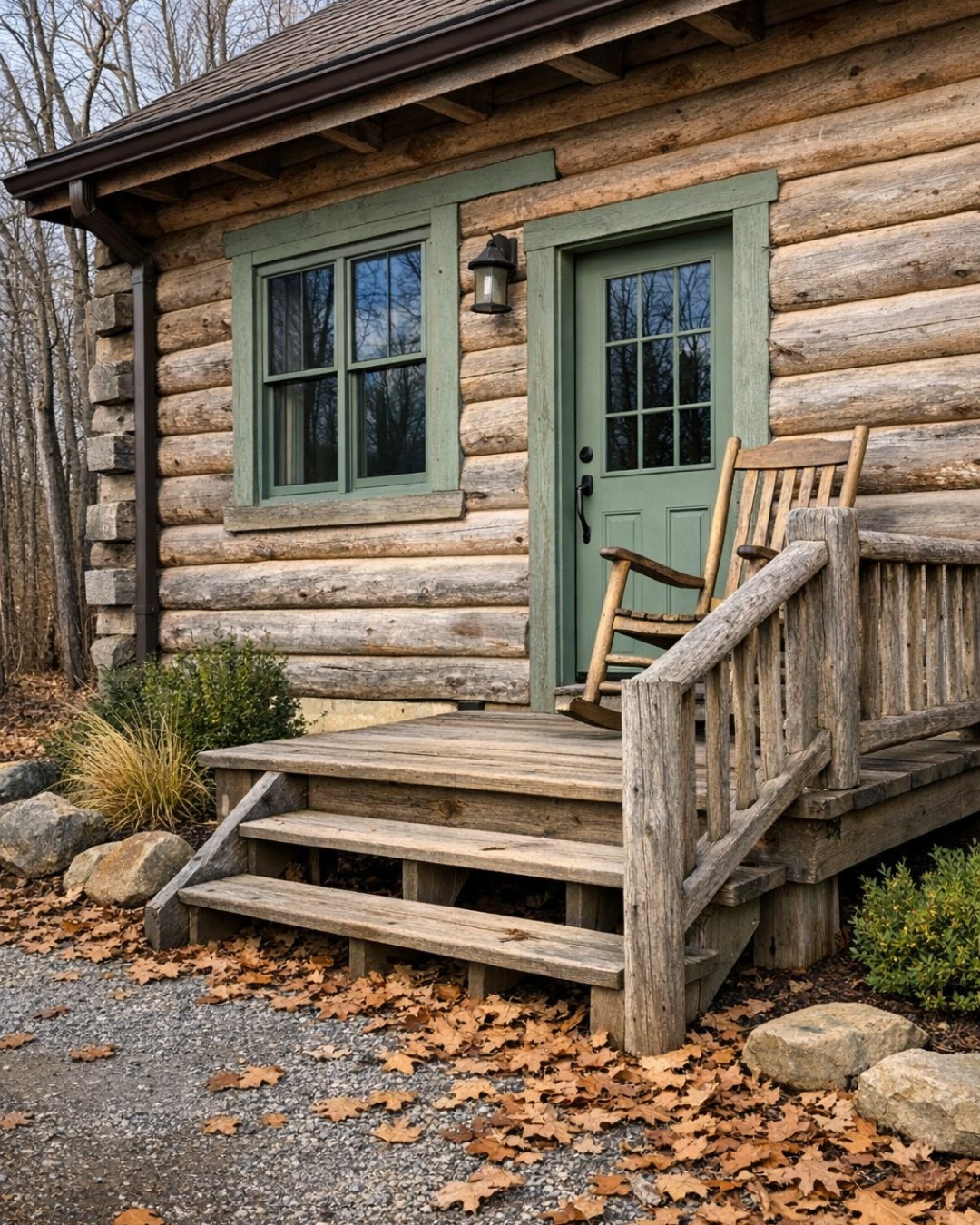
The exterior has a humble, almost understated presence, with faded tan logs that give the home a sun-washed, time-softened look rather than a heavily varnished one. I like that choice because it feels more natural and a lot more relaxed. The roofline is simple and sturdy, with deep overhangs that add shadow and depth, while black-framed windows sharpen the whole composition and keep it from feeling too rustic. A stone chimney introduces another texture and helps anchor the house visually, especially against the horizontal rhythm of the logs.
What really works for me is the balance between rugged and welcoming. A covered front porch with chunky timber posts creates that immediate sense of shelter, and I’d imagine a pair of simple outdoor chairs and a woven mat rather than anything overly themed. The landscaping would stay loose and regional—ornamental grasses, evergreen structure, and maybe a few native shrubs—so the house feels connected to its setting instead of overly decorated. It’s the kind of exterior that gets more appealing the longer you look at it.
Living Room
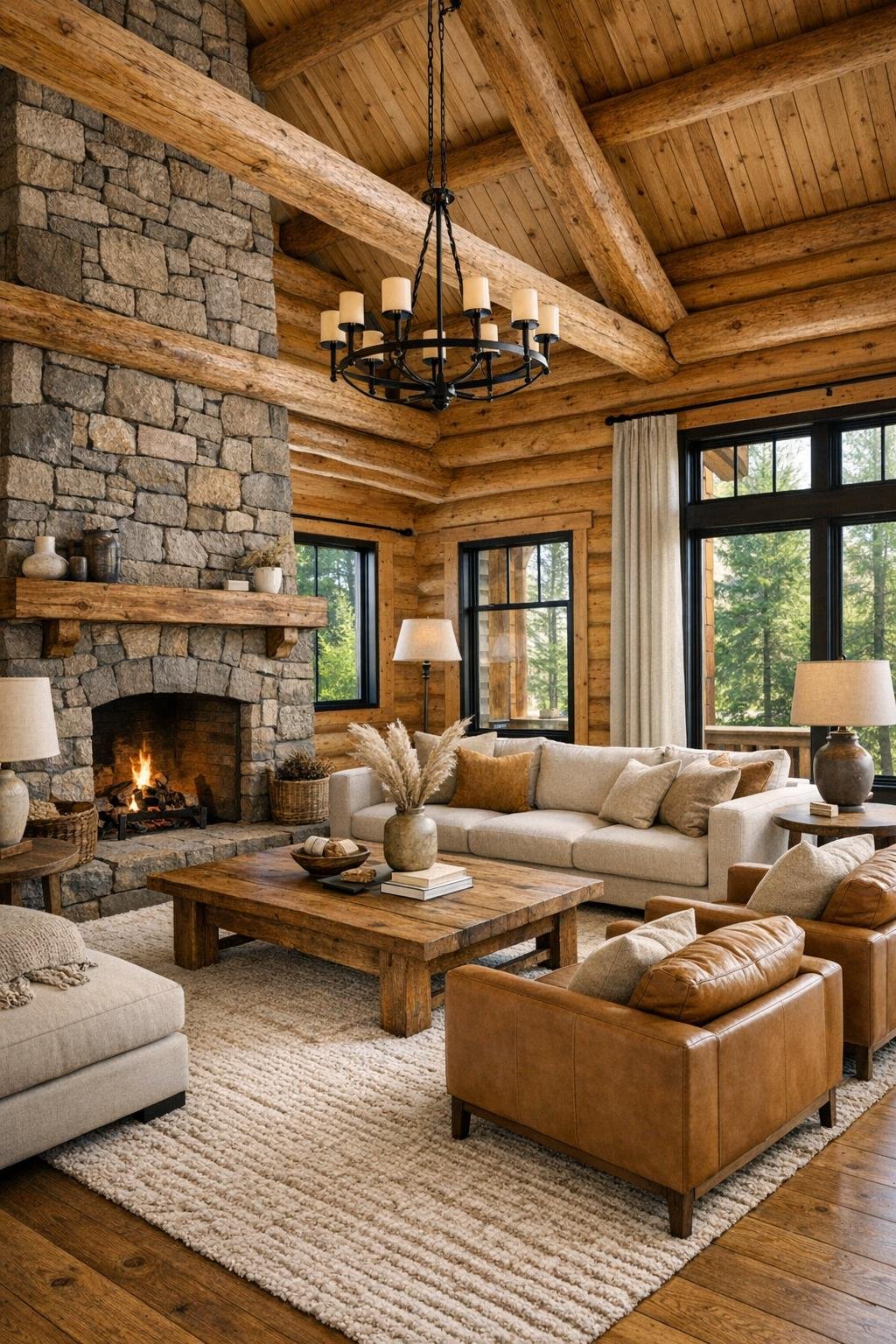
The living room is where the home’s personality really opens up. I’d center it around a tall stone fireplace, letting that natural texture rise all the way to the ceiling while the surrounding walls and beams keep the log architecture visible without overwhelming the room. The palette stays calm—oatmeal, camel, warm gray, and soft brown—with upholstery that looks durable enough for real life but still polished. A deep sofa, two structured accent chairs, and a substantial wood coffee table make the room feel ready for both quiet mornings and busy weekends.
Lighting does a lot of heavy lifting here, and I appreciate that because it’s something I always notice in a home. Layered fixtures would keep the room from feeling dark or overly lodge-like: a central iron chandelier, linen-shaded table lamps, and discreet recessed lighting tucked between beams. I’d also add a large area rug with a low, forgiving pile to soften the wood underfoot and help define the seating zone. The overall effect is cozy, but not heavy—exactly the kind of living room where you could host friends, answer a few emails with coffee nearby, or just collapse at the end of a long day.
Dining Room
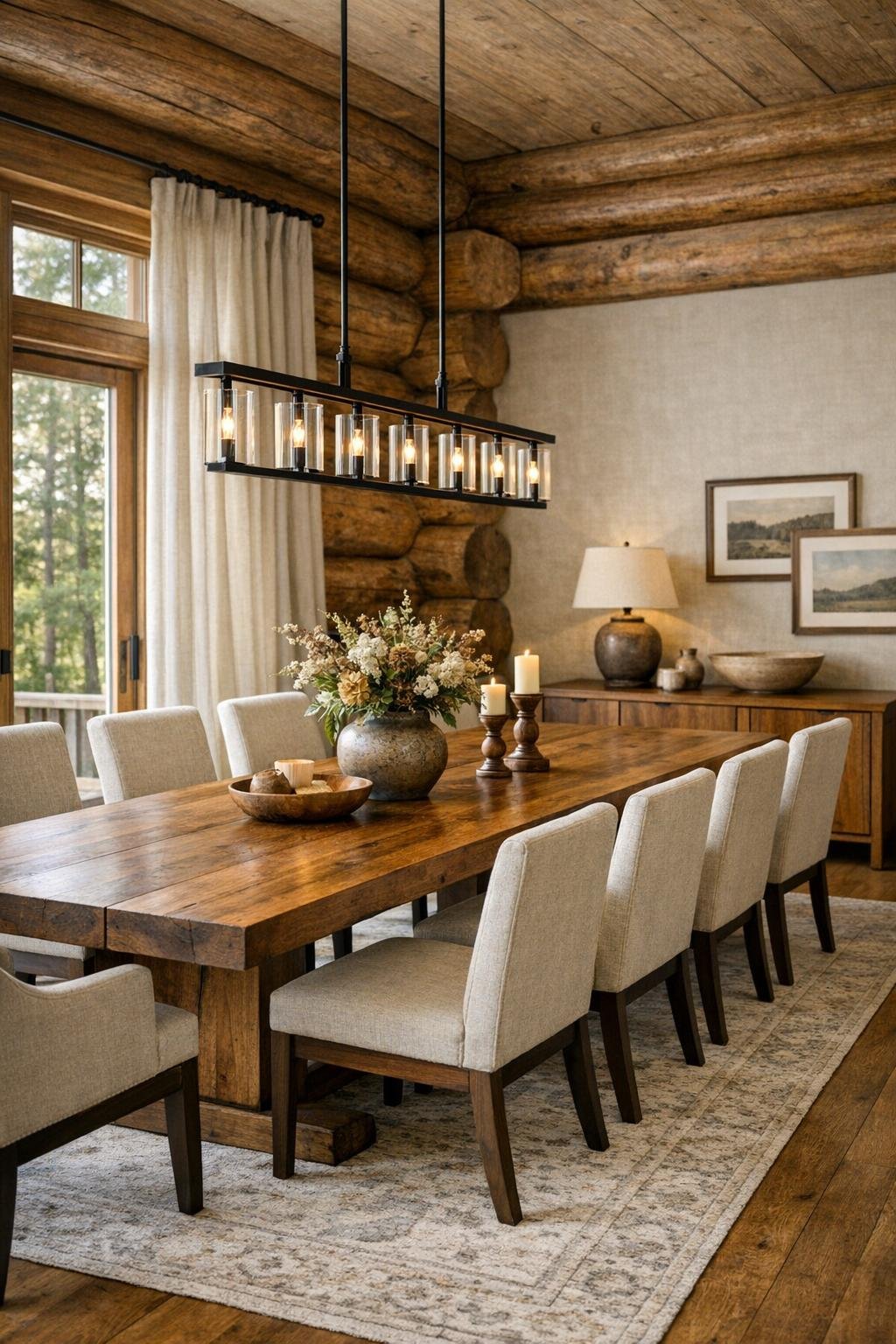
The dining room feels intentionally simple, which is exactly why it works. I picture a long solid-wood table with enough surface character to hold its own against the log walls, paired with upholstered dining chairs that soften the sturdier architecture. Instead of leaning overly formal, the room would use scale and material to create presence: a generous linear chandelier in blackened metal, full-length linen drapery, and maybe a slim sideboard with a stone or honed wood top for serving pieces and extra storage.
This is the kind of room that makes everyday dinners feel a little more put together without becoming precious. As someone who is always thinking about food and how a kitchen connects to the rest of the house, I love when a dining room feels close enough to the action but still distinct. Here, the textures would do most of the work—matte wood, soft fabric, a ceramic centerpiece, and maybe a vintage-style rug under the table to warm up the footprint. It feels ready for weeknight pasta, holiday brunch, or a last-minute dinner party where nobody minds lingering.
Kitchen
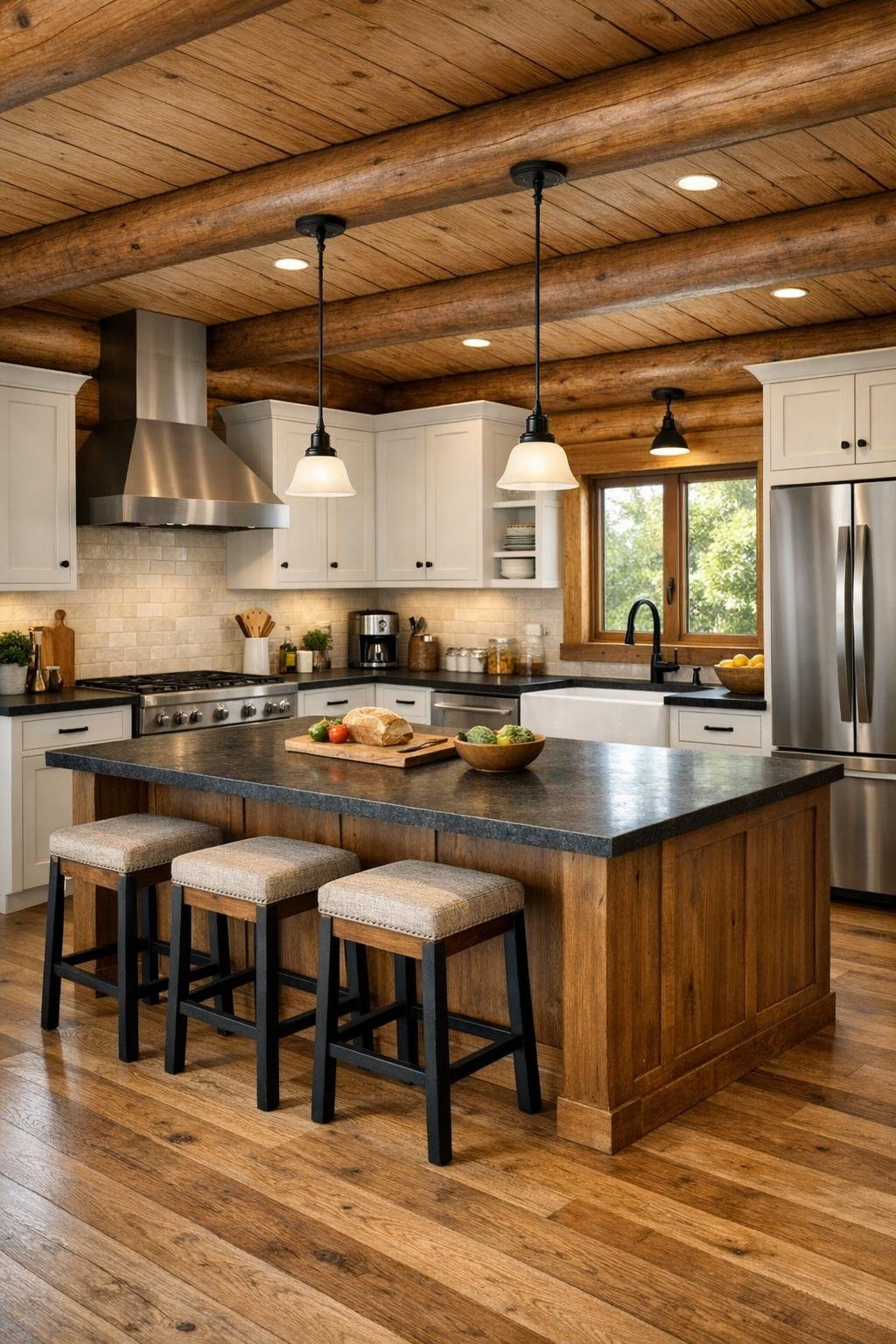
The kitchen is where I’d probably spend the most time, and this one is designed in a way that feels genuinely usable. Instead of going too rustic, it mixes painted cabinetry with natural wood accents so the room feels fresh and bright. I imagine warm white cabinets, a medium-tone wood island, soapstone or leathered quartz countertops, and a backsplash with subtle handmade variation. That combination keeps the log shell from making the room feel visually busy, and it gives the kitchen the kind of calm backdrop that’s perfect for actual cooking.
Functionally, it checks all the boxes I’m always hoping for: generous prep space, deep drawers, good task lighting, and open circulation around the island. A pair of simple pendant lights over the island would bring in shape without adding clutter, while integrated storage keeps small appliances tucked away. I can absolutely see meal prep happening here on a Sunday afternoon—containers lined up, soup on the stove, groceries unpacked—because the room feels efficient without losing warmth. It’s polished, but still approachable, which is honestly the sweet spot.
Bedroom
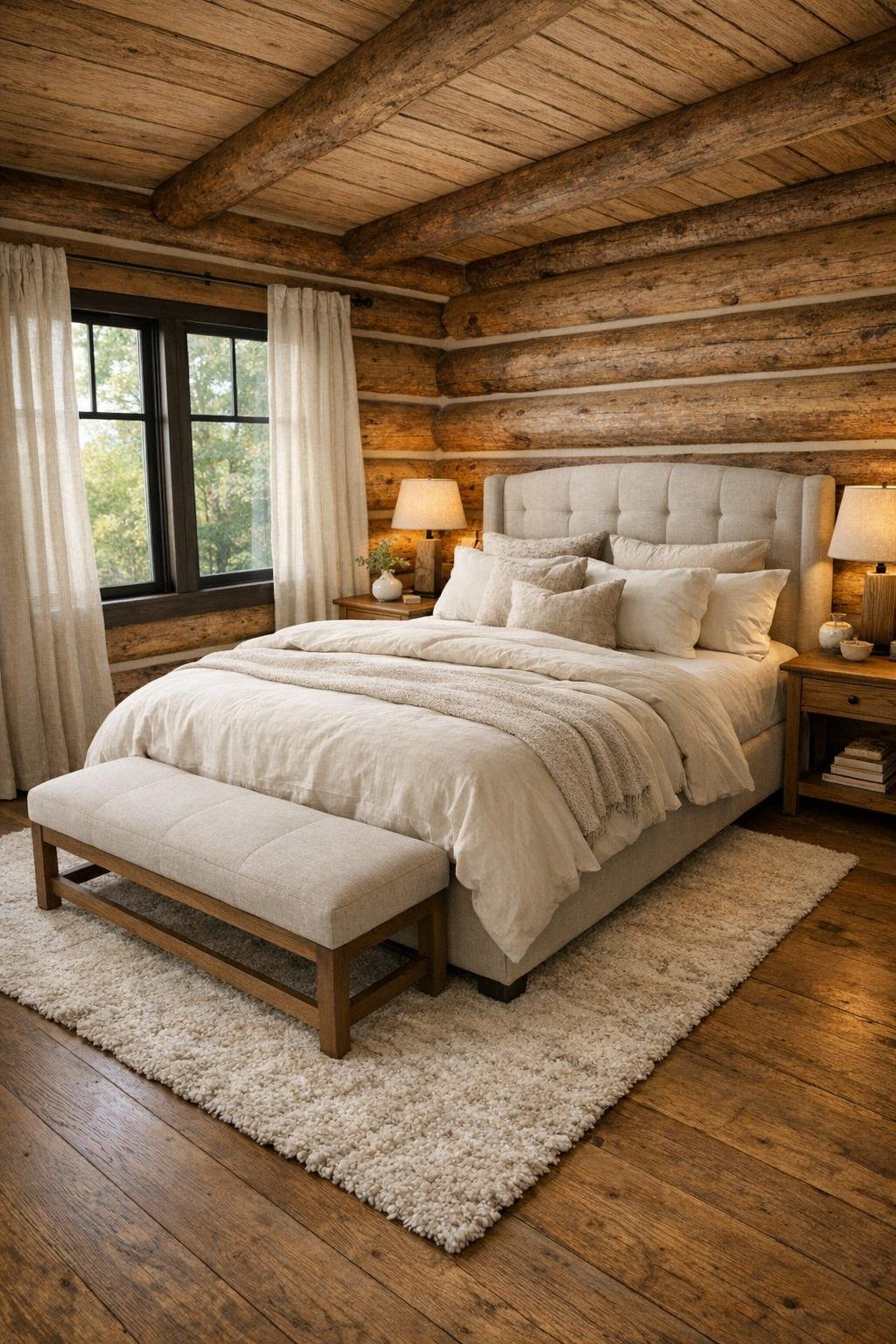
The bedroom takes the home’s rustic bones and quiets them down in the best way. I’d keep the palette especially soft here—creamy bedding, warm taupe, faded clay, and a little charcoal for contrast—so the room feels restful rather than overly themed. A substantial upholstered bed helps balance the texture of the wood walls, and I like the idea of low-profile nightstands in stained oak or walnut with simple lamps that cast a gentle glow in the evening.
What makes this room feel especially livable is the restraint. There’s no need to overcrowd it when the architecture already brings so much texture. A bench at the foot of the bed, linen drapery, maybe one vintage dresser, and a wool rug underfoot would be enough to make it feel complete. I always think a bedroom should feel like permission to slow down, and this one does. It’s cozy without being dark, polished without being stiff, and easy to imagine sinking into at the end of a packed weekday.
Bathroom
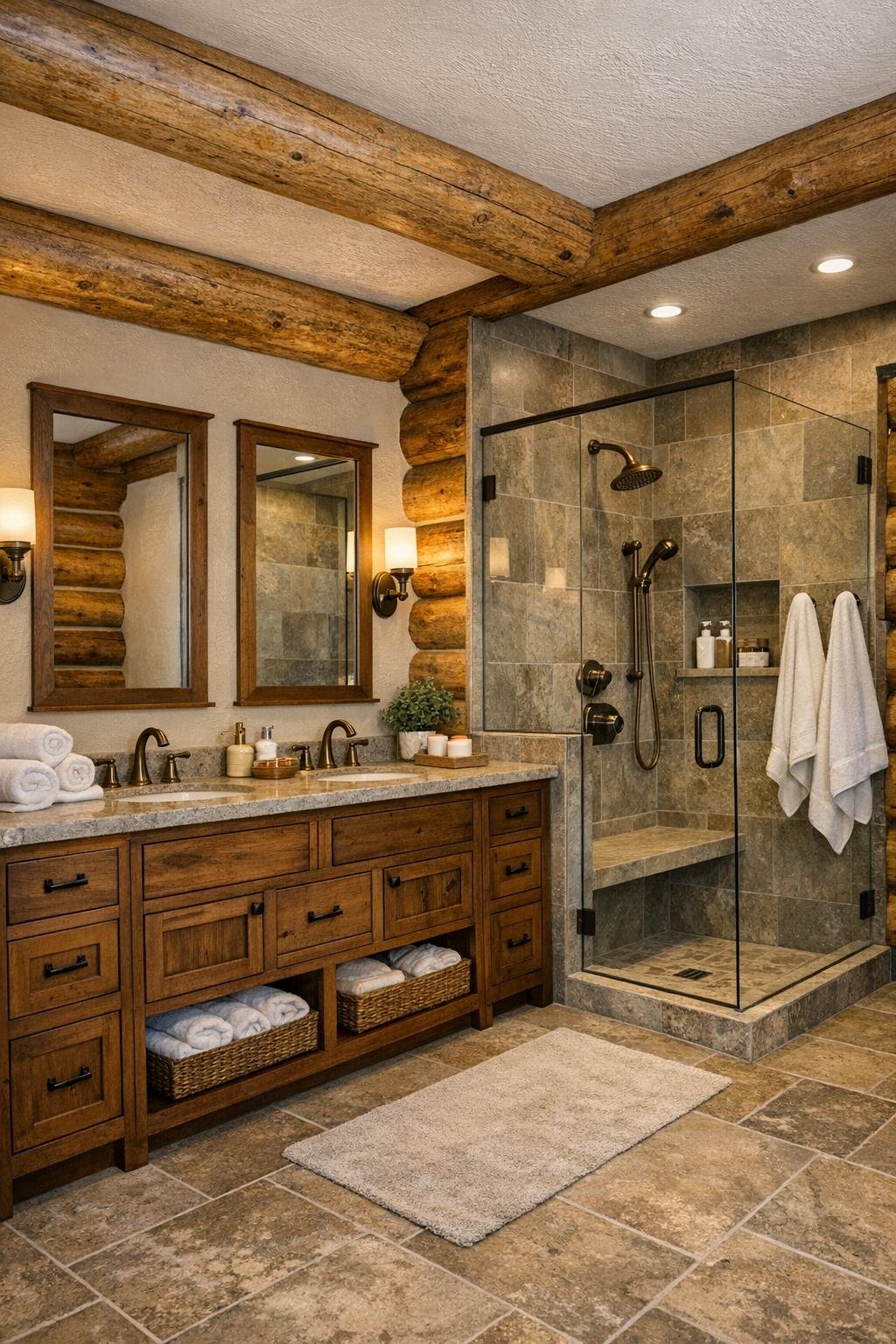
The bathroom continues the home’s material story but gives it a cleaner, more spa-like finish. I picture a double vanity in stained wood with a lightly textured stone countertop, paired with warm metal fixtures that bring in a subtle glow. The walls might shift from exposed log to plaster or tile in key areas, which would help the room feel fresher and brighter. A large mirror, simple sconces, and soft underfoot texture would keep everything feeling comfortable rather than stark.
If I had to pick my favorite detail, it would probably be the shower. A walk-in design with large-format stone-look tile, a frameless glass panel, and a built-in niche feels modern in a way that doesn’t fight the home’s rustic structure. I’d also want good closed storage here, because pretty bathrooms are great but practical bathrooms win in real life. Altogether, the room feels serene and unfussy—the kind of bathroom that makes rushed mornings a little easier and evening routines a lot nicer.
Other Areas
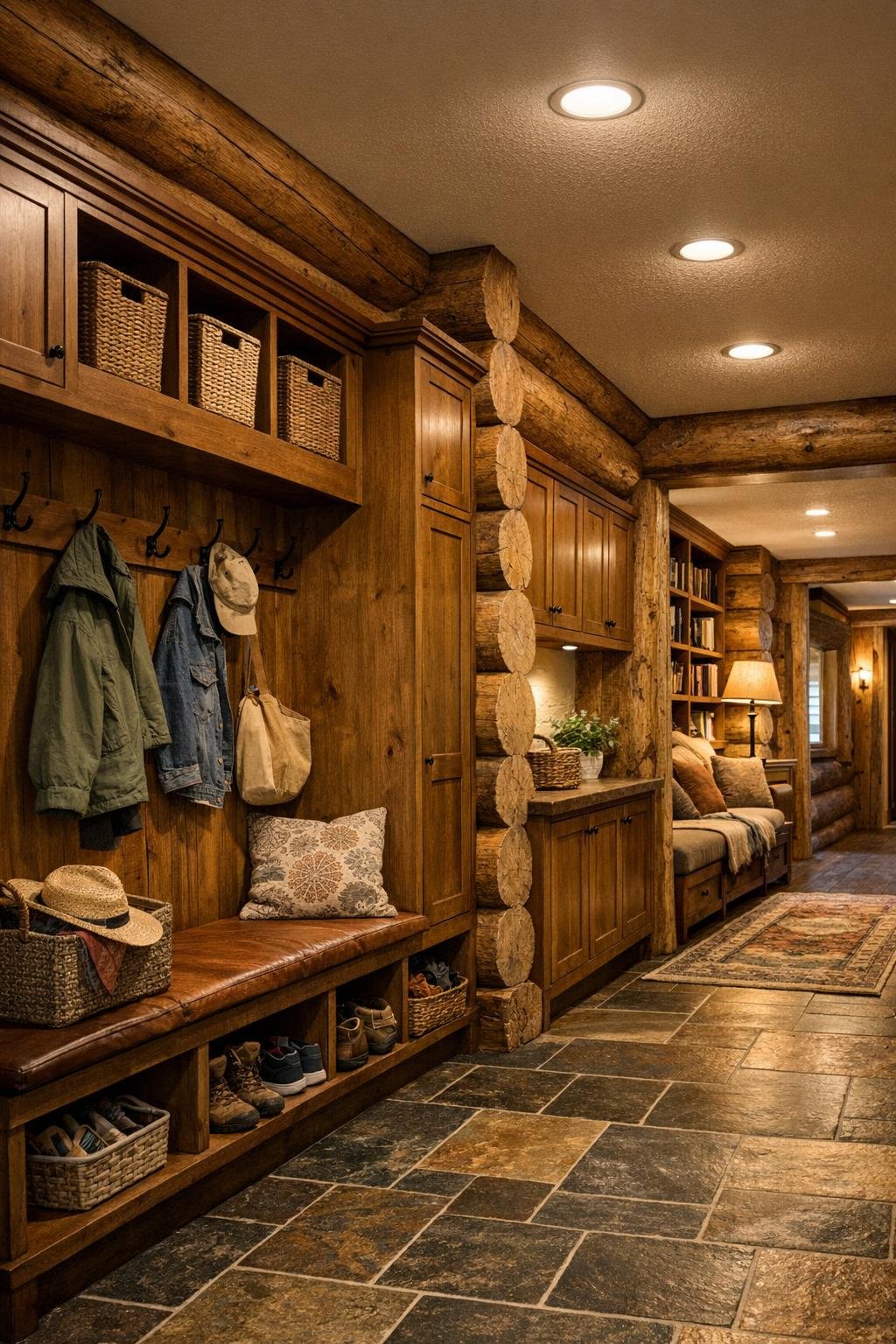
The supporting spaces in this home are what make it feel truly complete. I can easily imagine a mudroom just off the entry with built-in benches, hooks, closed cubbies, and a durable tile floor that can handle boots, bags, and the general chaos of everyday life. In a house with this much warmth and texture, practical zones matter even more because they keep the prettier rooms from carrying all the mess. A compact laundry space with stacked storage, wood cabinetry, and a countertop for folding would fit right into the overall look.
I’d also hope for a small reading nook or upstairs landing where the architecture can breathe a little—a place for one great chair, a lamp, and a small side table. Those in-between spaces always get me because they make a house feel personal rather than just well designed. Even a hallway here would have purpose, with thoughtful lighting, framed artwork, and enough width to feel gracious. These quieter corners are what turn a beautiful shell into a home that actually supports daily routines.
Why You'd Live Here
You’d live here because it gives you the comfort of a log home without asking you to commit to a heavy, overly themed version of rustic living. It feels approachable, bright, and designed for real routines, which is something I always come back to when I look at a house. The materials have character, the palette is easy on the eyes, and the layout seems ready for everything from busy weekday mornings to slow weekends at home.
More than anything, this home makes a strong case for second looks. What seems quiet from the road opens into rooms that feel thoughtful, balanced, and genuinely livable. I love that it doesn’t rely on one flashy moment to win you over. Instead, it builds trust room by room, with smart choices, warm finishes, and the kind of atmosphere that makes you want to settle in, start dinner, and stay awhile.