There’s something instantly comforting about a log home done with restraint, and this one gets that balance exactly right. Set against a quiet wooded backdrop, it takes the rough-and-ready spirit of a former hunting shack and reshapes it into a warm, deeply livable retreat with the kind of thoughtful detailing that makes every room feel intentional. Even as a concept design, it feels believable in the best way—cozy without being cramped, rustic without tipping into theme.
What I love most is how the house leans into simplicity while still giving you moments of delight. The logs, stone, and worn-in wood tones create that classic cabin mood, but the furniture plan, layered lighting, and soft textiles make it feel much more like a forever home than a weekend hideaway. And yes, the reading corner really is the standout: the sort of place I can already picture myself claiming with coffee in the morning and a cookbook or mystery novel by late afternoon.
Exterior
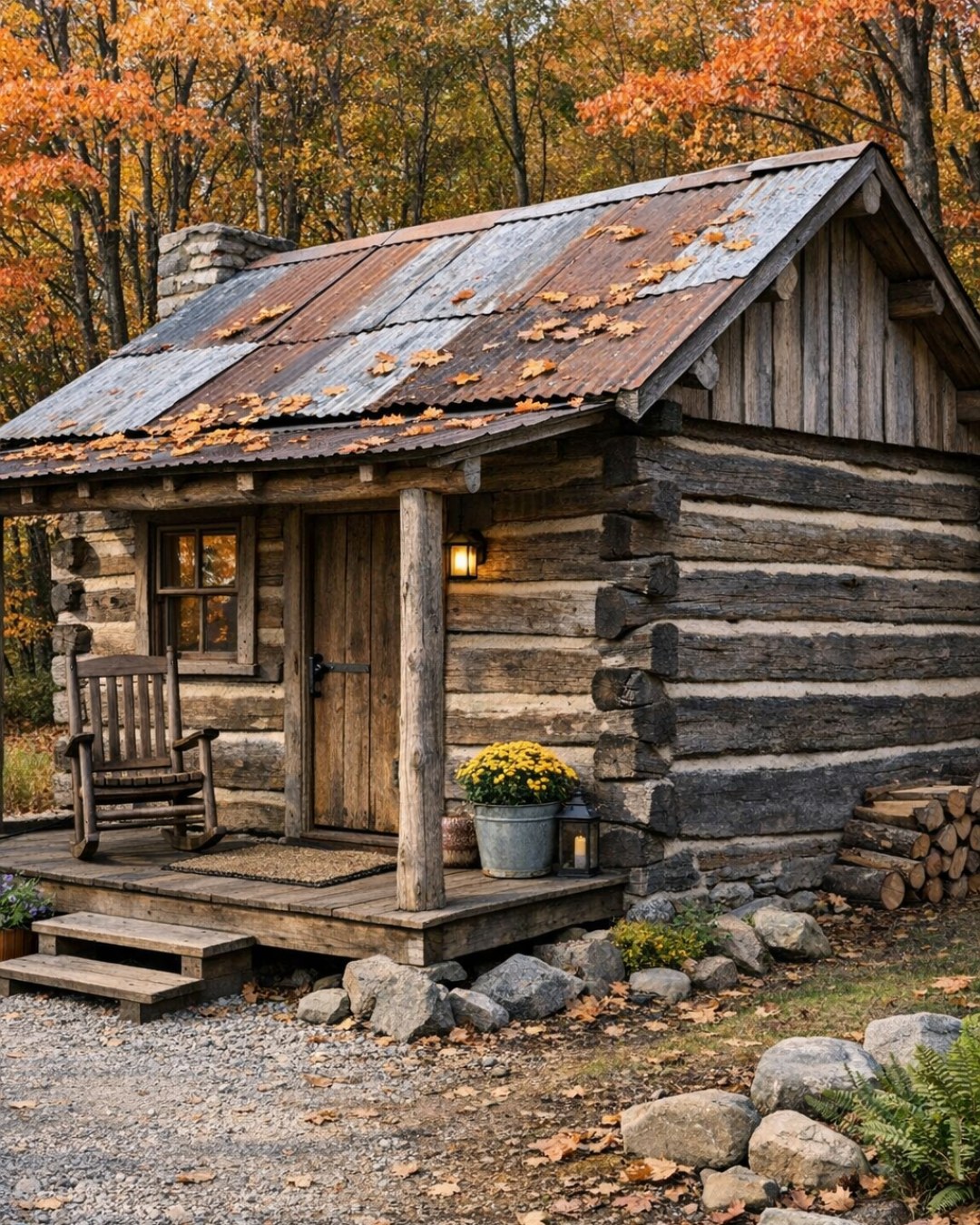
From the outside, the home keeps the familiar silhouette of a modest backwoods structure, but it has been elevated through proportion and material contrast. Rounded log walls in honeyed cedar tones are paired with a heavier stone chimney and a darker metal roof, giving the whole composition a grounded, durable feel. The front porch is wide enough to be useful rather than decorative, with square timber posts, simple black lantern sconces, and a wood plank floor that looks built to handle muddy boots, wet leaves, and slow evenings in rocking chairs.
The landscaping is intentionally unfussy, which I think is exactly the right move here. Instead of manicured beds, there are native grasses, stacked firewood, gravel paths, and natural boulders that help the home settle into the site. A few warm window glows soften the rugged shell and hint at the comfort inside. It feels like the kind of place that respects its history but doesn’t romanticize hardship—practical, handsome, and ready for a slower pace of life.
Living Room
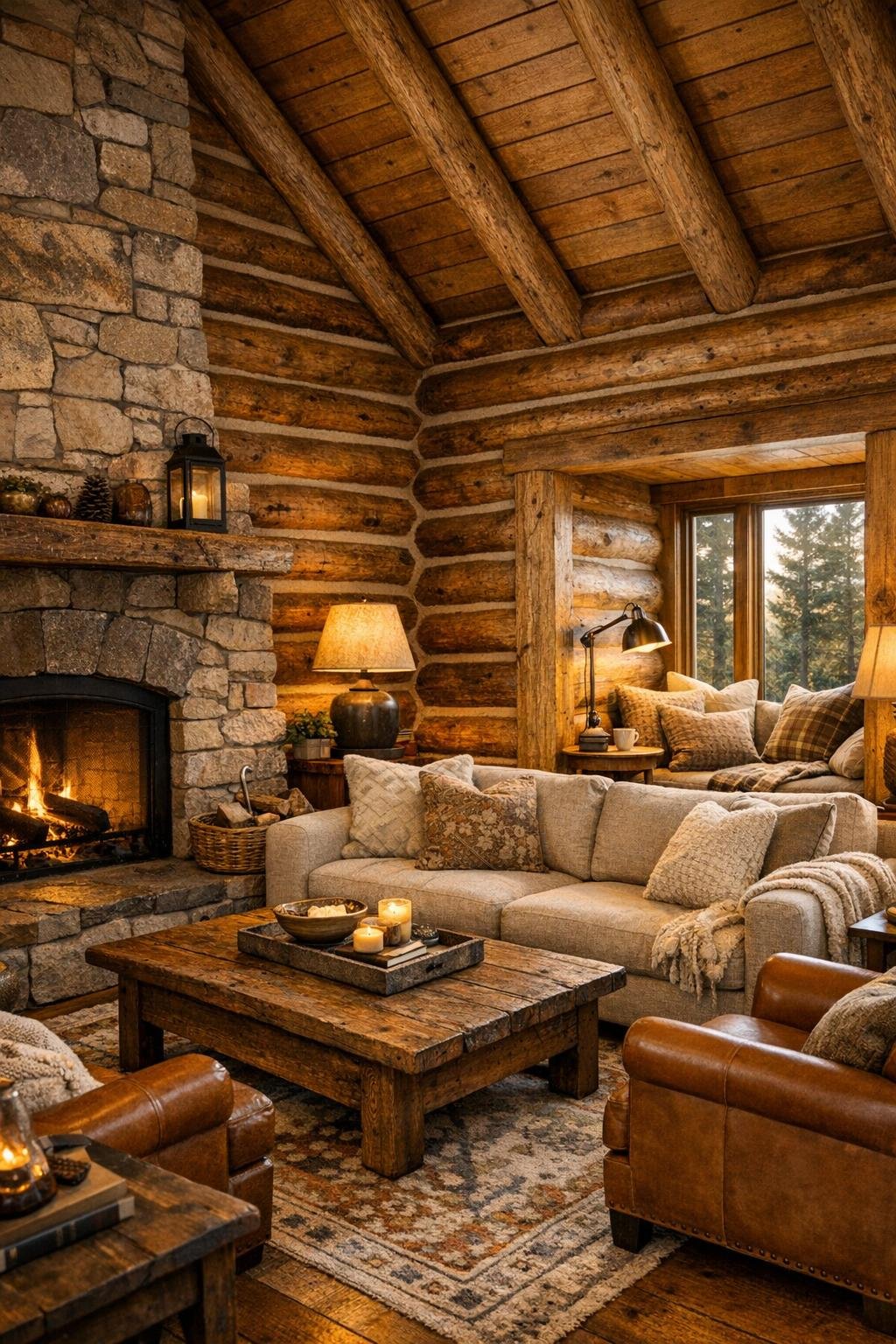
The living room is where the cabin character really opens up. Exposed log walls and a vaulted wood ceiling create that enveloping lodge-like feeling, while a substantial stone fireplace anchors the room without making it feel heavy. I can picture this being the space that earns its keep all winter long: a deep sofa in oatmeal linen, two caramel leather armchairs, a chunky reclaimed-wood coffee table, and a wool area rug in soft rust, cream, and charcoal to pull everything together. The palette stays close to nature, which lets the textures do most of the work.
My favorite detail here is the reading corner tucked near a generous window. It’s outfitted with a built-in bench layered with plaid and nubby neutral pillows, a slim bronze reading lamp, and a small side table just big enough for tea and reading glasses. The lighting throughout is warm and layered—ceiling beams with discreet fixtures, wall sconces near the fireplace, and table lamps that keep the room glowing rather than glaring. It feels calm, practical, and very easy to actually live in, which, honestly, is what I always want after a busy workweek.
Dining Room
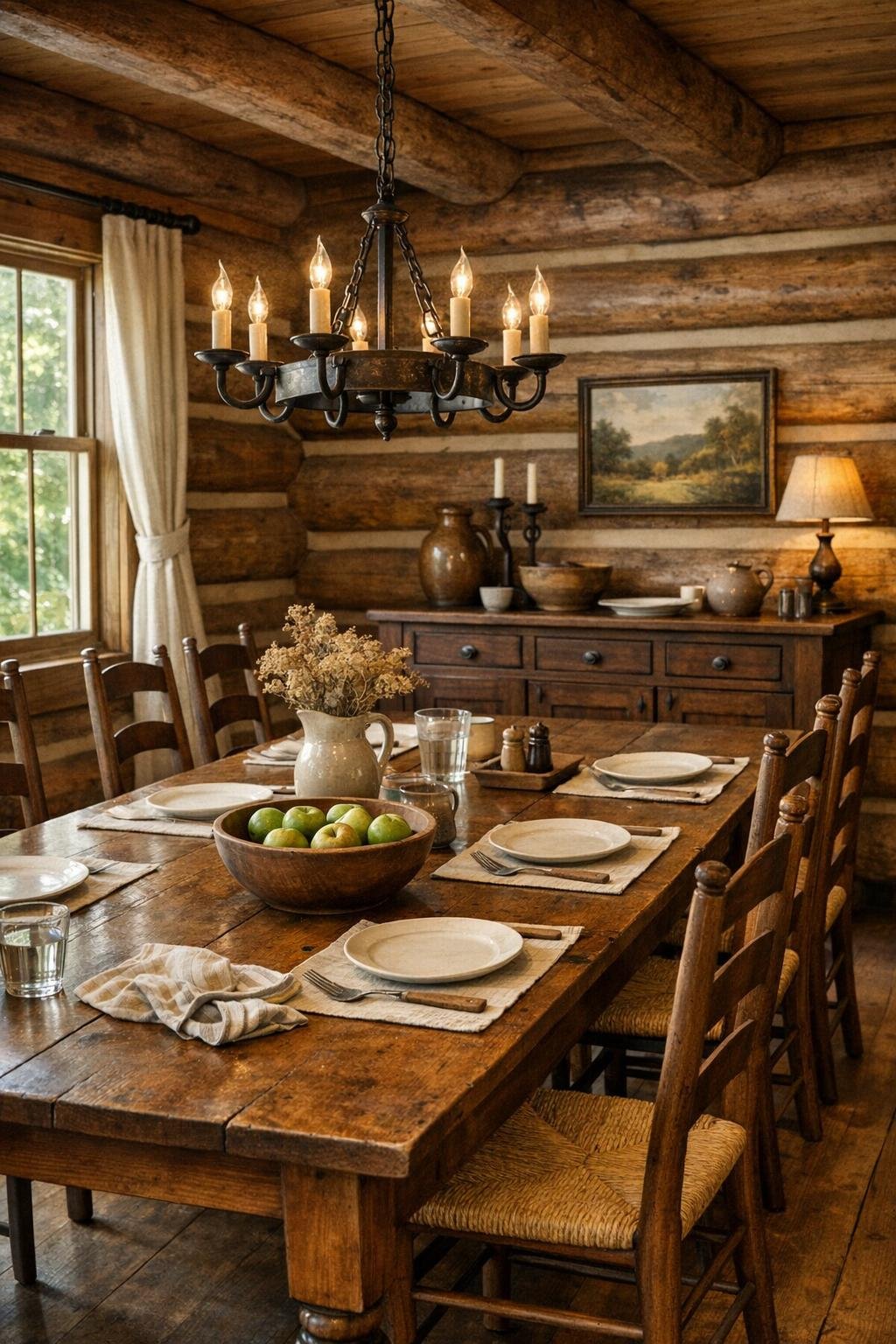
The dining room continues the home’s easygoing rustic language but sharpens it just enough to feel special. A long solid-wood table with a softly worn finish sits at the center, surrounded by ladder-back chairs with woven seats that look comfortable enough for lingering long after dinner. Overhead, a simple iron chandelier brings in a little structure and contrast, while a sideboard in darker stained wood adds visual weight and useful storage. I can absolutely imagine holiday meals here, but it also feels right for everyday breakfasts with the paper spread out and a pot of something simmering nearby.
What keeps the room from feeling too heavy is the editing. The window trim is clean, the wall decor is minimal, and the linens stay understated—just natural cotton, maybe a faded stripe or soft check. A low ceramic bowl, a few branches, and sturdy candlesticks are enough. There’s a nice connection to the surrounding rooms too, so the dining area feels social and open rather than boxed in. For anyone who likes a house that supports real routines, this room has that appealing mix of durability and quiet charm.
Kitchen
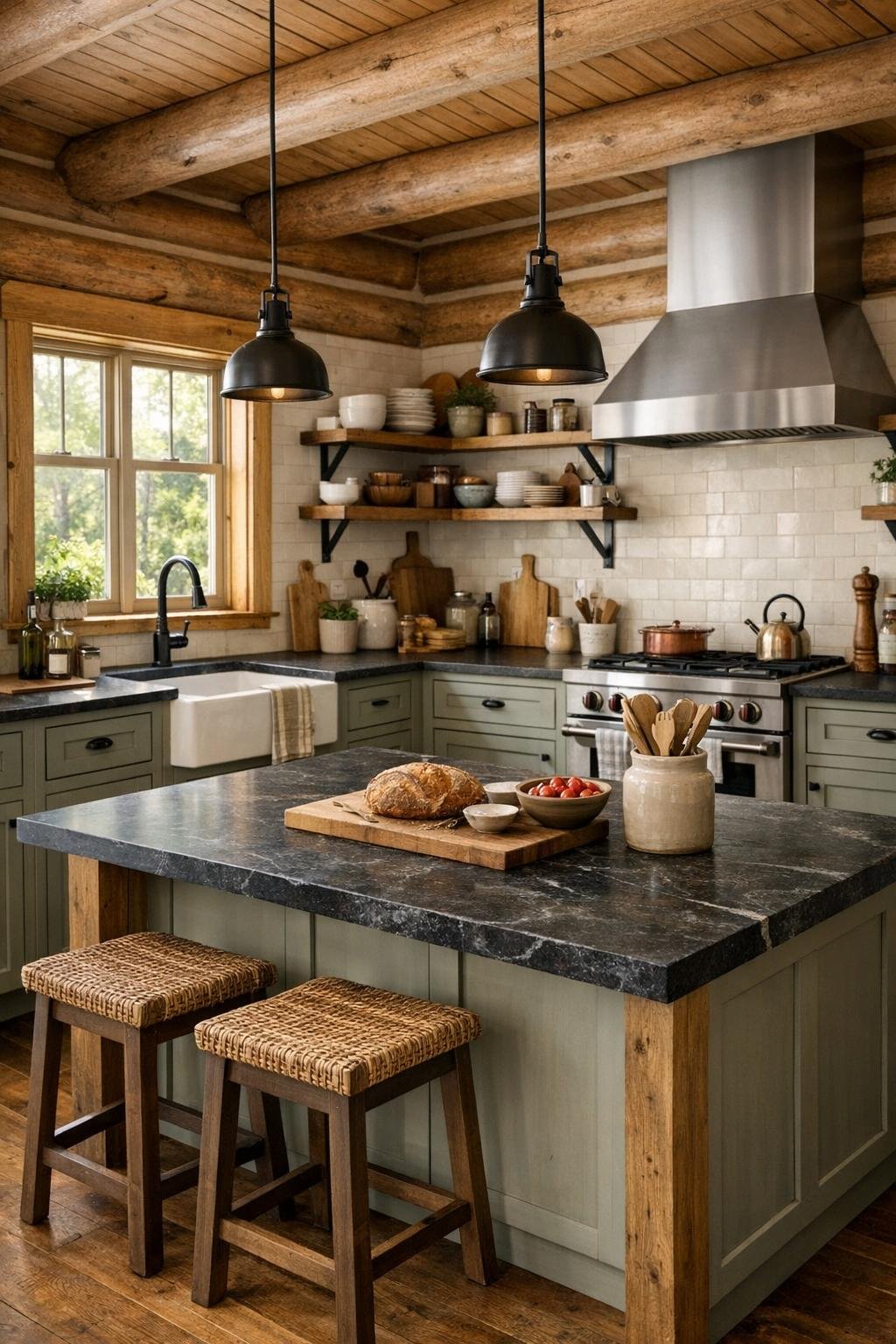
The kitchen is where this home really wins me over, probably because I’m always looking at a space through the lens of actual daily use. Instead of overcomplicating things, the layout is compact but smart: perimeter cabinetry in a muted sage or warm cream, open shelves for everyday dishes, and a central island topped in honed soapstone that can handle prep, serving, and casual conversation all at once. The cabinetry style is simple Shaker, which works beautifully with the logs because it keeps everything feeling clean and familiar rather than overly ornate.
There’s also a lovely tension between rustic and hardworking finishes here. A farmhouse sink sits under a window, the backsplash is a handmade-looking tile in an off-white matte glaze, and the hardware is dark metal with a slightly aged finish. I’d probably be meal prepping soup or chopping vegetables here on a Sunday, and the room seems designed for exactly that kind of rhythm. Under-cabinet lighting, a pair of modest pendants over the island, and plenty of natural light make the whole space bright enough for cooking without losing the home’s warm, cabin-like atmosphere.
Bedroom
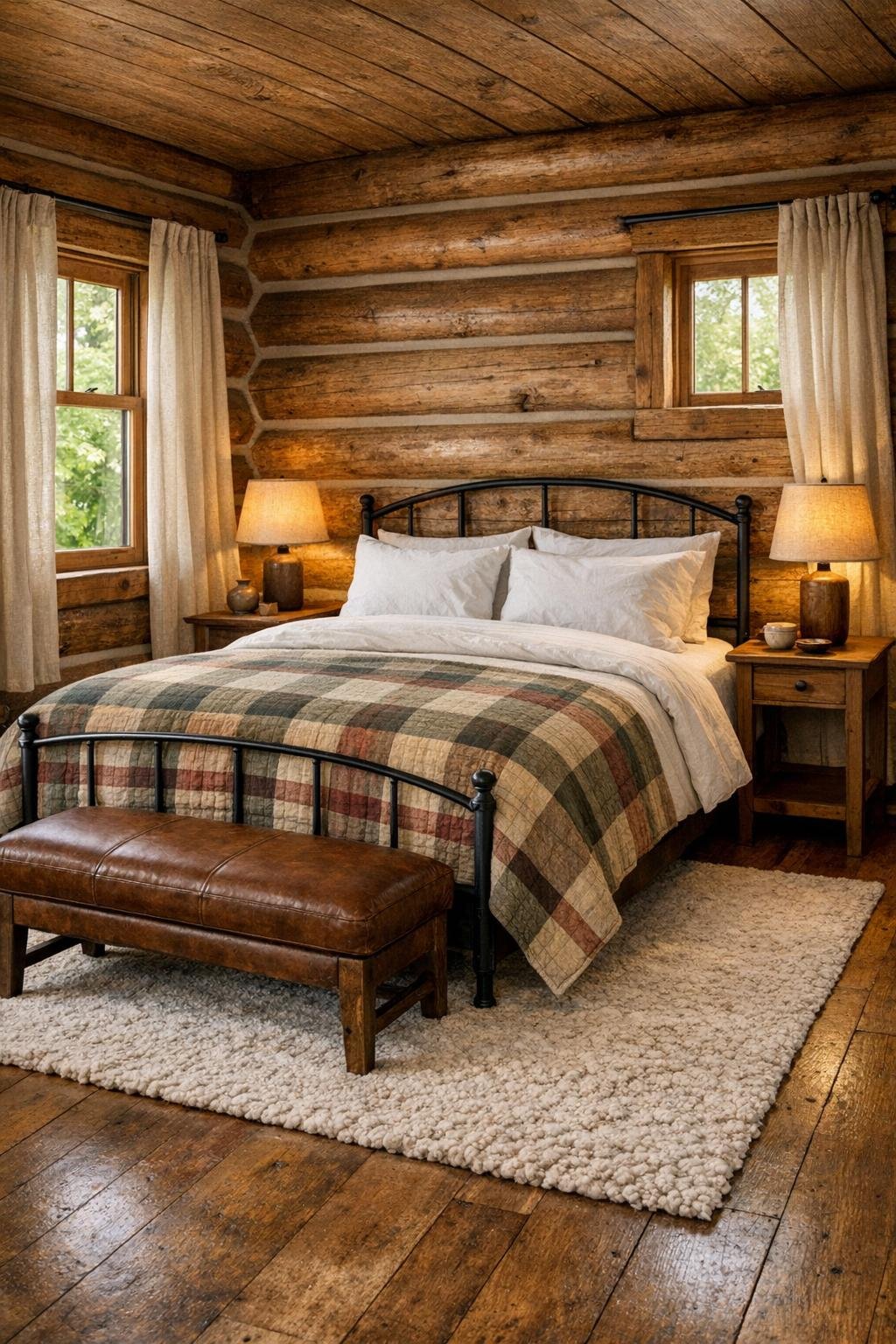
The bedroom takes a softer, quieter approach, which feels right after the richer textures in the main living spaces. Log walls remain visible, but they’re balanced with crisp white bedding, a tailored quilt in muted plaid, and linen drapery that filters the light instead of blocking it. The bed itself is substantial without being showy—either a simple wood frame or an iron bed with clean lines—and the nightstands are mismatched in that collected, lived-in way that makes a home feel personal rather than staged.
I especially like how the room avoids the usual cabin clichés. Instead of antler-heavy decor or too much dark furniture, there’s restraint: a wool rug underfoot, a worn leather bench at the foot of the bed, ceramic lamps with warm shades, and just enough art to break up the wood surfaces. The result is restful and grounded. It feels like the kind of room where you’d actually sleep well, wake up slowly, and maybe keep a stack of books within reach because the whole house seems to encourage that pace.
Bathroom
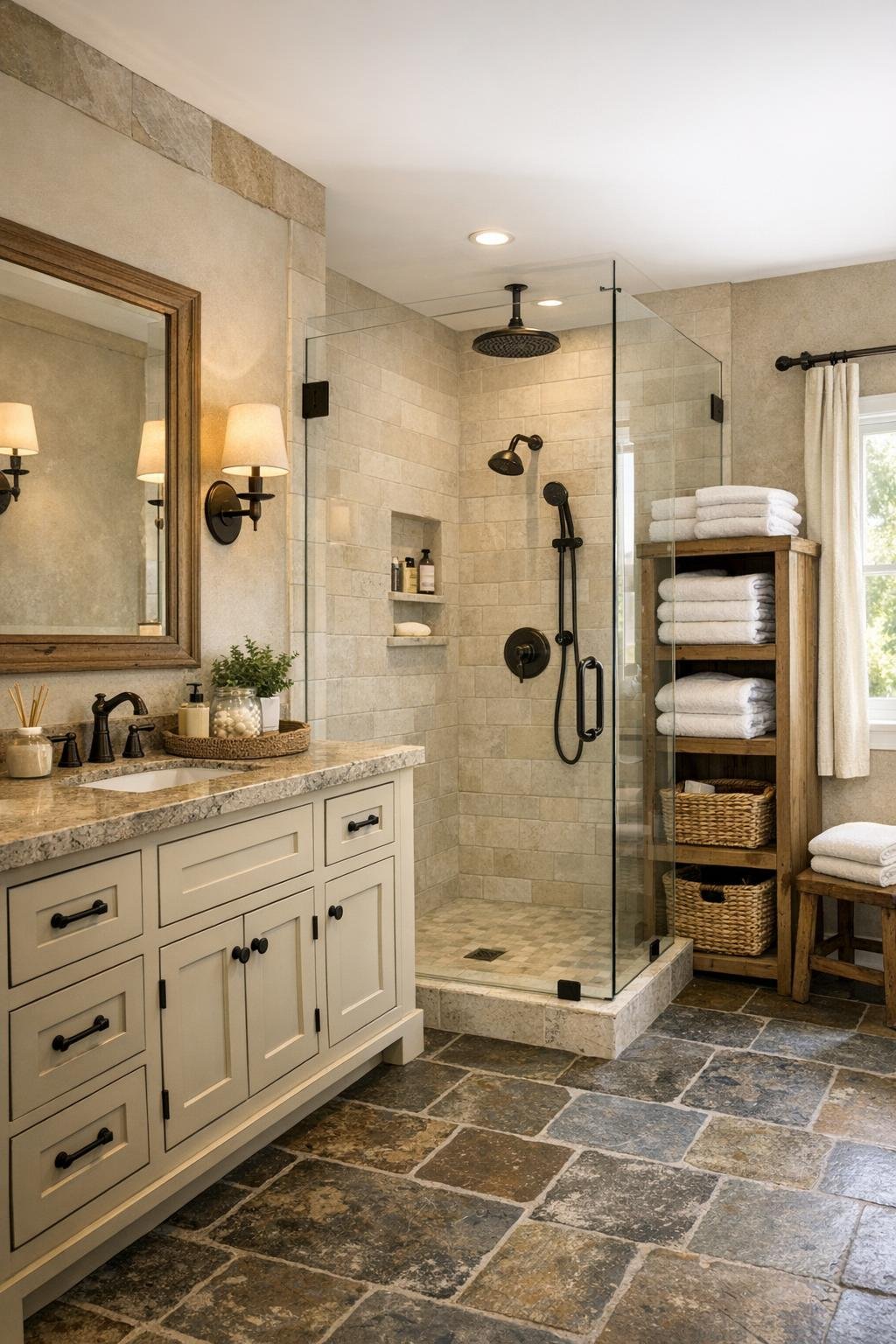
The bathroom is one of the smartest spaces in the home because it translates the rustic palette into something fresher and more refined. Natural stone or slate-look floor tile grounds the room, while painted wood cabinetry in a soft warm gray or cream keeps it from feeling visually dense. A wide vanity with a sturdy stone or quartz top offers enough counter space for real life, and I appreciate that the mirror and sconces would likely be chosen for warmth rather than trend—something simple in blackened metal or aged bronze.
The bathing area feels especially inviting. I imagine a glass-enclosed shower lined in creamy tile, maybe with a pebble or textured stone floor for just a hint of spa influence, plus thick white towels and woven storage baskets to soften the harder finishes. If there’s room for a soaking tub under a window, even better. It’s not flashy, but it is deeply appealing in that practical-retreat way: clean, comfortable, and easy to maintain, which matters more than ever in a home meant to be enjoyed every day.
Other Areas
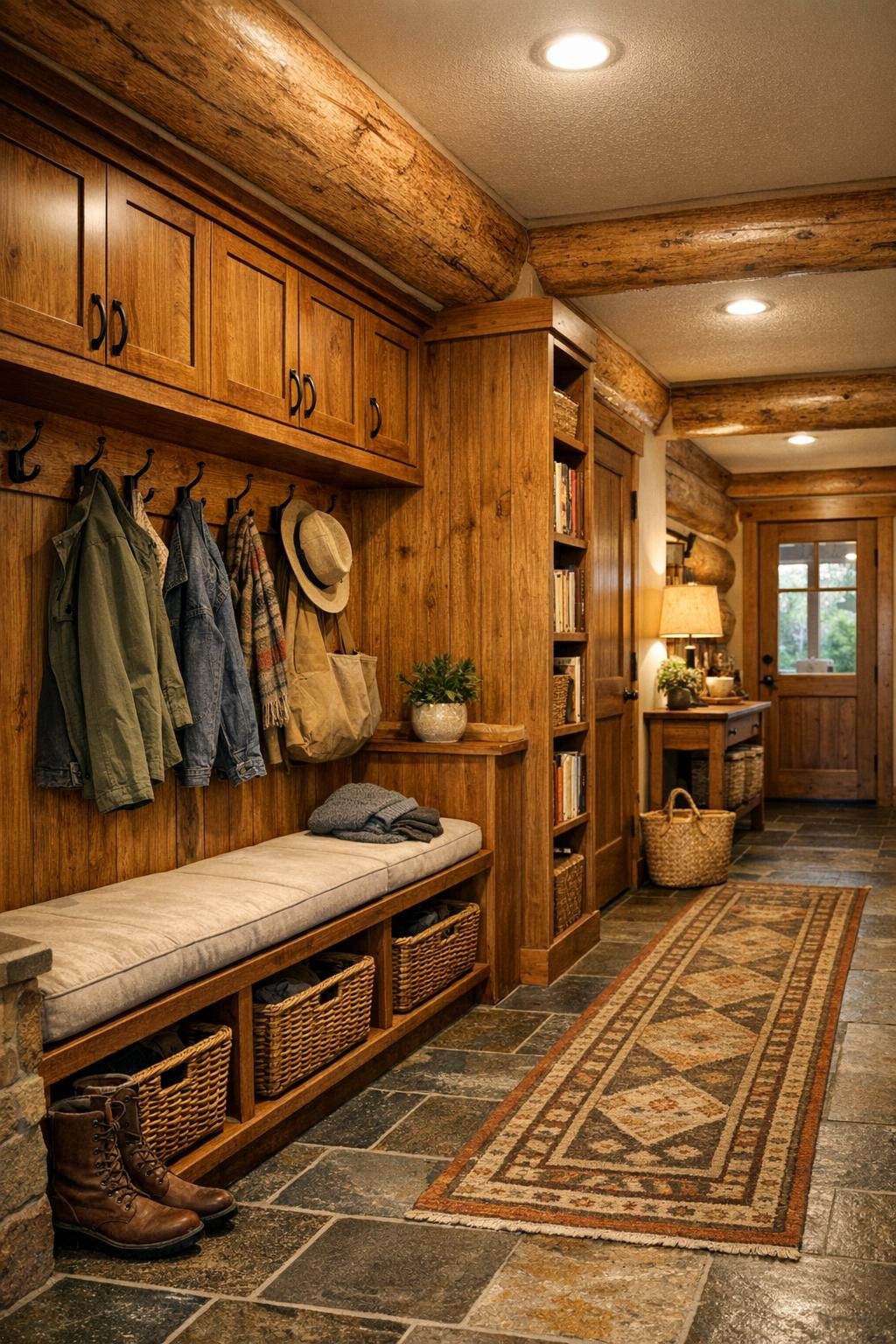
What rounds out the house are the transitional spaces, and this design handles them beautifully. A mudroom or entry zone is almost essential in a home like this, and here it would likely include built-in benches, closed storage for coats and boots, open hooks, and a durable floor that can handle snow, dirt, and whatever the day brings in. There may also be a compact loft, hallway niche, or small office corner, each treated with the same practical warmth as the main rooms. Nothing feels wasted, which is something I always notice in smaller-footprint homes.
These in-between spaces are also where the personality really shows up. A narrow bookshelf lined with well-loved novels, a vintage runner in the hall, baskets tucked under a bench, framed landscape sketches, maybe even a peg rail with quilted jackets ready to grab on the way out—it all contributes to the feeling that this place has been thoughtfully adapted for real routines. The home doesn’t rely on square footage to make an impression; it relies on comfort, usefulness, and a clear point of view.
Why You'd Live Here
You’d live here because it offers the kind of comfort that doesn’t need to announce itself. The materials are honest, the rooms are scaled for daily life, and every design move seems aimed at making the home easier to use and nicer to be in. It honors the humble origins of a hunting shack without clinging to them, turning a once-basic structure into something warm, durable, and genuinely inviting.
For me, the biggest draw is that this home understands how people actually want to live, especially in a season of life when home can become a true destination. There’s space to cook, to host, to read, to slow down, and to keep things manageable. And that reading corner? It’s the perfect symbol of the whole design: simple, cozy, and impossible not to love.