From the road, this faded tan farmhouse reads as modest and a little sun-washed, the kind of place that keeps its best qualities tucked just out of sight. What caught me here was the tension between simplicity and polish: a familiar rural silhouette softened by age on the outside, then sharpened indoors by thoughtful material choices, generous light, and rooms that feel composed without ever turning fussy. This concept home imagines exactly the kind of balance I’m always drawn to—practical, warm, and quietly elegant.
Set against an open landscape and shaped by a straightforward farmhouse form, the house has an ease that feels honest from the start. Inside, that ease translates into creamy neutrals, weathered wood, matte metals, and a layout that seems designed for real daily rhythm, the way a good kitchen flows when you’re cooking from memory and instinct. Nothing feels overdone; every finish and furnishing seems chosen to make the home more livable, more tactile, and more grounded.
Exterior
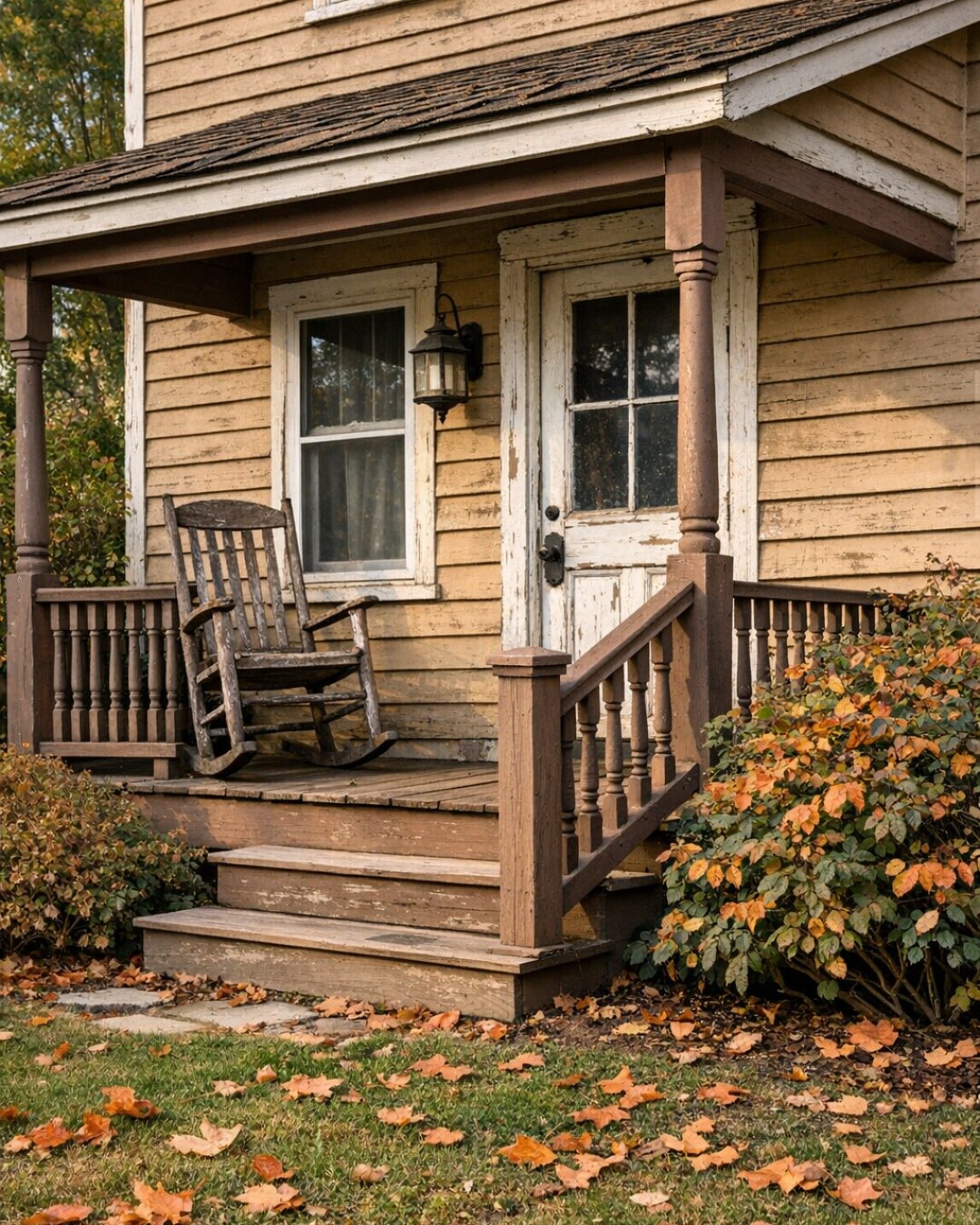
The exterior leans into understatement, and I think that restraint is exactly why it works. The faded tan siding has a chalky, time-softened quality that gives the house immediate character, while crisp trim in a warm off-white keeps the profile from looking tired. A dark charcoal roof adds just enough contrast to anchor the palette, and the front porch—simple posts, modest overhang, clean-lined rail detail—creates a transition that feels welcoming rather than ornamental. I can easily imagine the late-afternoon light making the tan read almost honeyed, with the whole facade settling comfortably into the landscape.
What makes the exterior memorable is its proportion and texture more than any one dramatic feature. The windows are symmetrically placed in a way that honors the farmhouse language, but they appear slightly larger and cleaner lined than expected, hinting at the updated interior mood. Gravel, native grasses, and a few restrained planting beds keep the setting natural and unfussy, while the front door in a muted deep brown introduces a richer note without breaking the calm palette. It is the kind of exterior that doesn’t demand attention but absolutely rewards a second look.
Living Room
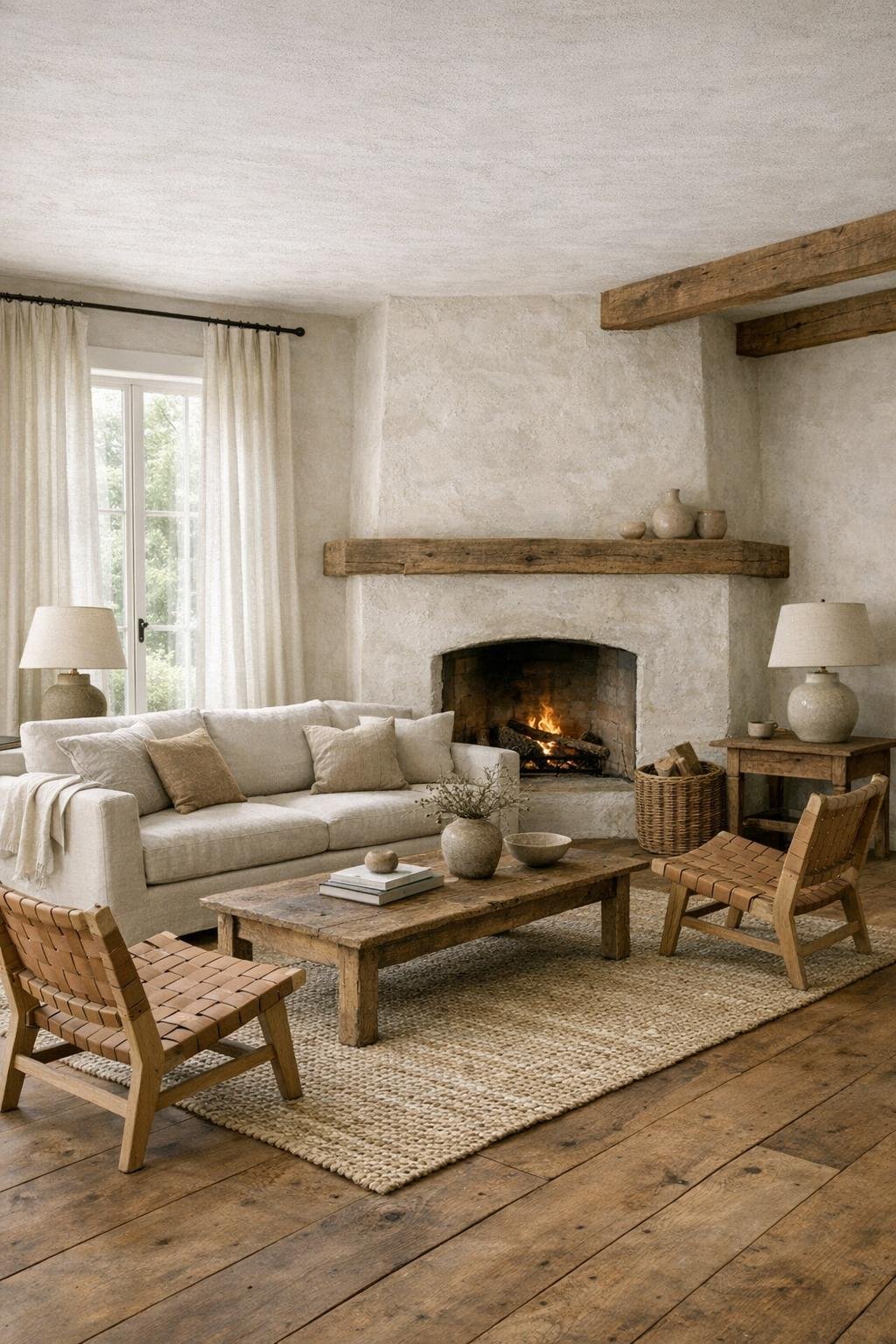
The living room is where the house starts to reveal its real point of view. The palette stays quiet—oatmeal, flax, warm white, and soft brown—but the layering is what gives it depth. Wide-plank wood floors with a low-sheen finish ground the room, while plaster-toned walls bounce light in a way that feels velvety rather than stark. A substantial sofa in a nubby natural fabric faces a simple fireplace with a limewashed surround, and a pair of low, oak-framed lounge chairs keep the arrangement conversational. I like that the furniture is scaled for comfort, not just appearance; it invites you to settle in for a long evening.
Lighting and texture do a lot of work here. A large woven rug softens the footprint, linen drapery filters daylight without blocking it, and a mix of ceramic lamps and a restrained iron overhead fixture keeps the room warm after sunset. There is very little that feels decorative for decoration’s sake. Instead, I notice thoughtful contrasts: smooth plaster against rougher wood grain, matte black accents against pale upholstery, open negative space balanced by shelves with a few well-chosen books and handmade vessels. The overall effect is calm, but not sleepy—more like a room that knows how to hold conversation, coffee, and a rainy afternoon equally well.
Dining Room
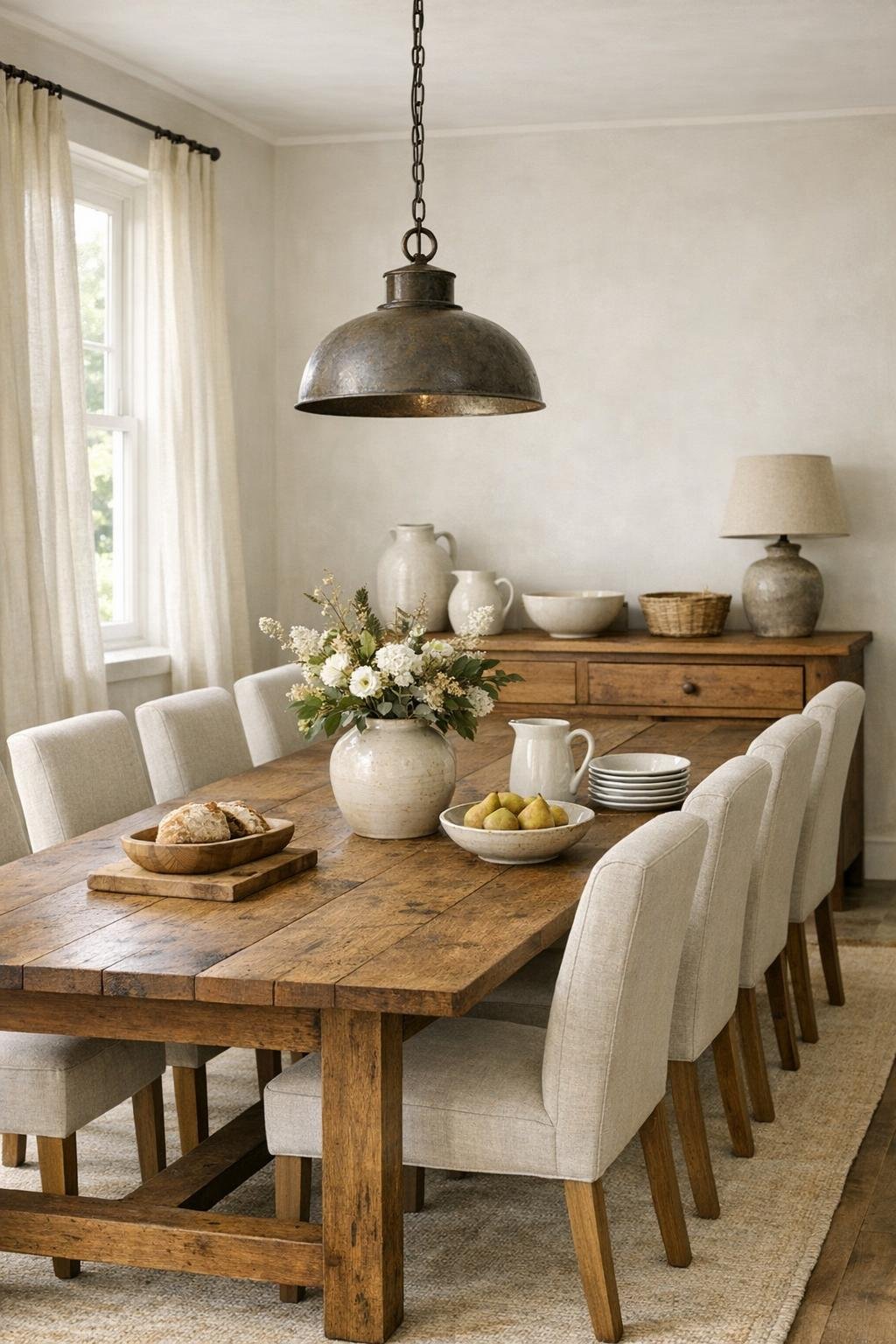
The dining room carries the same quiet confidence but with a little more structure. A long solid-wood table sits at the center, its surface showing enough grain and wear variation to feel substantial and real. Surrounding it are dining chairs with gently curved backs, upholstered in a durable flax-colored textile that softens the room’s straight lines. The walls remain pale and restrained, but here I’d say the architecture takes the lead: taller baseboards, a cased opening with subtle trim, and windows that frame the outdoor light like still-life compositions. It feels formal enough for a holiday meal and relaxed enough for an ordinary Tuesday supper.
As someone who spends a lot of time thinking about how people gather around food, I appreciate how this room avoids stiffness. A linear pendant in aged metal hangs low enough to define the table without crowding it, and a vintage-style sideboard along one wall adds both storage and visual weight. The styling stays useful—ceramic serving bowls, stacked linen runners, a few stemmed glasses catching light—so the room reads as lived in rather than staged. The color story remains rooted in tan, cream, oak, and softened black, which lets the natural textures carry the atmosphere.
Kitchen
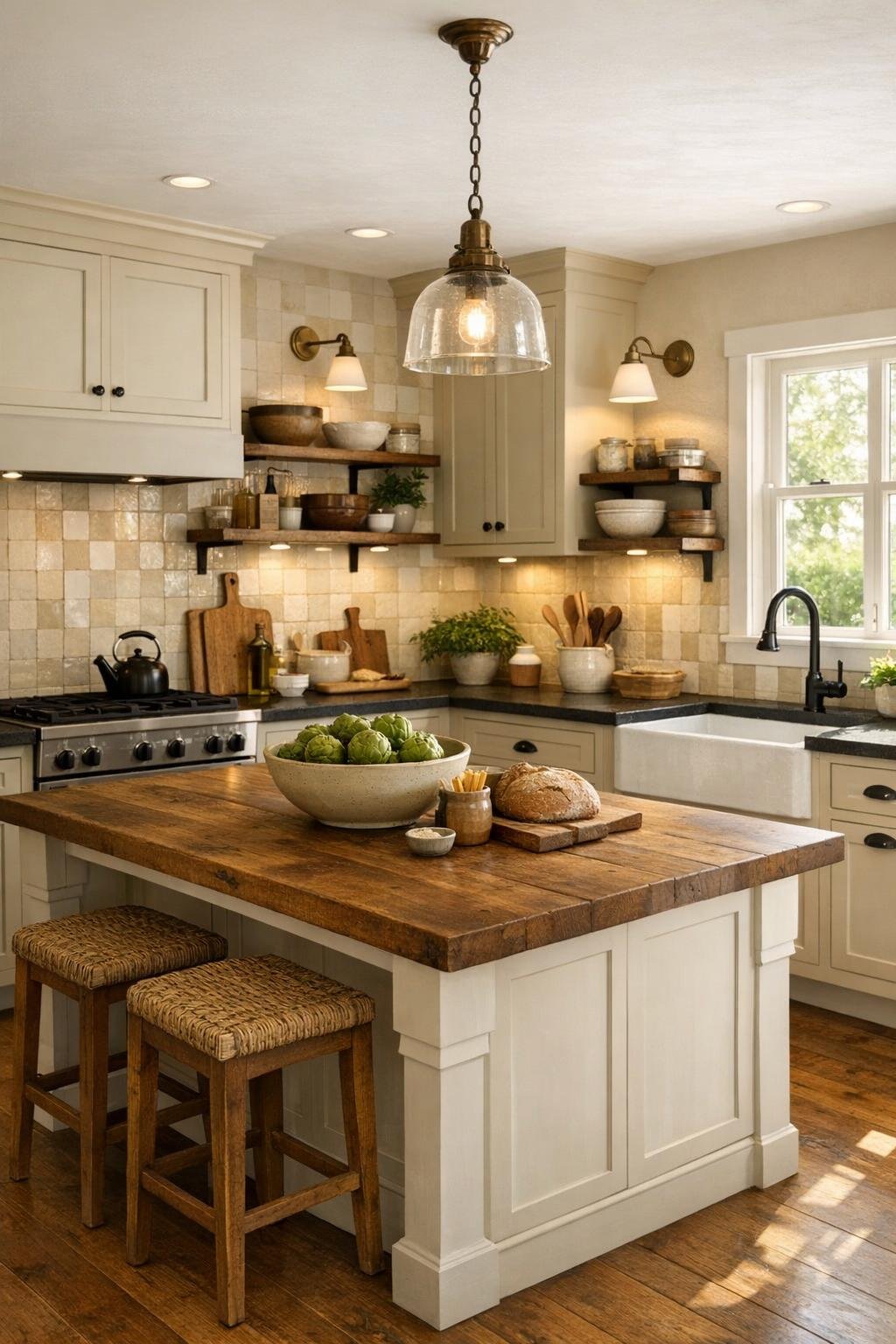
The kitchen is, for me, the emotional center of the house, and this one is especially well judged. Cabinetry in a creamy putty tone keeps the room soft, while soapstone-look counters bring in depth and a grounded, hardworking feel. I love the decision to use a mix of closed storage and a few open shelves; it gives the eye a place to rest while still allowing everyday objects—stacked bowls, wooden cutting boards, a crock of utensils—to become part of the design. The island is generously sized but not oversized, topped in wood to introduce warmth and break up the painted surfaces.
Functionally, the layout feels smart in the way a serious cook would appreciate. There is clear landing space by the range, ample prep area, and lighting that seems designed for actual use rather than mood alone: shaded sconces, discreet under-cabinet illumination, and a pair of simple pendants over the island. The hardware is dark and unfussy, the backsplash is a handmade-look tile with gentle variation, and the floor continues in wood so the kitchen remains connected to the rest of the house. It is polished, certainly, but still has that essential farmhouse quality of being ready for pie dough, soup stock, or an ambitious weekend dinner.
Bedroom
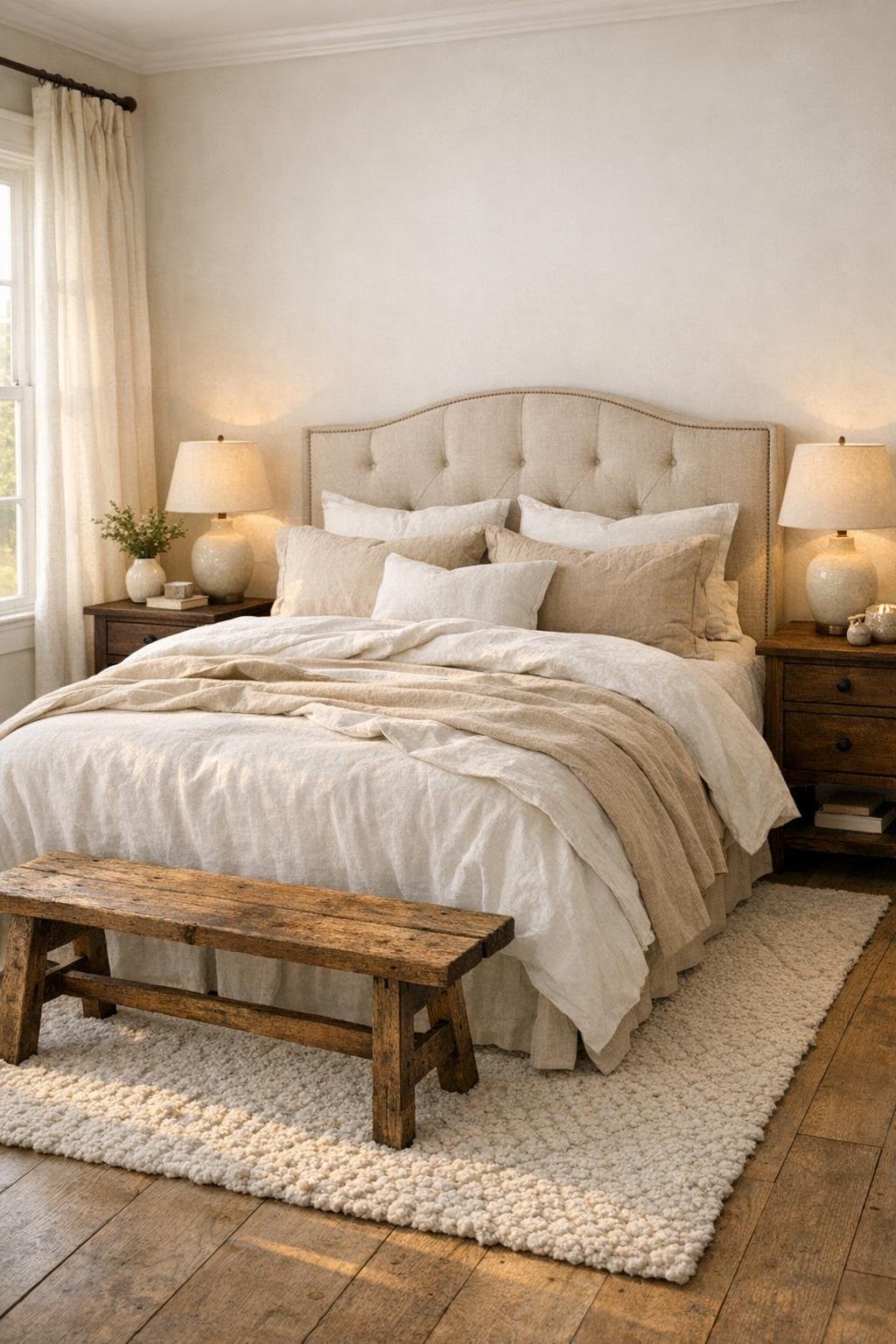
The bedroom takes the home’s softness and turns it into something almost cocooning. The bed is dressed in layered natural linens—ivory, sand, and a faded clay accent—that add visual warmth without relying on pattern. An upholstered headboard in a subtle oat tone keeps the room feeling padded and restful, while darker wood nightstands introduce a bit of contrast. I especially like bedrooms that do not confuse luxury with excess, and this one understands that comfort often comes from restraint: fewer objects, better materials, calmer tones.
There is a gentle rhythm to the room created by the repetition of texture. Linen drapes, a wool rug underfoot, a bench at the foot of the bed in weathered wood, and softly diffused bedside lighting all contribute to a sense of quiet. The walls stay pale, almost creamy, which allows daylight to move through the room with a kind of hush. Rather than filling corners for the sake of completeness, the layout leaves breathing room, and that gives the bedroom its elegance. It feels like a place where sleep would come easily and mornings would start without friction.
Bathroom
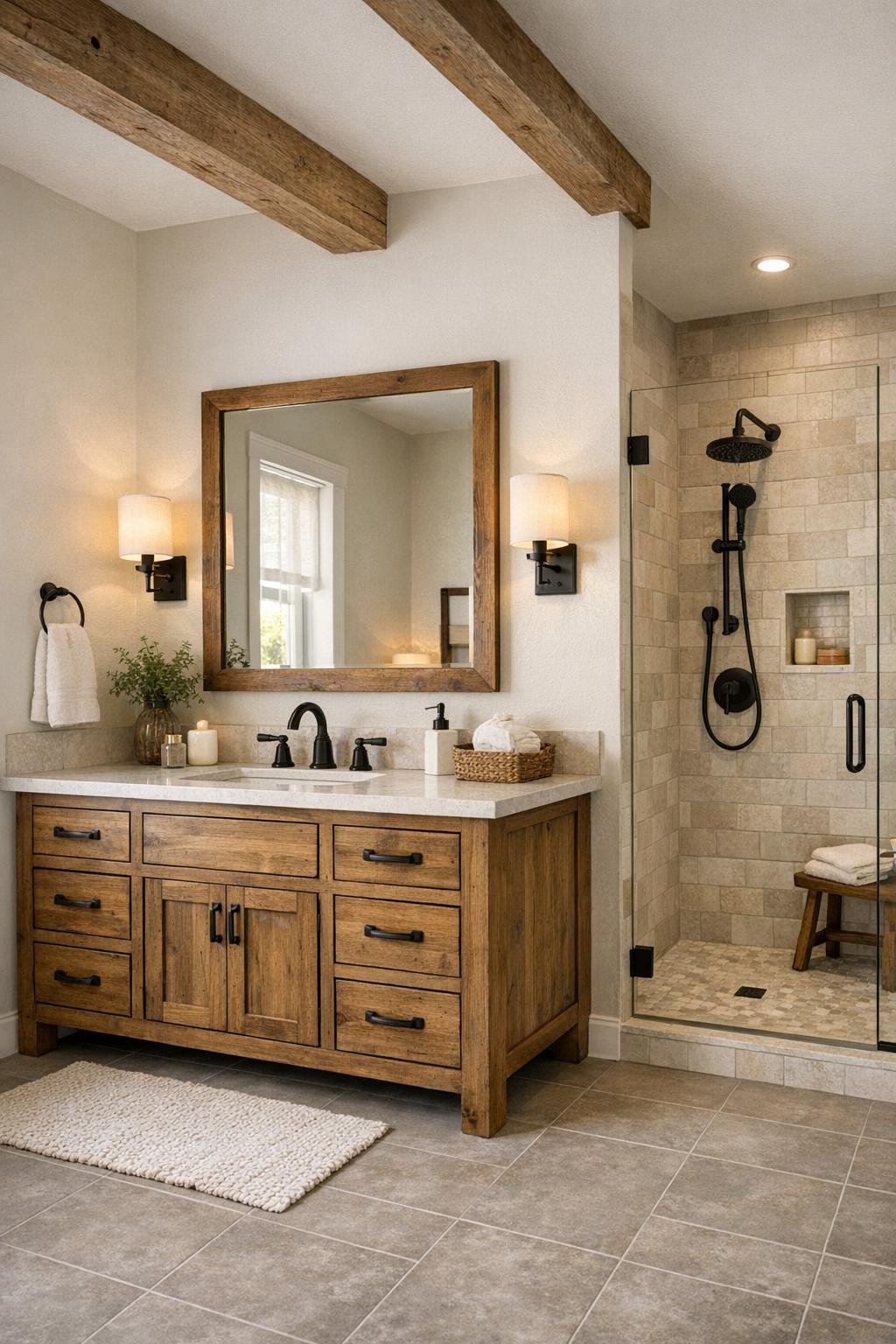
The bathroom is one of the strongest examples of how this house handles contrast. Pale stone-look surfaces and warm white walls create a clean envelope, but darker metal fixtures and a richly toned wood vanity keep it from feeling too airy or anonymous. I’m drawn to the vanity in particular: simple shaker lines, visible grain, and a countertop that looks durable enough for daily life. A large framed mirror expands the light, while wall sconces on either side provide a flattering, practical glow that is much better than a single harsh overhead source.
What keeps the room aligned with the rest of the house is its tactile quality. The floor tile has a muted matte finish, the shower tile carries slight tonal variation, and plush cotton towels bring in another necessary softness. There is just enough traditional farmhouse reference—a bit of panel detailing, an apron-edge sink, a classic faucet profile—but it is all edited into something cleaner and more current. The result is a bathroom that feels fresh and restorative, not precious, which is exactly the note I want in a hardworking home.
Other Areas
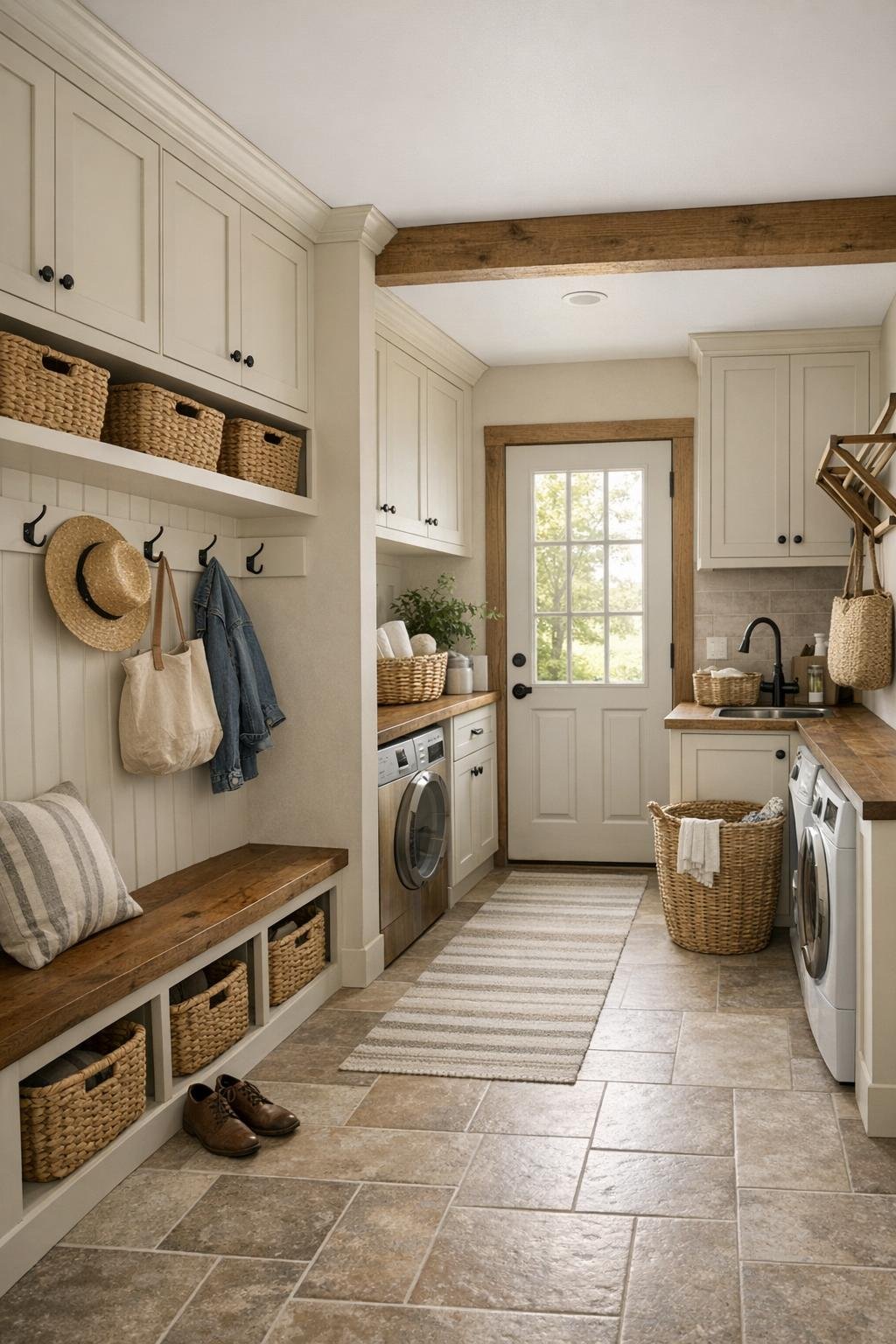
The supporting spaces are handled with the same care, which is often the real sign of a well-resolved home. I imagine a mudroom with built-in wood benches, pegs, and closed cabinets painted in the same putty tone as the kitchen, giving everyday storage a tailored look. A laundry area could easily sit just beyond, brightened with checkerboard or brick-pattern tile, a practical counter for folding, and woven baskets that add texture without clutter. Even a hallway here would matter, with art placed sparingly, warm sconces, and wood floors that keep the circulation spaces connected to the rooms around them.
There is also room in this home’s language for a small reading nook, an upstairs landing, or a pantry that feels unexpectedly beautiful. I can picture shelves lined with dry goods in glass jars, oak trim, and a little window bringing in side light—the kind of modest detail that makes daily routines feel more considered. These in-between spaces do not compete with the main rooms, but they deepen the experience of the house. They make it feel complete, like every square foot has been asked to be useful, attractive, and quietly comforting.
Why You'd Live Here
You would live here because it understands that beauty is not separate from usefulness. The rooms are attractive, certainly, but more importantly they seem designed for the steady rituals of living—cooking, gathering, resting, coming in from outdoors, setting things down, picking them back up. I find that kind of design far more persuasive than anything flashy. This house knows how to be calm without being bland and polished without losing its warmth.
More than that, it offers a lesson I always appreciate: first impressions can be incomplete. The faded tan farmhouse exterior is appealing in a quiet way, but the interior is what gives the home depth, personality, and a true sense of invitation. For anyone who loves natural materials, a hardworking kitchen, and spaces that feel settled rather than showy, this is the kind of home that lingers in the mind long after the tour is over.