From the road, this farmhouse has the kind of quiet presence I’ve always trusted most. Its faded gray siding, simple roofline, and unhurried shape settle into the landscape with the ease of something that belongs there, as if wind, weather, and long seasons had gently taught it how to stand. Inside, though, the house opens into a softer, more considered world—one where humble country bones are paired with thoughtful finishes, warm light, and rooms that feel both practical and deeply comforting.
What makes this home special is the way it honors rural simplicity without feeling stuck in the past. Even as a concept design, it carries the emotional truth of a real farmhouse: honest materials, spaces made for gathering, and little moments of beauty tucked into everyday use. It feels like the sort of place where muddy boots wait by the door, bread cools on the counter, and every room seems to ask you to stay just a little longer.
Exterior
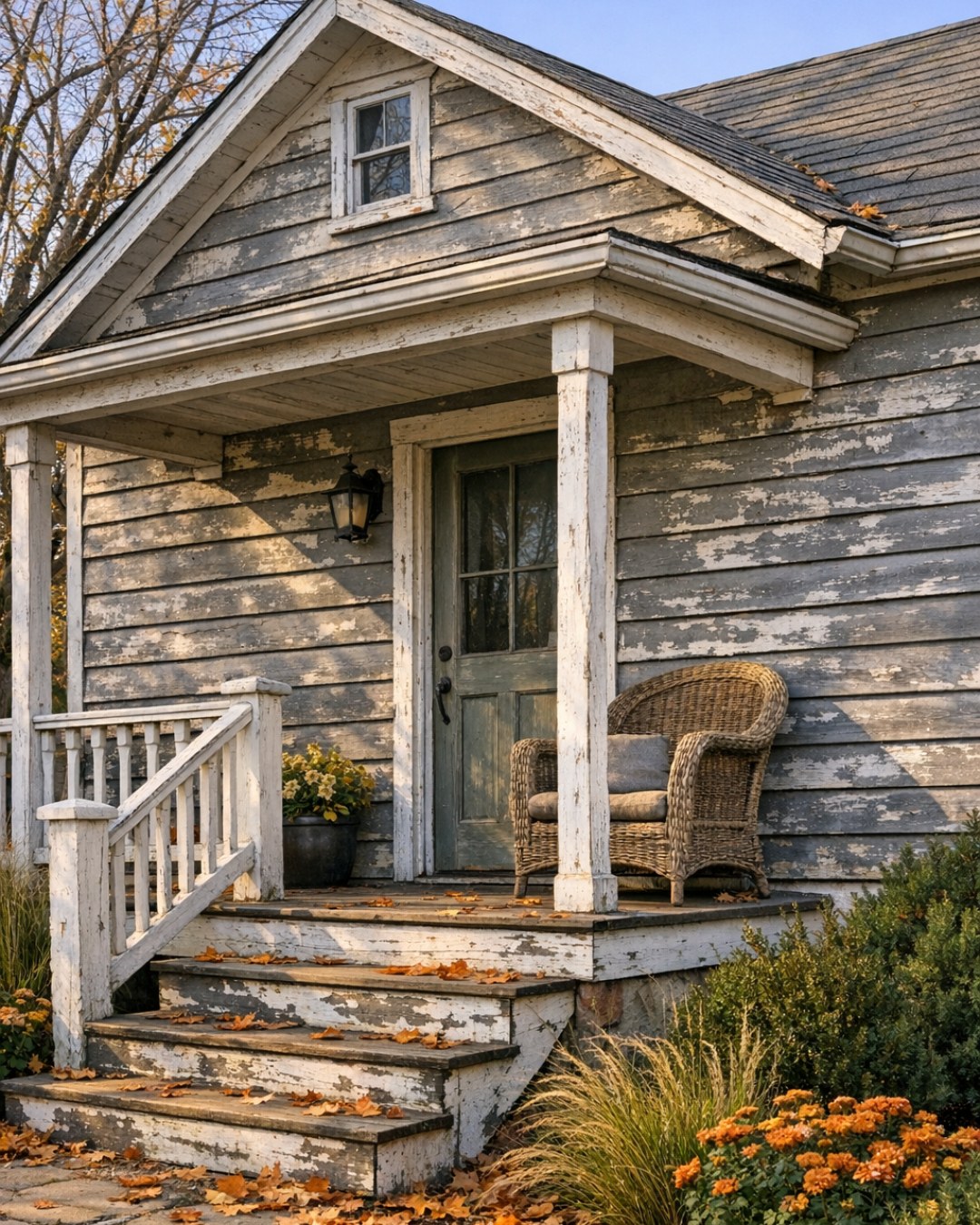
The exterior keeps its restraint, and that is exactly its charm. Weathered gray clapboard siding gives the home its name and its character, while crisp off-white trim around the windows and porch posts provides just enough contrast to sharpen the silhouette. A broad front porch stretches across the face of the house, furnished simply with black rocking chairs, a painted bench, and sturdy planters filled with loose, meadowy greens rather than fussy arrangements. The roof, in a muted charcoal metal, brings a practical farm note, and the whole composition feels grounded by native grasses, gravel paths, and a yard that is shaped more by use than ornament.
I’m especially drawn to how the home avoids polish for polish’s sake. The paint looks sun-softened rather than freshly lacquered, the stone at the foundation has a rough, timeworn texture, and the porch floorboards appear scrubbed clean but not precious. Black iron lanterns flank the entry with a plainspoken elegance, and the windows—tall, straightforward, and generously spaced—hint at the brightness within. It is a house that doesn’t call attention to itself, but once you notice the balance of proportion and the confidence of its simplicity, it becomes very hard to look away.
Living Room
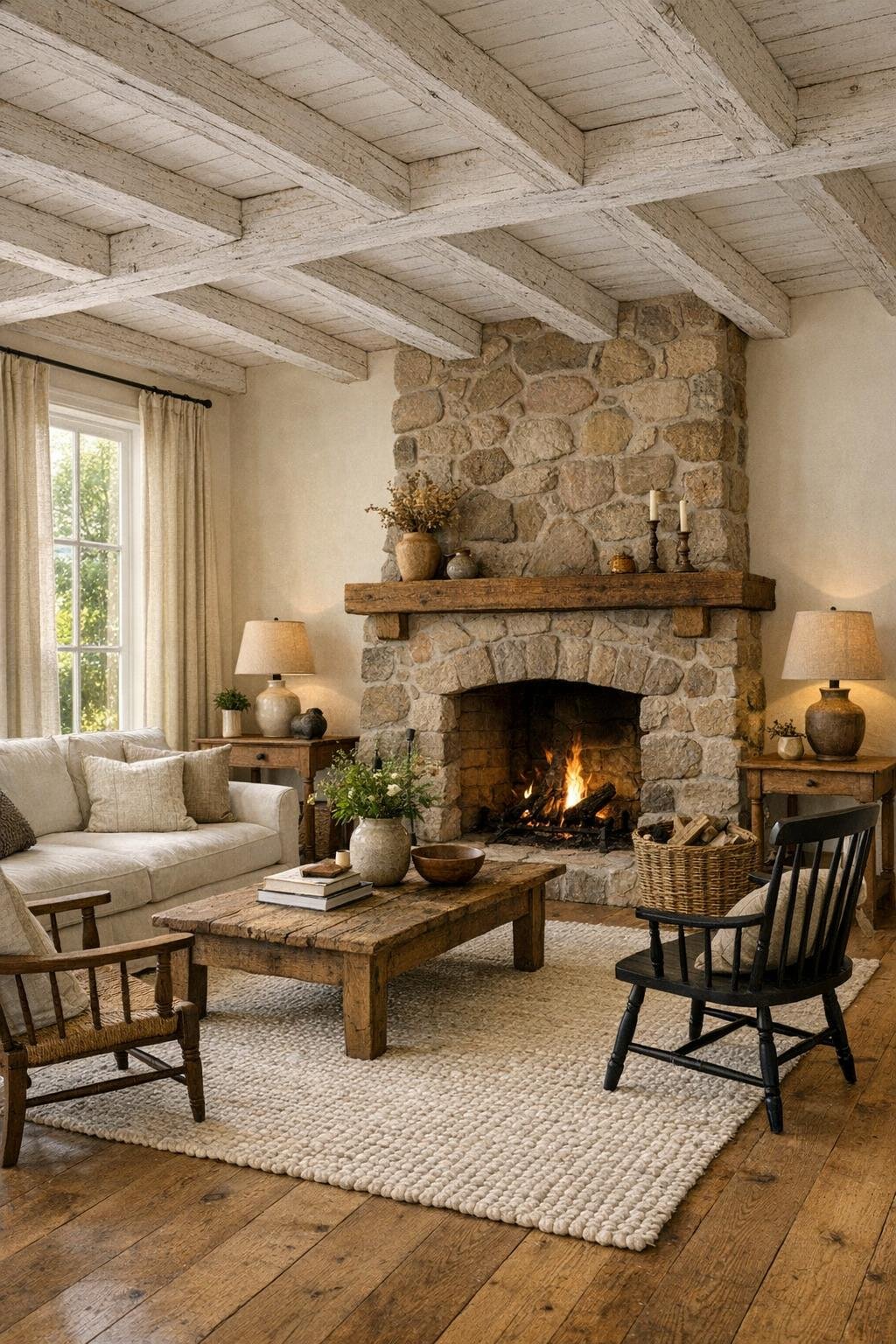
The living room is where the interior first reveals its gentle surprise. Whitewashed ceiling beams stretch overhead, catching natural light from tall windows dressed in soft flax linen curtains that hang with an easy, unfussy drape. The walls are a warm cream rather than a hard white, and that choice gives the room a settled glow I associate with old homes lit by afternoon sun. Underfoot, wide-plank oak floors in a matte, honeyed finish add warmth, while a large woven wool rug in faded tobacco, oatmeal, and muted blue anchors the seating arrangement.
The furniture is generous and inviting without becoming overstuffed. A slipcovered sofa in natural linen faces a substantial stone fireplace, joined by two spindle-back armchairs and a deep leather club chair that looks as if it would only improve with years of use. I can just imagine setting a pie plate or coffee cup on the chunky reclaimed-wood table at the center. Lamps with ceramic bases and pleated shades soften the room in the evening, and a long shelf over the mantel holds simple pottery, framed landscapes, and a few old books—enough to give the space memory and soul without crowding it.
Dining Room
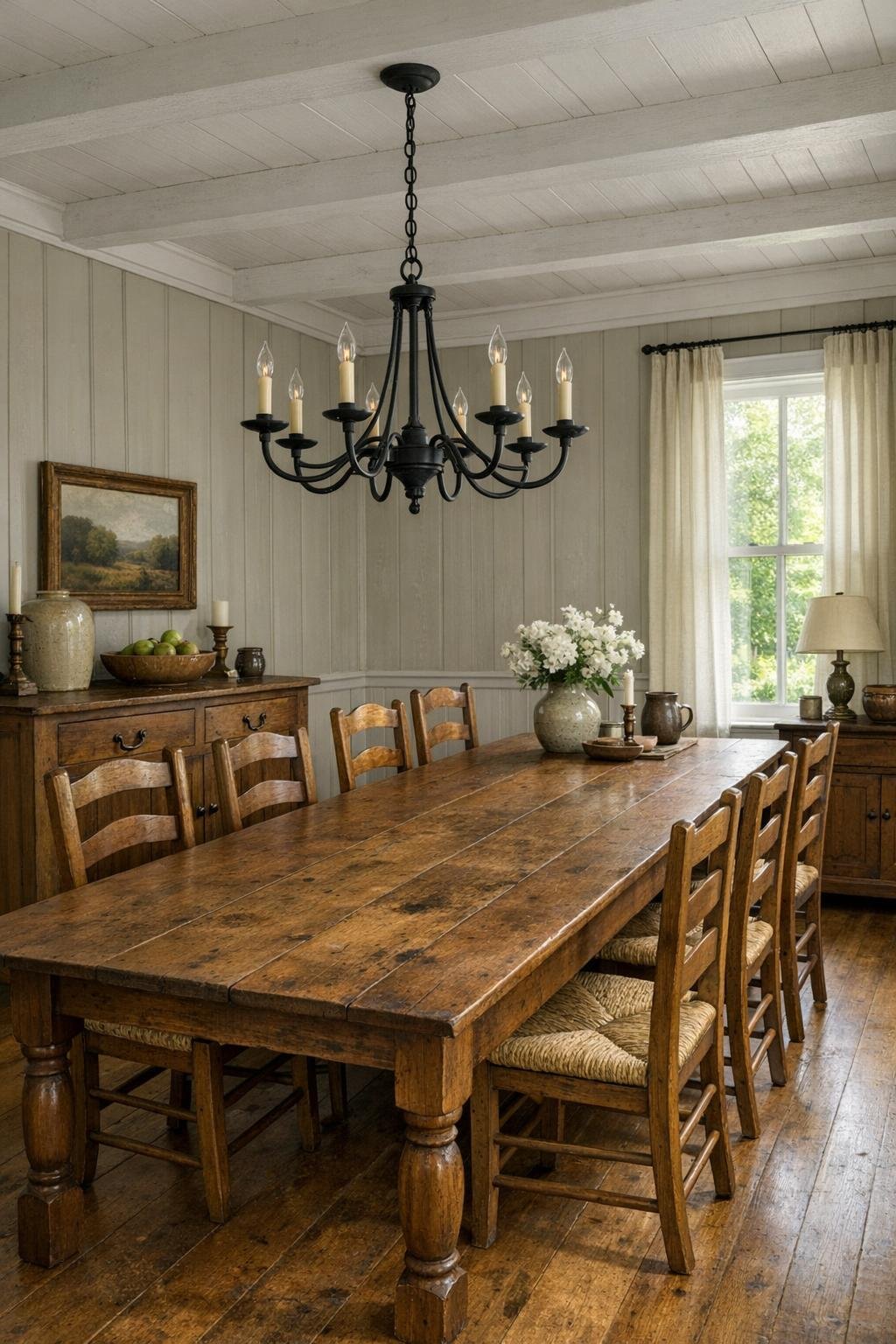
The dining room carries a little more formality, though in the plain, country way I love best. A long solid-wood table, rubbed to a soft low sheen, sits at the center of the room beneath a black iron chandelier with candle-style bulbs. The walls are clad in painted paneling in a pale mushroom tone, which gives the space depth and a slightly cocooning quality, especially against the white trim and the darker wood tones of the furniture. Tall windows bring in light from two sides, making the room feel cheerful by day and intimate by supper.
What I find especially successful here is the mixture of sturdy and graceful elements. Ladder-back dining chairs with woven rush seats keep the room rooted in farmhouse tradition, while a vintage-style sideboard introduces a touch of refinement with its turned legs and aged brass hardware. On top, I’d expect to find a simple crock of branches, maybe a stack of everyday plates, and a linen runner folded just so. The room feels designed for holiday tables and Tuesday night meatloaf alike, and that balance is no small thing.
Kitchen
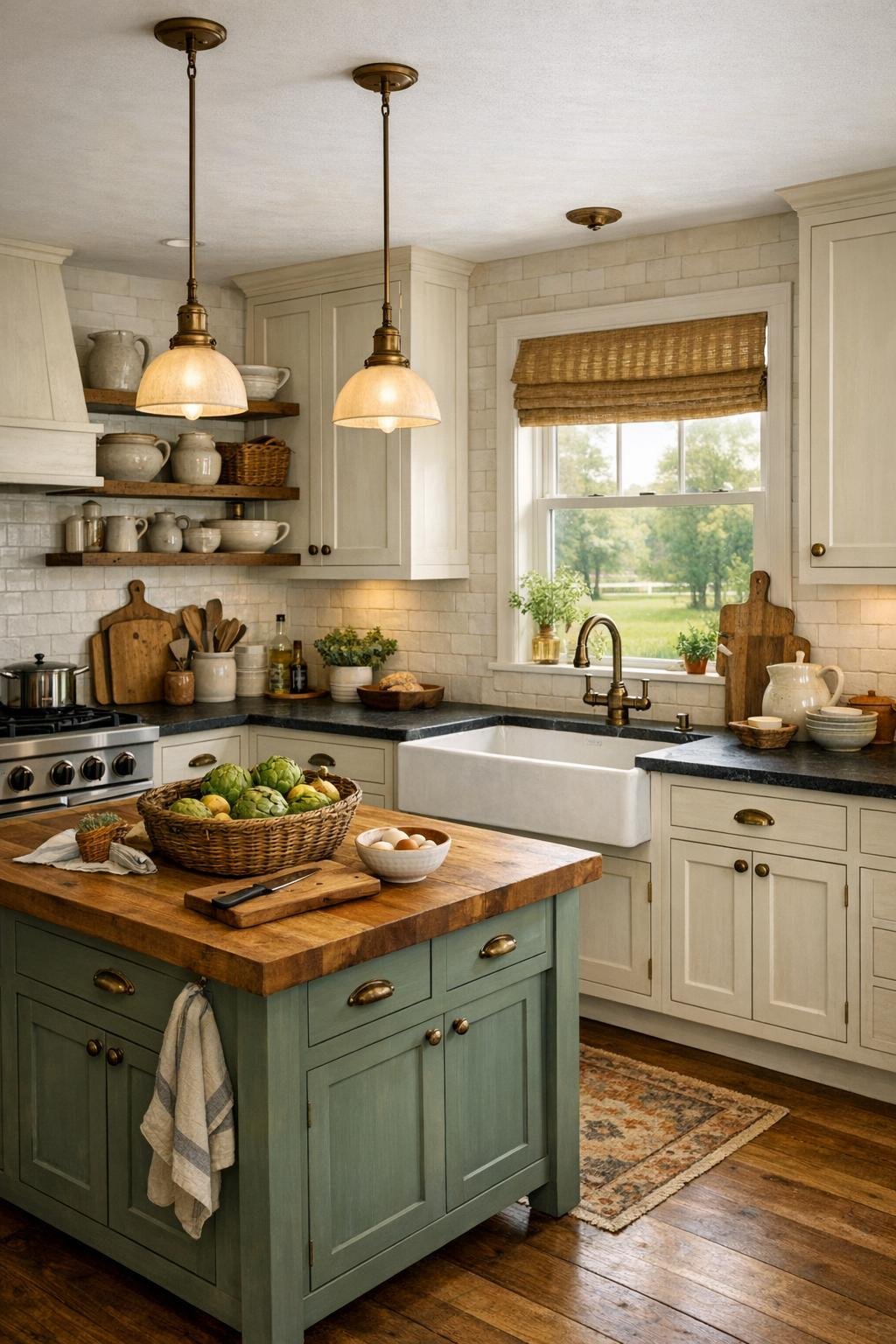
The kitchen is, to my eye, the true heart of the home, and it has been imagined with a cook’s priorities in mind. Cabinetry painted a muted, earthy cream runs to the ceiling, broken up by glass-front uppers and open shelves holding stacks of stoneware and clear jars. Soapstone counters lend a deep, velvety contrast, and their lived-in matte surface feels exactly right against the painted wood. The central island is finished in a softened sage green, with turned legs and a butcher-block top that invites real work—rolling dough, trimming beans, or simply setting out lunch for whoever wanders in.
I appreciate the old-meets-new rhythm here. A classic range sits beneath a plaster-look vent hood, while an apron-front fireclay sink faces a window that surely makes dishwashing less of a chore. Antique brass bin pulls and bridge faucets warm the palette, and a run of handmade subway tile with slightly irregular edges gives the backsplash a handmade honesty. Over the island, two broad metal pendants cast focused light, while under-cabinet illumination keeps the work surfaces practical. It is a kitchen that understands beauty, certainly, but never at the expense of usefulness, and that always wins me over.
Bedroom
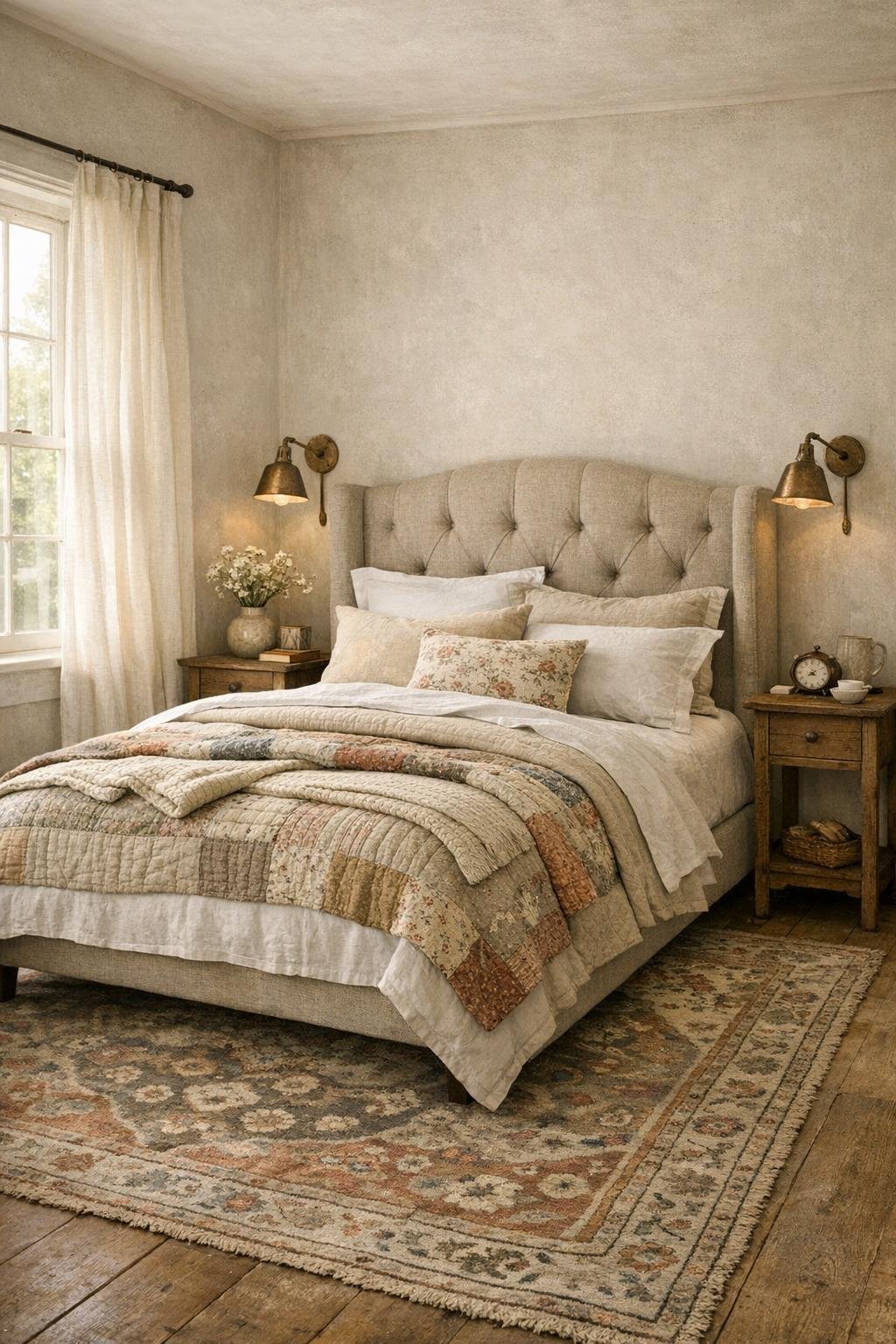
The bedroom quiets everything down in the loveliest way. The palette shifts toward washed linen, soft taupe, and the faintest gray-blue, echoing the exterior while feeling more intimate indoors. A tall upholstered bed in natural flax anchors the room, layered with a quilt, a folded coverlet, and pillows that look inviting rather than decorative for decoration’s sake. On either side, mismatched wood nightstands add a collected, lived-in spirit, and the walls, finished in a chalky neutral paint, reflect light with a velvety softness.
There is a restraint here that feels deeply restful. A vintage wool rug lies under the bed, a simple bench sits at the foot, and a painted wardrobe provides storage with a little old-house romance. The window treatments are light and breezy, letting morning sun filter through without fuss, while bedside sconces in aged brass free up surface space and cast a gentle pool of light for reading. It’s the sort of room that reminds me sleep is a luxury best supported by calm, texture, and quiet proportion—not by excess.
Bathroom
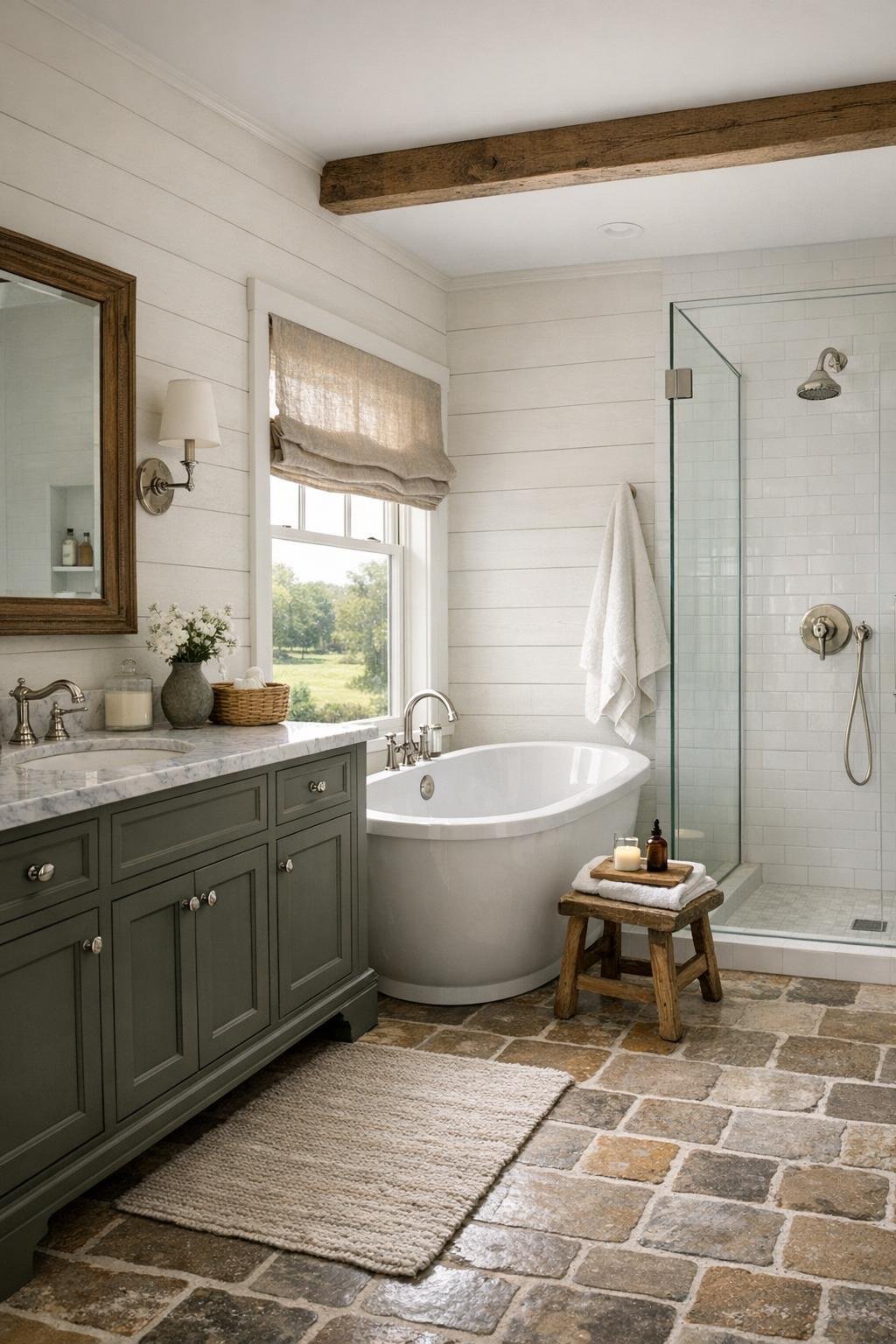
The bathroom is one of the home’s prettiest surprises, combining utility with a kind of old-fashioned grace. A freestanding soaking tub sits near a window, positioned to catch the best natural light, while the floor is laid in small tumbled stone tile that adds texture and a cool, earthy note. The vanity, painted a dusky olive-gray, is topped with pale marble whose subtle veining keeps the room feeling soft rather than flashy. Polished nickel fixtures lend brightness, and a wide framed mirror helps bounce light around the room.
I’m particularly fond of the shower treatment: simple white tile taken nearly to the ceiling, enclosed in clear glass with slender metal framing that doesn’t interrupt the openness of the space. The linens are thick and practical, the wall hooks are sturdy, and there is likely a little wooden stool for setting down a folded towel or a bar of soap. Nothing feels overdone, but everything feels attended to. That, to me, is the secret of a memorable bathroom—it should feel fresh, calm, and easy to live in every single day.
Other Areas
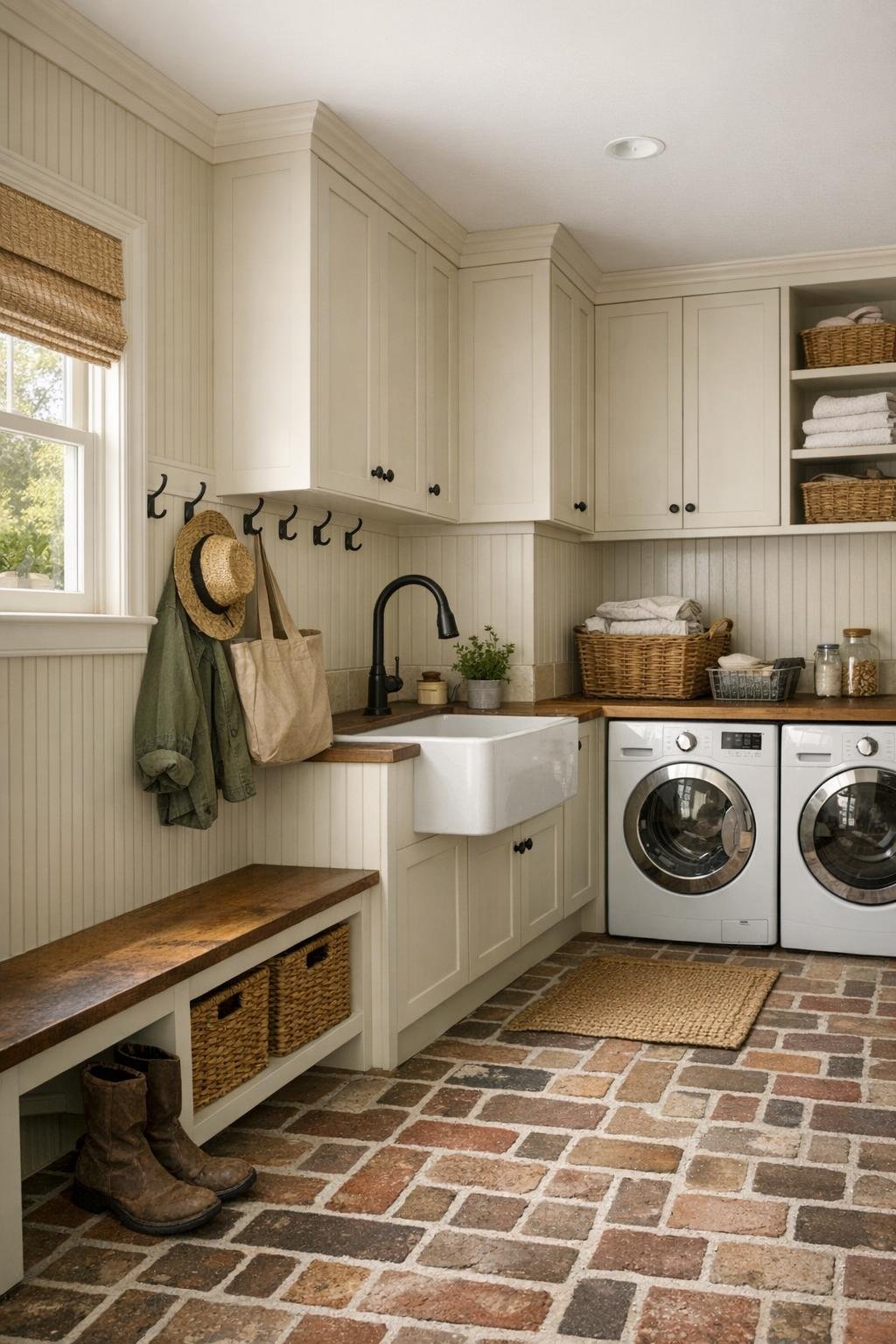
The supporting spaces are handled with just as much care, and that always tells me a design has real integrity. A mudroom just off the side entry features beadboard walls, brick flooring, built-in benches, and a row of black iron hooks ready for coats, hats, and market baskets. There is probably a laundry nook tucked nearby, outfitted with shaker-style cabinetry, a deep utility sink, and counters wide enough for folding towels or setting down garden clippings before they make their way indoors. These are workhorse spaces, yes, but they are handsome ones too.
Upstairs or along a quiet hall, I imagine a reading landing or small study with sloped ceilings, painted floorboards, and a modest desk facing a window over the fields. A hall runner softens the steps, framed botanical prints line the walls, and little pools of lamplight make the circulation spaces feel companionable rather than forgotten. Even the transition areas in this home seem to understand what country living requires: durability, order, and those small touches of beauty that make chores feel lighter and daily routines feel cherished.
Why You'd Live Here
You’d live here because it understands that comfort is not the same thing as extravagance. Every room is shaped by usefulness, softened by texture, and warmed by materials that feel honest in the hand and easy on the eye. There is beauty here, certainly, but it is the beauty of things meant to be lived with: wood that can age, stone that can wear, linens that can wrinkle, and spaces that improve when filled with people, meals, and ordinary routines.
I think that is what made me take a second look. This farmhouse does not rely on showiness to make its impression; it trusts proportion, restraint, and the deep appeal of homey details done well. In a world full of houses trying very hard to be noticed, this one simply stands there, quiet and capable, and offers the greater luxury of all: a life that feels grounded, gracious, and wonderfully real.