From the road, this farmhouse has that soft, timeworn presence I always love: faded cream siding, a simple gabled roofline, and the kind of porch that practically asks you to slow down and stay awhile. But once I stepped into this home, what struck me most was how beautifully it balances country character with a cleaner, more considered point of view. It feels calm, bright, and deeply livable, with every room shaped around comfort rather than show.
As a concept design, it imagines farmhouse living in a way that feels especially thoughtful for real family life. The palette is gentle and grounded, the materials are honest, and the layout has that rare quality of feeling open without losing its sense of coziness. I could immediately picture muddy shoes by the door, a pie cooling on the counter, and a table full of people lingering long after dinner.
Exterior
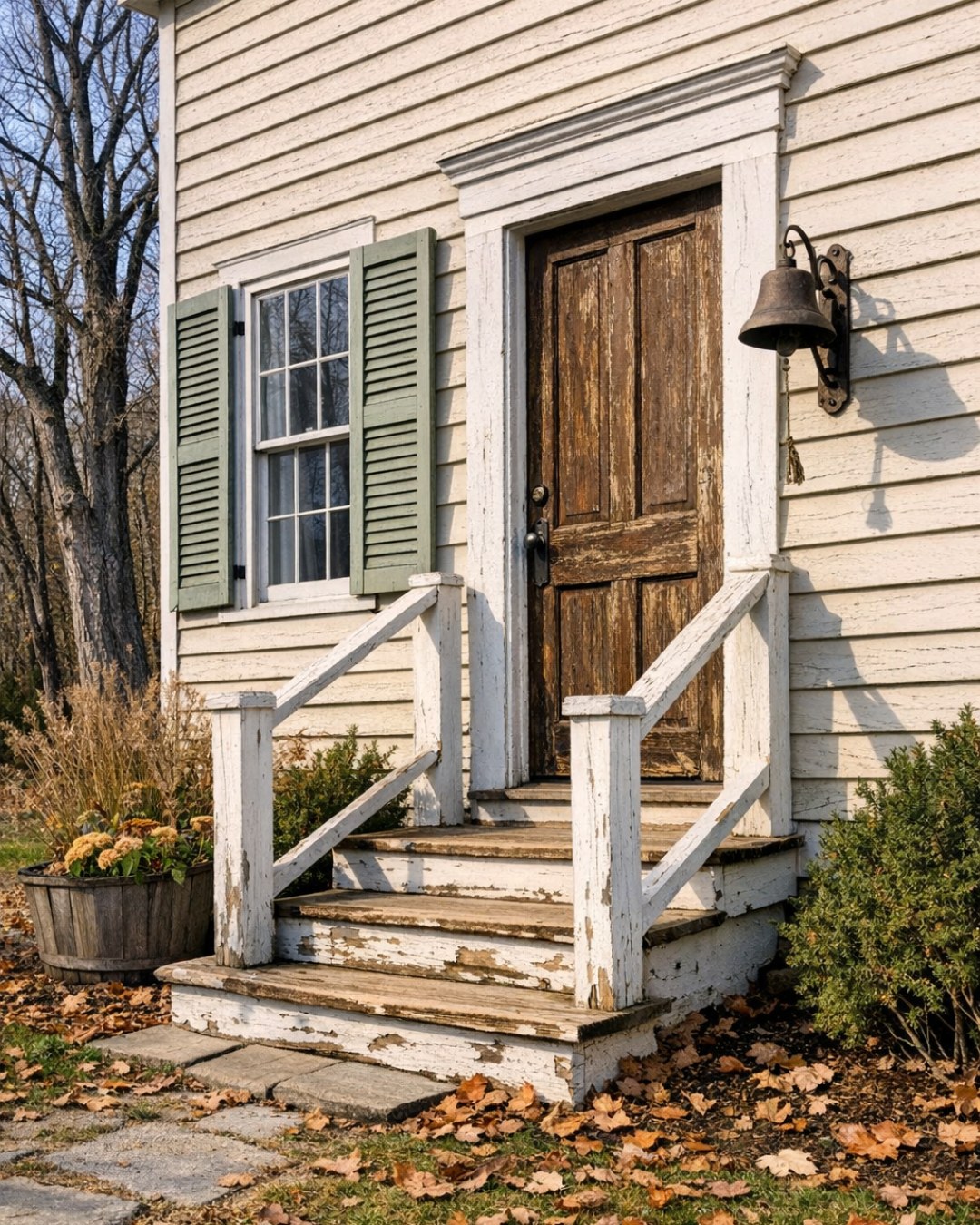
The exterior keeps its farmhouse roots intact, but it does so with a lighter hand than the style often gets. The cream-painted clapboard has a chalky, sun-faded finish that gives the home its softness, while the trim is a warmer white rather than a bright one, which helps everything feel settled into the landscape. A muted metal roof adds just a touch of crispness overhead, and the porch columns are plain and sturdy, letting texture and proportion do the decorative work instead of extra ornament.
I especially like the way the materials suggest a home that has been cared for over time. Brick foundation details, weathered wood underfoot on the porch, and simple black iron hardware at the entry all add contrast without breaking the gentle mood. The whole composition feels approachable and unfussy, the kind of place where potted herbs, a porch swing, and a pair of rain boots would look exactly right.
Living Room
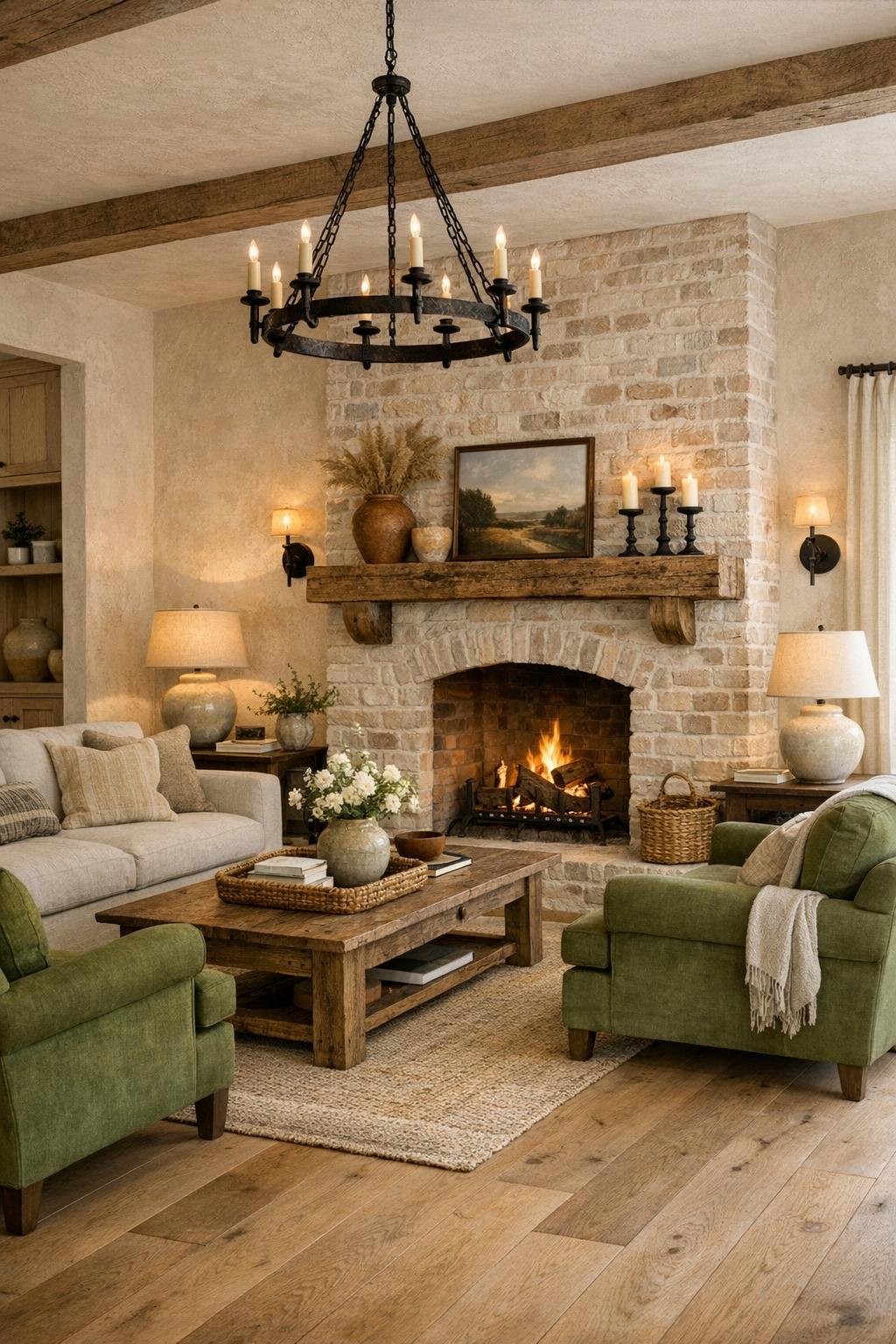
The living room is where the farmhouse shell gives way to a more polished interior story. White oak floors run wall to wall, grounding the space with honeyed warmth, while the walls are finished in a creamy plaster tone that bounces light around in the prettiest way. A large slipcovered sofa in oatmeal linen anchors the room, paired with deep, comfortable club chairs in a muted moss fabric that adds just enough color to keep the palette from feeling sleepy. The coffee table is substantial and rustic, made from reclaimed wood with softened edges, and I can already imagine it piled with board games, cocoa mugs, and a plate of cookies after dinner.
Lighting is layered here in a way that makes the room feel useful from morning to night. There’s a simple iron chandelier overhead, wall sconces with pleated shades near the fireplace, and a pair of ceramic table lamps that cast that lovely low evening glow every family room needs. The fireplace itself is finished in limewashed brick, with a chunky wood mantel that brings in another note of age and texture. I also appreciate the textiles: woven wool throws, striped pillows, and a large natural-fiber rug that softens the room without making it precious. It’s elegant, but in a way that still welcomes kids, pets, and real life.
Dining Room
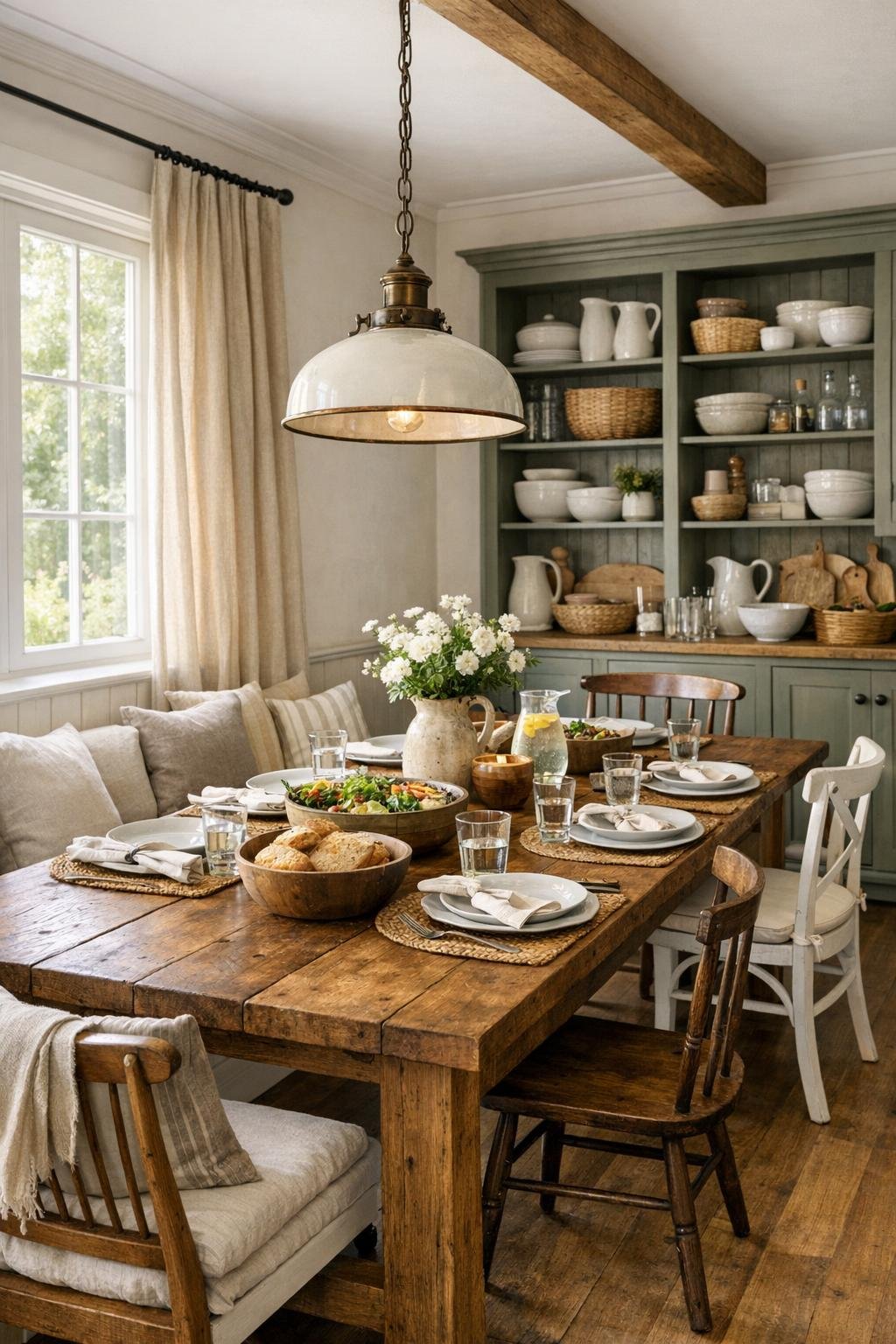
The dining room feels like the heart of the home in that very honest, welcoming way I always notice first as someone who loves feeding people. A long solid-wood table sits at the center, beautifully imperfect with visible grain and a hand-finished surface that would only get better with years of shared meals. The chairs are mixed rather than matched, which keeps the room from feeling overly formal, and a built-in bench along one wall makes the whole setup feel especially family-friendly. If you’ve ever tried to squeeze in one more cousin or one more picky eater who wants to sit by mom, you know how useful that is.
The room’s finishes are simple but very effective. A large vintage-style pendant hangs low above the table, giving the space intimacy, while soft drapery in a washed flax tone frames the windows without blocking natural light. I love the addition of a painted hutch in a dusty green-gray, which breaks up the neutrals and offers a place for stacked platters, everyday dishes, and maybe a few pretty serving bowls. It’s the sort of dining room that could handle Sunday roast, birthday cake, or a last-minute pasta supper with equal grace.
Kitchen
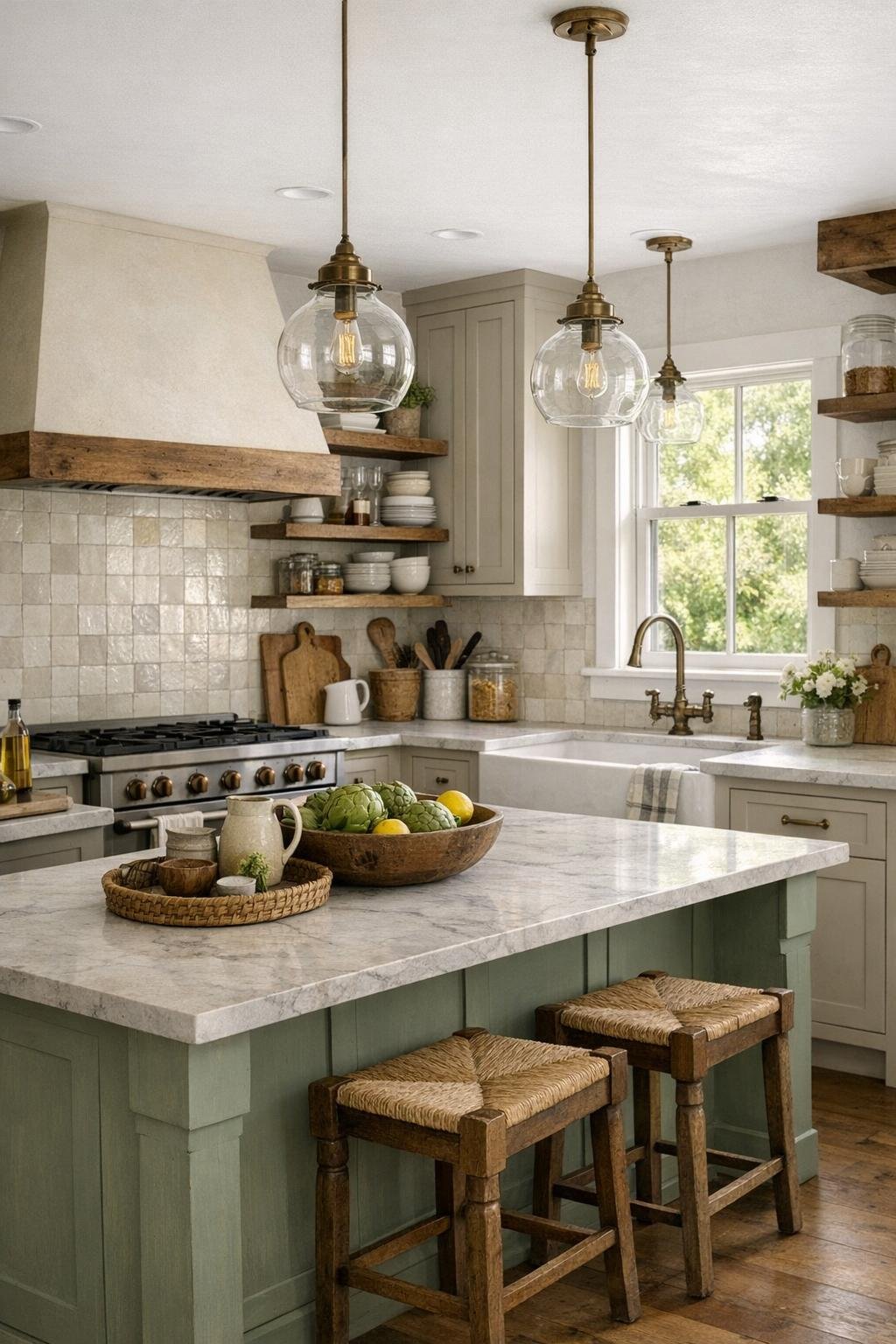
The kitchen is my favorite room here, and I say that as someone who always imagines how a space works during the small, busy parts of the day. This one is wonderfully practical without losing any charm. Soft putty-colored cabinetry pairs with warm white walls and aged brass hardware, while honed quartzite counters bring in a gentle movement that feels elevated but not flashy. The island is painted a deeper sage, which gives the room a little center-of-gravity and creates a natural gathering spot for homework, baking, or simply keeping the cook company.
What really makes the kitchen shine is the mix of utility and softness. Open shelving holds everyday dishes within easy reach, a wide apron-front sink sits beneath a window, and the range wall is wrapped in zellige tile with a subtle sheen that catches the light beautifully. I can picture setting out toppings for picky eaters at the island, with plain noodles in one bowl and fresh herbs in another, because the layout makes serving feel so easy and relaxed. Stools with woven seats, a generous walk-in pantry, and understated glass pendants finish the room with exactly the kind of thoughtfulness I want in a kitchen meant to be used every day.
Bedroom
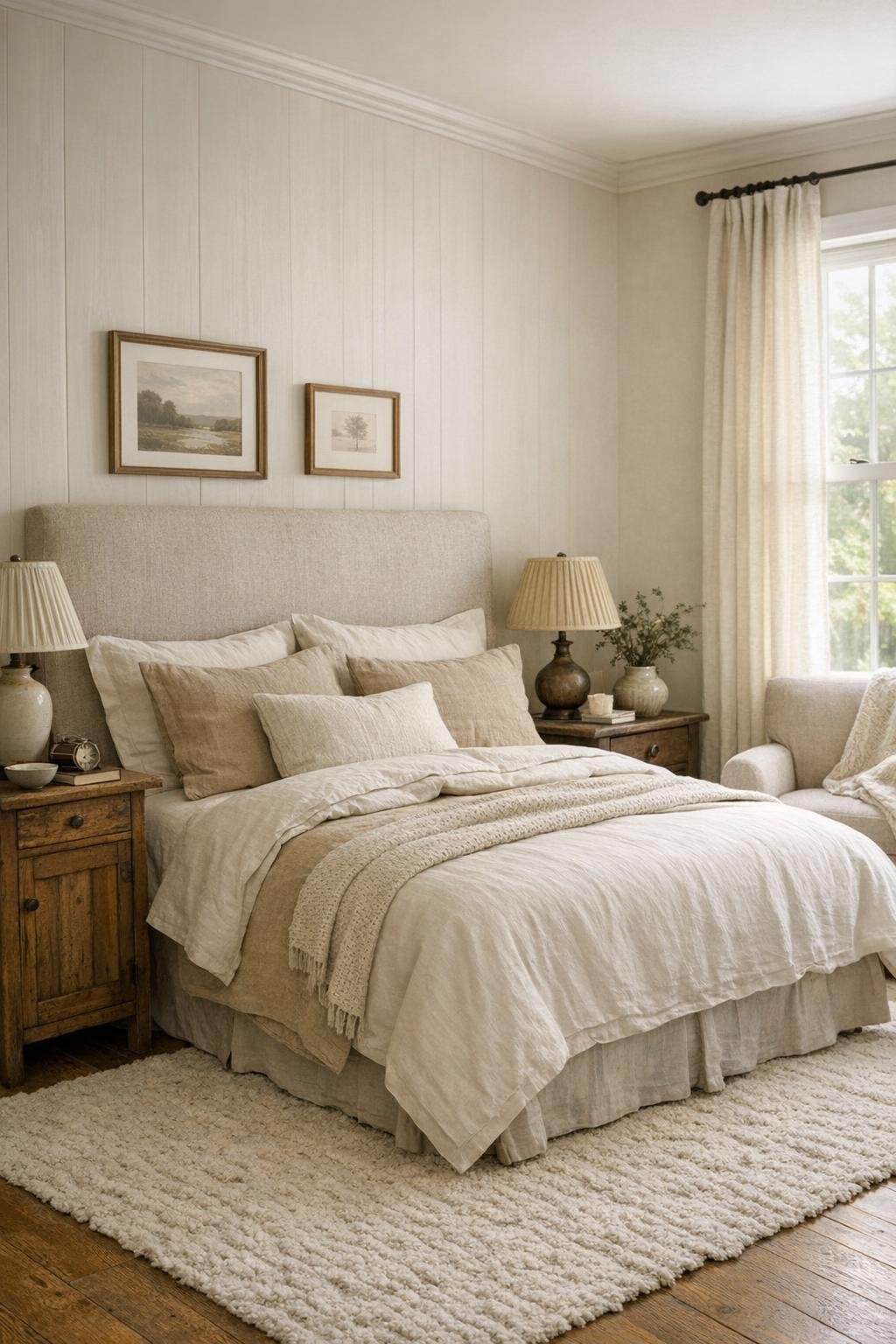
The bedroom takes the same farmhouse vocabulary and quiets it down even further. The palette shifts into soft layers of ivory, sand, and faded taupe, making the room feel restful the second you enter. A tall upholstered headboard in natural linen gives the bed presence without heaviness, and the bedding is all about touch: crisp cotton sheets, a quilted coverlet, and a knitted throw folded across the foot. There’s a modesty to the room that I find very appealing. It doesn’t try too hard, and because of that, it feels deeply comfortable.
On either side of the bed, mismatched wooden nightstands add just enough character, while antique-style lamps with pleated shades lend a gentle glow in the evenings. I like the addition of a small reading chair near the window, paired with a textured wool rug underfoot and simple framed landscape art on the walls. Storage is integrated neatly rather than dramatically, so the room stays visually calm. It’s the kind of bedroom that encourages earlier bedtimes, slower mornings, and a moment of quiet before the rest of the house wakes up.
Bathroom
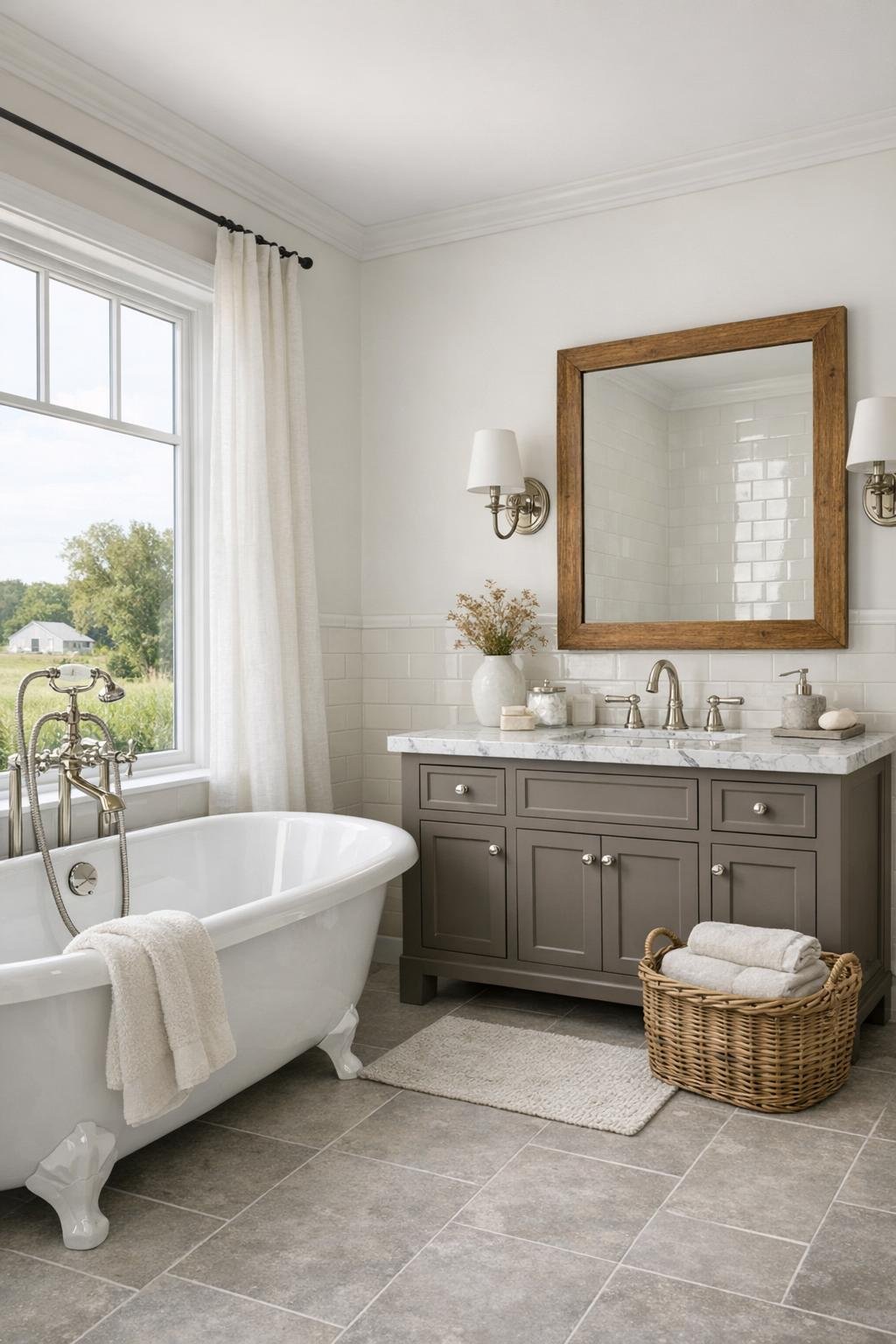
The bathroom is especially well judged, combining old-house references with a cleaner finish that feels fresh instead of fussy. A freestanding tub sits near a window, giving the room a lovely focal point, while the shower is enclosed in clear glass so the space stays open and bright. The vanity is painted in a smoky mushroom tone with a marble top, and the cabinet fronts have that classic inset detailing that always reads timeless to me. Polished nickel plumbing fixtures add a little brightness and feel appropriate to the home’s age-inspired character.
The tile choices are where the room really comes together. Small-format stone-look floor tile keeps the footing practical, while glossy off-white wall tile reflects light and makes the room feel especially clean. I also like the softer details: fluffy cotton towels, a woven stool, and a touch of wood in the mirror frame to warm up the harder surfaces. It’s a bathroom that feels restorative but still grounded, and that balance is not always easy to get right.
Other Areas
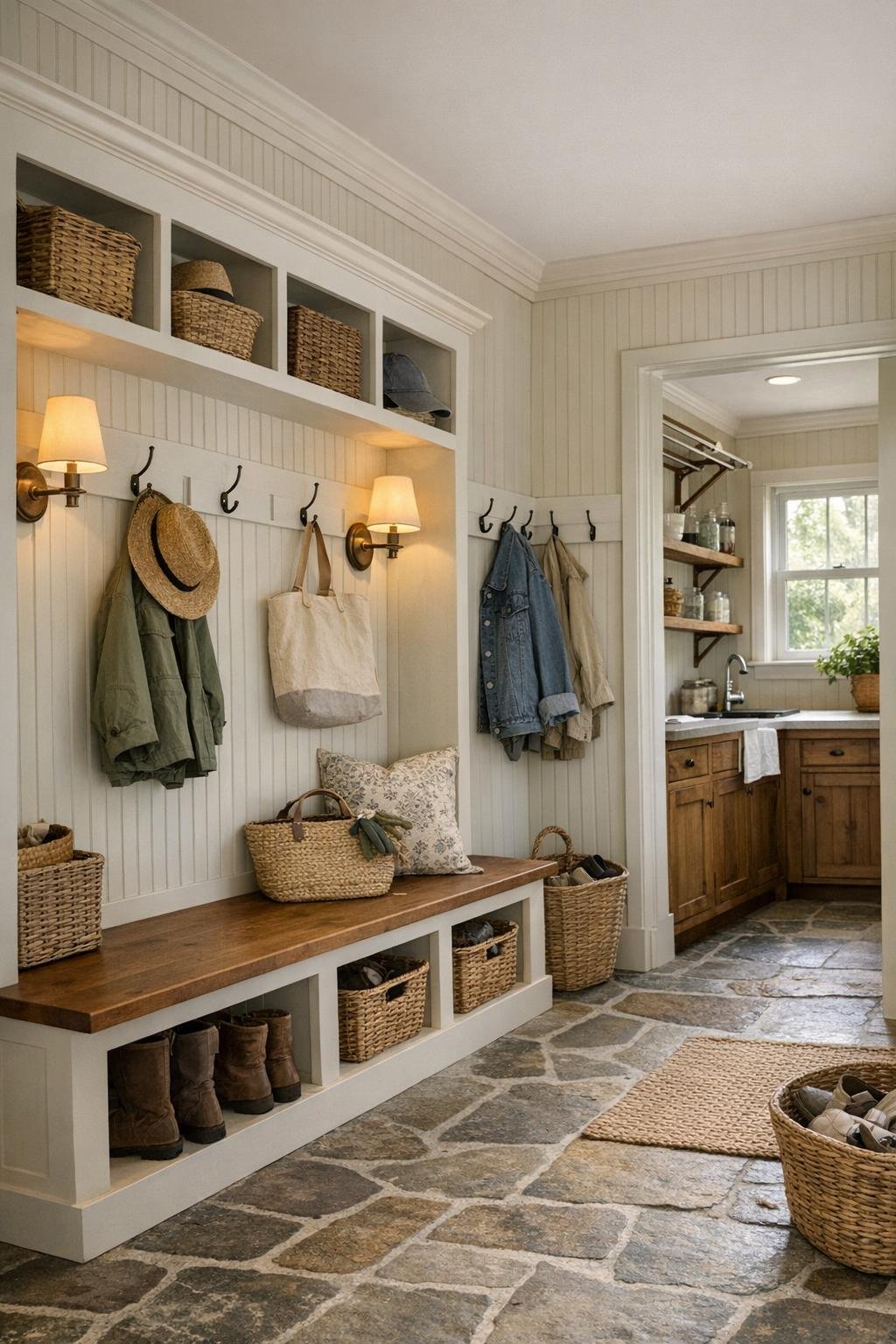
The supporting spaces in this home are just as thoughtfully handled, and that always tells me a design has been considered from daily life outward. There’s a mudroom with beadboard walls, durable stone flooring, and built-in cubbies that would make coming home from school or the garden feel organized instead of chaotic. A compact laundry room uses stacked cabinetry, hanging rails, and a deep utility sink to turn chores into something far less stressful. Even the hallway has purpose, with slim console storage, framed family photos, and carefully placed sconces that keep circulation spaces warm rather than forgotten.
I can also imagine a small breakfast nook or keeping room tucked just off the kitchen, with a pedestal table, spindle-back chairs, and windows on two sides. That sort of in-between space is invaluable in a family home because it creates flexibility: a place for cereal, craft projects, coffee with a friend, or one child who wants a quieter meal. These secondary rooms are where the house really proves itself, not just as pretty to look at, but as genuinely supportive of the rhythms of everyday living.
Why You'd Live Here
This farmhouse works because it understands that beauty and usefulness don’t need to compete. Every room has a softness that makes you exhale, but there’s also enough structure, storage, and durability to support real family living. I’m always drawn to homes that feel kind in the way they function, and this one does exactly that. It gives you welcoming shared spaces, restful private ones, and plenty of room for the everyday rituals that end up meaning the most.
If you love interiors that feel warm rather than trendy, this home makes a strong case for keeping things simple and well chosen. The materials will age gracefully, the color palette won’t tire quickly, and the overall mood is one of steadiness and comfort. To me, that’s the real luxury here: a house that looks lovely, yes, but more importantly, supports the people inside it with ease.