From the road, this faded olive log home has the kind of quiet presence I’ve always trusted more than flash. It sits low and steady, as if it has known every season for generations, with that weather-softened green playing against warm timber in a way that feels both woodsy and worn-in. The whole place carries a gentle, Northern cabin spirit, but there’s also a thoughtful polish to it that keeps it from feeling rustic in the rough sense. Even as a concept design, it feels deeply believable to me, like a house shaped by long winters, good suppers, and people who know how to settle in.
What makes it special is the contrast between that humble exterior and the interior’s surprisingly layered warmth. Inside, the home opens into a series of rooms that balance log-house character with cleaner lines, softer colors, and a kind of calm restraint that I find very inviting. Nothing feels overdone. Instead, each space seems to understand the comfort of natural materials, the importance of light in a country setting, and the beauty of rooms that welcome real living.
Exterior
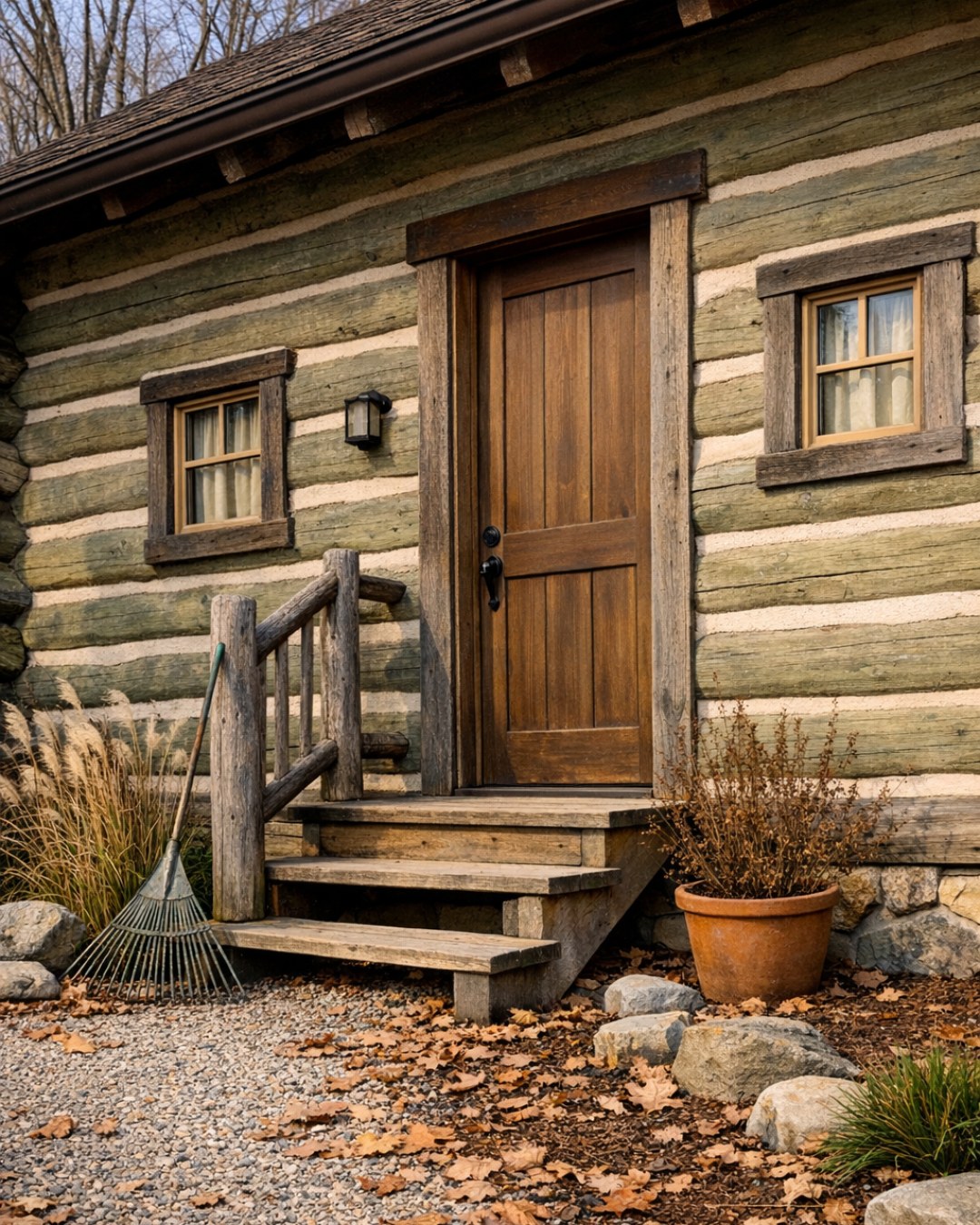
The exterior keeps its log-home identity intact, but it does so with uncommon subtlety. The olive stain is faded just enough to let the grain of the logs show through, and that soft patina gives the house an honest, lived-through beauty. I can picture it set against pines, gravel, and a sweep of untamed grasses, with blackened steel lanterns near the entry and a sturdy stone base anchoring the whole composition. The windows are generous without feeling oversized, trimmed in a muted cream that brightens the green and keeps the facade from feeling too heavy.
What I like most is that the home doesn’t try to perform. A broad porch with simple timber posts, a practical standing-seam metal roof, and a well-worn wood front door all speak the same language: durable, grounded, and made for the long haul. There’s likely a bench by the entry, maybe a pair of planters in galvanized steel, and enough covered outdoor space to hear rain on the roof without getting wet. It feels like the sort of place where boots line up neatly by the door and every season leaves its own mark in the best possible way.
Living Room
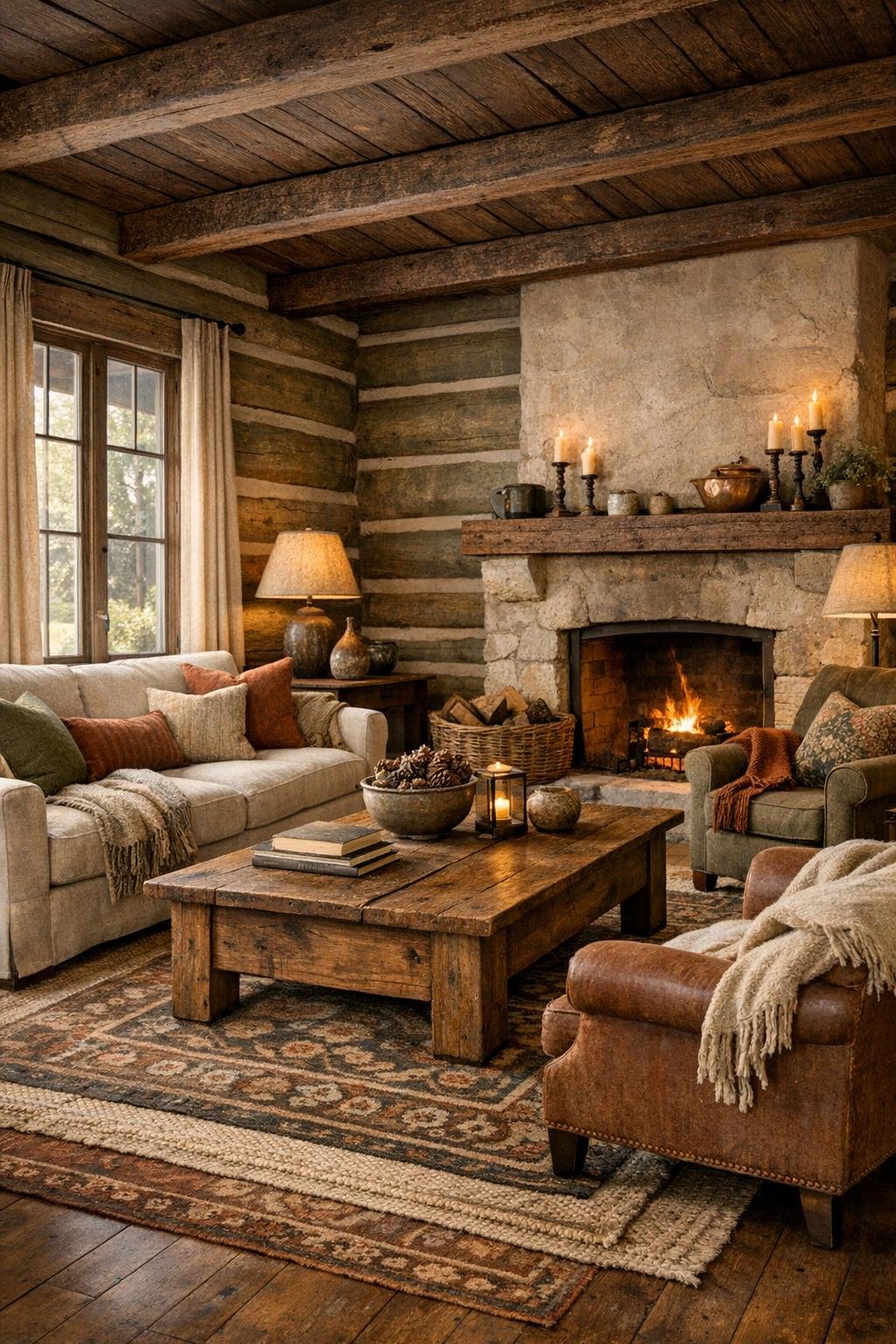
The living room is where the house first reveals its softer side. The log walls remain visible, but they’re balanced by a pale plaster chimney breast, creamy upholstery, and layered textiles in oat, moss, rust, and tobacco. A deep linen sofa and a pair of generously proportioned armchairs gather around a substantial wood coffee table, and the seating arrangement feels close enough for conversation without crowding the room. I’m especially drawn to the way the ceiling beams are left a touch darker than the walls, giving the space depth while keeping the overall mood relaxed.
Lighting here does a lot of quiet work. Daylight pours through tall windows and catches the nubby weave of the rugs, the soft nap of a wool throw, and the subtle sheen of leather accent pillows. In the evening, I imagine shaded table lamps and a simple iron chandelier casting a golden glow that flatters every surface. The room feels rooted and restful, like the kind of place where someone might read by the fire while supper simmers in the next room.
Dining Room
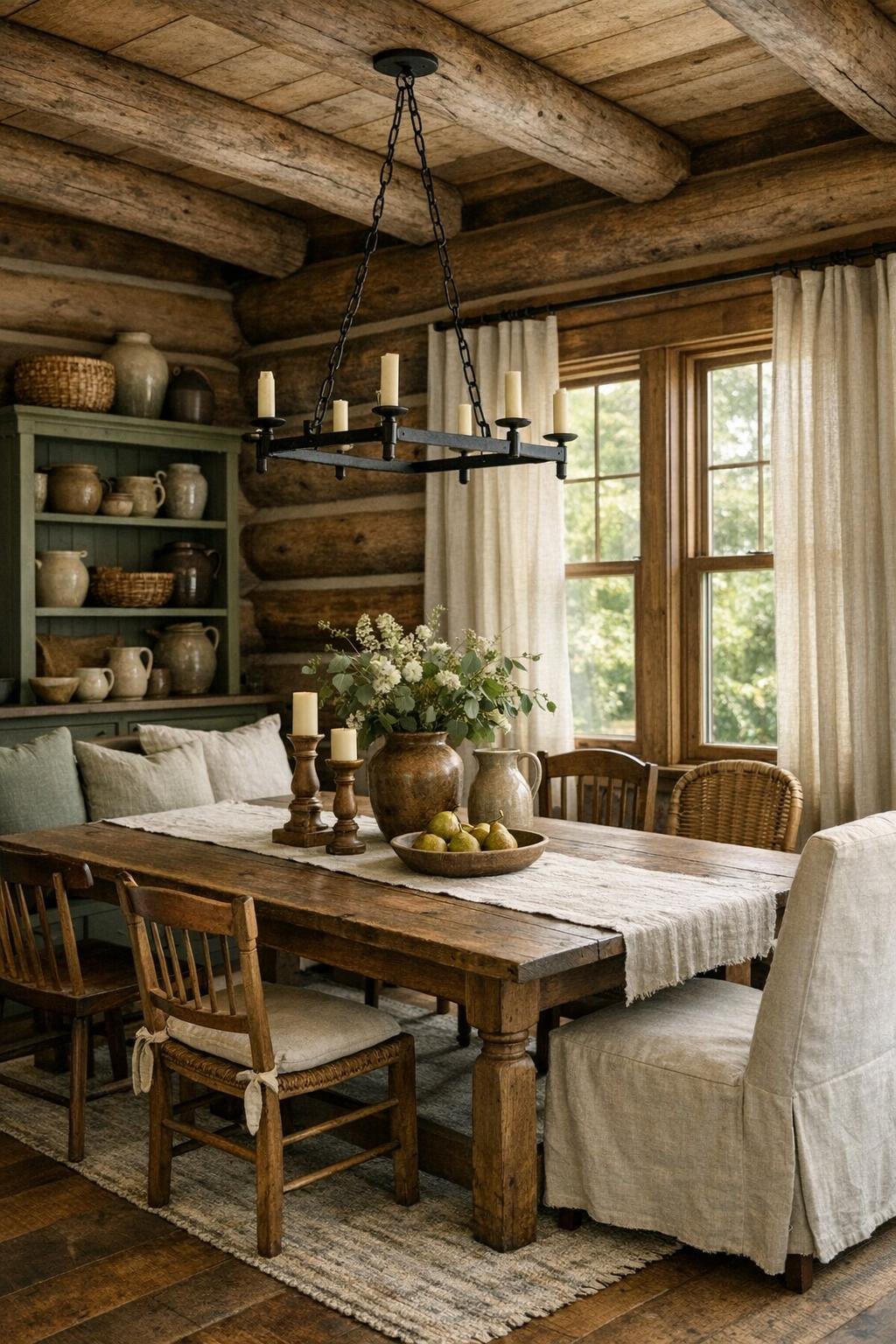
The dining room carries that same welcoming spirit, though it feels a bit more intentional and gathered. At the center is a long farmhouse table in a medium-toned wood, worn smooth in spirit if not by years, surrounded by mixed seating that keeps things from feeling too matched. Slipcovered host chairs at the ends and simpler spindle or ladder-back chairs along the sides would suit this room beautifully. Overhead, I imagine a modest iron fixture with candle-style bulbs, enough presence to anchor the table without overpowering it.
The palette stays close to the land: mossy greens, warm neutrals, weathered brown, and the soft off-white of natural cotton and linen. Perhaps there’s a vintage hutch or shallow cabinet displaying stoneware, pressed glass, and serving pieces that feel useful instead of precious. What I appreciate here is the sense that the room is prepared for both holiday dinners and ordinary Tuesday meals. It has dignity, certainly, but not stiffness, and that’s a rare balance.
Kitchen
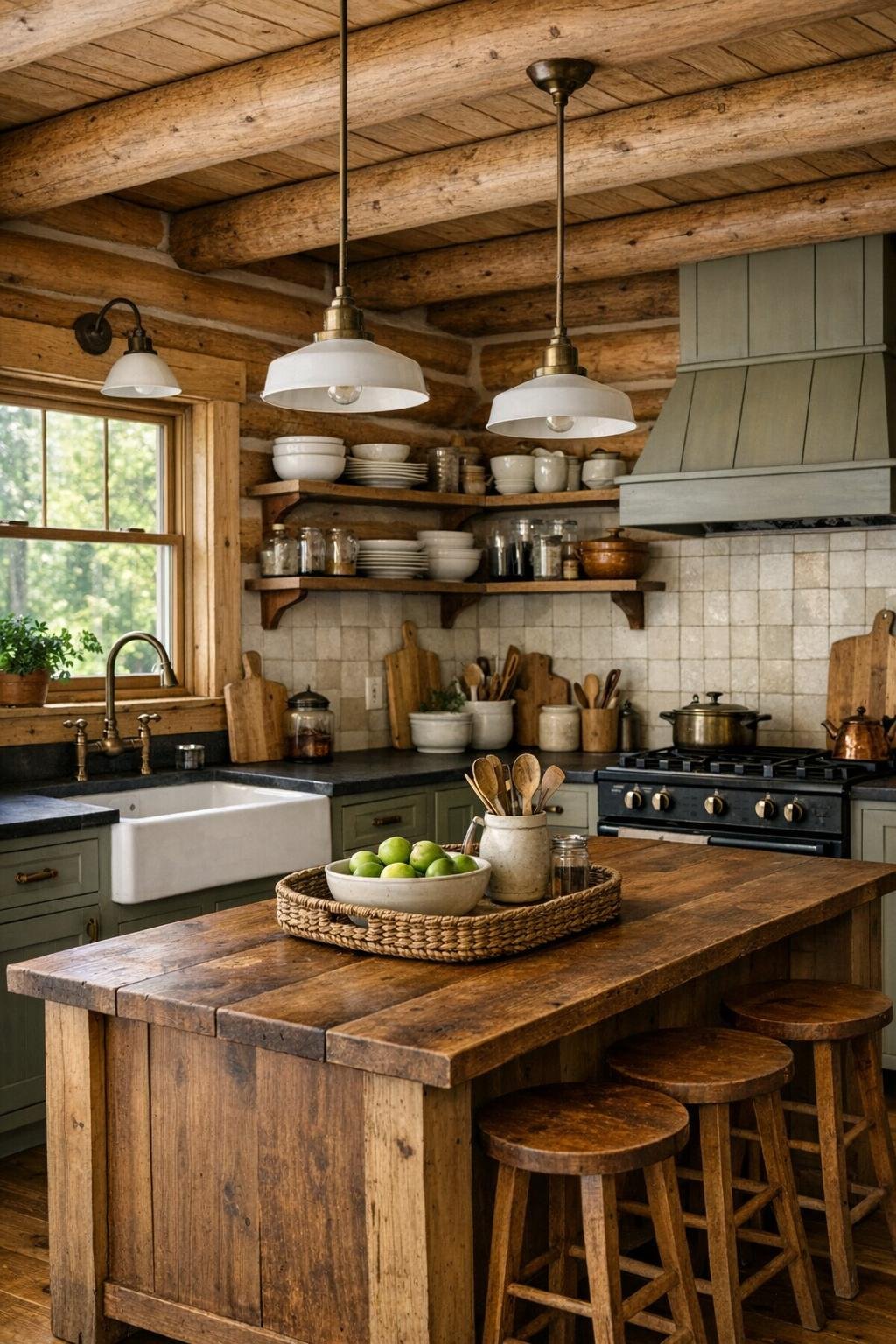
This kitchen is, to my eye, the heart of the house, and I say that as someone who has always believed a good kitchen should feel ready for real work. The cabinetry appears in a muted painted green or warm putty tone that sits beautifully against the timber backdrop, while soapstone or honed dark counters add depth and a little old-fashioned gravitas. Open shelves, used sparingly, keep everyday dishes and mixing bowls within easy reach, and a large island gives the room enough surface for pie dough, soup pots, and a grandchild leaning in to help.
I can also see a deep apron-front sink under a window, aged brass hardware, and a backsplash in handmade tile with just enough irregularity to feel human. The lighting would matter here: perhaps shaded sconces and a pair of simple pendants over the island, supplemented by generous daylight. Nothing in the room feels glossy or fussy. Instead, it’s practical in the most beautiful way, with finishes chosen to grow better-looking as they’re used.
Bedroom
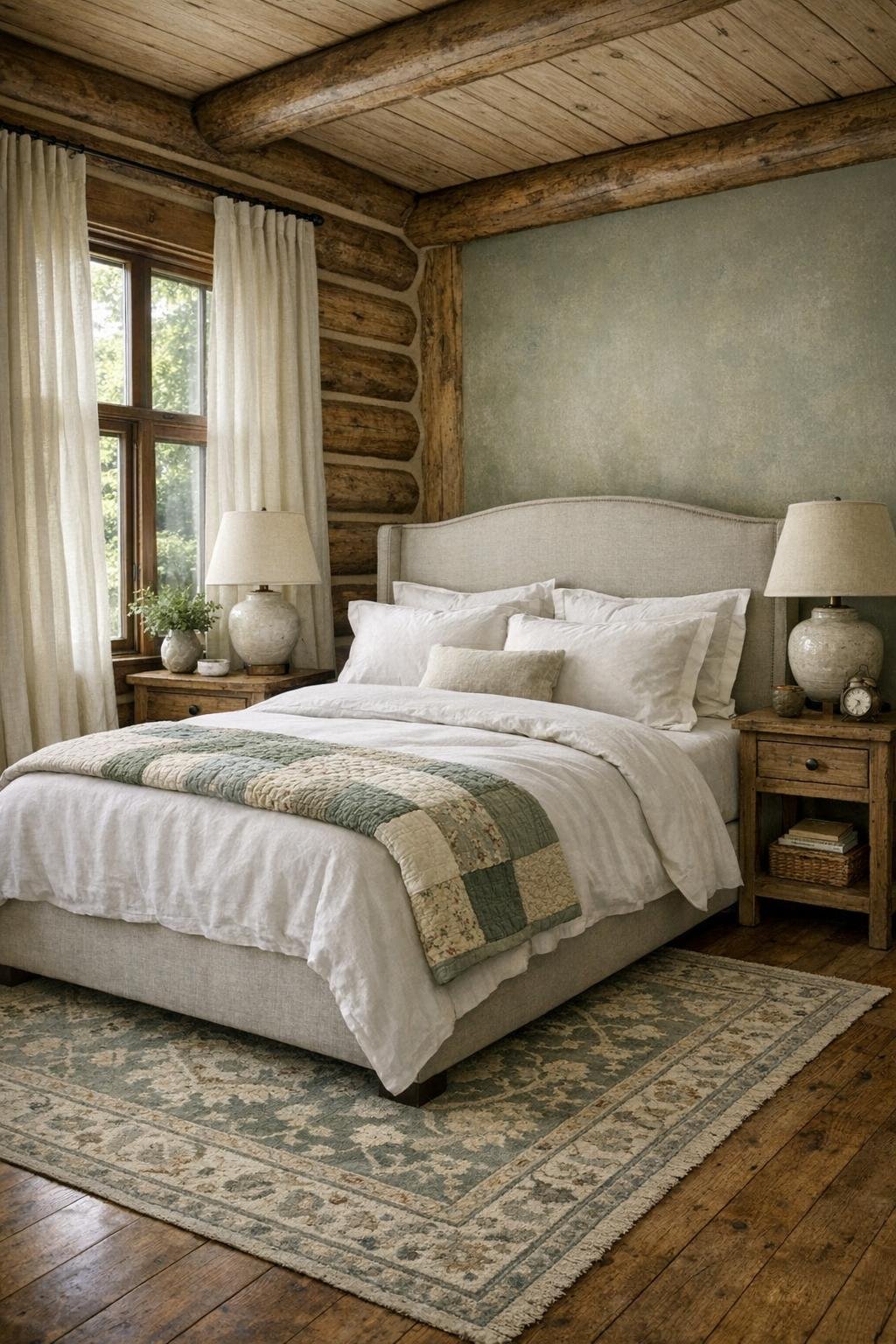
The bedroom looks to me like a lesson in restraint. Rather than competing with the character of the log walls, the furnishings soften them: an upholstered bed in flax-colored linen, crisp white bedding, a quilt folded at the foot, and drapery in a weighty natural fabric that hangs with quiet elegance. The room doesn’t need much else. A pair of wood nightstands, ceramic lamps, and perhaps an antique chest at the end of the bed would be enough to create that feeling of completeness.
What makes the room memorable is the hush of it. The color palette stays subdued, built from cream, bark, sage, weathered green, and warm brown, so the eye can settle. If there is a rug underfoot, I imagine it with a faded pattern and soft hand, something that adds comfort rather than demand. This is not a showy bedroom. It’s the sort of room that invites an early bedtime when rain is on the roof and morning light comes gently through the trees.
Bathroom
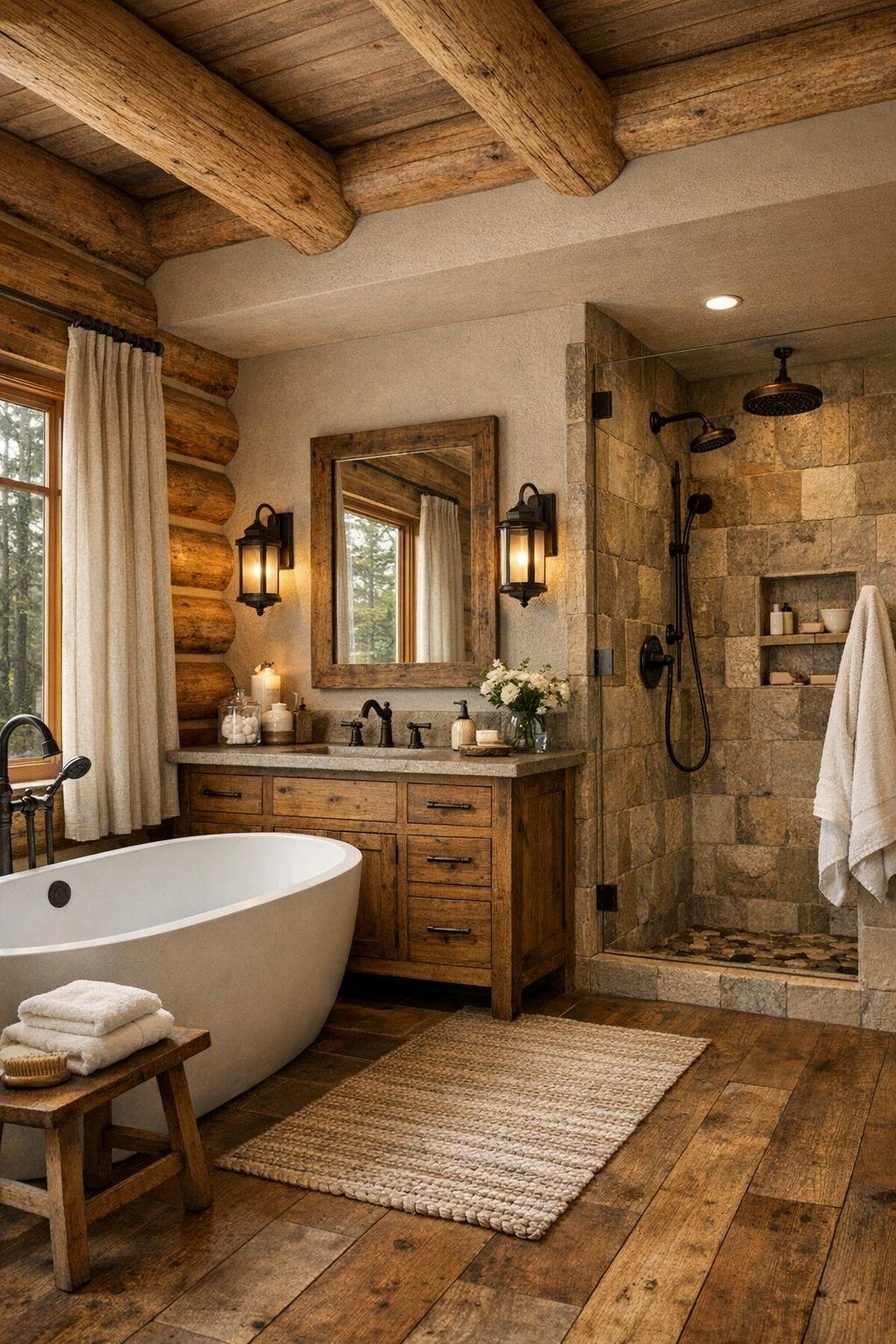
The bathroom continues the home’s quiet confidence. I picture a freestanding tub placed near a window, a walk-in shower lined in stone or softly textured tile, and a wood vanity that feels more like a piece of furniture than built-in cabinetry. The finishes sound familiar to the rest of the house—aged metal, matte surfaces, warm wood, and gentle color—but the effect is a touch more tailored. It feels clean and restorative without turning cold.
There’s a lovely tension here between rugged and refined. The grain of the vanity, the slight irregularity of handmade tile, and the softness of thick cotton towels all work together to keep the room human. Good bathroom lighting can be hard to get right, but this one seems to understand the assignment, with flattering sconces and enough daylight to make the space feel fresh from morning onward. It’s a room made for slowing down, not rushing through.
Other Areas
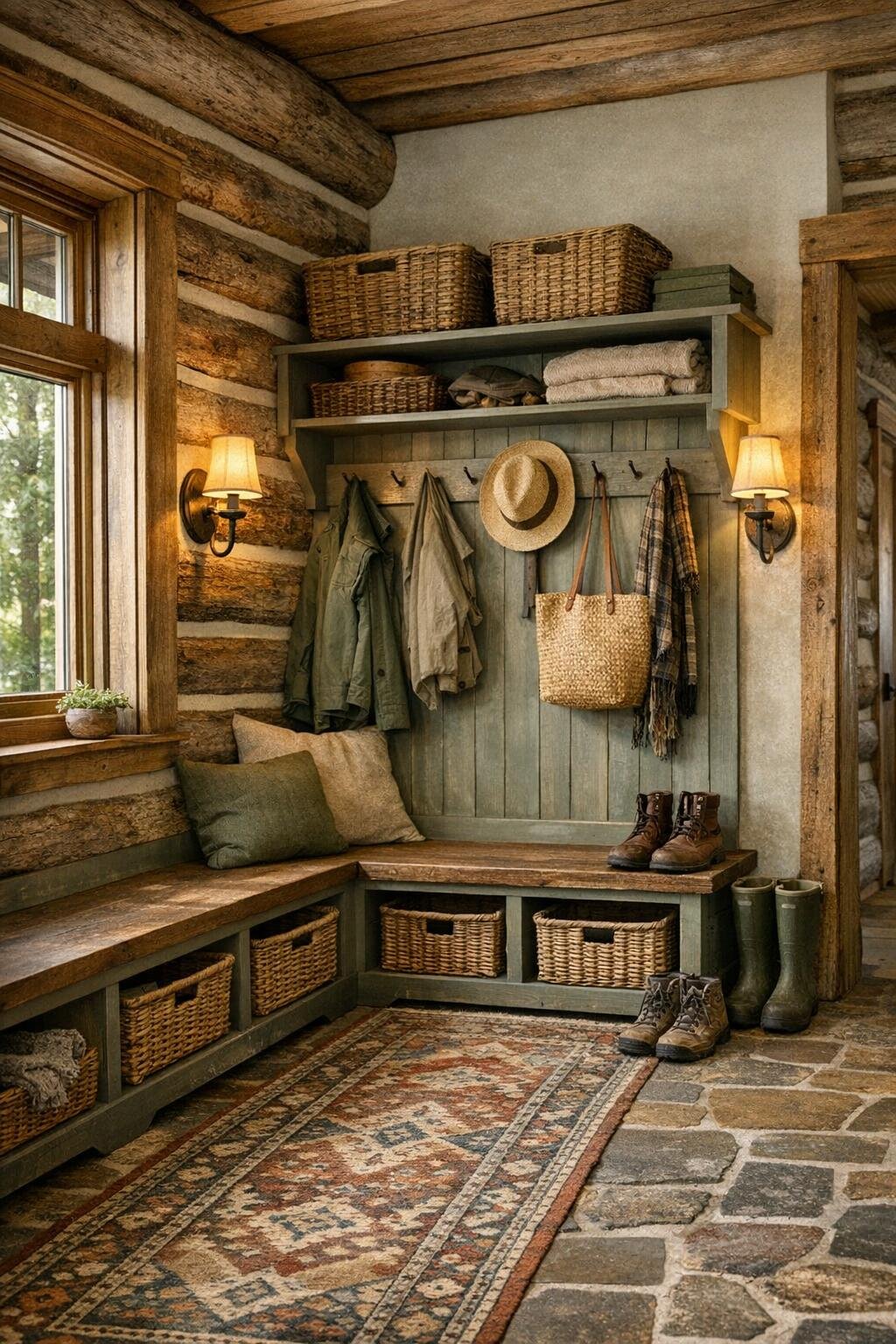
The in-between spaces may be what charm me most. A mudroom with peg rails, a bench seat, and baskets underneath would be exactly right for a home like this, especially with a brick or stone floor that can handle wet boots and muddy paws. Hallways are likely kept simple, perhaps with vintage runners, framed landscapes, and wall sconces that throw a gentle wash of light across the logs. Even a stair landing could become a quiet moment with a reading chair, a small table, and a view out to the trees.
If there’s a tucked-away porch, loft, pantry, or laundry room, I suspect each one is handled with the same practical grace as the main rooms. Nothing appears neglected, yet nothing is trying too hard either. That’s often the difference between a house that merely photographs well and one that feels truly livable. Here, every corner seems to understand daily rhythm: where coats are dropped, where blankets are kept, where one pauses for a breath before moving on.
Why You'd Live Here
You’d live here because it understands comfort without slipping into clutter, and character without turning theatrical. So many rustic homes lean too far one way or the other, either becoming overly polished or too heavy-handed with the cabin theme. This one stays steady in the middle. It honors natural materials, respects the landscape, and leaves room for ordinary life to be the main decoration.
I think that’s what made me stop and stare. Beneath the faded olive exterior is a home that feels seasoned, thoughtful, and deeply kind in its design. It offers warmth in every sense of the word: warmth of color, warmth of texture, and the kind of warmth that makes you imagine supper on the stove, lamplight in the windows, and a house that knows exactly how to hold a family well.