There is something in me that always softens at the sight of old timber given a second life, and this home has that kind of grace in every beam. What began as a log corn crib has been reimagined into a warm, deeply rooted country retreat, one that still carries the plainspoken honesty of its agricultural past while embracing the comforts of a slower, gentler way of living. Set against an open rural landscape, it feels both practical and poetic, with the sturdy silhouette of the original structure now dressed in a way that invites lamplight, books, and long evenings indoors.
I especially love that this concept design does not try to polish away its history. Instead, it leans into the rough-hewn beauty of weathered logs, honest craftsmanship, and rooms arranged for living rather than showing off. The mood is restful and familiar, with a palette drawn from bark, cream, stone, and old iron, and there is a quiet confidence about the place that reminds me of homes where work was respected, meals were shared, and a good chair by the window was considered a luxury worth having.
Exterior
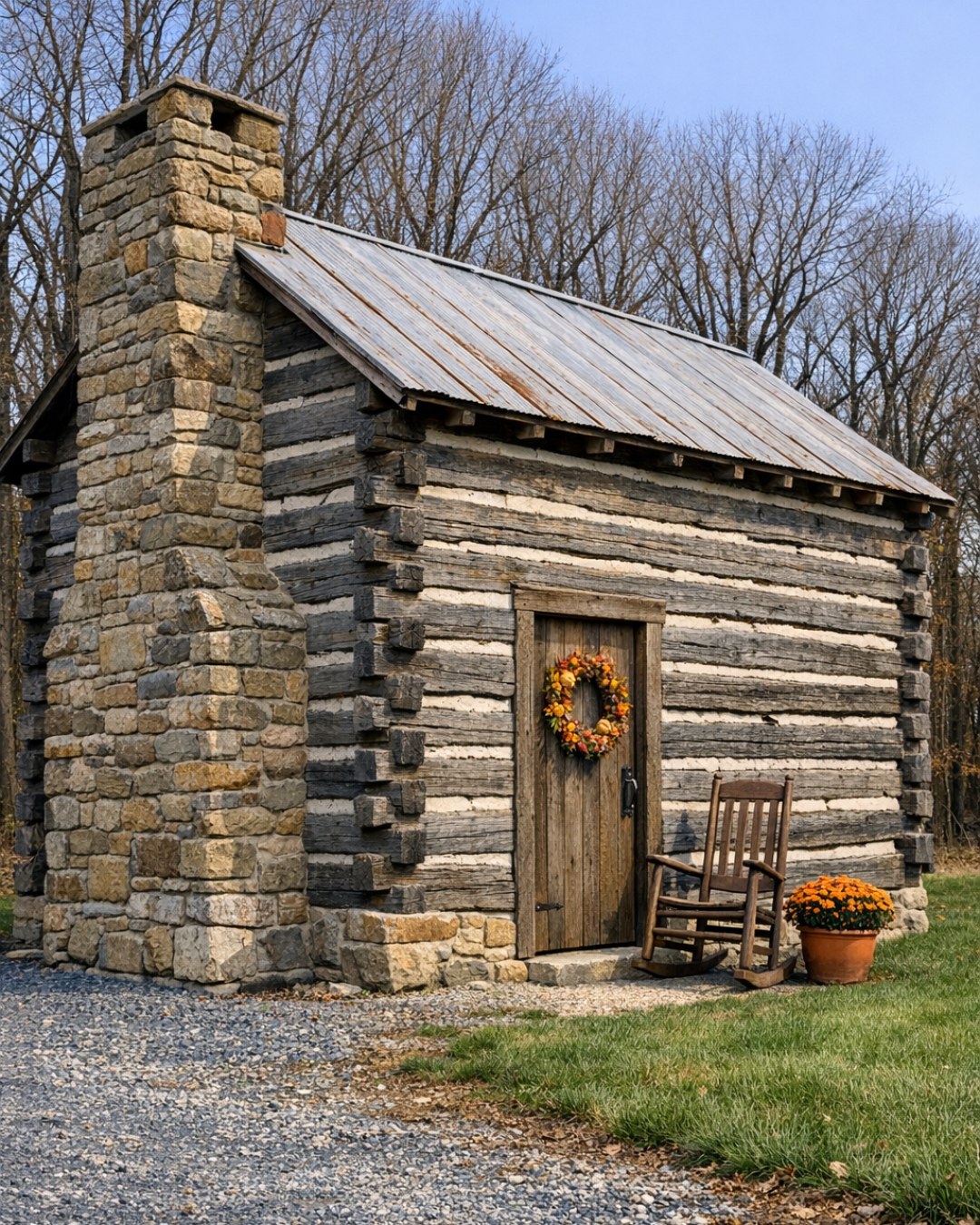
From the outside, the home keeps the recognizable form of a traditional Midwestern corn crib, and that decision gives it much of its charm. The log walls are left visually prominent, their age and irregular texture celebrated rather than concealed, while careful restoration brings out warm honey, walnut, and smoky gray undertones in the wood. A simple metal roof in a soft charcoal finish caps the structure with practical elegance, and the windows are inserted thoughtfully, never so many that the building loses its barn-born character. The result is handsome and grounded, like something that has belonged to the land for generations.
What makes the exterior feel complete is the balance between ruggedness and welcome. A modest porch or entry terrace introduces a domestic note, with timber posts, stone underfoot, and black metal lanterns casting a golden glow by evening. I can easily imagine a pair of rocking chairs, a potted herb or two, and muddy boots lined neatly by the door. The landscaping stays true to the setting: native grasses, a sweep of gravel, perhaps an old sugar maple nearby, all of it allowing the structure itself to remain the heart of the view.
Living Room
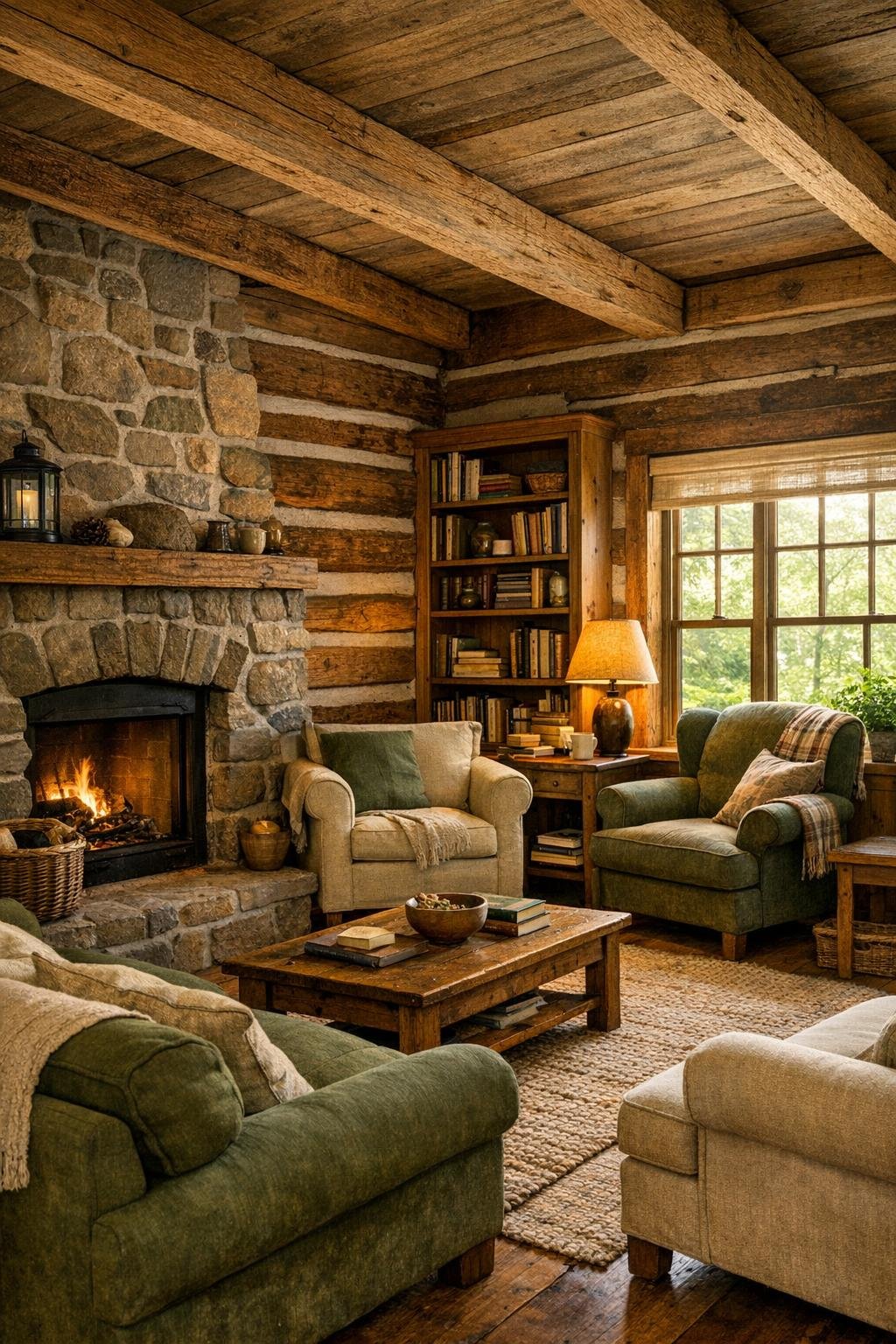
The living room is where this home truly settles into itself, and I can see at once why the reading corner would become its soul. The logs remain exposed, giving the space a rich, sheltering texture, while the ceiling rises enough to keep it airy instead of heavy. Upholstery in oatmeal, faded rust, and mossy green softens all that timber, and the furniture is arranged close enough for conversation, not scattered for display. A broad woven rug in a muted geometric pattern pulls the seating area together and keeps the room from feeling too rustic, while a stone hearth anchors everything with the kind of permanence I always trust.
My favorite touch is the reading nook, tucked by a generous window where daylight can pool across the floorboards. It feels thoughtfully made for real use: a deep armchair with a washable linen slipcover, a small table scarred just enough to be endearing, a brass library lamp, and shelves fitted between structural posts as if they had always belonged there. The lighting elsewhere is layered and soft, with iron sconces and shaded lamps doing more of the work than overhead fixtures, and that makes the room feel calm at every hour. It is the kind of place where rain on the roof and the turning of pages would be enough entertainment for an entire afternoon.
Dining Room
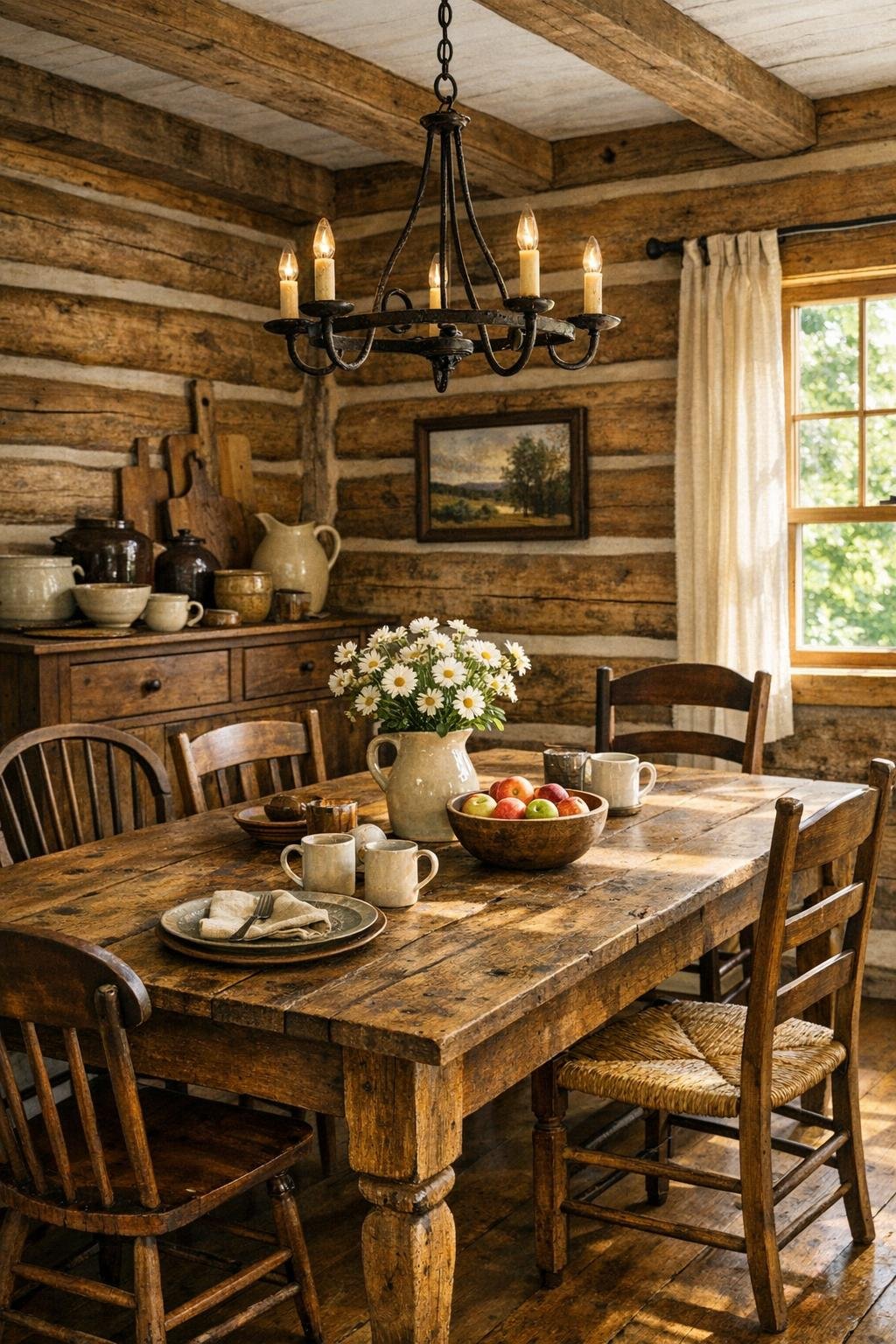
The dining room carries the same honest warmth, but with a slightly more gathered feeling, as though it was designed for Sunday dinners and long stories after pie. A substantial farmhouse table in reclaimed wood takes center stage, its surface broad enough for everyday meals and holiday platters alike. Around it, mismatched but harmonious chairs bring in that collected-over-time spirit I find so comforting, with painted finishes, worn edges, and simple turned legs. The palette stays close to the rest of the home, relying on warm neutrals and wood tones, though here I would welcome a little more color in the form of checked linen runners, pottery, or a bowl of late-summer apples.
Lighting above the table is simple and sturdy, perhaps a wrought-iron chandelier or a row of shaded pendants that cast a mellow downward glow without becoming fussy. The room would benefit from a nearby window or glazed door, allowing daylight to catch the grain of the table and the uneven beauty of the logs. I also imagine a sideboard along one wall, holding stoneware pitchers, stacks of plates, and the sort of serving dishes that only come out when family is around. There is no stiffness here at all; it feels meant for passing bowls, second helpings, and lingering well after the plates are cleared.
Kitchen
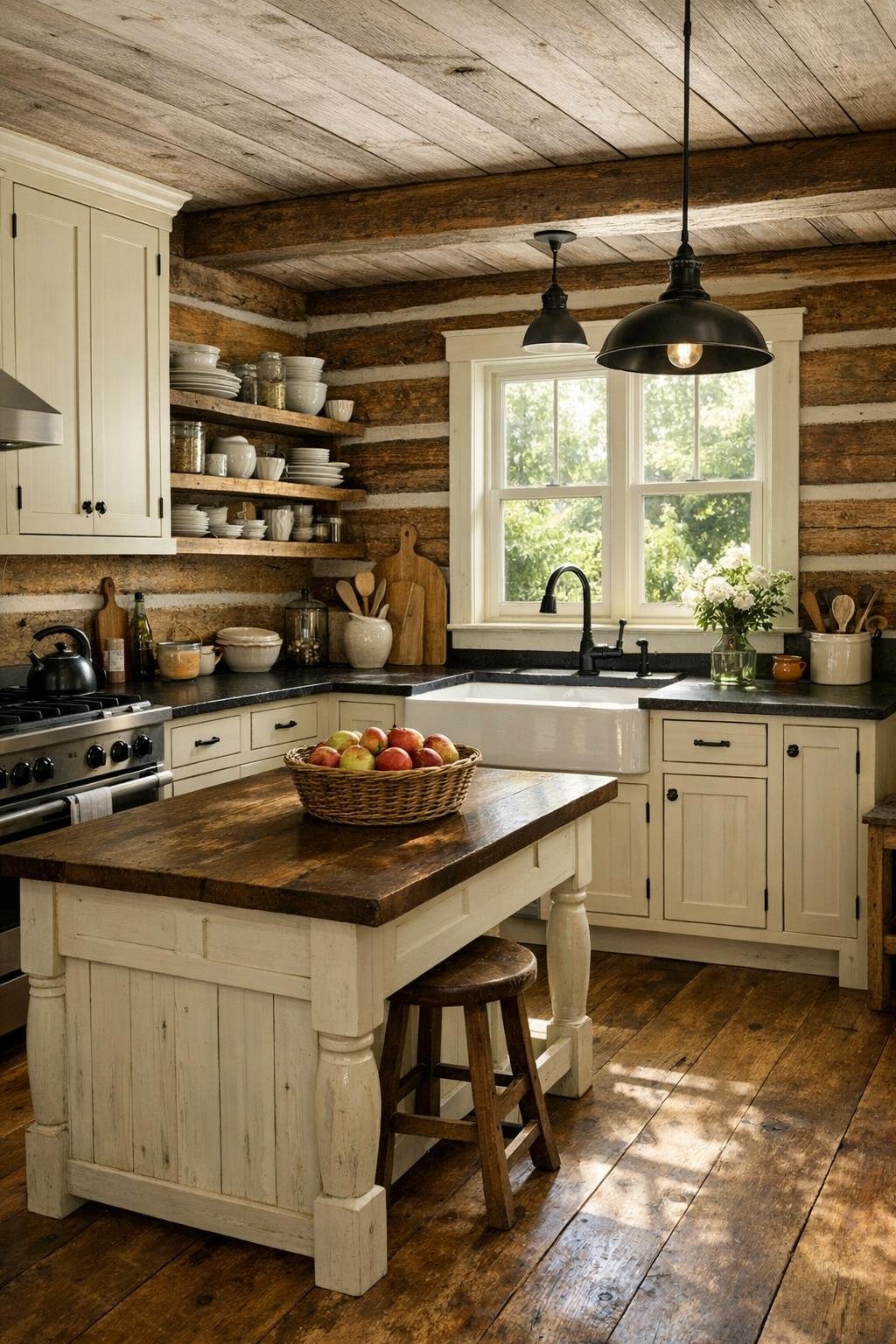
The kitchen is wisely handled as a working room first, and that is exactly why it feels beautiful. Rather than forcing a sleek modern statement into an old structure, the design lets cabinetry, counters, and fittings support the character already present. Painted cabinets in a creamy off-white lighten the room against the log shell, while soapstone or honed dark countertops bring depth and a useful, forgiving finish. Open shelves, perhaps in matching reclaimed wood, give space for crockery, mixing bowls, and everyday glass jars, and a deep apron-front sink under a window feels as natural here as flour on a bread board.
I can picture this kitchen with wide-plank floors underfoot, black iron hardware, and a sturdy central island where vegetables are chopped and biscuits are rolled. The appliances would be integrated carefully so they do not interrupt the old-world ease of the room, and a classic range would act almost like a hearth in its own right. Lighting matters here too: schoolhouse pendants or simple metal shades over the island, under-cabinet task lighting kept discreet, and daylight doing as much work as possible. It is a kitchen that respects labor, and because of that, it feels deeply livable to me.
Bedroom
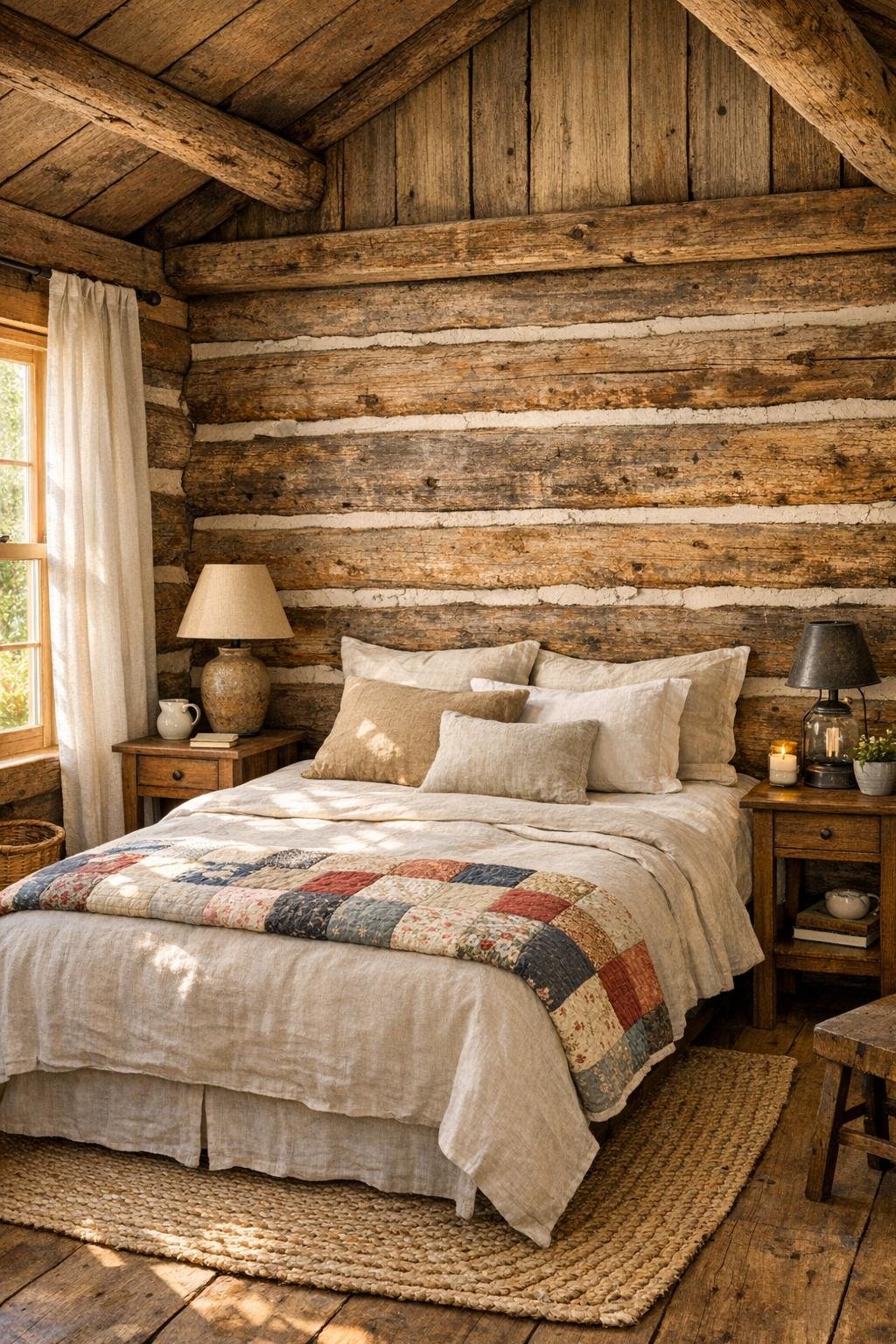
The bedroom turns the home’s rustic character into something especially restful. Exposed logs could have made the room feel visually busy, but the design answers that with soft bedding, restrained color, and furniture with clean, uncomplicated lines. A bed dressed in layers of ivory, flax, and weathered blue would look lovely here, especially against the darker wood tones, and a quilt folded at the foot adds just the right note of memory and tenderness. Instead of crowding the room, the furnishings stay purposeful: a pair of bedside tables, a chest or armoire, and perhaps a small bench for books and folded blankets.
What I appreciate most is the sense of quiet. Window treatments in linen or cotton filter the light rather than blocking it harshly, and the lighting is gentle, with bedside lamps and maybe one understated overhead fixture in aged metal. The floor might be softened with braided rugs or a low wool runner, giving bare feet a warmer welcome in the morning. Altogether, the room feels like a place where one truly rests, not just sleeps, and in a home with so much tactile history, that calm simplicity is exactly the right choice.
Bathroom
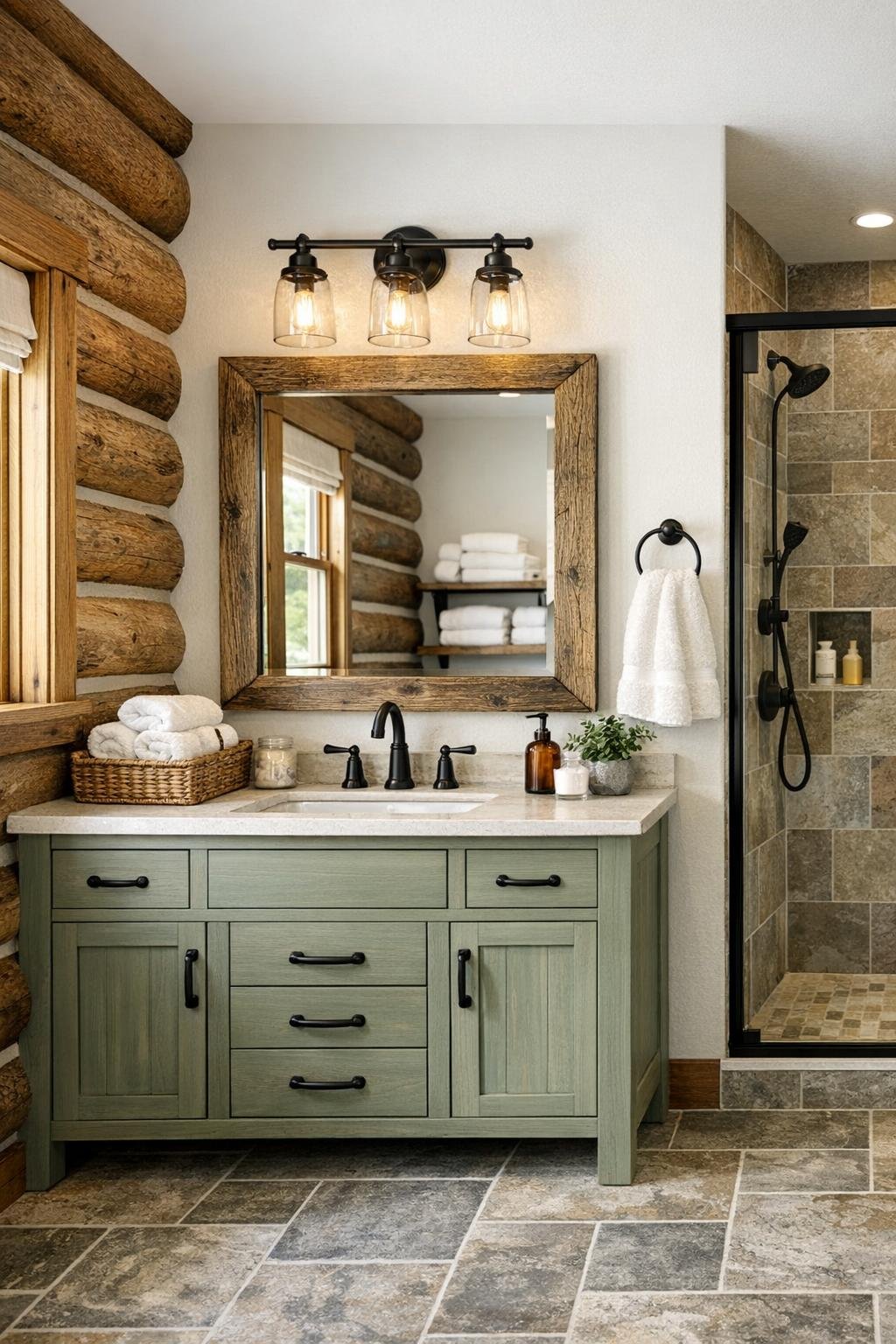
The bathroom is where old and new meet most delicately, and this design handles that meeting with real confidence. Rather than leaning overly polished, the room favors tactile finishes that suit the age of the home: stone or porcelain tile with a weathered look, a vanity in painted wood, and hardware in blackened metal or unlacquered brass. A trough-style or simple undermount sink keeps things useful and unfussy, while the mirror, perhaps framed in reclaimed timber, repeats the language of the rest of the house without turning theatrical.
I would want this room to feel clean, bright, and deeply soothing, and it seems to understand that. Soft white walls in the non-log portions help bounce light around, while fluffy towels, a woven stool, and a small sprig of greenery keep the space from feeling too stark. If there is a walk-in shower, a clear glass enclosure would preserve the openness; if there is a soaking tub, it should sit near a window where one could watch the weather change across the fields. It is modest luxury, the best kind in my view, because it serves comfort without losing its humility.
Other Areas
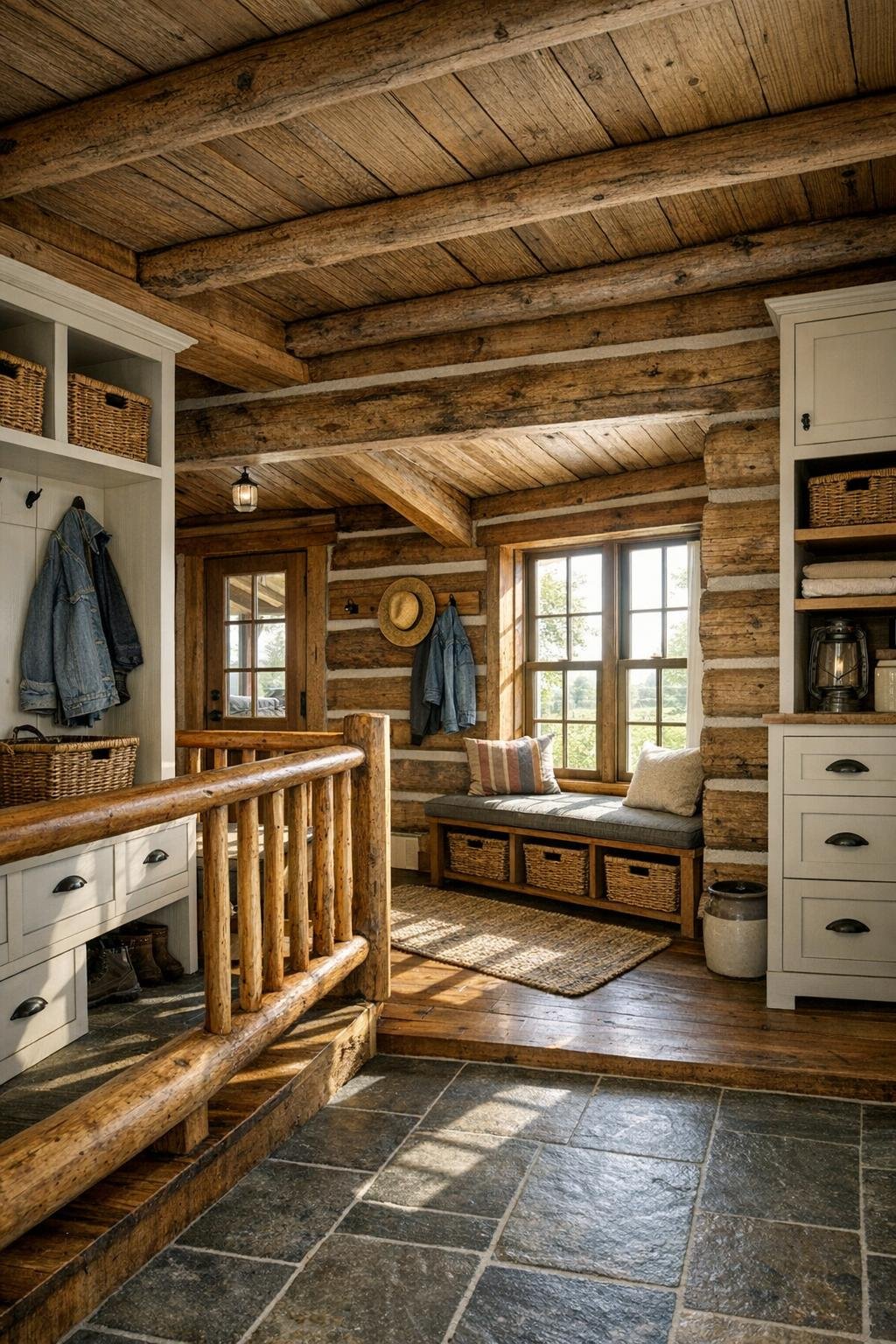
Because the home began as a utilitarian farm structure, the circulation spaces and tucked-away corners are especially important, and they offer some of the most memorable moments. A loft, landing, or upper hallway would make wonderful use of the vertical shape of the original crib, with railings in wood and iron and views down into the main living space. These in-between areas need not be grand to be charming. A narrow bench under a window, a row of pegs for coats, baskets for kindling, and old framed farm prints could give them a sense of story while keeping them useful.
I also imagine a mudroom or entry zone done with real country sense, where durable flooring, a boot tray, and built-in storage make daily life easier. If there is space for a small office or sewing nook, it would be lovely to keep it simple: one sturdy desk, one good chair, a practical lamp, and shelves that honor the home’s modest scale. These supporting spaces are often where a house proves itself, and here they feel thoughtfully tied to the whole, never overdecorated, always ready for ordinary living. That, to me, is one of the surest signs of good design.
Why You'd Live Here
You would live here if you believe a home should feel earned, not manufactured. This design offers beauty, yes, but the kind that comes from texture, memory, and honest materials rather than from flash. Every room seems to understand the pleasure of usefulness: a kitchen meant for cooking, a dining room meant for gathering, a living room meant for reading and lingering, and quieter corners that support the rhythms of daily life. It has the rare ability to feel special without ever becoming precious.
More than that, this home carries a spirit that many new houses spend years trying to imitate and never quite catch. It is rooted in the land, respectful of its origins, and arranged around comfort in the truest sense of the word. I think that is why the reading corner stays with me so strongly; it stands for the whole idea of the house. This is a place where past and present sit down together easily, where the wood still remembers its first purpose, and where growing older might feel not smaller, but sweeter.