From the curb, this faded tan log home has the kind of quiet presence that can be easy to overlook, especially if you’re used to dramatic architecture announcing itself from a mile away. But that understatement is exactly what pulled me in. Set against a softly wooded backdrop with a gravel drive, a deep porch, and just enough weathering on the exterior to make it feel settled into the land, the house has a calm, grounded character that reads rustic at first glance and surprisingly refined once you start paying attention. As a concept design, it imagines that sweet spot between cabin warmth and everyday polish in a way I find incredibly livable.
What makes this home special is the contrast between expectation and experience. I went in anticipating knotty pine overload and heavy lodge furniture, but the interior shifts the story completely with lighter finishes, better proportions, and rooms that feel designed for real life instead of just a weekend retreat. There’s a softness to the palette, a practical flow from space to space, and the kind of layered texture that makes a home feel welcoming the second you step inside. It reminds me a little of the houses I save to inspiration boards while waiting for soup to simmer on a weeknight—beautiful, yes, but also smart about how people actually live.
Exterior
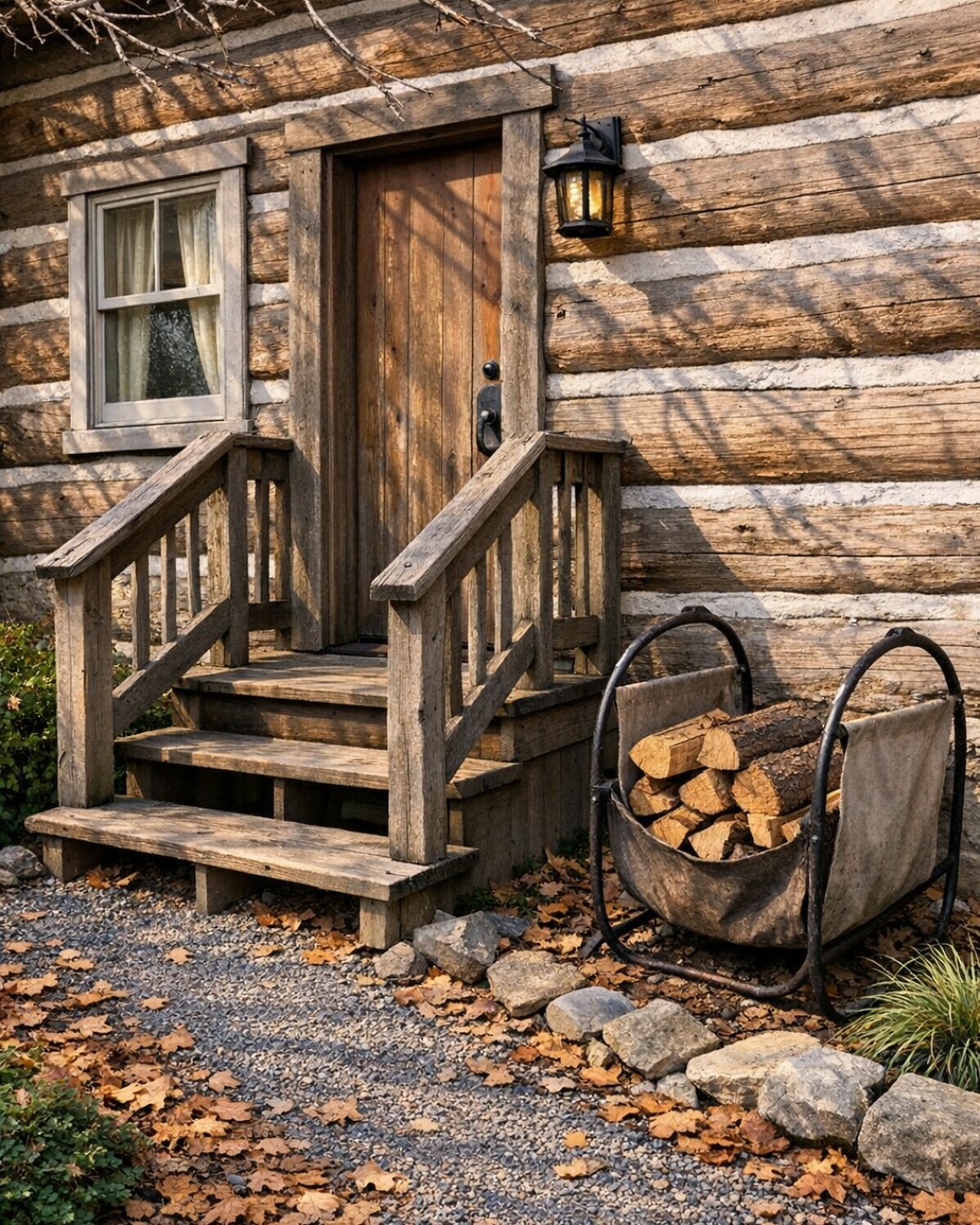
The exterior keeps the original rustic language of the house intact, but it does it with a lighter hand than you might expect. The faded tan logs are allowed to be part of the charm, with their sunwashed finish giving the home an easy, lived-in warmth rather than a freshly staged look. Dark bronze window trim adds needed contrast, and the roofline is simple and low-slung, which helps the house feel connected to the landscape instead of imposed on it. A broad covered porch stretches across the front, furnished sparingly with black metal lanterns, chunky wood posts, and a pair of woven lounge chairs that suggest long evenings without trying too hard.
What I like most is how the exterior transitions the idea of rustic into something more current. Instead of leaning heavily on decorative details, the design uses proportion and texture: stacked logs, matte stone at the foundation, a practical front door in an earthy mushroom tone, and planters filled with grasses and white blooms. The result feels approachable and honest. It’s the sort of house that doesn’t need perfect landscaping or a grand entry sequence to win you over; it just settles in confidently, and by the time you reach the porch steps, you’re already curious about what’s inside.
Living Room
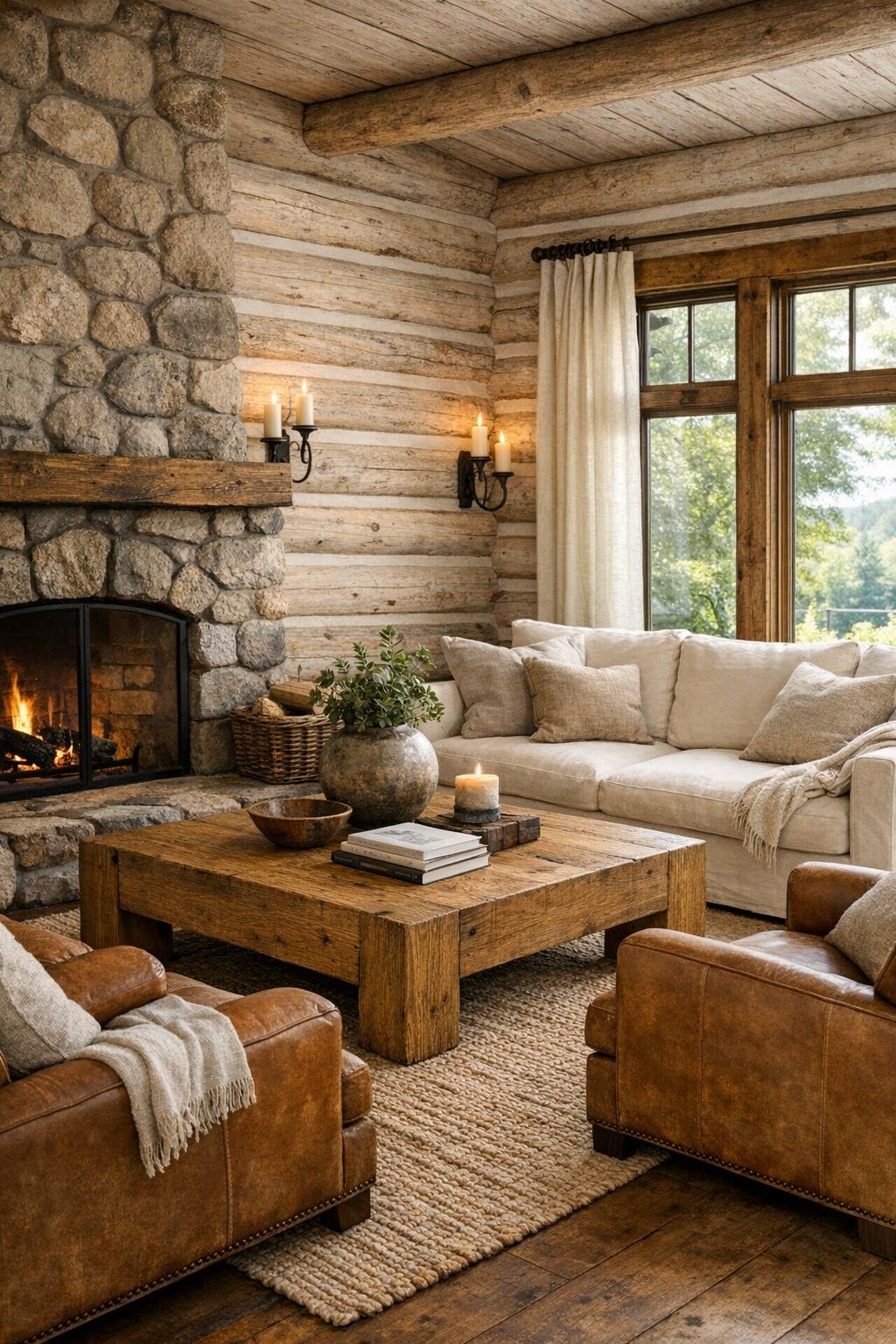
The living room is where the entire tone of the house comes into focus. The logs remain visible, but they’ve been softened by a limewashed finish that lightens the walls without erasing their grain, and that one choice changes everything. Instead of a dark, enclosed cabin feel, the room opens up into a warm neutral envelope of sandy beige, oat, cream, and muted brown. A large area rug in a subtle geometric weave anchors the seating group, which mixes a slipcovered sofa, two caramel leather chairs, and a chunky oak coffee table with rounded edges. It feels collected rather than themed, and I think that balance is what makes the room work.
Lighting and layout do a lot of heavy lifting here too. A stone fireplace rises on one wall, but the mantel is kept simple with just a tall ceramic vase and a framed landscape, which keeps the eye on the texture of the stone itself. Iron sconces and a linen-shaded floor lamp add softer pools of light, while oversized windows pull in enough daylight to keep the wood tones from feeling heavy. I can picture this being the room where everyone ends up at the end of the day, with blankets tossed over the arm of the sofa and a pot of chili still lingering in the kitchen nearby. It has that rare mix of visual calm and actual comfort.
Dining Room
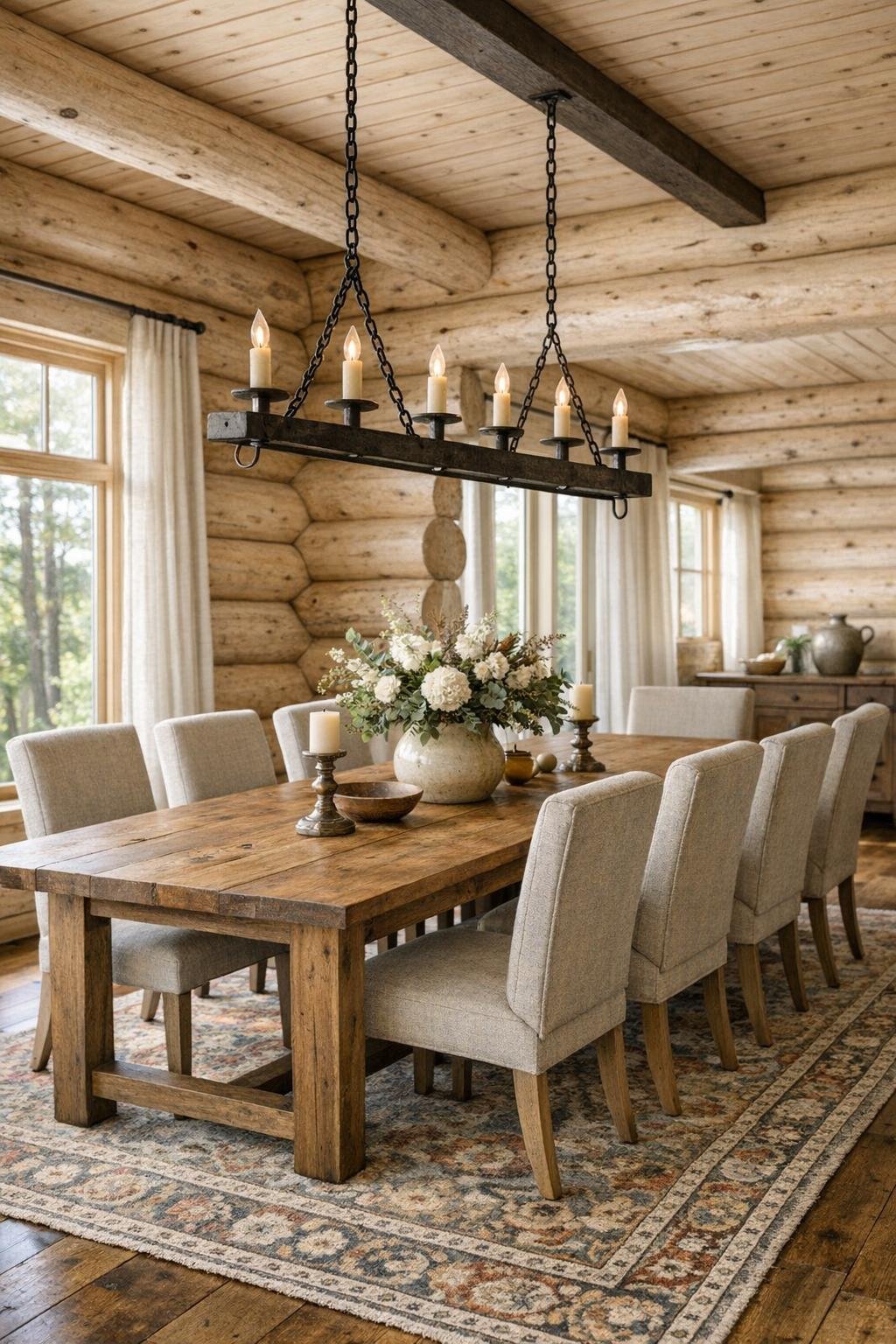
The dining room carries the same softened-rustic approach but feels a little more tailored. At the center is a long rectangular wood table with a matte, hand-rubbed finish that lets every variation in the grain show through. Around it, upholstered dining chairs in a warm flax tone keep the room from tipping too rugged, and I love that decision because it instantly makes the space feel more comfortable for real dinners that stretch on longer than planned. A vintage-style wool runner underfoot introduces a bit of pattern in faded rust and charcoal, tying the room back to the home’s earthy shell without competing with it.
Overhead, a linear chandelier in aged iron adds structure and a subtle bit of drama, especially against the lighter wood walls. The room is likely positioned near generous windows, and that natural light plays beautifully off the table surface and the soft fabric seats. There’s also enough breathing room around the furniture to make the space feel easy to move through, which matters more than people think when you’re carrying hot dishes back and forth. As someone who is always mentally mapping where serving bowls would go before a dinner party, I appreciate how this room seems designed for both holiday meals and quick weekday takeout eaten from proper plates.
Kitchen
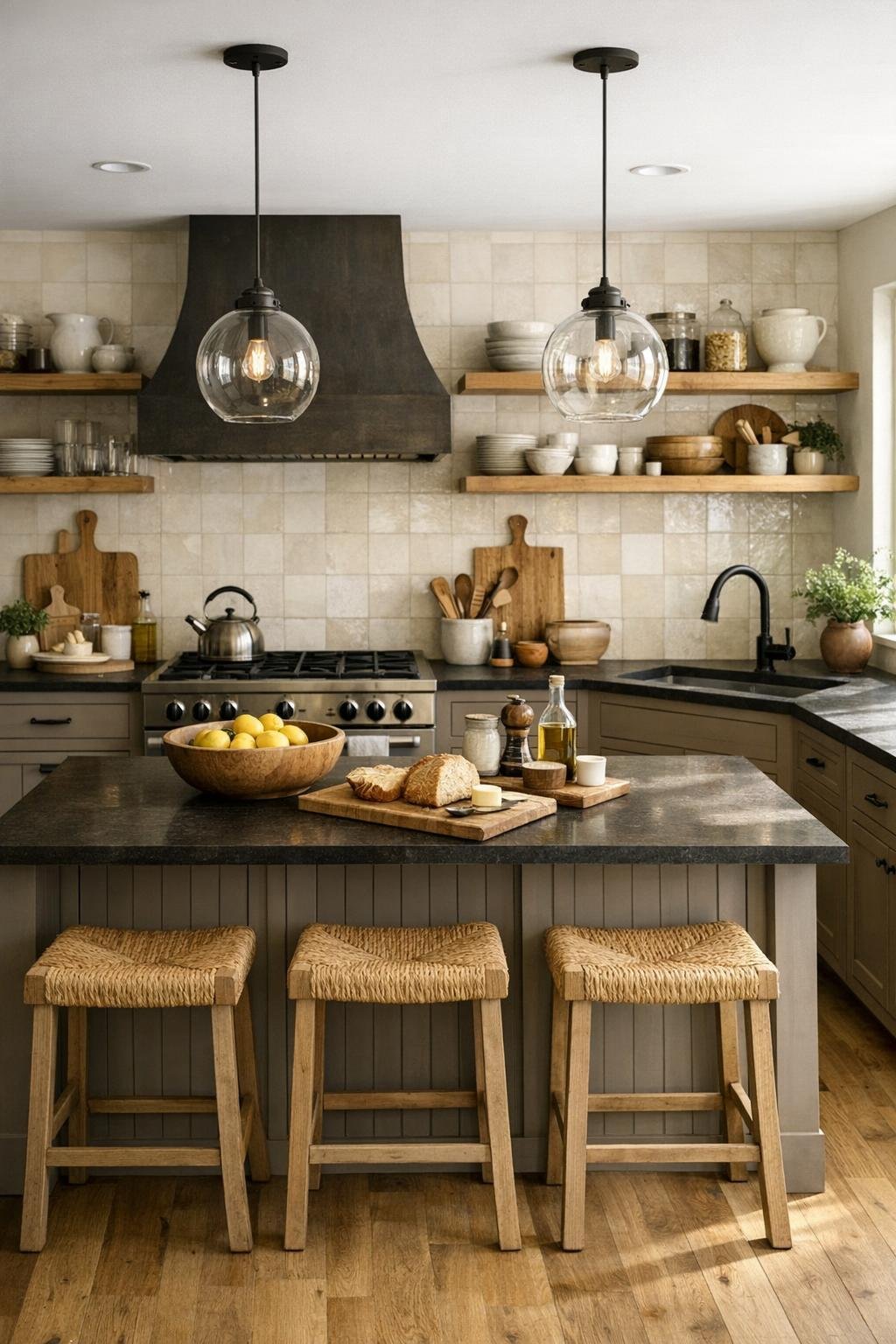
The kitchen is the biggest surprise in the house, and honestly, it’s the room that would have me rethinking the entire exterior at first glance. Rather than going full farmhouse or full lodge, it lands somewhere much more useful: clean-lined, warm, and built for someone who actually cooks. The cabinetry is a mix of painted mushroom-toned lowers and light oak uppers or open shelving, which keeps the room from feeling too blocky. Soapstone or leathered dark quartz counters provide depth, while a creamy zellige-style backsplash introduces a gentle shine and enough variation to keep all the matte finishes from feeling flat.
An oversized island becomes the center of everything, with room for prep on one side and casual seating on the other. I can already imagine lining up containers there for Sunday meal prep or setting out snacks while dinner finishes. The hardware is understated in aged brass, the faucet has a more architectural profile, and the pendants overhead are simple glass and metal forms that don’t distract from the materials. What I really love is that the kitchen respects the rustic bones of the house without performing them. It feels fresh, practical, and deeply comfortable—the kind of kitchen where a simmering sauce, a laptop, and a grocery list could all coexist without the space missing a beat.
Bedroom
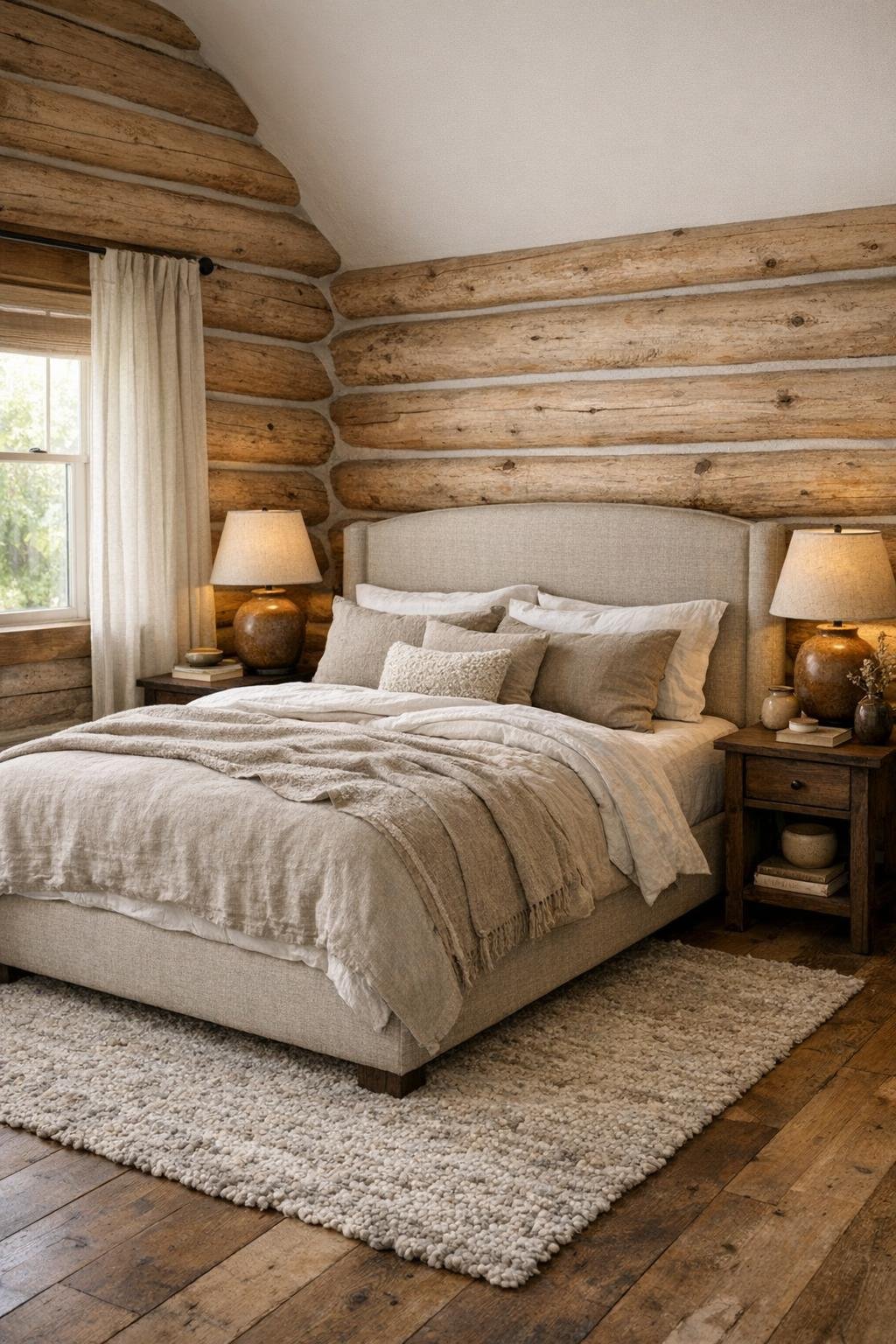
The bedroom takes a quieter approach than the main living spaces, which I think is exactly right. Here, the log walls are either more lightly finished or balanced with enough soft furnishings that the room reads restful instead of rustic. A low upholstered bed in oatmeal linen sits against one wall with layered bedding in ivory, taupe, and soft clay, and the palette feels intentionally muted, like the visual equivalent of exhaling. A bench in weathered wood at the foot of the bed and compact nightstands in darker stained oak add just enough contrast to keep the room from drifting into bland territory.
Texture is really the story in this space. There’s likely a wool rug underfoot, nubby throw pillows, lined drapery that frames the windows without blocking the view, and bedside lamps with ceramic bases that cast a warm evening glow. I also like to imagine one comfortable reading chair tucked into a corner with a small table for tea or a stack of books, because bedrooms always feel more finished to me when they offer more than just a place to sleep. This room doesn’t chase trendiness; it leans into comfort, visual softness, and that clean-but-not-stiff feeling that makes you want to turn in early.
Bathroom
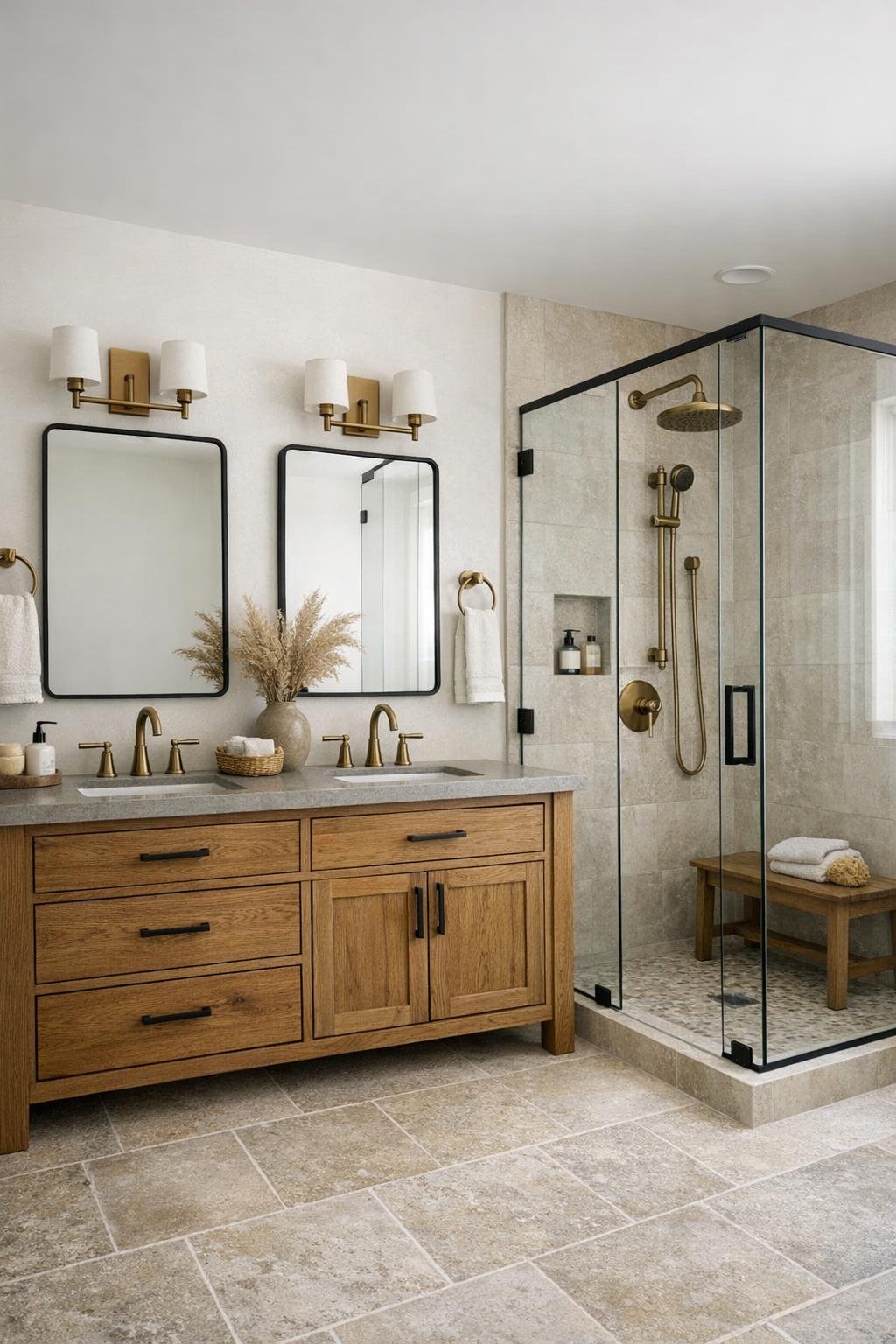
The bathroom is where the home gets a little more spa-like without losing the grounded material palette that ties everything together. A double vanity in warm stained oak or a painted clay tone supports stone countertops with a soft matte finish, and the mirrors above are framed simply in blackened metal. Instead of leaning ornate, the design stays restrained and lets materials do the work: creamy plaster-like walls, textured porcelain tile underfoot, and brushed brass plumbing fixtures that add warmth without too much shine. It feels edited, which is a smart move in a log home where visual texture already exists in abundance.
If there’s a standout feature here, it’s probably the bathing zone. I can picture a walk-in shower wrapped in pale stone-look tile with a glass enclosure, or even a freestanding tub positioned near a window if the footprint allows. Either way, the room seems designed around ease and calm rather than luxury for luxury’s sake. Good sconces, soft white towels, a wood stool for bath products, and maybe a woven basket tucked beneath the vanity are all little details, but they’re what make a bathroom feel finished. It’s the kind of space that would make rushed mornings a bit more manageable and nighttime routines feel like a reset instead of another task.
Other Areas
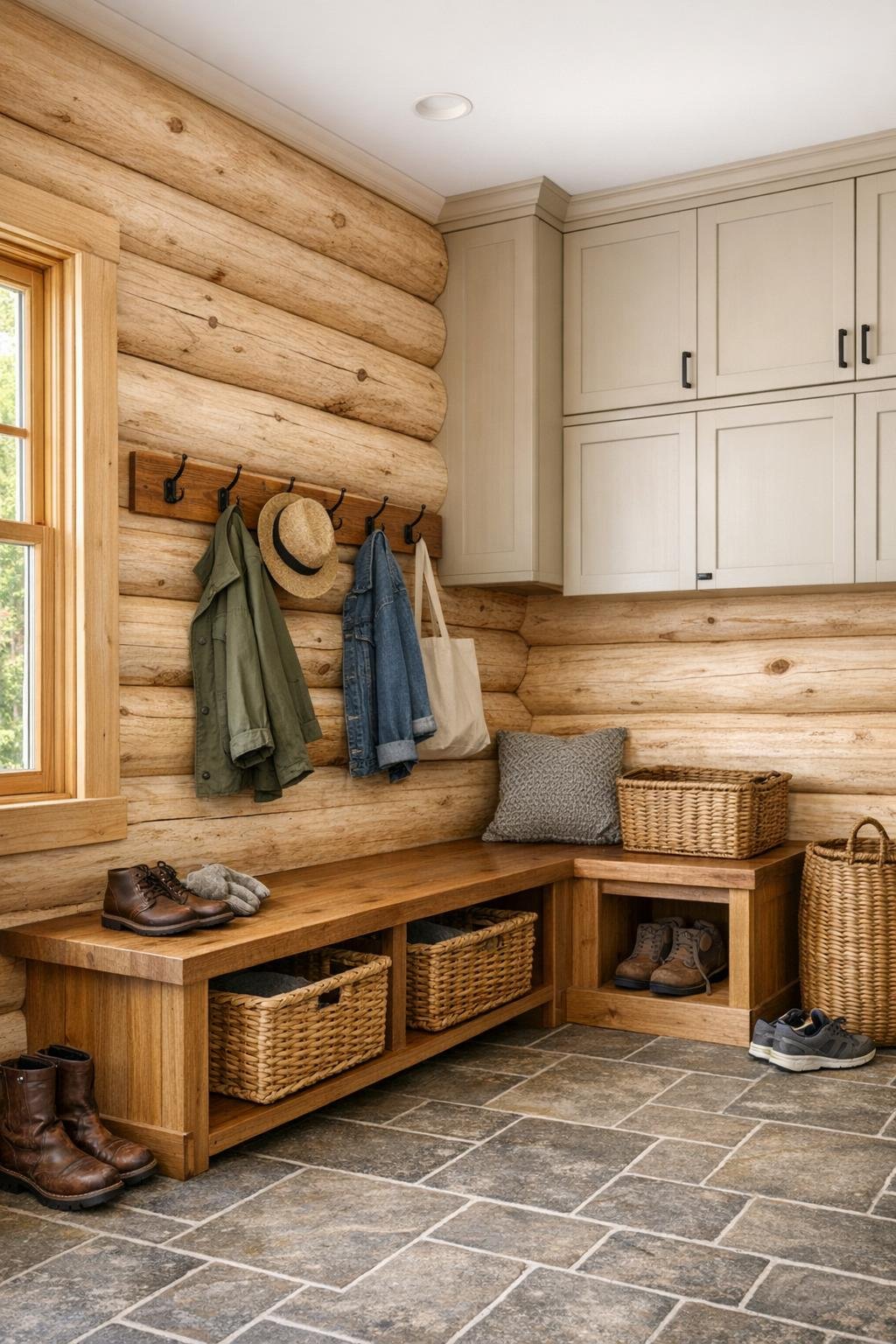
The secondary spaces are what make the whole house feel especially believable. A mudroom near the entry likely includes built-in benches, closed storage below, and sturdy hooks mounted against the log wall, creating a buffer between the outdoors and the polished interior. I always notice these spaces because they do so much for everyday sanity, especially in a home with a wooded setting and all the shoes, coats, grocery bags, and dog leashes that tend to pile up. A small laundry room with stacked storage, a folding counter, and durable tile would fit naturally into this plan too, carrying through the same warm neutrals and practical finishes as the main rooms.
There also feels like there should be a loft, reading nook, or hallway corner that’s been given a little extra intention. Maybe it’s a built-in desk under a window, a slim console with baskets below, or a quiet landing with a chair and wall sconces. Those in-between moments matter because they keep a home from feeling like a collection of isolated showpieces. In this design, I can imagine every corridor and utility zone being handled with the same care as the kitchen or bedroom, which is often what separates a pretty house from one that truly supports a busy life.
Why You'd Live Here
You’d live here because it offers something a lot of rustic homes miss: balance. It keeps the charm of a log house—the texture, the warmth, the connection to the landscape—but edits out the heaviness that can make these spaces feel dark or overly themed. Every room seems to understand that comfort and beauty are not opposing ideas. The finishes are approachable, the palette is easy to live with, and the design choices feel thoughtful rather than flashy.
For me, this home’s biggest strength is that it feels ready for actual routines. I can picture early coffee at the island, weeknight pasta in the kitchen, muddy shoes dropped in the mudroom, and a long exhale in that bedroom at the end of a packed day. It’s visually calming, quietly stylish, and full of the kinds of details that support real life without sacrificing personality. That’s what makes it memorable—and what makes that faded tan exterior such a satisfying surprise.