From the road, this farmhouse reads as quiet and a little weathered, the kind of faded beige exterior that blends into late-summer grass and soft Midwestern light. Then the interior opens up, and the whole house shifts in tone. What looks humble outside becomes layered, warm, and deeply considered inside, with a palette of oat, clay, smoke, and worn wood that feels grounded rather than rustic for effect. As a design concept, it imagines the farmhouse not as nostalgia, but as something calmer, cleaner, and far more useful for modern living.
I was especially taken with the way the home balances simplicity and richness. Nothing is shouting for attention, yet every surface seems to have been chosen for touch as much as appearance: limewashed walls, old-brass hardware, broad-plank floors, nubby linens, and stone with a chalky, matte finish. It has the steadiness I always appreciate in a good kitchen or dining room—the sense that materials should age well, work hard, and still make everyday life feel just a bit more beautiful.
Exterior
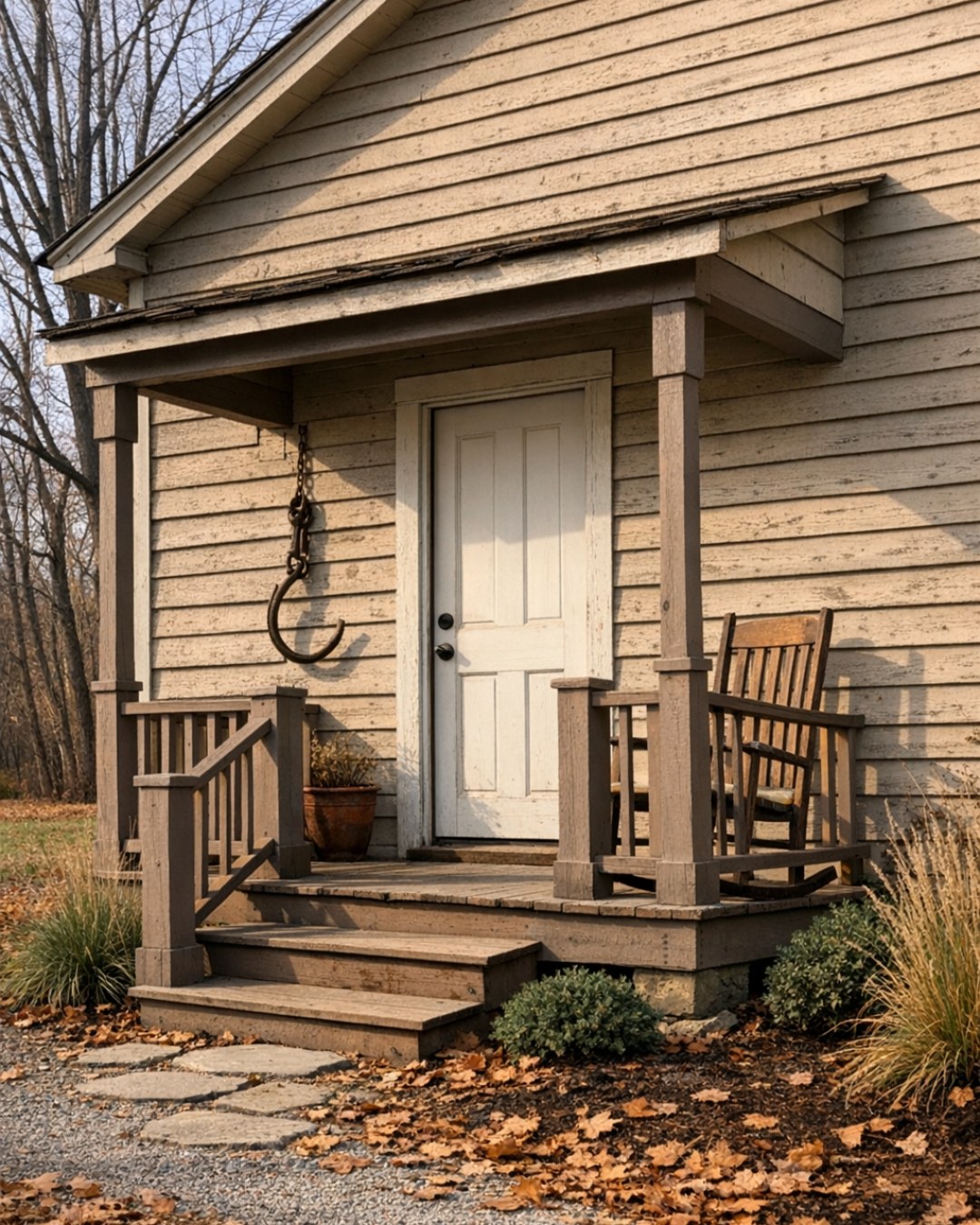
The exterior keeps its farmhouse silhouette honest: a straightforward gabled form, a low front porch, and beige siding that has the slightly sun-softened look of old paint rather than a fresh decorator color. That faded tone is exactly what gives the house its first layer of charm. Instead of sharpening everything up with bright white contrast, the trim leans creamy and muted, and the roofline is finished in a soft charcoal that anchors the elevation without making it feel heavy.
What makes the outside memorable is its restraint. The landscaping is loose and regional, with native grasses, hydrangea, and irregular stone edging rather than clipped formality. A simple wooden front door, blackened lantern sconces, and a few galvanized planters are enough to signal the home’s character. I like that the exterior doesn’t oversell what’s inside; it lets the interior be the surprise.
Living Room
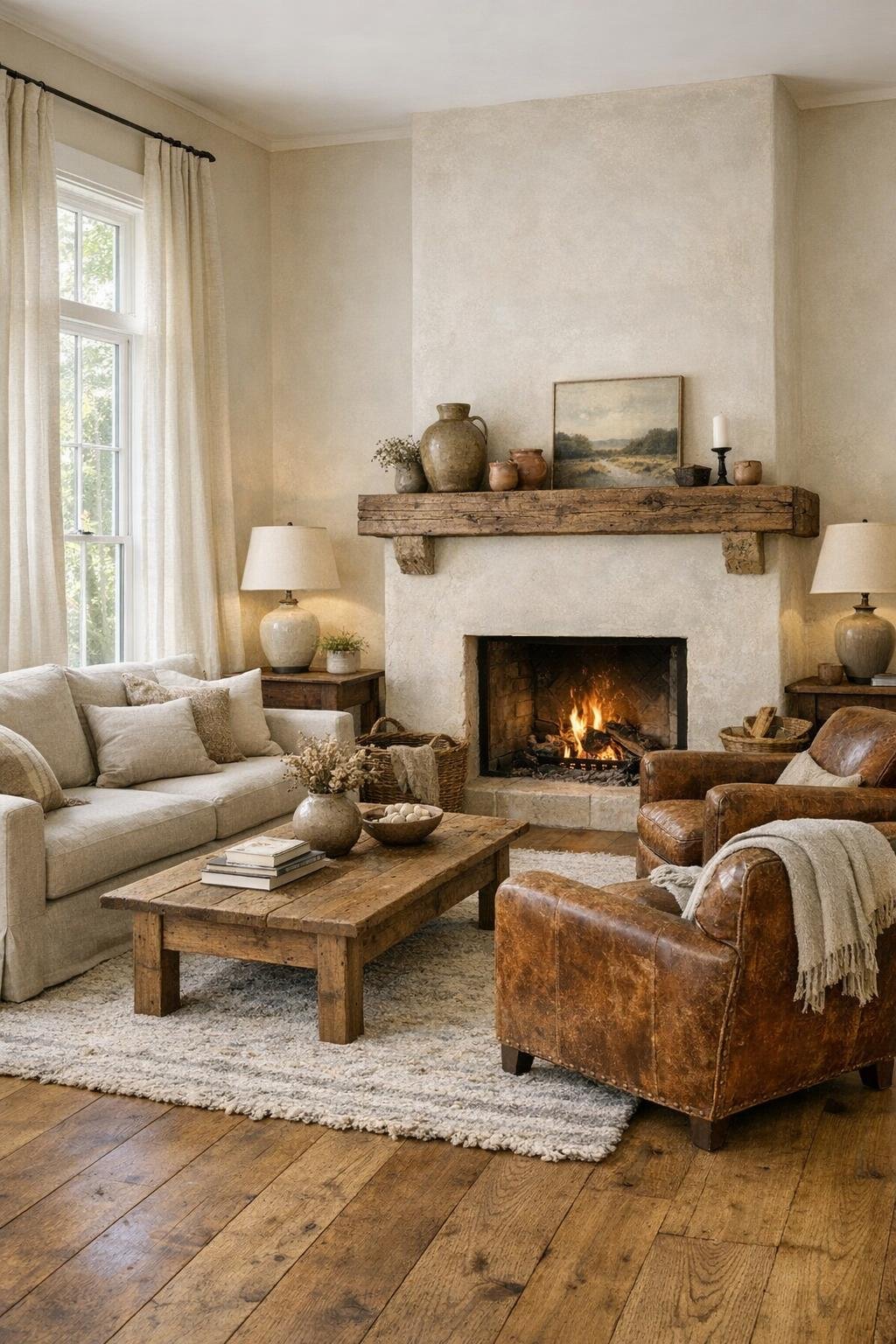
The living room is where the farmhouse vocabulary gets refined. Wide-plank oak floors run under a generous wool rug in a faded wheat and charcoal pattern, and the walls are finished in a warm off-white that catches light softly rather than bouncing it around. A deep, slipcovered sofa in natural flax linen faces a low oak coffee table with rounded corners, while two leather lounge chairs in a weathered saddle tone add structure and a bit of polish. The fireplace is treated simply, with a pale plaster surround and a substantial reclaimed timber mantel that brings in age without feeling theatrical.
Lighting does a lot of the emotional work here. During the day, tall windows dressed in relaxed linen panels keep the room bright but filtered; in the evening, a shaded floor lamp, a pair of ceramic table lamps, and the glow from the fire turn everything honeyed and intimate. The layout leaves generous circulation around the furniture, which keeps the room from feeling crowded despite its layered textures. It is comfortable in the truest sense—designed for conversation, reading, and long afternoons rather than for display.
Dining Room
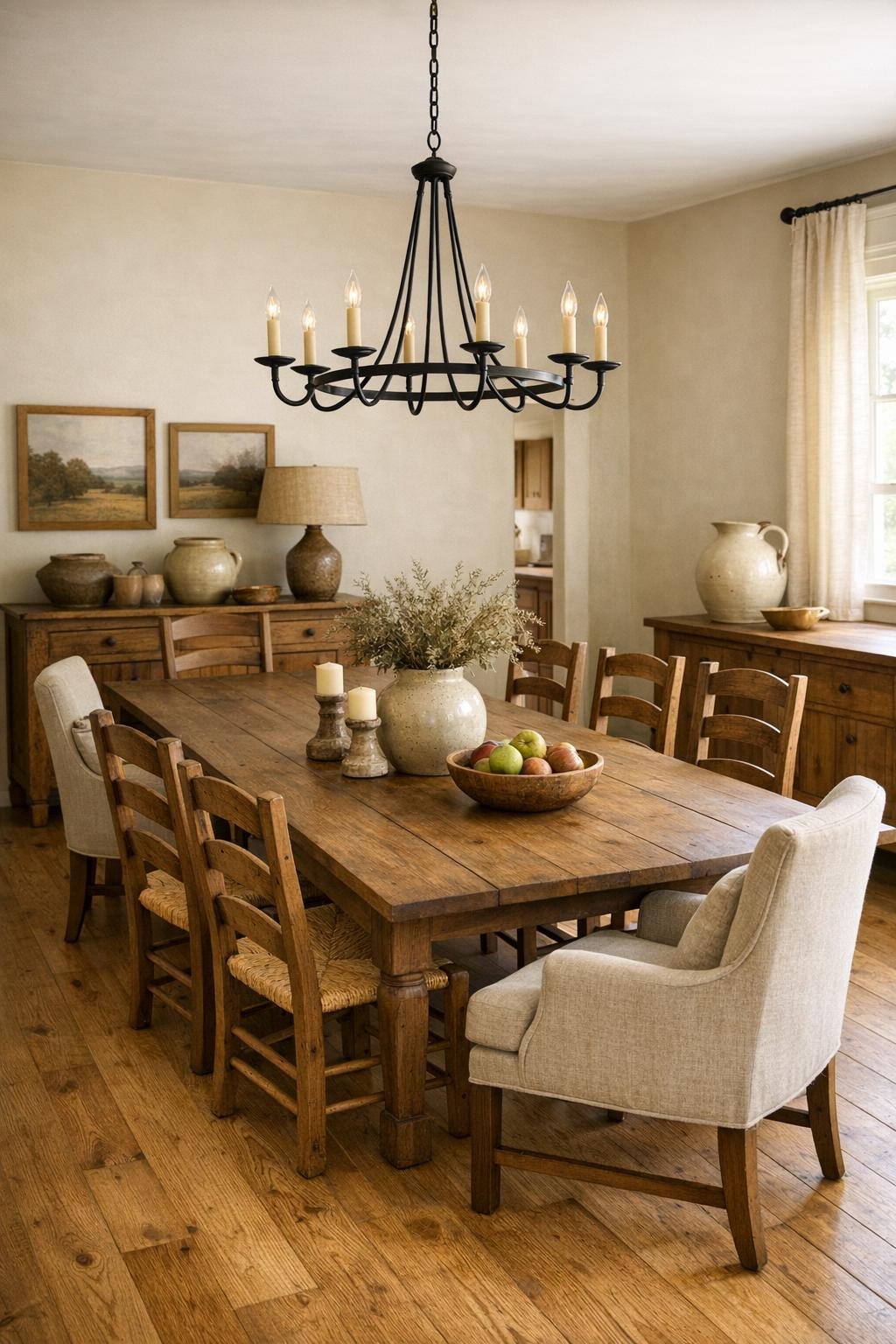
The dining room has the kind of quiet confidence I always admire because it understands that meals are the real centerpiece. A long solid-wood table, visibly grained and left matte, sits beneath a linear iron chandelier with candle-style bulbs that cast a gentle, flattering light. The chairs mix ladder-back side seating with upholstered host chairs at either end, which keeps the room from feeling too matched. The palette stays close to the rest of the house—stone, flax, brown-black metal, and softened wood—but here it reads a touch more formal through symmetry and proportion.
There is likely a sideboard along one wall, topped with ceramic vessels and perhaps a pair of sconces or a shaded lamp, giving the room both storage and visual weight. I can easily imagine this being one of the most hardworking rooms in the house: weeknight pasta, holiday pies cooling on linen runners, coffee lingering after dinner. The beauty is in the details that support use, from durable finishes to the open clearance around the table that makes serving and gathering feel easy.
Kitchen
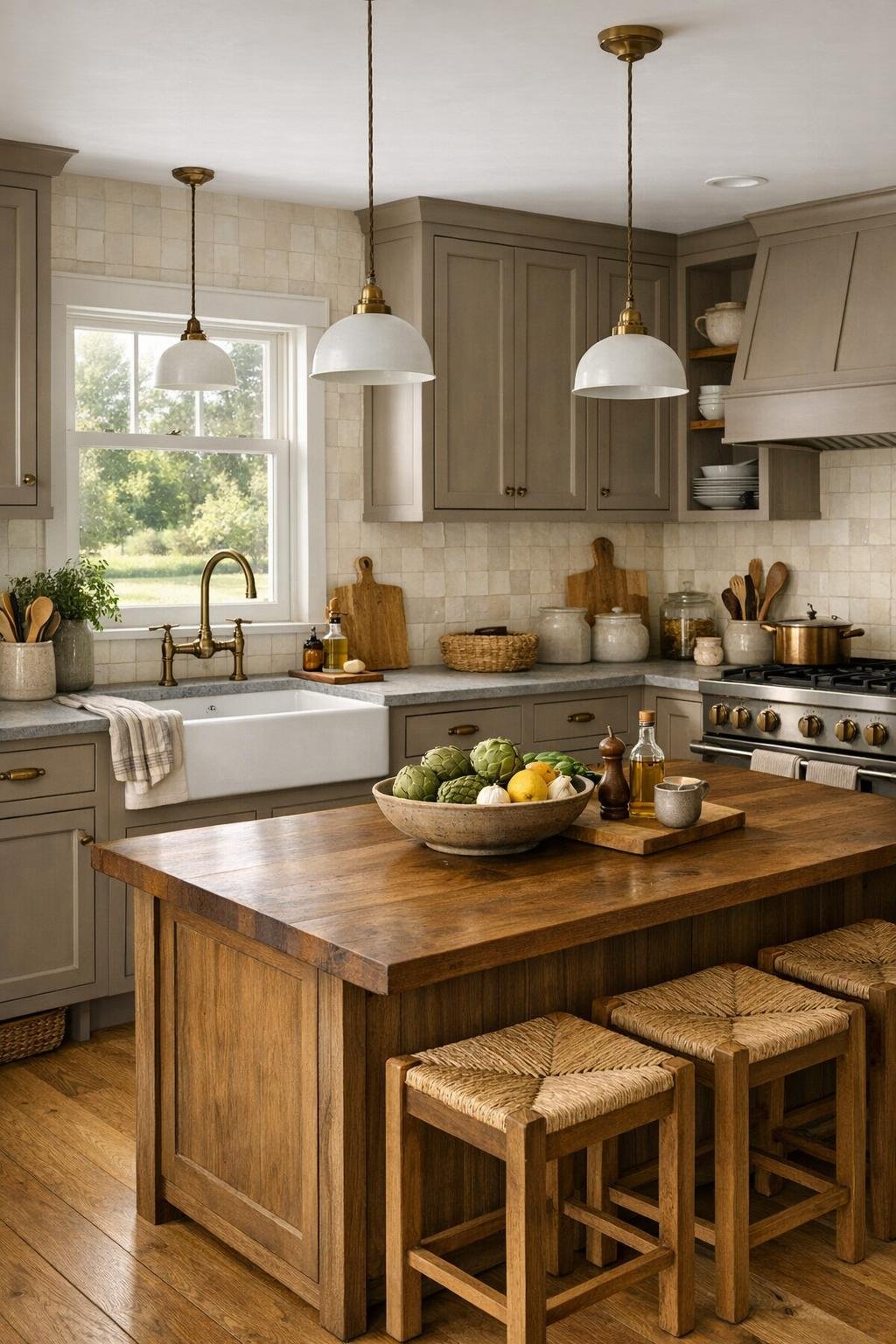
The kitchen is, for me, the heart of the whole design. It trades flashy finishes for materials that a serious cook would actually love living with: painted cabinetry in a muddied mushroom tone, aged brass pulls, honed stone counters, and a full-height backsplash in creamy handmade tile with subtle variation. The island is broad enough for prep, rolling dough, or setting out platters, and I appreciate that it looks substantial without becoming bulky. Open shelves are used sparingly, which keeps the room practical, while glass-front uppers lighten the cabinetry wall and show off everyday ceramics.
Functionally, the layout feels intelligent. There is room for multiple work zones, proper landing space beside the range, and likely a tucked-away pantry area that helps the main room stay composed. A large apron-front sink under a window is almost expected in a farmhouse, but here it feels earned, especially paired with bridge-style brass hardware and a view to the yard. The lighting mix—a pair of understated pendants over the island, recessed ambient light, and under-cabinet task lighting—suggests a kitchen designed for actual cooking, which I always find more luxurious than anything ornamental.
Bedroom
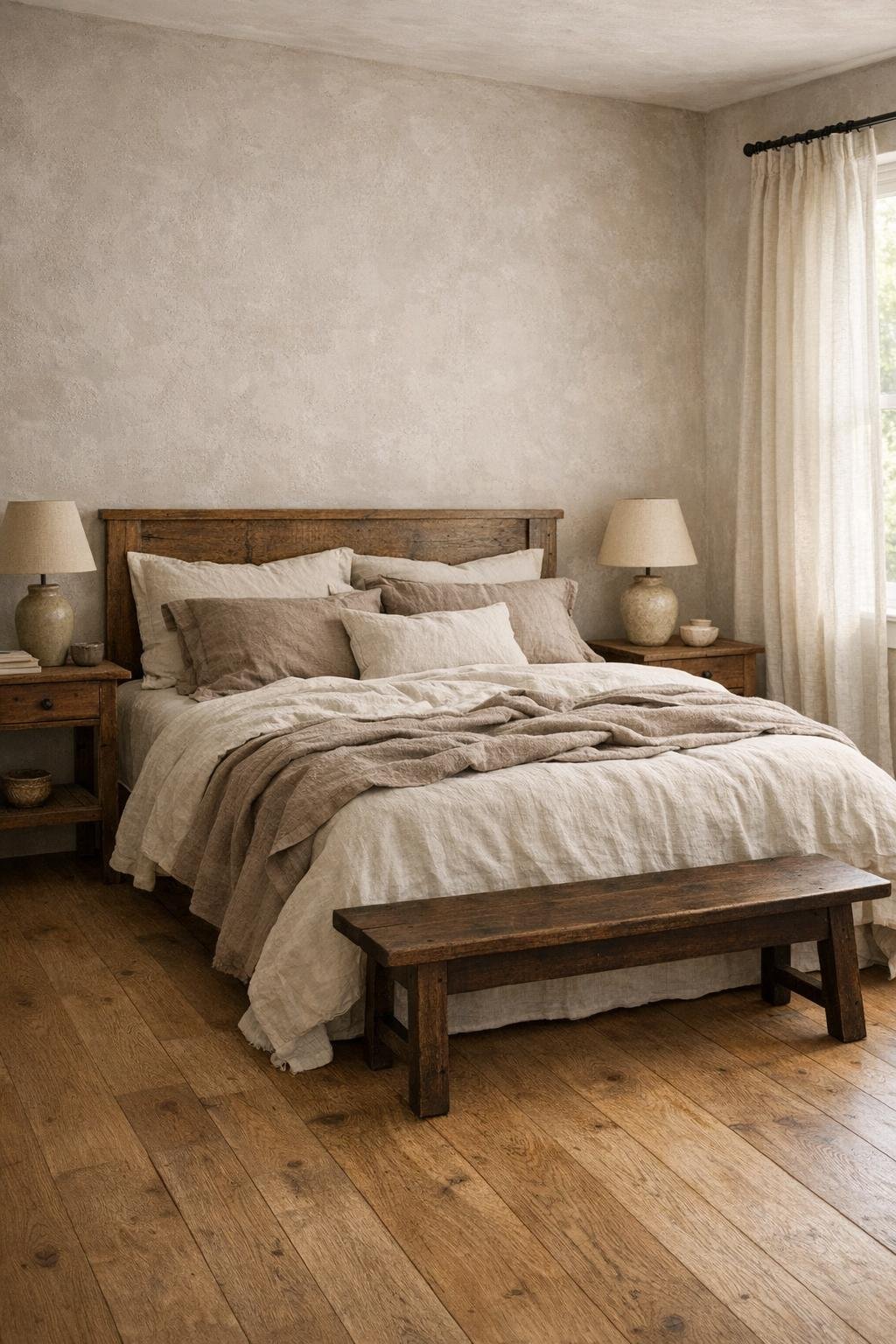
The bedroom pulls the home’s earthy palette into something even quieter. Walls in a pale greige or chalky plaster finish set a restful tone, while the bed—upholstered or simply dressed in layered linen—becomes a soft focal point against that muted envelope. I like the likely contrast of a darker wood dresser or bench at the foot of the bed, because it gives the room a bit of visual gravity. Bedding in cream, flax, and smoky taupe keeps the look tonal, with a quilted coverlet and heavier throw adding depth without clutter.
There is an appealing lack of fuss here. Nightstands are practical and substantial, lamps are warm and shaded rather than sculptural for their own sake, and window treatments feel tailored but relaxed. The room is probably not oversized, and that works in its favor; the scale reads intimate and protective. Instead of trying to impress, it seems designed to slow the pulse, which is often the smartest thing a bedroom can do.
Bathroom
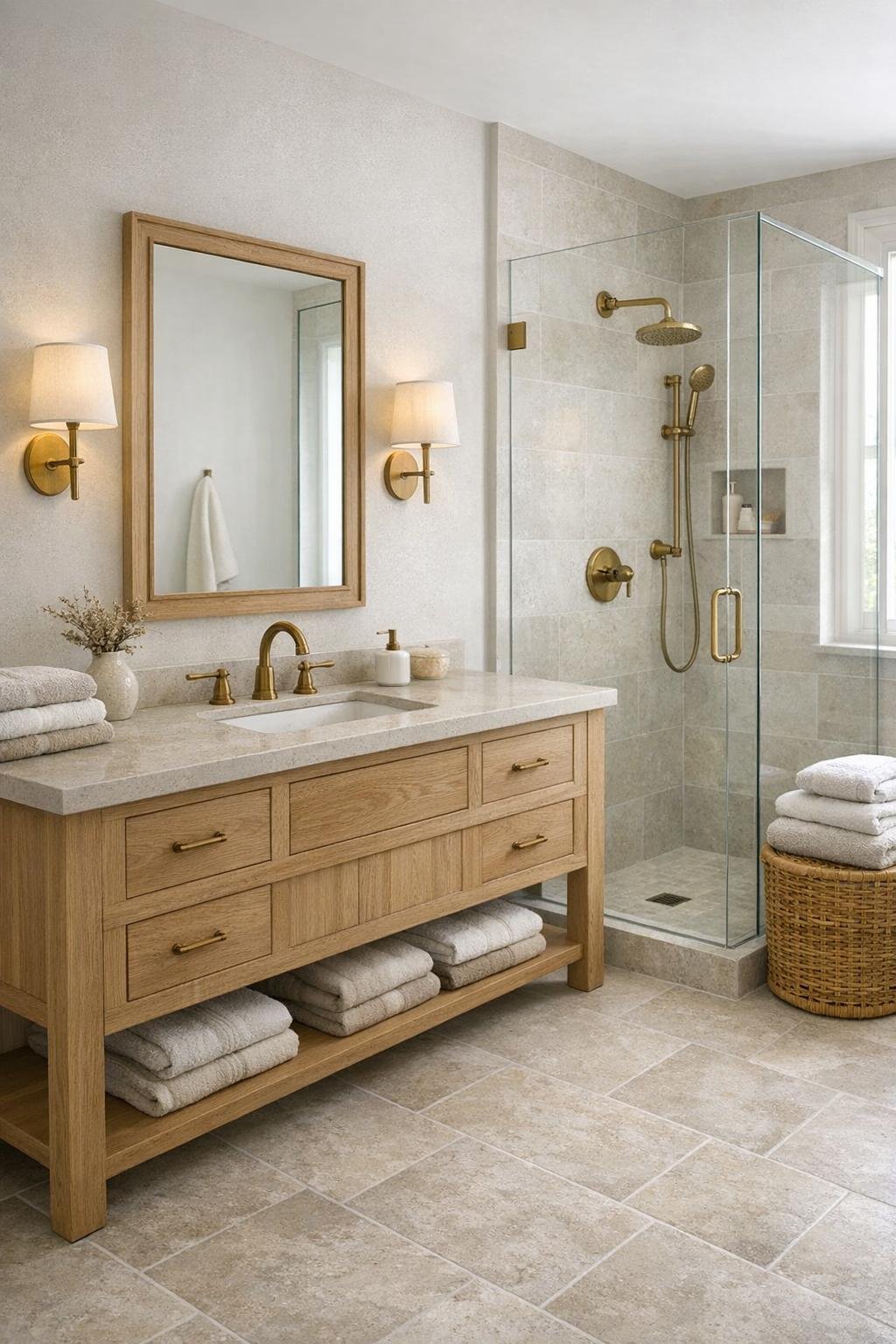
The bathroom continues the home’s understated material story with a slightly cooler hand. I imagine stone-look floors or large-format limestone tiles underfoot, a white oak vanity, and counters in pale marble or honed quartz with delicate movement. Wall-mounted brass or bronze fittings bring a refined outline to the room, while a framed mirror and shaded sconces soften what could otherwise become too crisp. The overall effect is clean, but not sterile.
What I find most successful is the balance between farmhouse references and spa-like restraint. A freestanding tub may sit near a window, but it does not dominate the room; a glass shower enclosure keeps sightlines open; and towels in oat or ivory add softness without introducing fussy color. Everything feels easy to maintain and pleasant to use, which is exactly the standard I hold a good bathroom to. Luxury, in a room like this, is about calm surfaces, good light, and enough warmth in the materials to make mornings gentler.
Other Areas
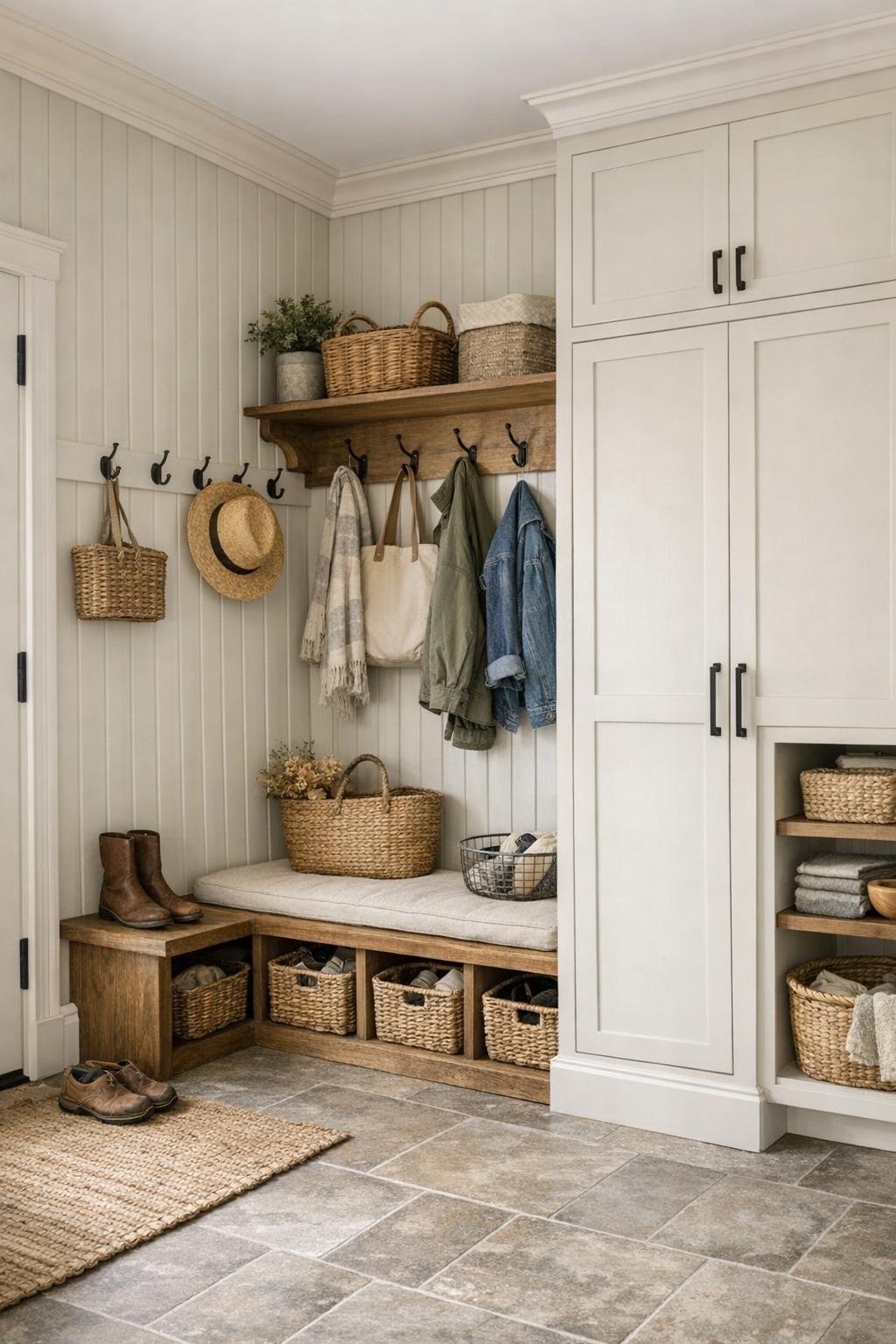
The supporting spaces are where this home likely becomes truly lovable. A mudroom with beadboard or simple vertical paneling, durable tile, and built-in benches would make perfect sense here, especially with baskets, pegs, and closed storage that can handle coats, market bags, and muddy shoes. A small breakfast nook or keeping area near the kitchen might hold a pedestal table and rush-seat chairs, giving the house a more casual place for morning coffee or chopping herbs while something simmers on the stove.
I can also imagine a laundry room treated with the same dignity as the main spaces: painted cabinetry, a deep utility sink, open shelving for glass jars and folded linens, and a patterned runner to soften the floor. Even the hallway and stair landing would matter in a house like this, with framed art, a vintage runner, and warm wall color keeping transitions from feeling neglected. That continuity is what makes the entire design persuasive—every corner seems considered, but never overworked.
Why You'd Live Here
You would live here if you value atmosphere that comes from material honesty rather than obvious drama. This farmhouse never stops being modest at its core, and that is exactly why the interior lands so well. It understands proportion, texture, and usefulness, and it gives each room enough warmth to feel personal without slipping into sentimentality. For anyone who loves homes that support real routines—cooking, gathering, reading, resting—it offers an especially convincing version of comfort.
I think that is what made me take a second look. The faded beige exterior sets one expectation, then the interior answers with depth, calm, and intelligence. It is a house that trusts subtlety, and that confidence makes it memorable. In a landscape of louder designs, this one feels seasoned, capable, and easy to imagine living in for a very long time.