There is something instantly comforting about a home that wears its history openly, and this barn-turned-log-home does exactly that. Set against a quiet rural backdrop, it blends weathered character with the warm, grounded feeling of a handcrafted retreat. I love how the design leans into honest materials—thick timber, stone, iron, and softly worn wood—while still feeling calm and livable rather than overly rustic.
What makes this place special is the way it balances nostalgia with everyday ease, and even as a concept design, it feels deeply believable. I can picture a retired couple settling into this slower rhythm: morning coffee by the windows, grandkids visiting on weekends, soup simmering on the stove while the light changes across the beams. It has that rare mix of charm and practicality that makes a house feel immediately like home.
Exterior
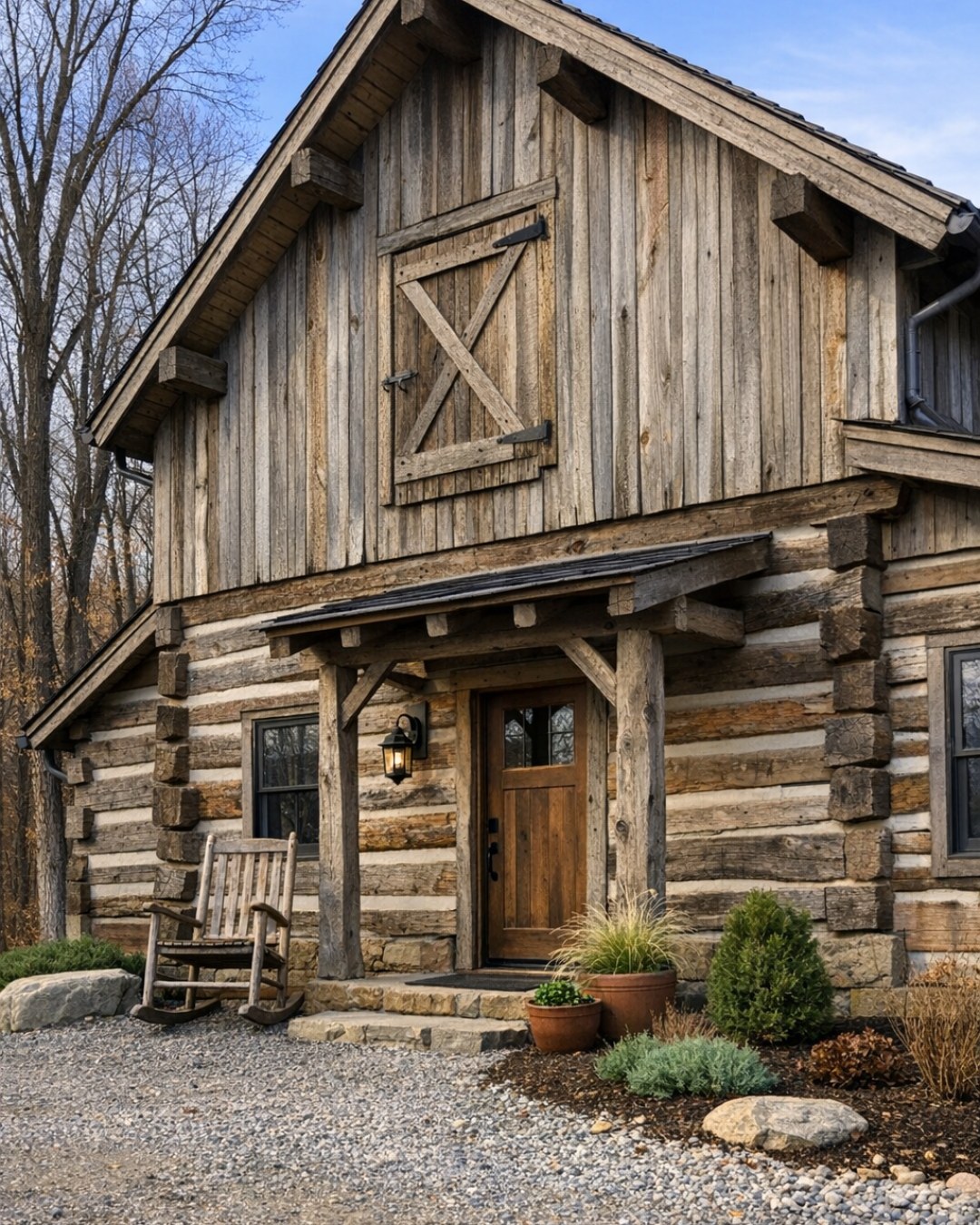
From the outside, the home keeps the simple silhouette of the original barn, which gives it such strong presence without needing anything flashy. The log structure is paired with a fieldstone base, black metal roofing, and oversized divided-light windows that bring in natural light while sharpening the old-meets-new contrast. I especially like the way the entry is handled: a covered porch with chunky timber posts, a sturdy wood front door, and iron lantern sconces that make the whole facade feel welcoming in every season.
The landscaping stays intentionally relaxed and natural, with gravel paths, native grasses, low shrubs, and a few planting beds that soften the perimeter without making it too manicured. That choice feels right for a home like this; it lets the architecture stay front and center. The overall palette—aged cedar, honeyed log tones, charcoal metal, and stone in muted gray and brown—creates a look that feels settled into the land, as if the house has belonged there for generations.
Living Room
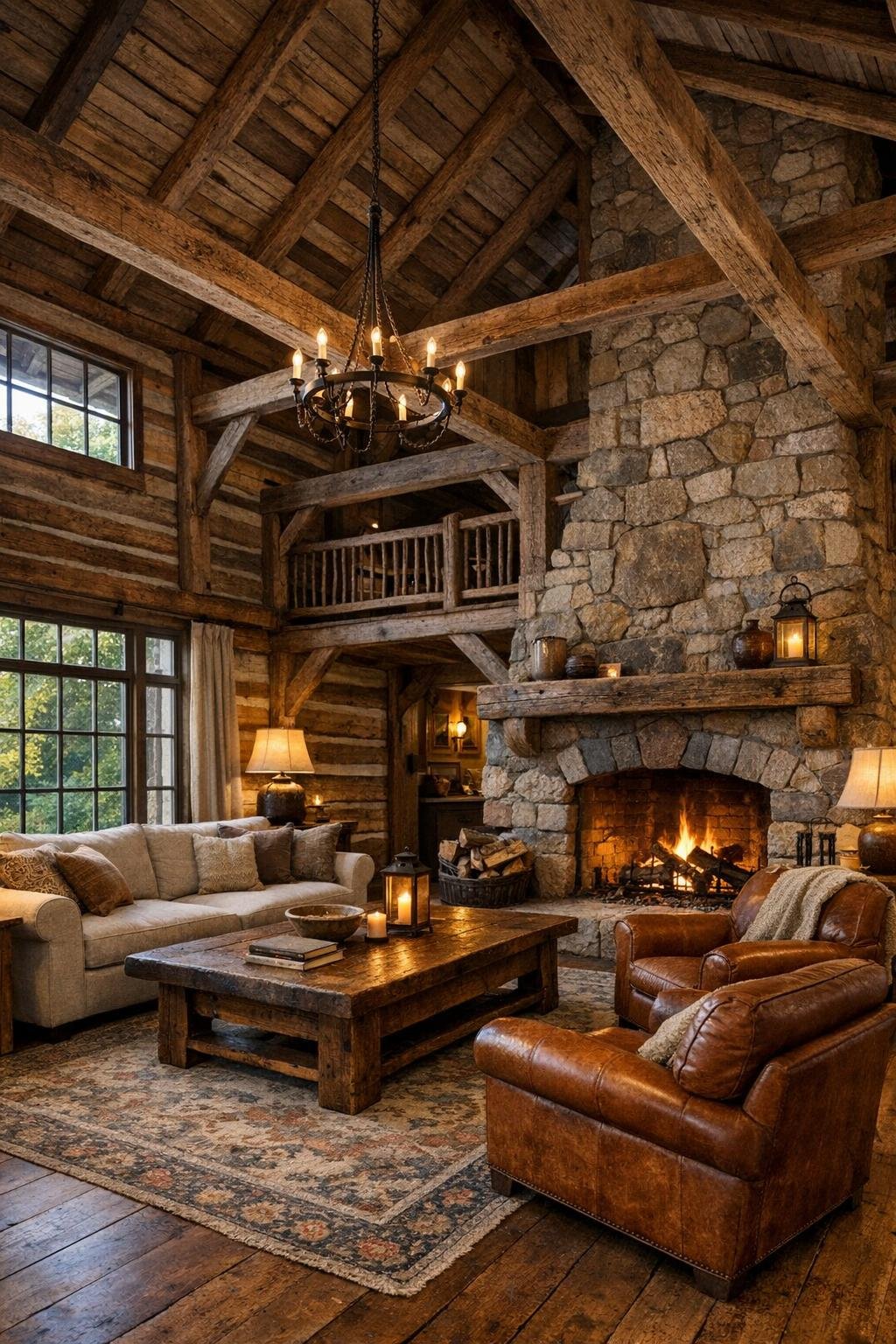
The living room is where the converted-barn character really comes alive. Double-height ceilings expose the original beams overhead, and the scale is softened with a massive stone fireplace that anchors the entire room. I can already imagine arranging a weekend snack board on the broad wood coffee table while everyone drifts between armchairs and the long, nubby linen sofa. The palette stays warm and natural: oatmeal upholstery, cognac leather, matte black metal accents, and layered woods in slightly different tones so the room feels collected rather than matched.
What keeps it from feeling too heavy is the light. Large windows draw sunshine across wide-plank floors, and in the evening, wrought-iron chandeliers and shaded table lamps create a mellow glow that makes the room feel especially cozy. A vintage-style rug in faded rust, moss, and cream brings in color without competing with the architecture, while baskets, pottery, and folded throws add the kind of texture that makes a large room feel personal and lived-in.
Dining Room
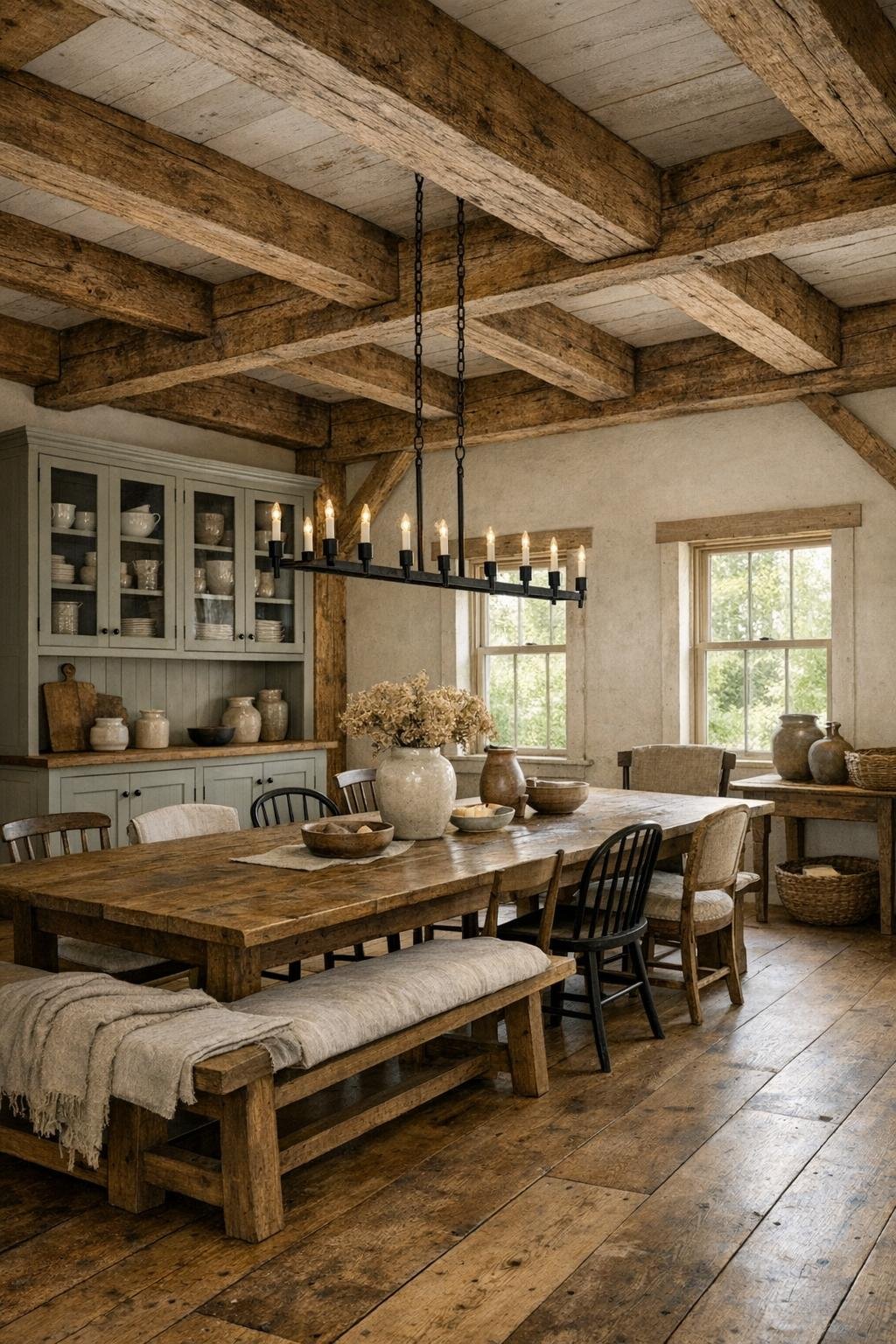
The dining room feels wonderfully straightforward in the best way, centered around a long farmhouse table with enough room for holiday dinners, casual breakfasts, and the kind of leisurely coffee chats that stretch longer than planned. High-back wooden chairs with simple upholstered seats keep it comfortable, and a bench along one side makes the setup feel a little more relaxed and family-friendly. Because the home began as a barn, the room benefits from generous volume, but the furnishings bring it back down to a human scale.
Above the table, I picture a linear iron chandelier with warm bulbs that cast a soft pool of light across the wood grain. Nearby built-ins in a muted sage or warm mushroom tone provide storage for dishes, serving pieces, and linens, which is exactly the kind of practical touch I always notice. The room is finished with understated pieces—a ceramic bowl as a centerpiece, linen curtains, maybe a vintage hutch in the corner—and together they create a dining space that feels ready for both weeknight meals and big family celebrations.
Kitchen
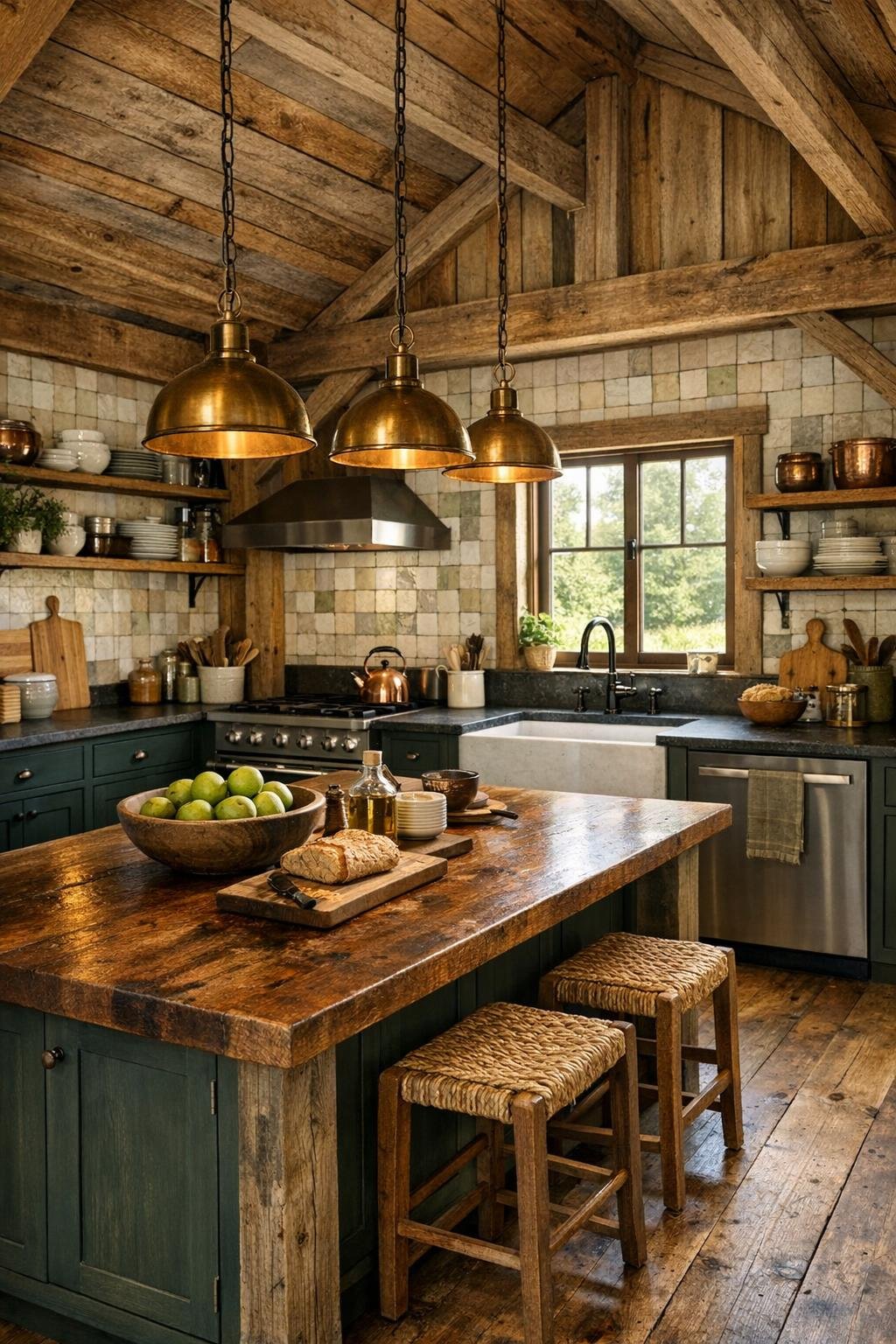
If I’m being honest, the kitchen is the space I’d gravitate to first. It is designed for real cooking, not just for looking pretty in photos, and I appreciate that. The cabinetry mixes painted lower units in a deep earthy green with natural wood uppers or open shelving, which keeps the room from feeling too formal. Soapstone or leathered granite countertops add subtle texture, and a big apron-front sink beneath a window makes the whole room feel classic and hardworking at once.
The island is generous without overwhelming the floor plan, giving enough room for prep, baking, and casual seating. I can absolutely see this being a meal-prep dream, with easy access to a professional-style range, integrated pantry storage, and plenty of drawers for cookware. Pendant lights in aged metal, unlacquered brass hardware, handmade tile backsplash, and a few cutting boards left out on the counter give the kitchen that layered, functional beauty that always makes a home feel more inviting.
Bedroom
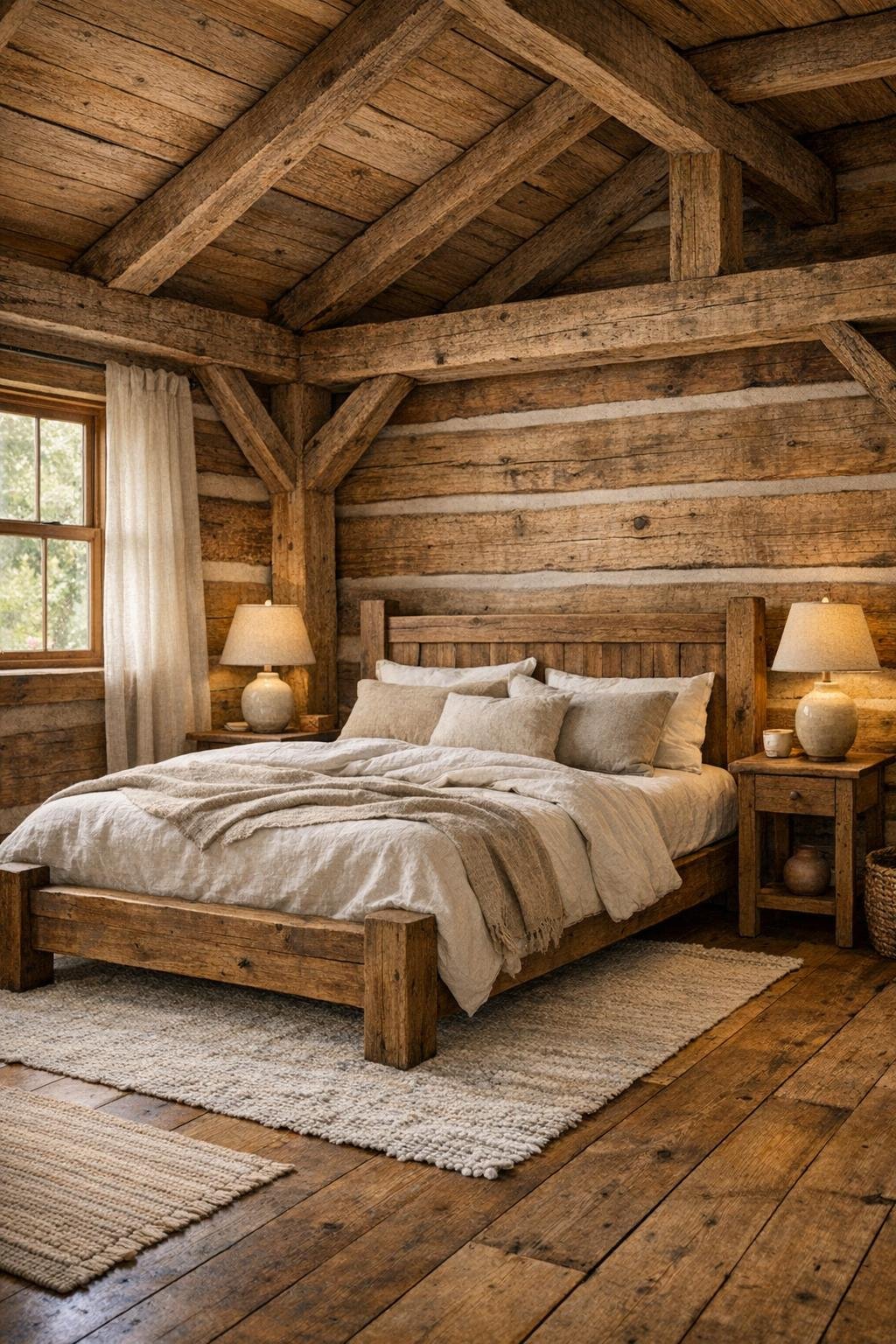
The bedroom takes a softer approach than the main living spaces, which feels smart. Instead of competing with the architecture, it lets the logs and beams act as a quiet backdrop for a layered, restful scheme built around cream, flax, soft gray, and muted brown. A substantial wood bed frame grounds the room, dressed in crisp white bedding, a quilted coverlet, and a mix of linen and knit pillows that make the whole space feel inviting without being fussy.
I like the idea of keeping the furnishings simple here: a pair of mismatched bedside tables, ceramic lamps, a vintage chest, and maybe a reading chair near the window. Area rugs underfoot help warm up the wood floors, and soft drapery adds privacy while preserving the natural light. The mood is peaceful and uncluttered, exactly what I think a retired couple would want—a room that encourages slower mornings and earlier nights, with enough texture to feel cozy all year long.
Bathroom
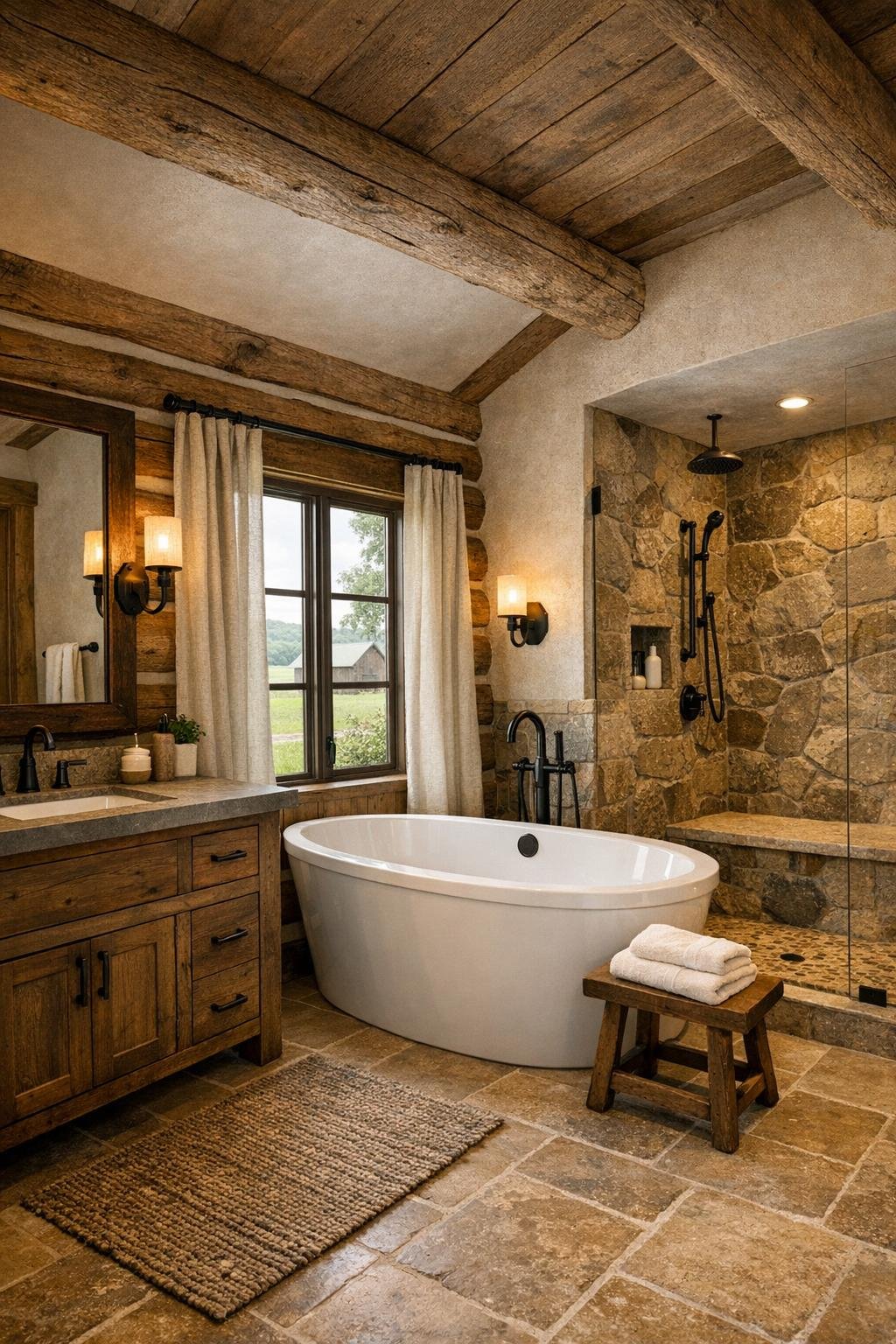
The bathroom carries through the same rustic warmth but in a cleaner, more pared-back way. A freestanding soaking tub placed near a window immediately sets a relaxed tone, while a walk-in shower lined in natural stone or subtly textured tile adds a spa-like note. I love when bathrooms in homes like this avoid being too polished; here, the charm comes from tactile materials like wood vanities, forged metal hardware, and countertops with a honed, matte finish.
Lighting is especially important in a room with this much texture, and I’d imagine soft sconces flanking the mirror plus overhead ambient light that keeps everything flattering and calm. The palette stays restrained—warm white, sand, charcoal, and wood—so towels, baskets, and greenery can provide the softer finishing touches. It feels like the kind of bathroom where you’d actually want to linger, whether that means a long soak at the end of the day or just a few peaceful minutes before the house wakes up.
Other Areas
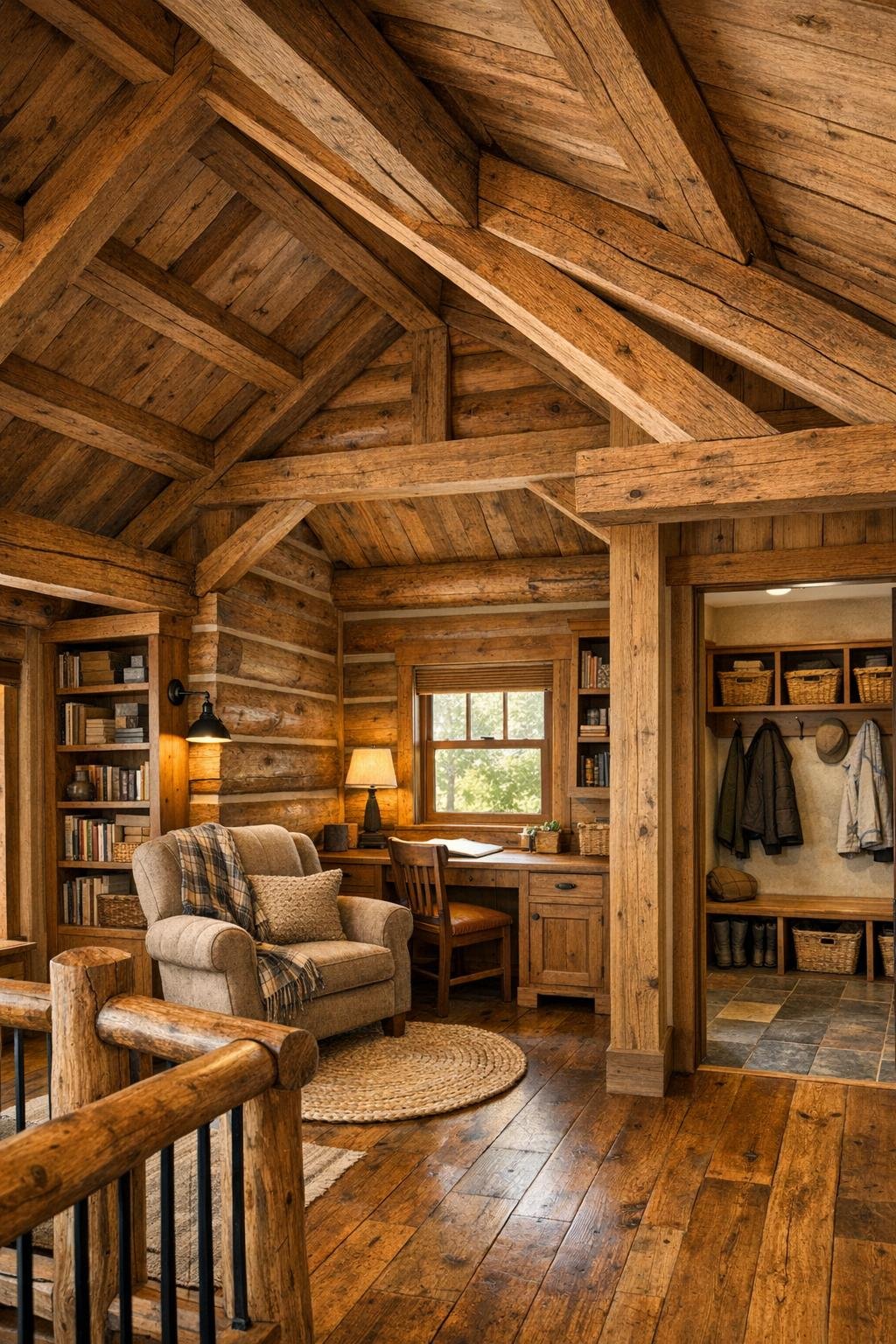
One of the best things about a barn conversion is all the in-between space, and this home uses it beautifully. An upstairs loft overlooking the living room becomes a flexible retreat—part reading nook, part office, part quiet spot to pay bills or flip through cookbooks. I can see built-in shelves tucked under the eaves, a deep armchair by the railing, and a sturdy desk that makes working from home feel a little less like work. These secondary spaces matter so much, especially when life shifts into a slower but still busy rhythm.
There is also room for the practical spaces that make a home function well day to day: a mudroom with hooks and benches, a laundry area with extra storage, and hallways wide enough for vintage cabinets or framed family photos. Those details may not sound glamorous, but they are exactly what make a home truly livable. In a house with this much personality, the supporting spaces are handled with just as much care as the showpiece rooms, and that is always a sign of thoughtful design.
Why You'd Live Here
You would live here for the warmth first—the kind that comes from natural materials, generous rooms, and a design that does not try too hard. This home understands its roots and builds on them thoughtfully, turning an old barn idea into something deeply comfortable and useful. Every space feels shaped around real life, from quiet mornings to family gatherings to all the ordinary moments in between.
For me, the biggest draw is that it feels beautiful in a grounded, approachable way. It is polished enough to feel special, but never so precious that you would be afraid to actually cook, host, read, nap, or track in a little mud from the garden. That balance is hard to get right, and this home makes it look effortless.