From the road, this farmhouse has the kind of quiet presence I’ve always trusted: faded gray siding, a deep porch, and a steady, weather-softened silhouette set against open land and big Midwestern sky. It doesn’t show off. It settles into the landscape the way an old quilt settles over the back of a chair, easy and familiar, with just enough age in its bones to make you lean in closer. Inside, though, the whole mood shifts in the loveliest way, balancing rural simplicity with a surprisingly refined hand.
This concept home feels rooted in the past without getting stuck there, and that’s what charmed me most. I found rooms full of pale oak, limewashed walls, handmade tile, soft iron finishes, and light that moves gently from space to space, giving the house a calm, almost restorative rhythm. It carries the humility of a working farmhouse, but every choice feels thoughtful, edited, and deeply human.
Exterior
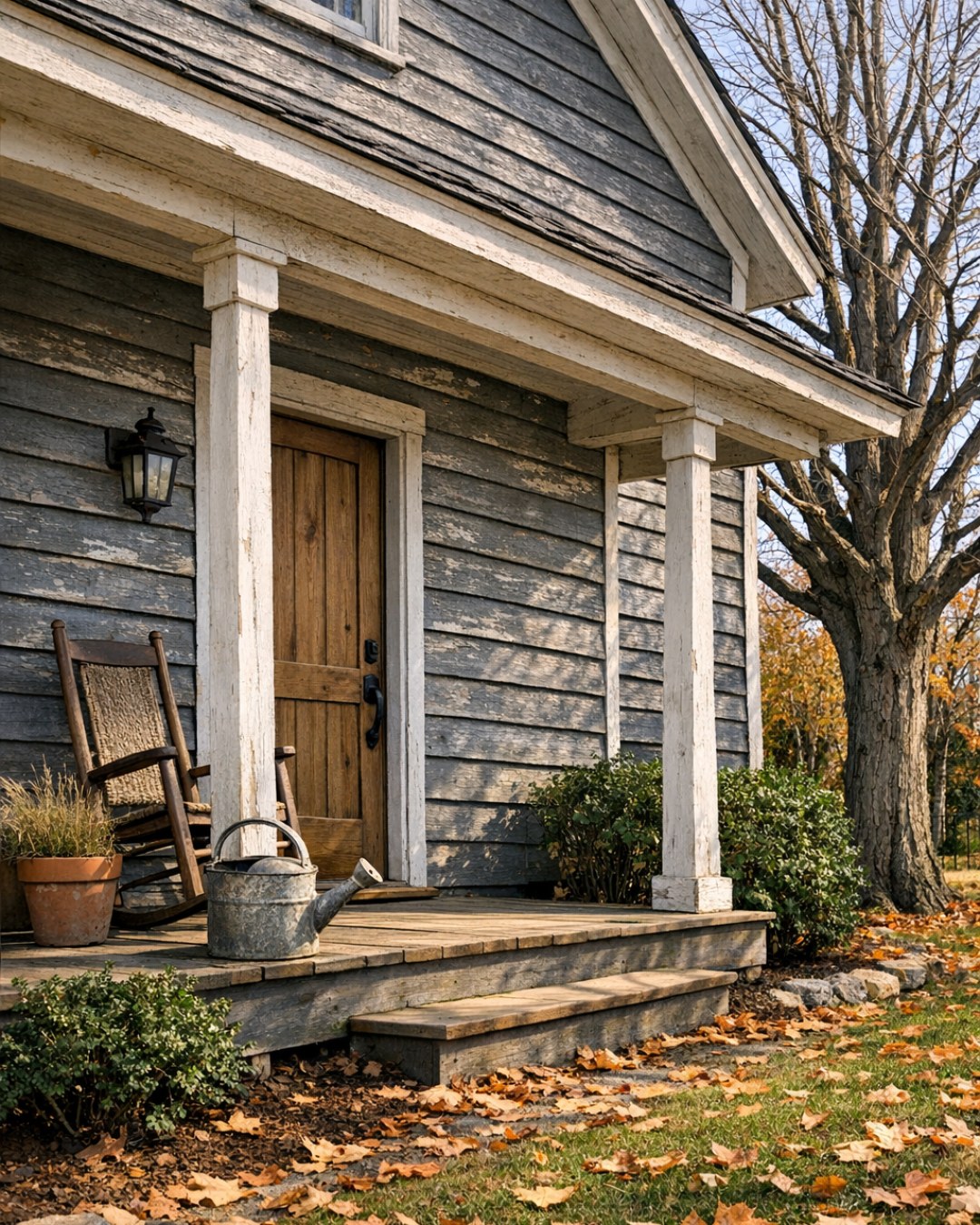
The exterior keeps its farmhouse character intact, but it has been pared back to its essentials so every material can speak clearly. The siding is a faded gray with a chalky, timeworn finish, paired with crisp but not glaring trim in a warm off-white. A standing-seam metal roof in a muted weathered zinc tone sharpens the profile just enough, while natural cedar at the porch soffit and front door adds a needed note of warmth. I especially like the way the blackened steel lanterns and simple house numbers bring a little definition without making the house feel dressed up for company.
The setting does a great deal of the work here. Gravel crunches up to the house, native grasses soften the edges, and the porch stretches out as a proper transition between field and home. Rather than manicured foundation beds, there are loose plantings—hydrangea, coneflower, boxwood, and herbs in galvanized tubs—that make the place feel lived in and useful. The whole composition has that rare quality I admire so much: it looks better because it is restrained, confident enough to let proportion, patina, and the landscape carry the beauty.
Living Room
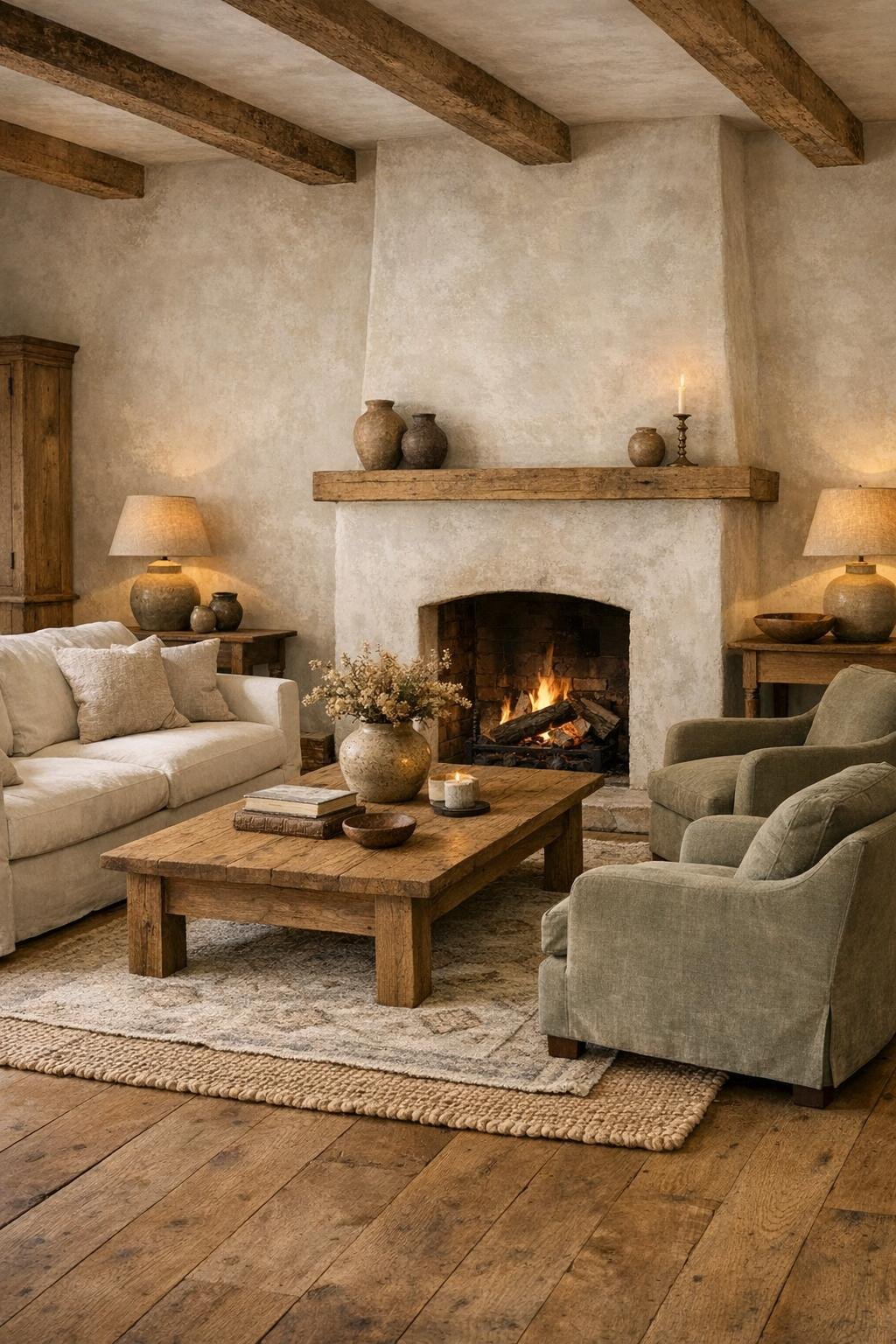
The living room opens with a softness that feels earned. Wide-plank oak floors in a matte finish run wall to wall, grounding everything in a honeyed, natural warmth, while the walls are finished in a limewash that catches daylight unevenly and gives the room a gentle, clouded depth. A plaster fireplace anchors one end without becoming grand about it; its broad hearth and subtly rounded edges make it feel handmade, almost old-world, even though the room itself is spare. The palette stays close to oatmeal, flax, fog, and driftwood, with black iron accents used carefully in the curtain rods, side tables, and fireplace tools.
The furniture arrangement is what makes the room feel genuinely livable. A deep slipcovered sofa in warm ivory faces a pair of low, shapely lounge chairs upholstered in muted olive, and between them sits a substantial oak coffee table that looks ready for coffee cups, seed catalogs, and a pie plate cooling on a trivet. Layered wool and jute rugs soften the floor, and the lighting is beautifully judged: a linen-shaded floor lamp near the reading chair, small sconces flanking the fireplace, and a quiet ceiling fixture in aged brass that glows rather than shines. It’s the kind of room that makes you want to lower your voice and stay a while.
Dining Room
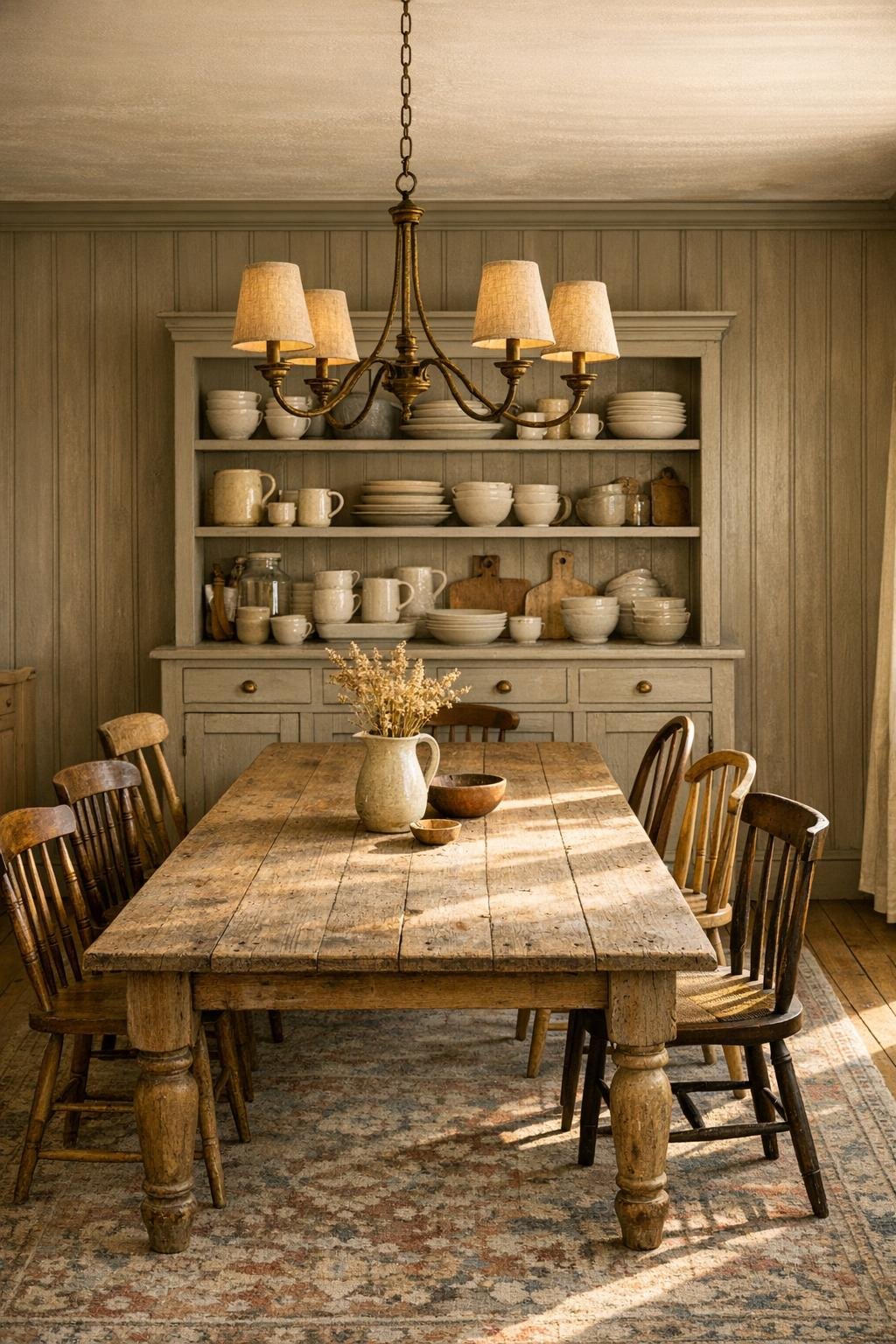
The dining room carries a little more formality, but in the homespun way I love best. At the center is a long farmhouse table in scrubbed oak, substantial enough to hold a holiday supper and plain enough to look beautiful with nothing more than a crock of branches set in the middle. The chairs are mismatched in a disciplined way—some spindle-back, some upholstered in natural linen—but all in similar wood tones, which keeps the room from feeling too studied. A large antique-style hutch painted in a putty color stands against one wall, displaying creamware, ironstone, and a few amber bottles that catch the afternoon sun.
What keeps the room fresh is the contrast between rustic pieces and cleaner architectural lines. The walls are paneled in a simple vertical millwork painted a soft mushroom shade, and overhead hangs a linear fixture in aged brass with linen shades that cast a buttery, flattering light. A faded vintage rug in brick, blue-gray, and sand tucks the table into place and adds just enough history to the room. I could picture Sunday roast here, or one of those long, slow suppers where nobody gets up after dessert because the room is simply too comfortable to leave.
Kitchen
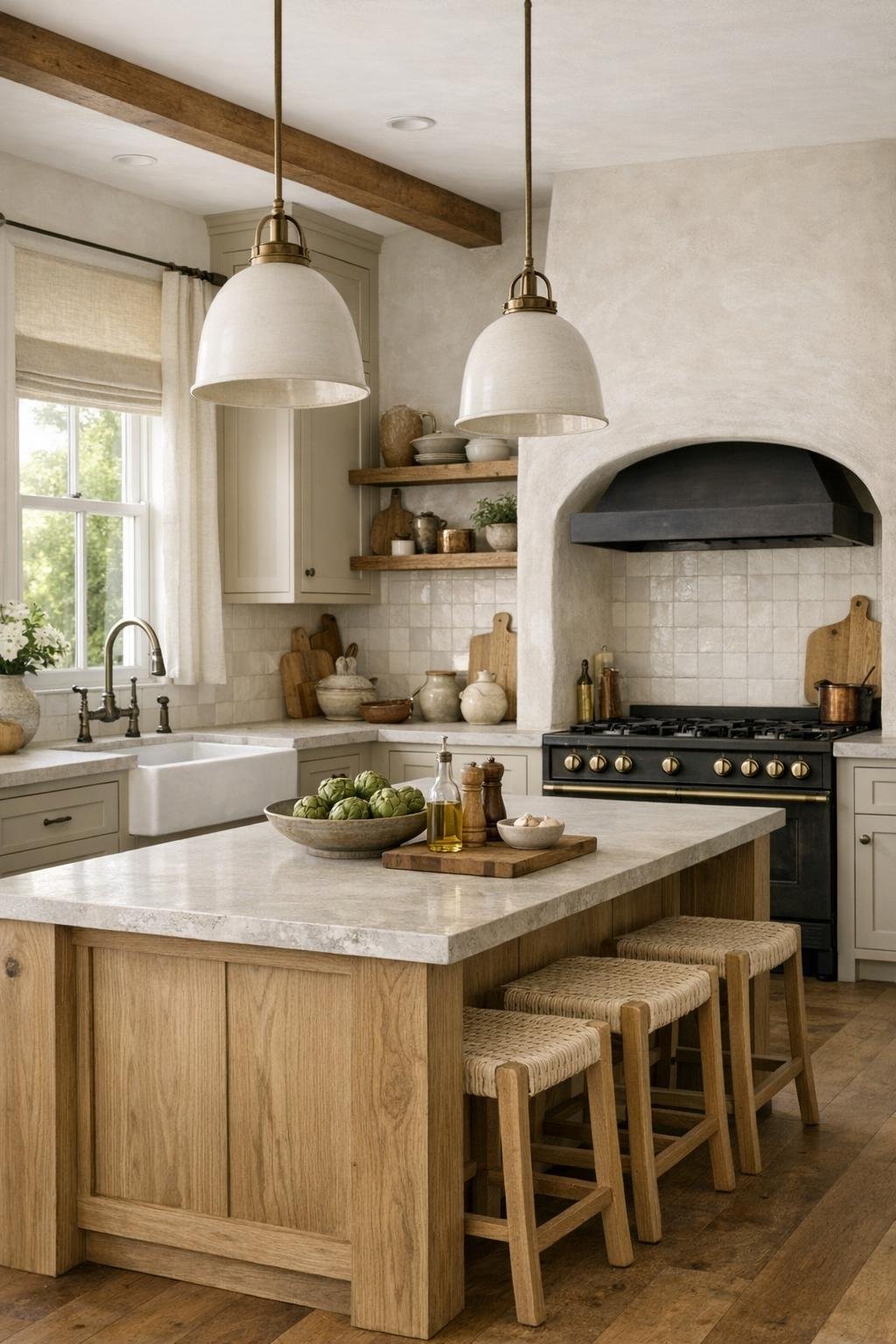
The kitchen is where this house speaks most directly to my heart. It is generous without being oversized, organized around honest materials and practical work rather than spectacle. Cabinets are painted a soft creamy taupe, with inset doors, unlacquered brass latches, and just enough bead detail to nod to tradition. The counters are a pale honed stone with quiet movement, and the backsplash is made of handmade off-white tile with slightly irregular edges that catch the light beautifully. There’s a proper apron-front sink under the window, open shelving for everyday dishes, and a large island in natural oak that brings a bit of furniture-like character into the room.
I especially admire how the kitchen balances utility and warmth. A dark range in a plaster-clad alcove gives the far wall some visual weight, while woven stools line the island and invite people to linger with coffee or help shell peas. The lighting is layered thoughtfully: small shaded sconces, simple pendants with aged metal detailing, and plenty of daylight pouring across the floors. I can almost smell yeast rolls in here. It has the calm efficiency of an old farm kitchen, only refined through better storage, better light, and a cleaner, more restful palette.
Bedroom
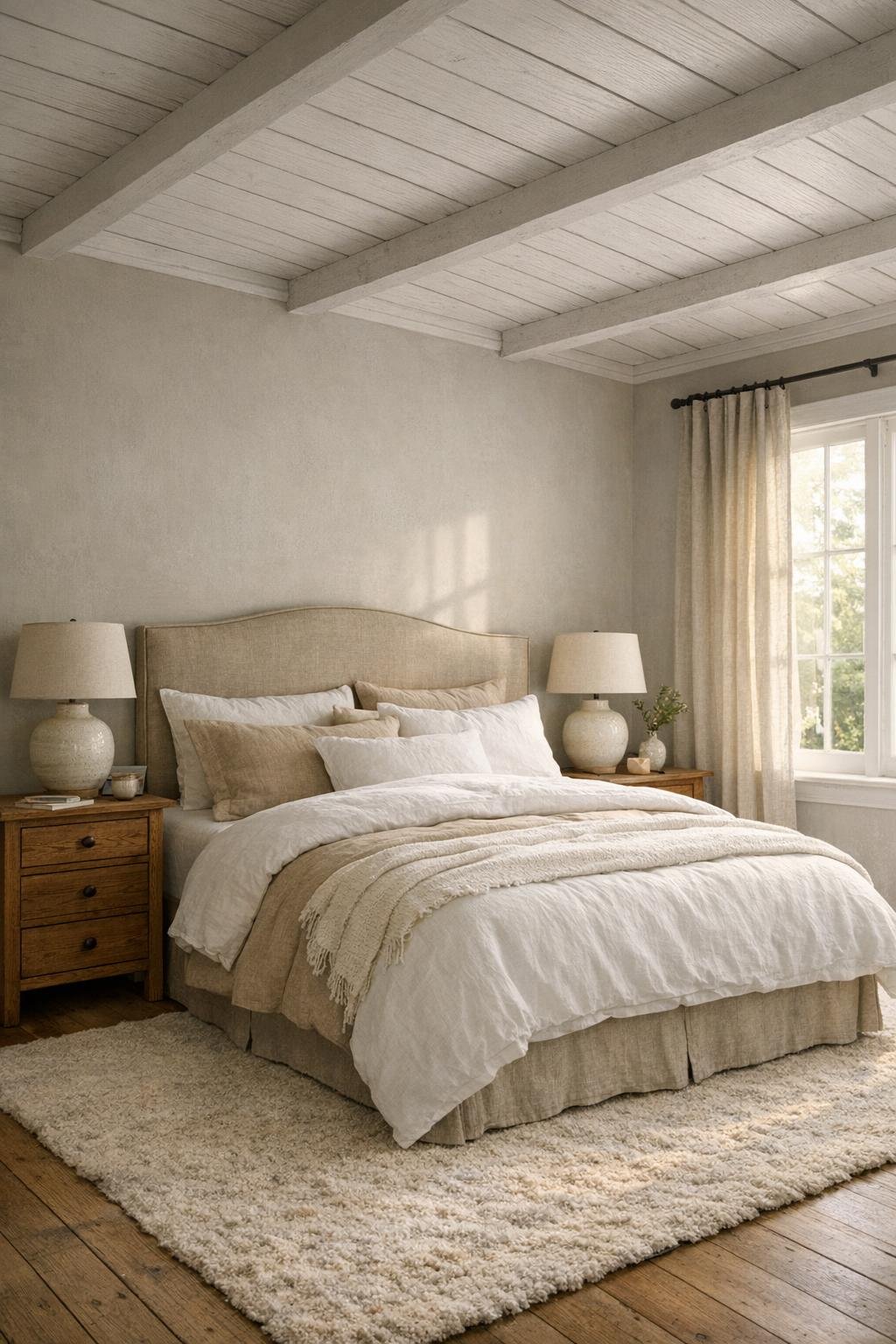
The bedroom is quiet in the truest sense, not empty but uncluttered, with every element chosen to lower the pulse. The walls are washed in the palest warm gray, and the ceiling is finished in painted wood planks that add a subtle cottage note overhead. A generously scaled bed with a natural linen headboard sits centered on the longest wall, layered in white, oat, and smoke-colored bedding that looks inviting rather than precious. On either side, simple oak nightstands hold ceramic lamps with pleated shades, and across from the bed a vintage chest brings in a little age and soul.
Texture is the real decoration here. There’s a nubby wool rug underfoot, a lightweight quilt folded at the end of the bed, breezy curtains in softened flax, and a bench in worn leather and wood that adds a touch of structure. The room isn’t trying to impress anybody, and that’s exactly why it works. It feels like the sort of place where you’d hear rain on the roof and sleep all the better for it, tucked away from the rest of the house in a setting that values comfort over display.
Bathroom
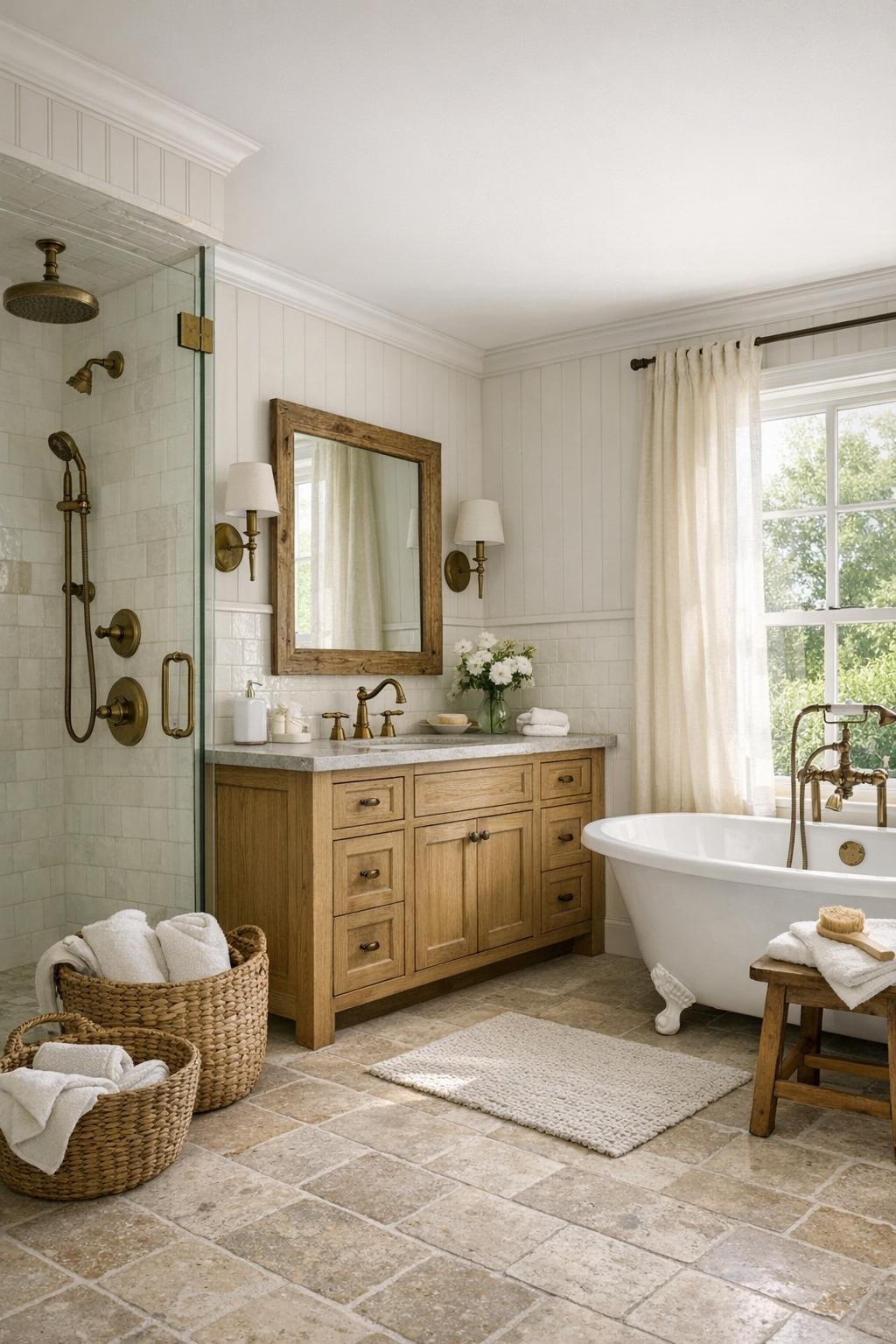
The bathroom has that clean, scrubbed beauty I associate with the best country houses. The floor is laid in small limestone or limestone-look tile, and the walls are split between painted paneling and handmade ceramic tile in a soft ivory glaze. A freestanding tub sits near the window like a quiet invitation, while the shower is enclosed in framed glass with aged brass fittings that echo the hardware elsewhere in the house. The vanity is furniture-like, built in white oak with a honed stone top and simple round mirrors above, each one flanked by tailored sconces.
What I appreciate most is how warm the room remains despite all that utility. Natural textures keep it from feeling clinical: woven baskets, thick cotton towels, a small wooden stool beside the tub, and a sprig of green in a pottery vase. Light reflects gently off the tile and stone, making the whole room feel fresh but not stark. It has the grace of an old washroom reimagined with modern comfort, and I suspect it would make even an ordinary morning feel a bit more civilized.
Other Areas
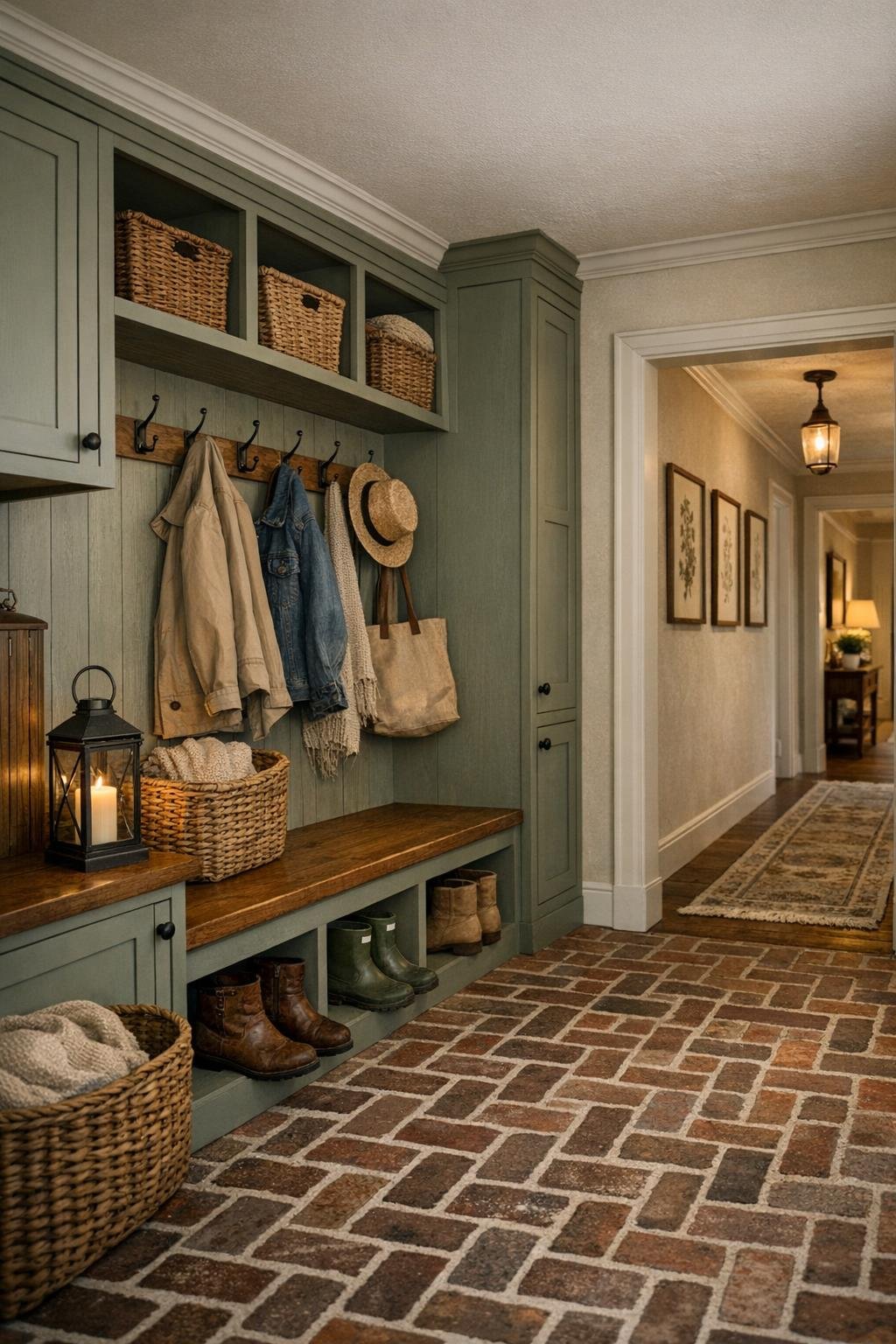
The transitional spaces are unusually well considered, and that always tells me a design has been handled with care. The entry is modest but handsome, with a brick floor laid in a simple pattern, a built-in oak bench, peg rails for coats, and a lantern overhead that gives the space a welcoming glow at dusk. A pantry or mudroom just beyond carries the same practical beauty, with open cubbies, painted cabinetry in a muddied green, and plenty of room for boots, baskets, jars, and the ordinary things that make a household run. Nothing is wasted, and nothing feels neglected.
Upstairs or tucked off to one side, I imagine a small reading nook or landing furnished with a spindle chair, a table lamp, and shelves lined with cookbooks, seed packets, and worn novels. Even the hallways are softened with runners, framed botanicals, and wall hooks that make the house feel used in the best possible way. These in-between spots often get treated like afterthoughts, but here they deepen the story of the home. They remind me of old farmhouses where every corner had a purpose, even if that purpose was simply to offer a place to pause.
Why You'd Live Here
You’d live here because it understands something many houses forget: comfort is not the enemy of beauty, and simplicity does not have to mean plainness. This home takes the familiar language of the farmhouse—porch, wood floors, practical rooms, humble materials—and refines it with patience and restraint. The result is a place that feels grounded, gracious, and entirely unforced.
I think that’s what made me stop and stare. Beneath that faded gray exterior is a home that honors rural life without turning it into a costume. It is calm, useful, and deeply welcoming, the sort of house that seems ready for muddy boots, fresh bread, quiet evenings, and generations of ordinary living made lovely by the setting around them.