From the road, this faded beige farmhouse has the quiet sort of presence I’ve always trusted. It sits with the modesty of an older rural home, low and steady against the landscape, with weather-softened siding, a simple roofline, and the kind of practical shape that feels born out of seasons rather than trends. But step closer and the whole place begins to unfold with a gentleness that surprised me: warm woods, creamy plaster tones, and a thoughtful layering of old farmhouse character with cleaner, more tailored lines. Even as a concept design, it feels rooted in real life, the sort of house made for muddy boots by the door, soup on the stove, and late afternoon light crossing the floor.
What makes this home special is the way it honors restraint. Nothing is flashy, and that is exactly its strength. The palette stays close to the land—beige, oat, weathered brown, soft black, and a little muted green—and every room seems to breathe in its own unhurried rhythm. I found myself drawn to the details that make a house feel lived in before anyone has even moved in: a generous bench in the entry, wide-plank floors that would only get prettier with age, honest materials, and rooms arranged not for show but for comfort, conversation, and daily work. It has the soul of a farmhouse that remembers where it came from, with interiors polished just enough to make you stop and look twice.
Exterior
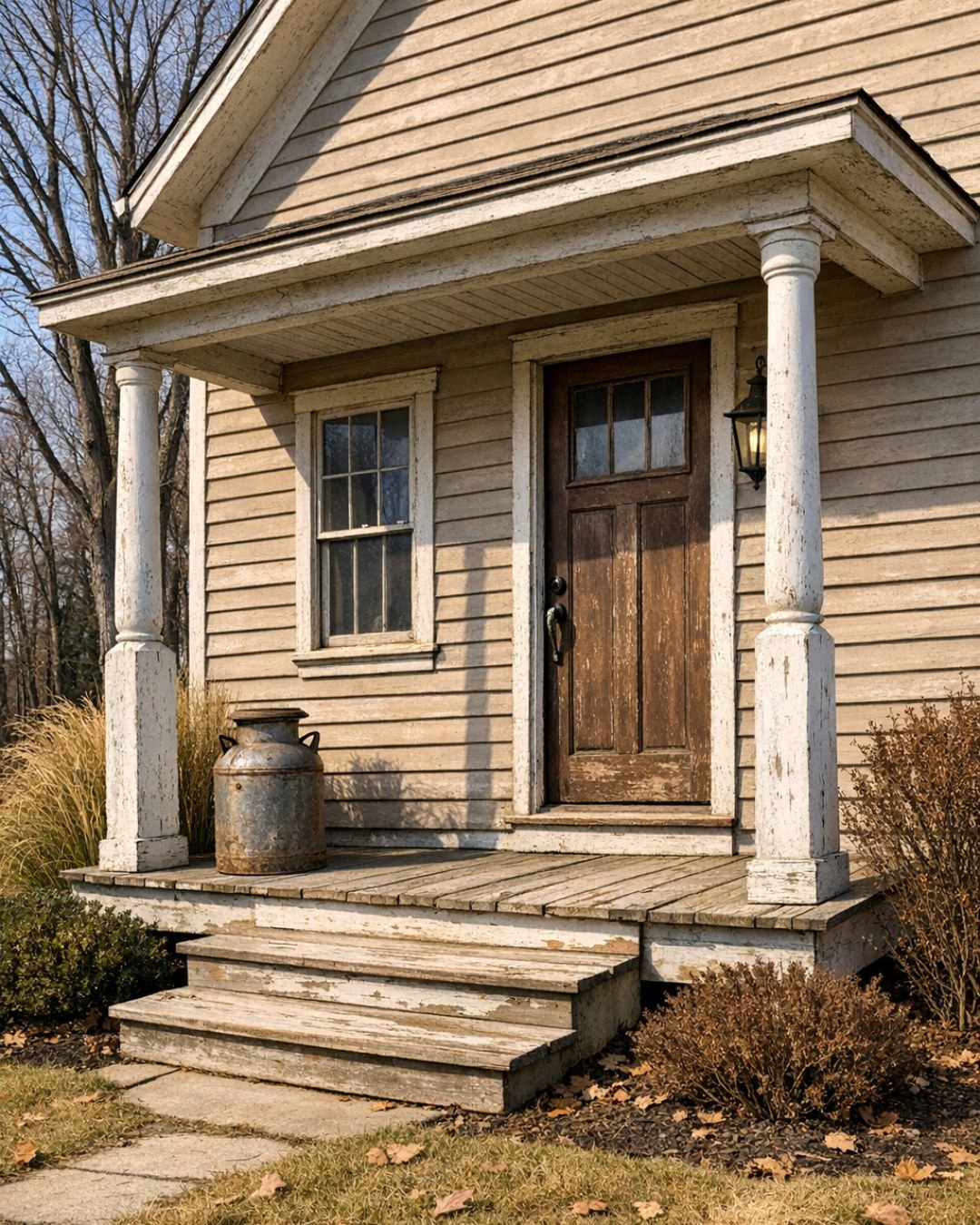
The exterior keeps its farmhouse roots intact, and I think that was the wisest choice. The beige siding has that faded, sun-washed cast that immediately puts me in mind of old Midwestern homesteads, while the trim in a soft warm white keeps the facade from feeling tired. A dark metal roof adds a crisp note overhead, and the windows—simple, evenly spaced, and trimmed without fuss—give the house a calm, balanced face. I especially like the front porch, which is deep enough to be useful rather than decorative, with square wood posts, a painted floor, and room for a pair of rockers and a pot of herbs by the steps.
There is a practical beauty to the whole composition. The landscaping is loose and natural, with tall grasses, a gravel drive, clipped shrubs, and the kind of perennial beds that would look just as right in June as in October. Nothing feels overly manicured. Instead, the house settles into its setting the way a good farm table settles into a kitchen—solid, familiar, and all the more beautiful for being unpretentious. The little contrast between the worn beige exterior and the unexpectedly refined interior is what gives the home its charm; it invites you in softly, then rewards your attention.
Living Room
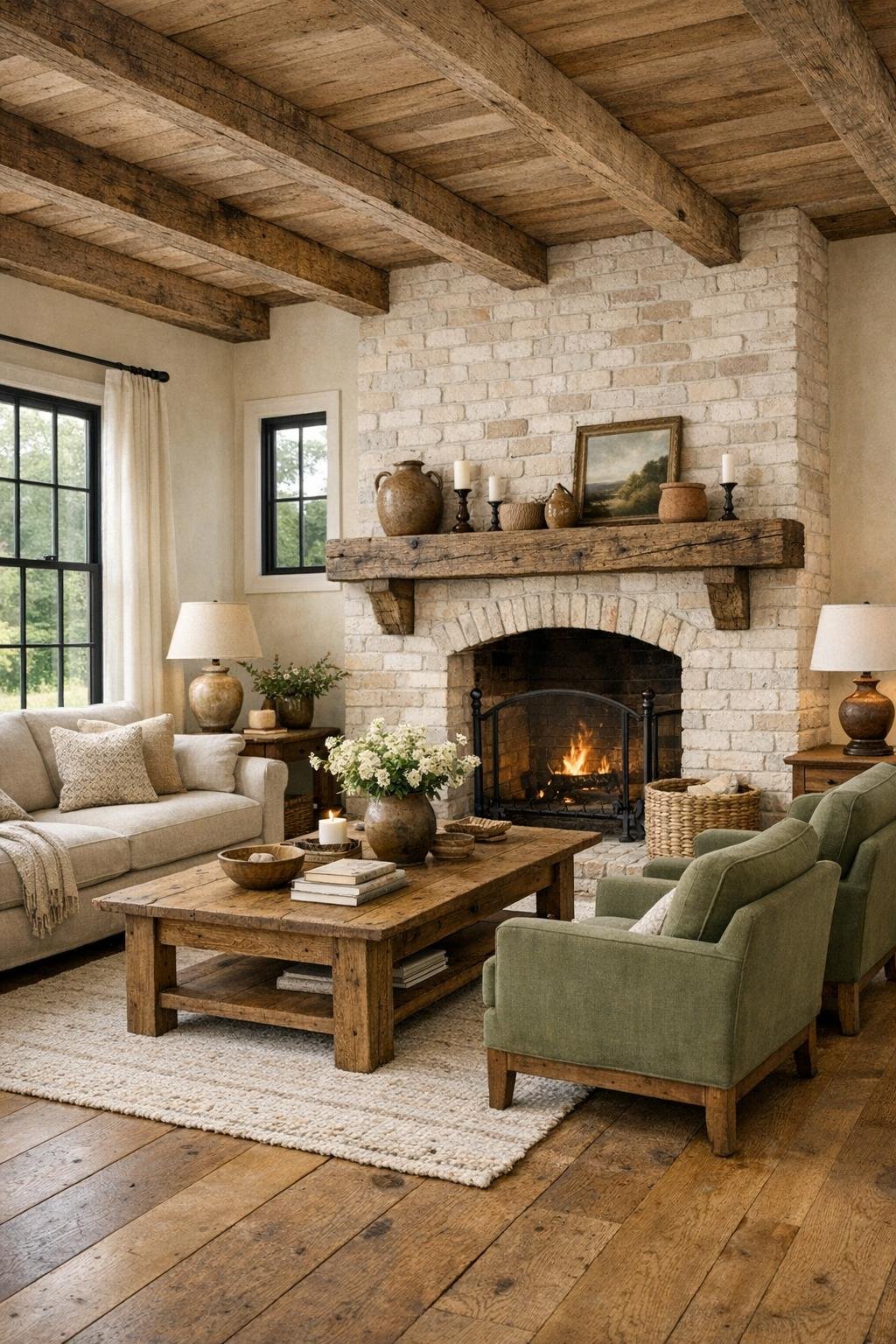
The living room is where the house first shows its hand. Wide-plank oak floors ground the space in warmth, and the walls are finished in a creamy mineral tone that catches light beautifully from tall, black-framed windows. The ceiling beams are simple and understated, left in a medium brown stain that adds depth without turning rustic into theme. At the center is a generous linen sofa in a warm flax color, paired with two deep club chairs in soft olive upholstery. The arrangement is conversational, gathered around a substantial wood coffee table with visible grain and a few timeworn knots, the sort of table that begs for a stack of cookbooks and a pie plate cooling nearby.
Texture does much of the work here. A wool rug in muted taupe and charcoal gives the room weight, while nubby throw blankets, woven baskets, and a stoneware lamp or two soften the edges. The fireplace, finished in pale brick or limewashed masonry, feels modest and deeply comforting, with a thick reclaimed mantel that would look lovely in every season. Lighting stays gentle and layered: iron sconces, a shaded floor lamp beside the chair, and daylight doing the rest. The room feels edited but not precious, and I could imagine a family gathering here after supper, the windows dark, the lamps on, and someone telling stories that have been told a hundred times before.
Dining Room
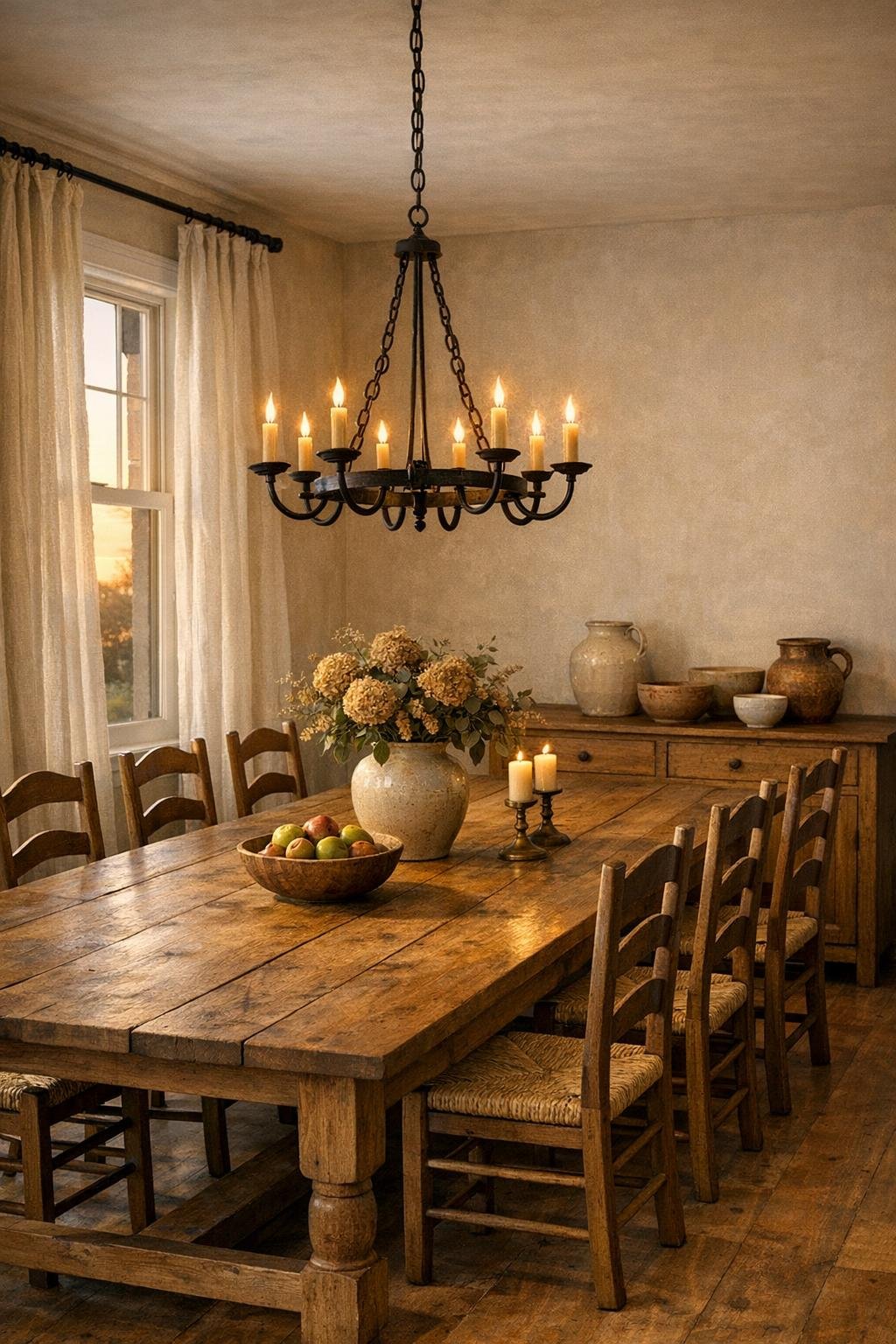
The dining room has a plainspoken elegance that I truly admire. A long solid-wood table anchors the room, its finish matte and natural enough to show every variation in the grain. Around it are ladder-back chairs with woven rush seats, the kind that instantly make a space feel honest and welcoming. The walls remain light and neutral, but there may be a touch more depth here—something like oatmeal or putty—which gives the room a hushed feeling, especially in the evening. A large sideboard in stained oak provides both storage and presence, topped with pottery, candlesticks, and perhaps a bowl of late apples or onions from the garden.
Overhead, a simple iron chandelier brings shape without fuss, and I can picture the warm pool of light it would cast across a loaf of bread and a casserole dish. Linen curtains hang full and soft at the windows, adding movement and filtering the daylight in a way that flatters everything in the room. What I love most is the scale: roomy enough for a holiday meal, yet intimate enough for a weekday supper. It is not trying to impress anyone, and somehow that makes it all the more memorable. This is a dining room that understands what tables are for—feeding people, holding stories, and gathering generations close.
Kitchen
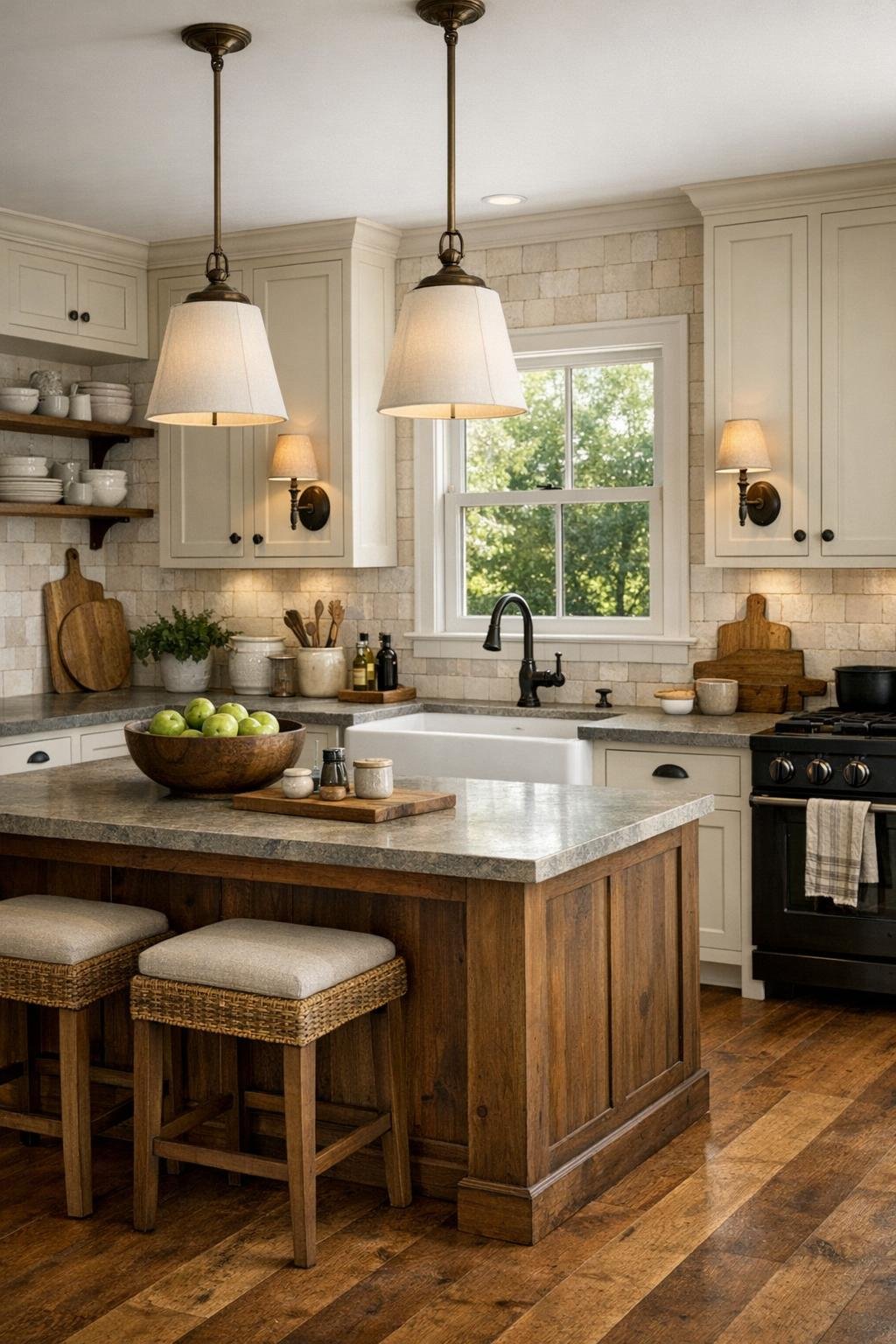
The kitchen is, to my eye, the heart of this whole home, and it is handled with real sensitivity. Cabinetry is painted a mellow, earthy cream—not bright white, thank goodness—with inset fronts and dark hardware that give it a handmade, furniture-like quality. The island is stained a deeper wood tone, which helps it read as a working piece rather than built-in bulk, and the countertop appears to be a honed stone in a soft gray-beige. Open shelves hold everyday dishes and mixing bowls, while upper cabinets are used sparingly enough to keep the room feeling open. There is a proper farmhouse sink under the window, and I can’t think of a more fitting place to stand and peel potatoes.
What lifts the room beyond nostalgia is the balance of utility and calm. The backsplash in handmade-look tile adds a touch of uneven texture, and the floors continue in wood for visual continuity, softened by a washable runner near the sink. A substantial range, shaded sconces, and pendant lights over the island make the room feel equipped for serious cooking, not just styling. I appreciate, too, the generosity of the work surfaces and the easy paths through the space. This kitchen looks ready for canning in August, cookie baking in December, and all the ordinary meals in between—the kind that matter most in the end.
Bedroom
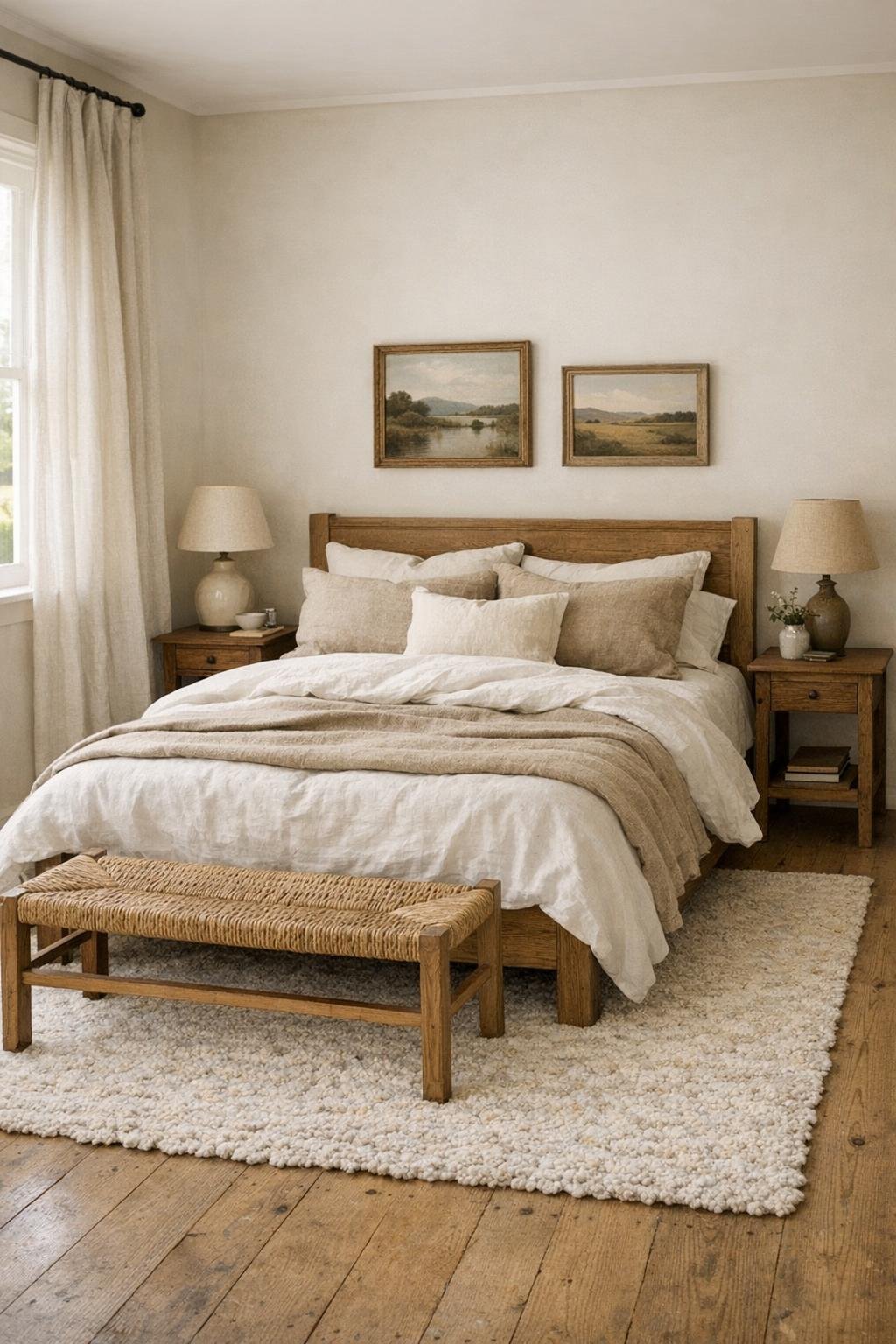
The bedroom takes the same restrained palette and turns it even softer. Walls in a pale warm neutral, layered with natural linen drapery and bedding in ivory, flax, and faded olive, make the room feel restful from the moment you enter. The bed itself is simple and substantial, perhaps in stained oak or painted wood, with clean lines that let the textiles do the talking. On either side, mismatched nightstands give a sense of quiet history, and shaded lamps cast a low, honeyed glow that would be especially lovely at dusk. There is nothing overdone here, just comfort assembled with care.
I like the way the room resists clutter. A woven bench at the foot of the bed, a wool rug underfoot, and one or two framed landscapes are enough to complete it. Storage appears integrated and sensible, with built-ins or an old-style wardrobe that suits the age and mood of the house. Even the windows seem placed for calm, drawing in views of grass, trees, or open sky rather than asking for attention. It feels like the kind of bedroom where you would sleep deeply after a day of work, then wake early to soft light and a quiet house below.
Bathroom
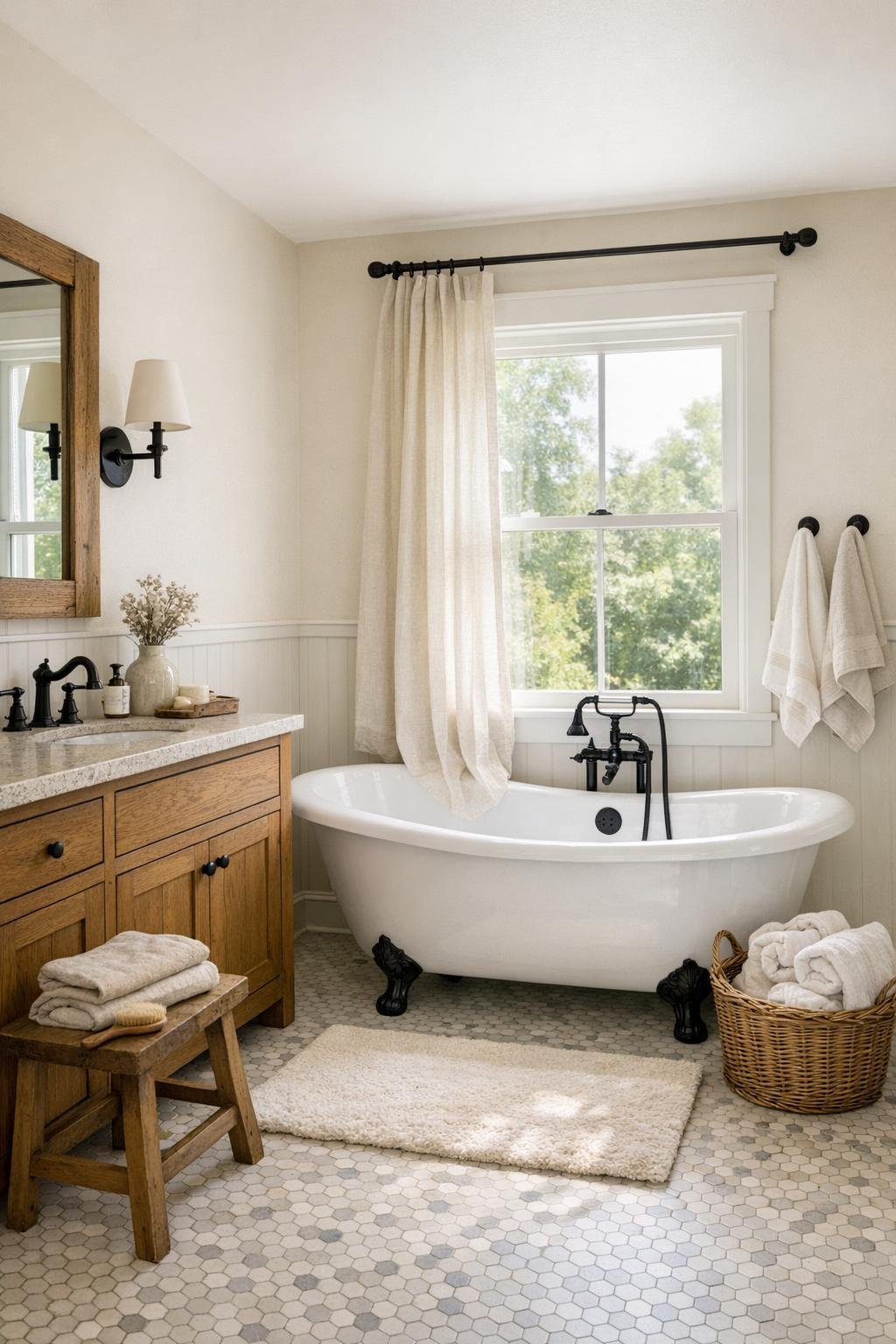
The bathroom is one of the nicest surprises in the home because it feels both old-fashioned and freshly refined. A freestanding tub sits near a window, catching natural light against walls finished in a warm white that keeps everything feeling clean but not stark. The vanity, likely in painted wood or stained oak, has a furniture-like profile with drawers instead of flashy detailing, and the countertop is simple stone or marble with soft movement. Underfoot, small-format tile in a classic pattern gives the room that timeless backbone every good bathroom needs.
There is a careful balance of softness and structure here. Black or oil-rubbed bronze fixtures add contrast, while a framed mirror, wall sconces, and neatly folded linen towels keep the room grounded in comfort. If there is a shower, I imagine it enclosed in clear glass with understated tilework rather than anything overly dramatic. The room feels made for lingering a little—opening the window in spring, soaking in the tub after a long day, and enjoying the sort of quiet that is increasingly hard to come by. It has dignity, which is not a word I use lightly for a bathroom.
Other Areas
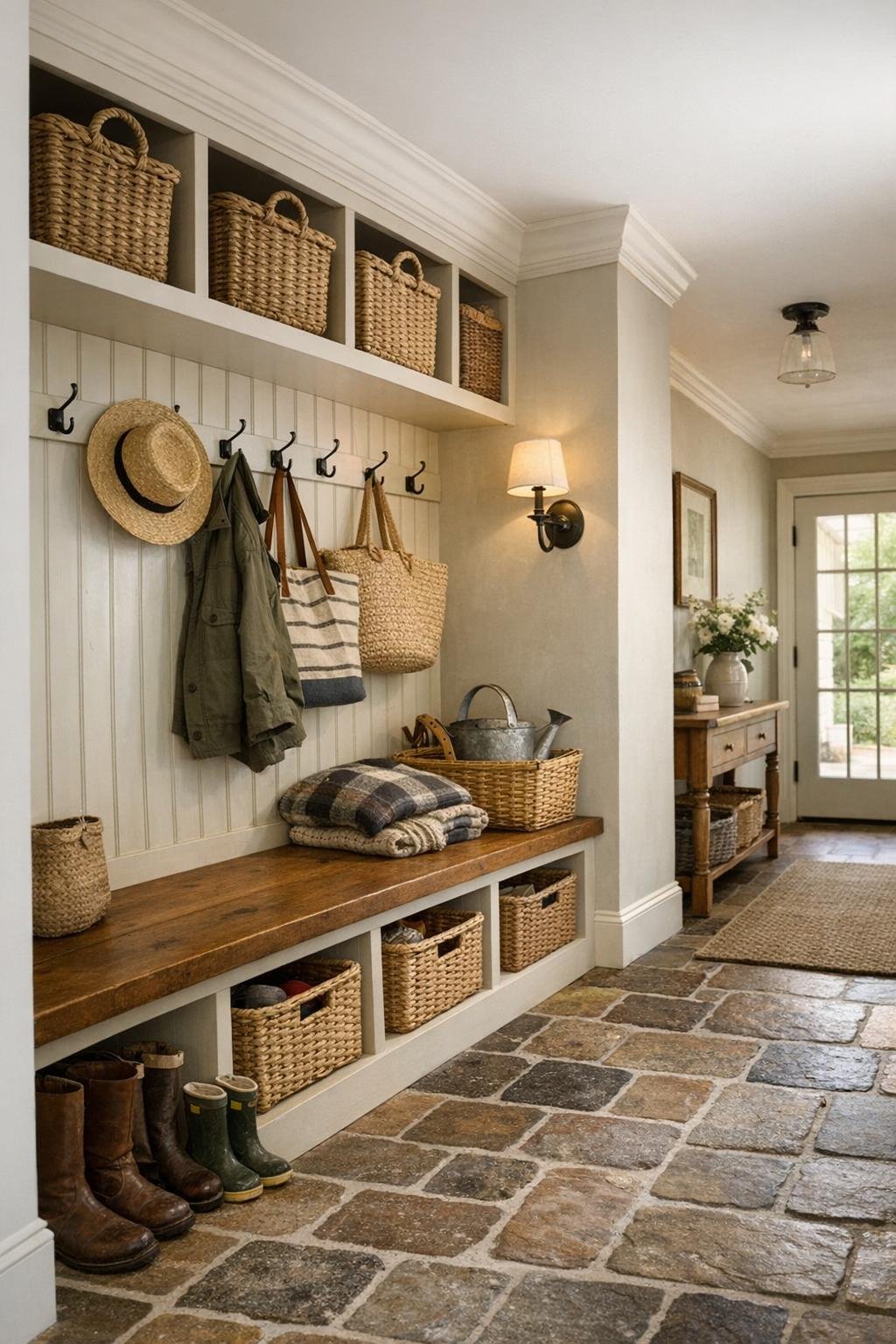
What rounds out the house so beautifully are the in-between spaces, the ones that often tell you whether a home really understands daily life. Here, the entry and mudroom are especially well considered, with built-in benches, hooks, cubbies, and durable flooring that can take a little dirt without complaint. I can imagine baskets tucked below for shoes and market bags, and maybe a narrow console where keys, gloves, and seed packets gather in their usual untidy way. Hallways are kept bright with simple sconces and natural light, and even a staircase—if present—would likely feature painted risers, a wood handrail, and the same honest detailing found elsewhere.
There may also be a small reading nook, pantry, laundry room, or upstairs landing given the same gentle attention as the main rooms. I would expect the pantry to be fitted with open shelving and labeled jars in spirit, if not in literal display, and the laundry room to have a deep utility sink, practical storage, and a touch of charm in its finishes. These spaces matter because they support the life of the house without asking for applause. In a home like this, usefulness becomes part of the beauty, and that may be the most farmhouse idea of all.
Why You'd Live Here
You would live here if you believe a house should calm you rather than perform for you. This farmhouse offers beauty in the old-fashioned sense of the word: proportion, usefulness, warmth, and materials that improve with age. It does not lean on trends or theatrical gestures. Instead, it trusts wood, linen, stone, quiet color, and rooms shaped for ordinary life. I find that deeply appealing, especially now, when so many interiors seem to forget that comfort is its own kind of luxury.
More than that, you would live here because it feels emotionally true. It respects the rhythms of cooking, gathering, resting, and coming in from the weather. It understands that the best homes are not always the loudest or newest-looking ones; sometimes they are the ones that hold themselves modestly until you cross the threshold. This one has that rare quality. It makes a second look feel like a reward, and I suspect it would make everyday living feel the same way too.