This single-level log home has the kind of quiet presence I always notice first in a well-made space: nothing feels flashy, but every surface suggests care, patience, and a deep respect for material. Soft Sitka spruce logs give the architecture a pale, honeyed warmth, while taupe fieldstone anchors it with a cooler, earthier note that keeps the whole composition from drifting into rustic cliché. Set against a calm natural backdrop, the house feels sheltered, grounded, and deeply livable from the very first impression.
What makes it especially memorable is the way traditional log-home character is refined through crisp detailing and beautifully executed Amish craftsmanship, all imagined here as a concept design. The proportions are snug rather than sprawling, and that restraint works in its favor: every room feels intentional, with joinery, built-ins, and hand-finished woodwork doing the heavy lifting instead of excess square footage. As someone who spends plenty of time thinking about how a home supports daily rituals, I find this one particularly convincing in the way it balances coziness with polish.
Exterior
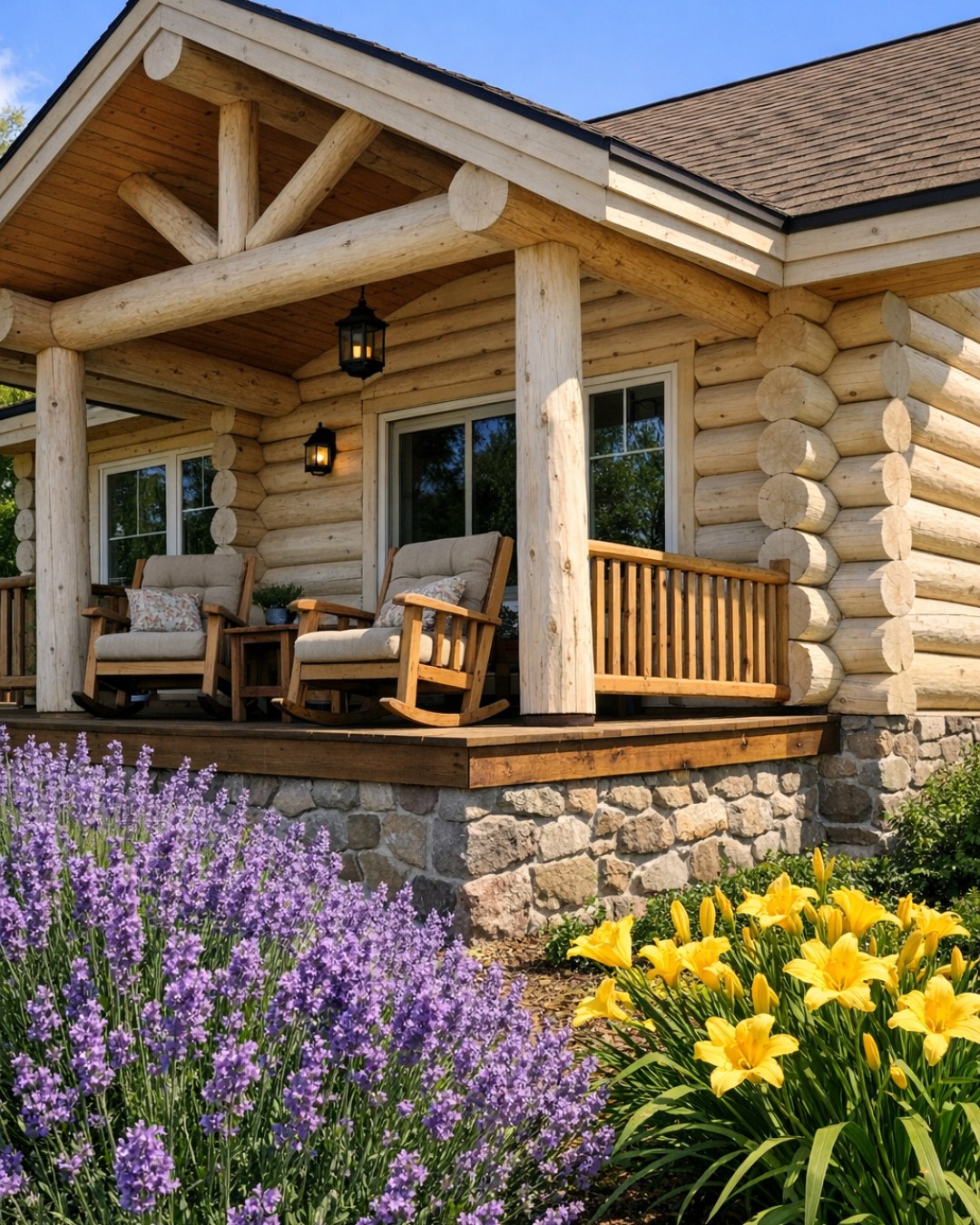
From the outside, the home reads as compact and substantial, with the soft Sitka spruce logs bringing a smoother, lighter expression than the darker, more rugged log shells people often expect. Their creamy-beige cast catches daylight beautifully, especially where the rounded profiles create delicate shadow lines. Taupe fieldstone wraps the foundation and rises into key architectural moments, giving the building visual ballast and a welcome mineral texture that plays against the gentle grain of the wood. The palette is understated and natural, which lets the craftsmanship stand at the forefront.
I like the way the roofline appears low and sheltering, emphasizing the single-level layout and making the house feel approachable rather than imposing. Timber posts, likely hand-finished with a matte seal, frame the entry with a sense of solidity, while dark metal hardware and understated exterior lighting add just enough contrast to sharpen the overall look. There is a pleasing honesty to the composition: no decorative excess, just well-chosen materials, balanced proportions, and the kind of exterior that promises warmth before you ever step through the door.
Living Room
The living room is where the home’s tactile richness really settles in. Sitka spruce walls and ceiling planes create an enveloping shell, but the pale tone of the wood keeps the room from feeling visually heavy. A fieldstone fireplace becomes the natural focal point, its taupe and ash-gray variation adding depth and quiet movement to the space. I can easily imagine Amish-built casework flanking the hearth—simple, sturdy, and beautifully proportioned—with inset panels, hand-rubbed finishes, and just enough detailing to celebrate the maker’s hand without turning ornate.
Furniture here would work best in a layered neutral palette: oatmeal upholstery, warm brown leather, charcoal accents, and woven textiles that soften the architecture. The layout should stay conversational and close, with a substantial sofa, two deep lounge chairs, and a solid wood coffee table that shows off the grain rather than hiding it under styling. Lighting is crucial in a room like this, and I’d want a mix of shaded lamps, discreet sconces, and perhaps a forged-iron chandelier overhead to pull light downward in the evening. The result is a room that feels composed, comforting, and wonderfully suited to long winters, quiet mornings, or a gathering that lingers after dinner.

Dining Room
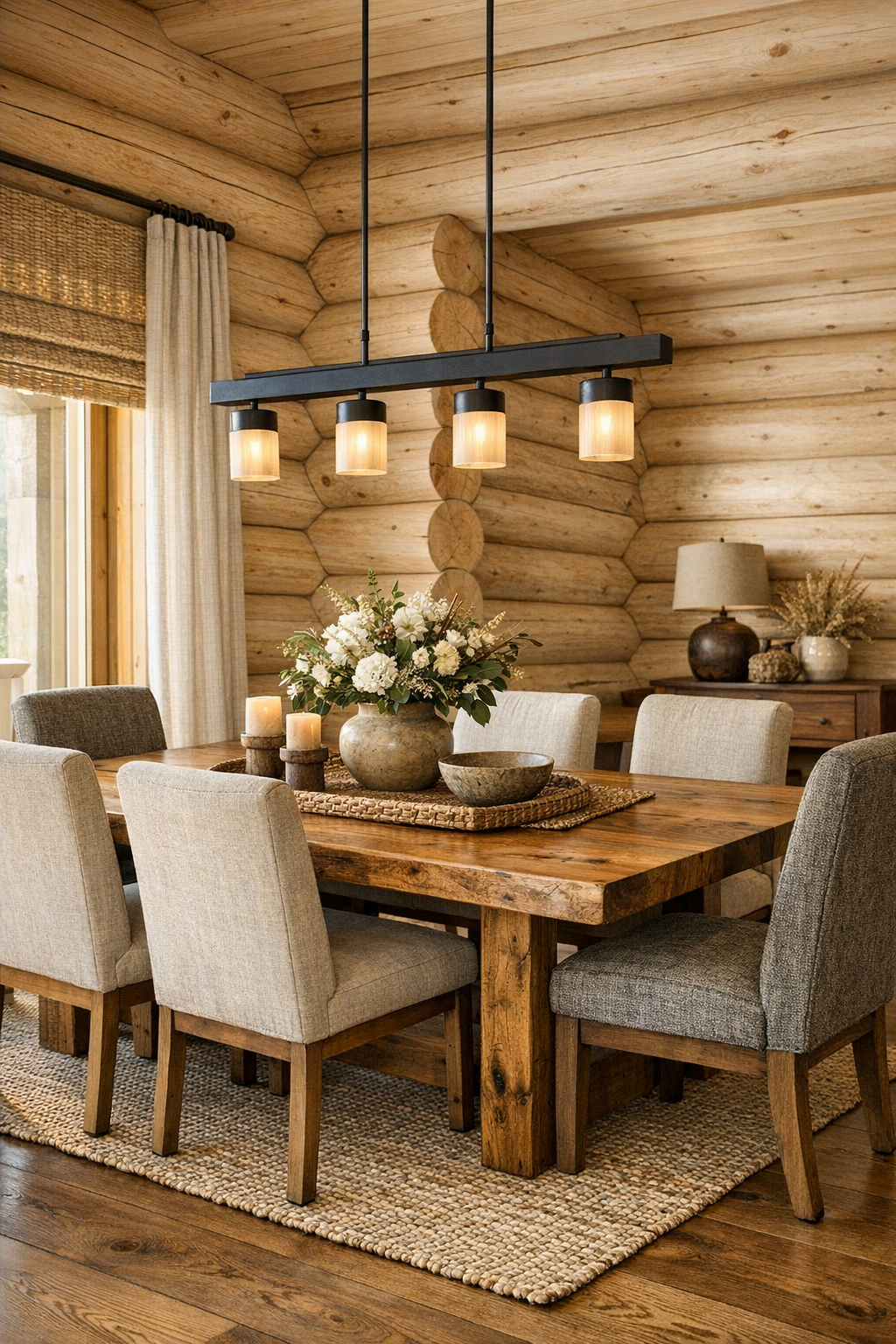
The dining room feels like an extension of the home’s broader philosophy: keep the materials honest, and let craftsmanship provide the beauty. I picture a substantial solid-wood dining table at the center, likely in white oak or walnut, with a hand-planed look that pairs gracefully with the softer log shell. Around it, ladder-back or gently contoured upholstered chairs would bring comfort without fuss. Because the house is single-level and snug, the dining area likely benefits from visual continuity with adjacent rooms, so the wood tones need to be carefully balanced—varied enough to create depth, but close enough to feel harmonious.
Overhead, a linear iron or bronze fixture would give the table presence and define the zone without overpowering it. I’d keep the textiles simple here: perhaps a natural-fiber rug underfoot, linen drapery if the room has windows to dress, and a quiet centerpiece that doesn’t fight the grain of the table. What I appreciate most is how a room like this can make everyday meals feel a bit more grounded. As someone who spends a lot of time around food, I always notice when a dining space encourages people to settle in, pass plates slowly, and stay at the table longer than they planned.
Kitchen
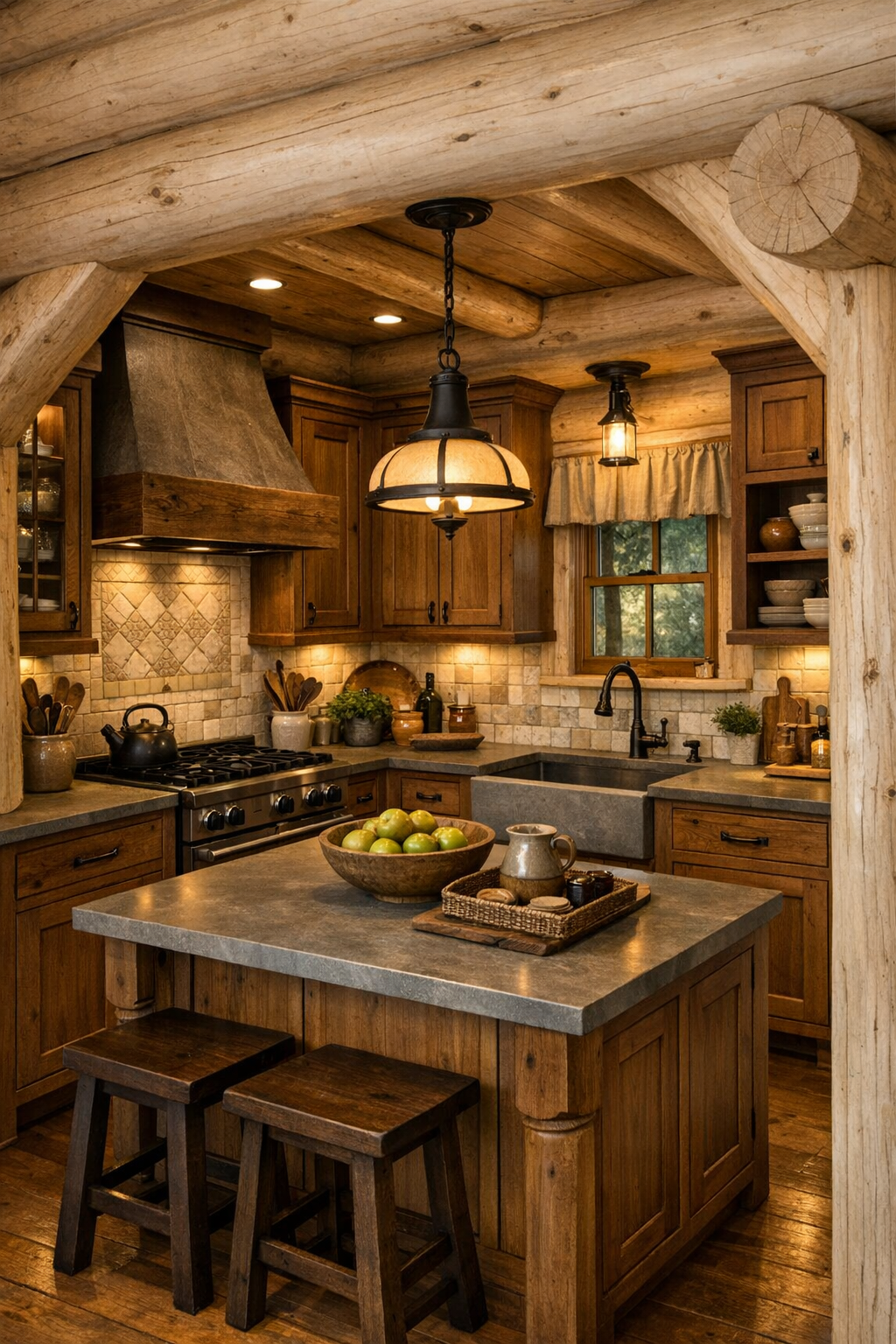
The kitchen is where this home’s Amish craftsmanship would truly shine, because cabinetry is one of the clearest places to see discipline, precision, and material intelligence. I imagine inset cabinet fronts in a medium warm stain—perhaps quarter-sawn oak or maple—paired with dark forged pulls and latches that nod gently to traditional utility. Countertops in a soft soapstone or honed quartz with gray-taupe veining would connect beautifully to the fieldstone elsewhere in the house, while a tile backsplash in a handmade finish would add a subtle sheen and slight irregularity that keeps the room from feeling too polished.
Layout matters immensely in a kitchen, and this one feels best when it is efficient, compact, and deeply practical rather than oversized. A central island would provide prep space and casual seating, while open sightlines to the dining and living areas would make the kitchen feel social without losing its hardworking identity. I’d want layered task lighting here—pendants over the island, under-cabinet lighting for prep, and ceiling fixtures that cast clean, even light. As an experienced cook, I always look for kitchens that respect movement: enough room to chop, simmer, bake, and serve without taking ten unnecessary steps, and this home seems perfectly tuned to that kind of daily rhythm.
Bedroom
The bedroom takes the home’s rustic vocabulary and quiets it even further, which is exactly the right move. Pale spruce walls continue the warm envelope, but I would keep the furnishings restrained: a beautifully made wood bed frame, matching nightstands with dovetailed drawers, and perhaps a bench at the foot of the bed in a woven or upholstered finish. The color palette should lean serene—cream, flax, stone, faded olive, and soft brown—so the room feels restorative rather than themed. In a log home, visual calm is everything, and this one seems to understand that instinctively.
Textiles do much of the emotional work here. A nubby wool rug underfoot, crisp cotton bedding, a quilt with subtle stitching, and heavier drapery panels for softness would all balance the sturdier wood surfaces. Lighting should remain intimate: bedside lamps with warm shades, maybe a small overhead fixture in dark metal or antique brass, and enough daylight during the day to bring out the grain in the logs. What I like most is the sense that this bedroom would never compete for attention. It simply supports rest, and in a home built around comfort and craftsmanship, that feels exactly right.

Bathroom
The bathroom is where a home like this can either become too literal or unexpectedly elegant, and I’d place this one firmly in the latter category. Taupe fieldstone or stone-look tile would be especially effective here, used selectively to create a sense of continuity with the exterior and main living spaces. A custom wood vanity—again, likely Amish-built—would add warmth and craftsmanship, especially if topped with a quieter slab material in a soft gray or creamy white. Framed mirrors, dark metal fixtures, and carefully chosen sconces would give the room structure and polish without losing the home’s natural character.
I would expect the bathing area to feel generous in finish if not enormous in footprint: perhaps a walk-in shower with clear glass, textured tile underfoot, and a built-in niche that keeps the lines clean. Plush towels, a small wooden stool, and subtle tonal variation in the stone and tile would make the room feel layered rather than stark. Bathrooms in rustic homes sometimes lean too rugged for my taste, but this one benefits from contrast. The clean edges of the fixtures and the smoothness of the countertop sharpen the softer grain and irregularity of the surrounding materials, creating a space that feels both practical and quietly luxurious.

Other Areas
In a single-level home, circulation spaces matter more than people often realize, and here I imagine hallways, entry moments, and utility zones treated with the same seriousness as the main rooms. A mudroom or entry nook with built-in benches, pegs, and shoe storage would be especially valuable, and it is exactly the kind of feature Amish cabinetry can make feel beautiful instead of purely functional. Even a compact corridor can become memorable when it includes paneled wainscot details, thoughtfully placed sconces, and a runner that softens footsteps across wood or stone flooring.
If the plan includes a reading corner, laundry room, or small office alcove, those spaces would likely echo the home’s larger palette while introducing a bit more specificity through storage and built-ins. I can picture closed cabinets, open shelving for baskets and books, and small windows that keep these secondary spaces connected to the landscape outside. What ties them all together is consistency: the same patient woodworking, the same restrained mineral palette, and the same sense that nothing has been added casually. Even the in-between spaces feel considered, which is often the clearest sign of a home designed to be lived in, not just admired.

Why You'd Live Here
You’d live here because it understands that comfort is not the same thing as excess. This home offers warmth through material, scale, and workmanship rather than through sheer size, and that makes it feel more personal. The soft Sitka spruce logs, taupe fieldstone, and handmade woodwork create a setting that is unmistakably rustic but also disciplined and refined. It has the visual coziness many people want from a log home, yet it avoids the heaviness that can make these houses feel dated or overly themed.
I also think you’d choose this home because it supports real daily life beautifully. The single-level layout is easy, the rooms feel connected, the storage can be purposeful, and the finishes are the sort that age with grace instead of demanding constant reinvention. For anyone who values craft, calm, and spaces that make ordinary routines feel a little richer—cooking dinner, reading by the fire, setting the table, turning in early on a cold night—this home makes a compelling case for living more simply, but better.