There’s something deeply reassuring about a single-level log home when it’s handled with restraint and care, and this one immediately strikes me as both grounded and graceful. Wrapped in cedar logs the color of maple syrup and set into a serene landscape, the house carries that unmistakable hand-built warmth people often chase but rarely capture. The overall mood is quiet, steady, and welcoming, with a kind of visual honesty that lets natural materials do the talking instead of relying on ornament.
What makes this home especially memorable is the way timeless Amish craftsmanship shapes every room, giving this concept design a sense of permanence and integrity. I’m drawn to the precision in the wood joinery, the practical layout, and the subtle balance between rustic character and everyday comfort. It feels like a place where the architecture supports real life beautifully, whether that means a long Sunday breakfast, an afternoon of reading by the windows, or a kitchen full of simmering stock and warm bread.
Exterior
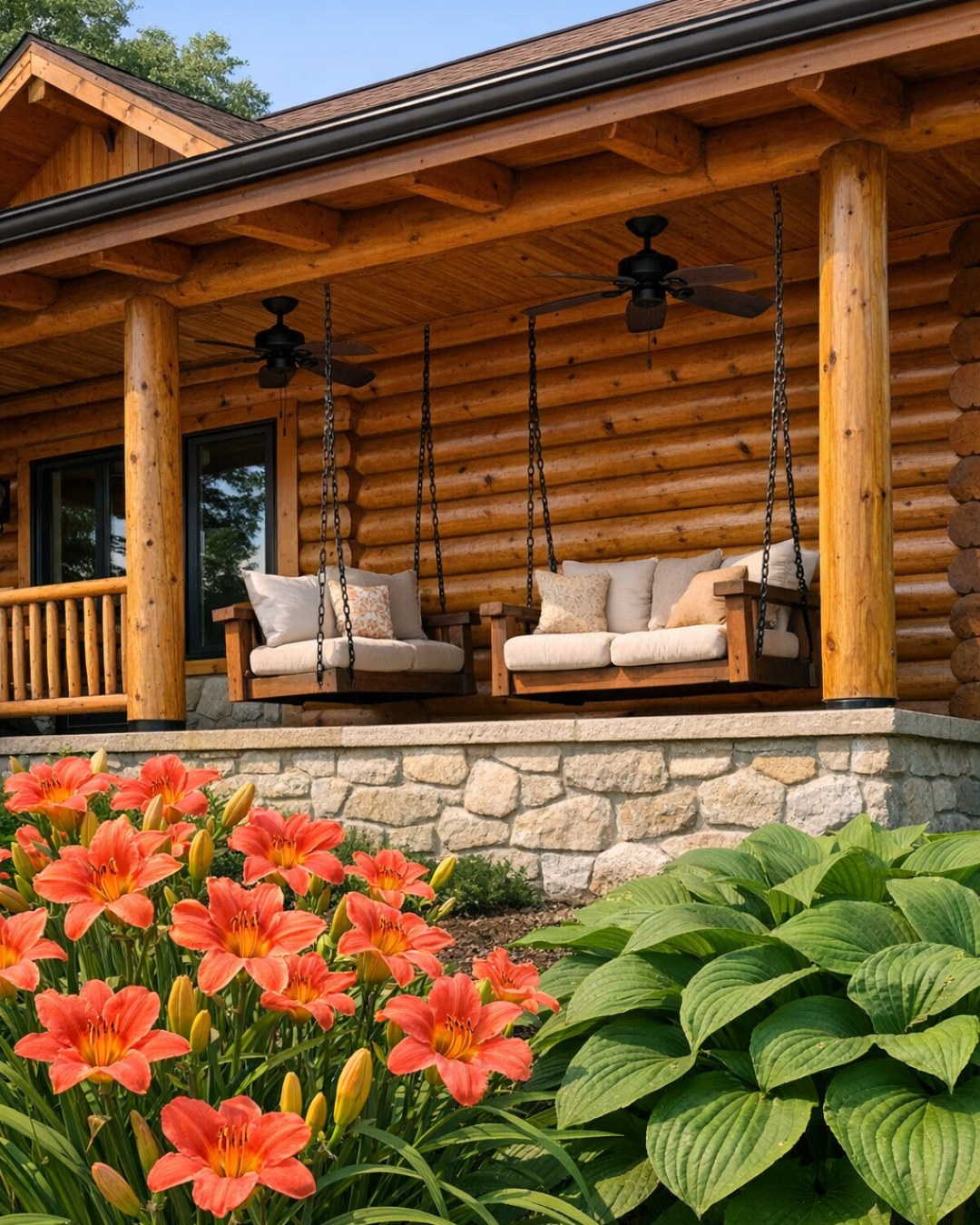
The exterior is defined by those warm cedar logs, finished in a rich amber-brown that catches the light almost like polished syrup. Because the home is single-level, the roofline stretches low and calm across the site, giving the architecture a distinctly settled presence. I like how that horizontal stance keeps the house from feeling overly theatrical; instead, it reads as confident and deeply connected to the land. Substantial timber posts, neatly detailed trim, and carefully proportioned windows reinforce the sense of solid workmanship without making the façade feel heavy.
Stone at the foundation and chimney adds a cool mineral contrast to all the wood, while blackened metal hardware and lantern-style exterior lighting bring definition and a touch of crispness. The entry porch feels especially well judged, broad enough for a pair of rockers and finished with plank decking that will only look better with age. Every element suggests durability and purpose, but also comfort. This is the kind of exterior that promises a calm interior before you even step through the door.
Living Room
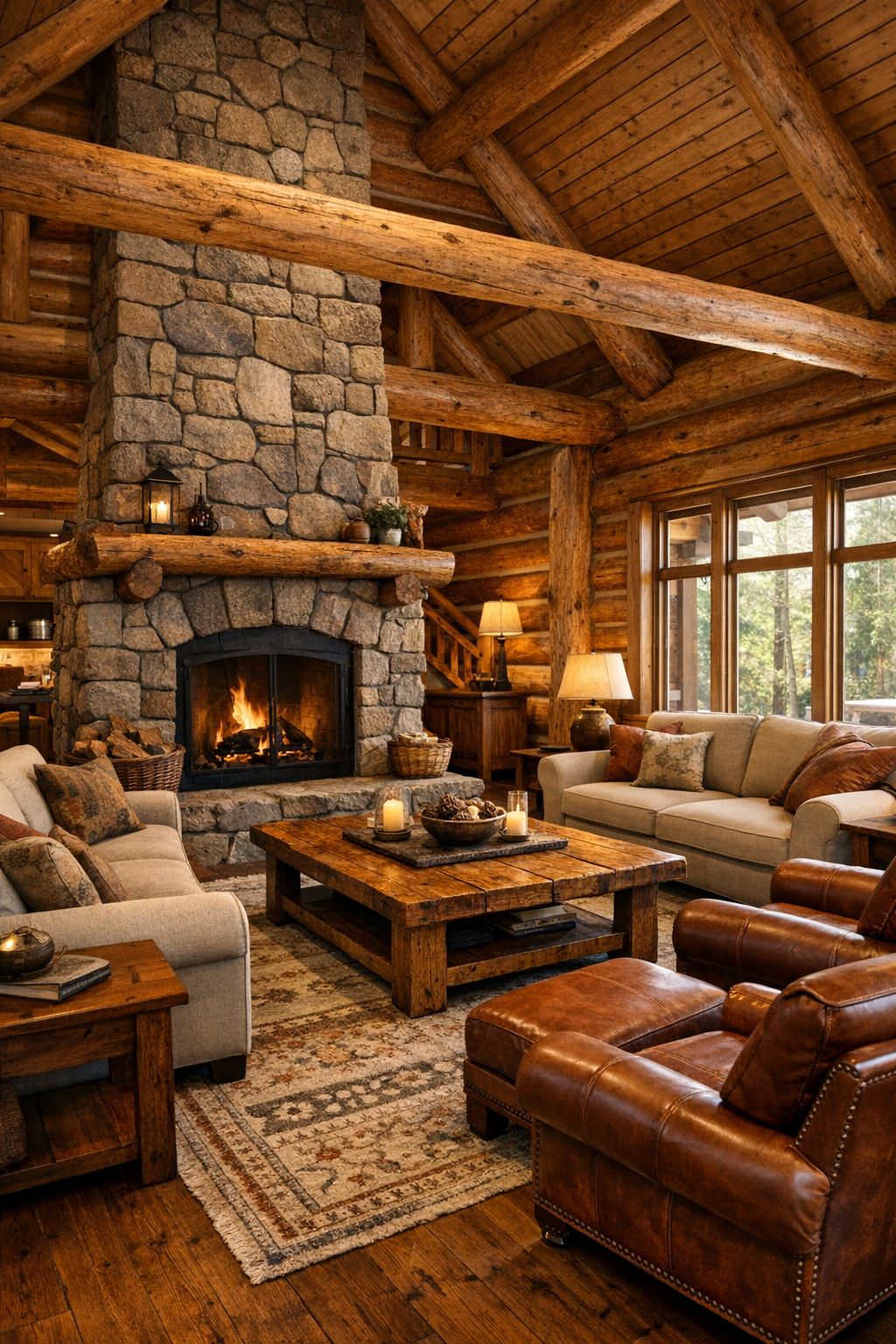
The living room centers on volume, texture, and the reassuring rhythm of exposed logs, but it avoids the visual clutter that can sometimes overwhelm rustic homes. Here, the cedar walls are complemented by a ceiling of heavy beams and tongue-and-groove boards, all in closely related honeyed tones that create an enveloping warmth. A large stone fireplace anchors the room, its rugged texture offset by the refined finish of the mantel, likely shaped by a skilled hand rather than stamped out by a machine. The seating is generous and practical: deep upholstered sofas in oatmeal and flax, leather club chairs in chestnut, and a substantial wood coffee table with visible joinery.
I’d expect layered lighting to do a lot of the heavy lifting here, and it seems beautifully considered. Iron chandeliers, shaded sconces, and table lamps with ceramic or turned-wood bases would soften the logs at night, while large windows pull in daylight that keeps the room from feeling dense. A wool area rug in muted rust, cream, and charcoal grounds the furniture, and linen drapery panels add just enough softness. The overall effect is restful and tactile, with every surface encouraging you to settle in a little longer.
Dining Room
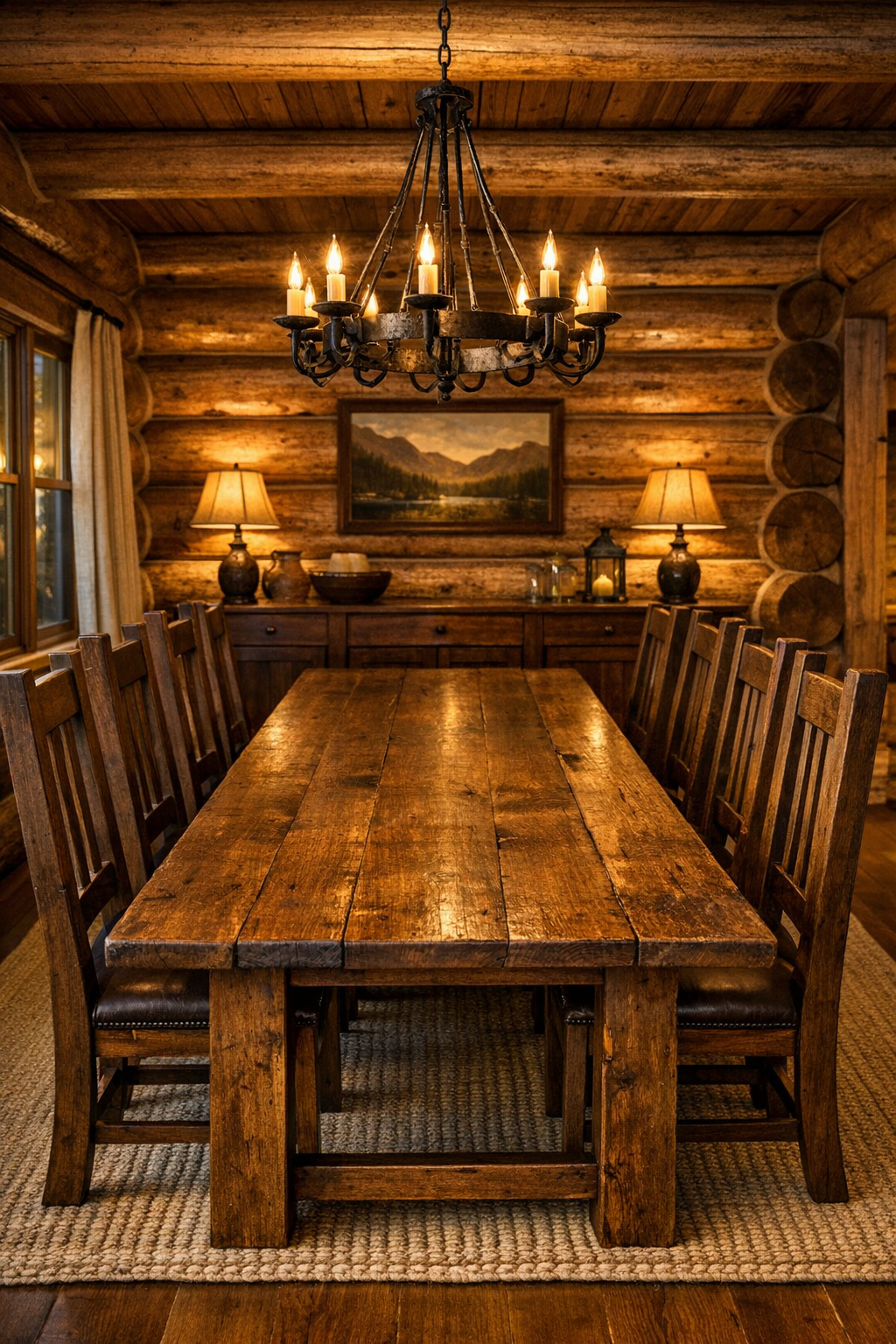
The dining room feels like an extension of the home’s values: honest materials, careful workmanship, and a layout designed for real gathering. I picture a long solid-wood table, likely oak or cherry with a hand-rubbed finish, paired with high-back chairs that show off classic Amish proportions and joinery. The room doesn’t need much embellishment because the craftsmanship carries it. With cedar walls surrounding it and a coffered or beamed ceiling overhead, the space gains richness through repetition of grain, tone, and structure.
What I find especially appealing is the balance between formality and comfort. A wrought-iron chandelier with warm bulbs casts an amber glow over the tabletop, while a sideboard provides both storage and another opportunity for beautiful cabinetmaking. The palette stays close to nature—burnished wood, soft cream textiles, muted green accents, perhaps a simple runner in flax or brick red. It’s a dining room made for meals that unfold slowly, with room for serving platters, conversation, and the kind of hospitality that never feels staged.
Kitchen
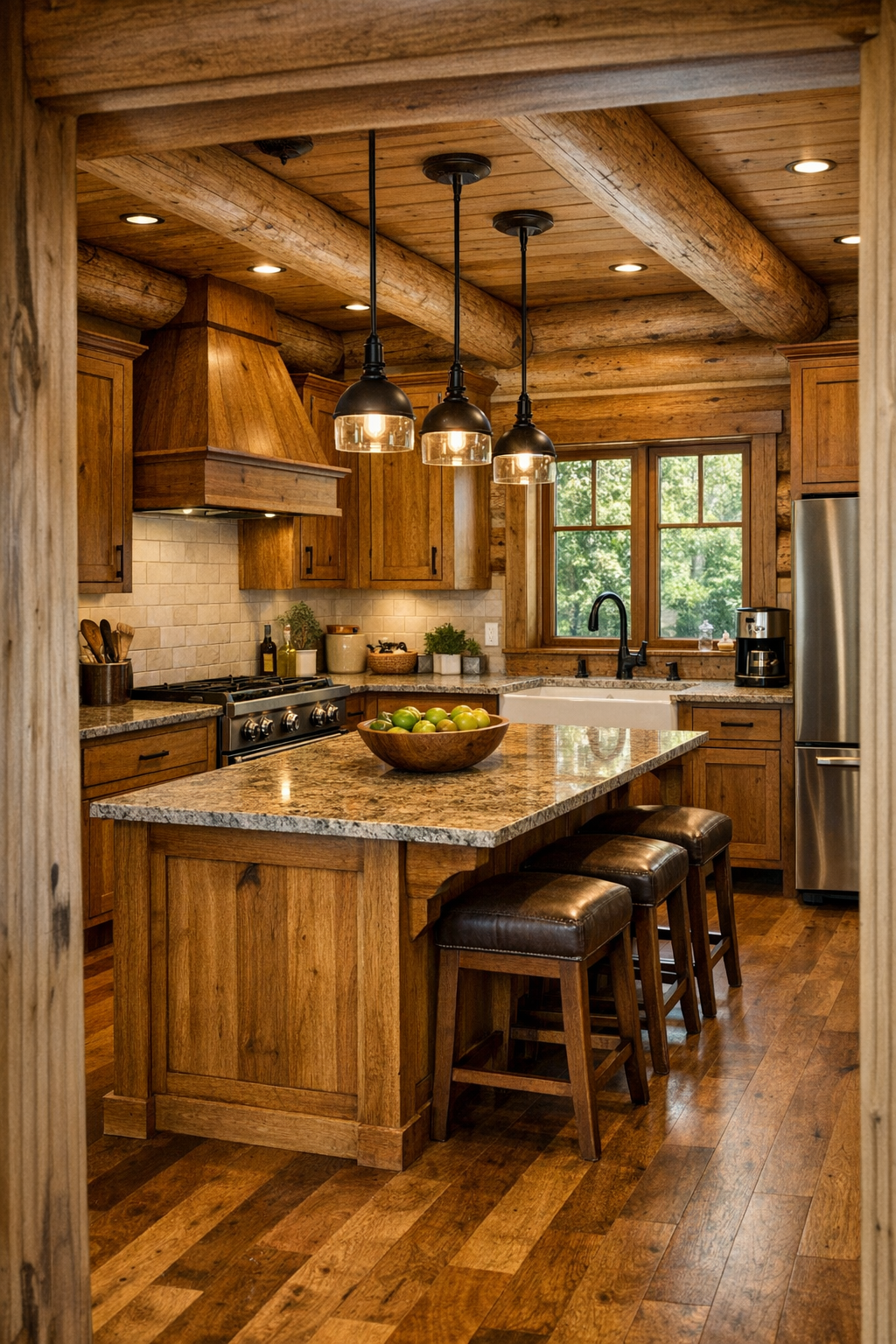
As someone who spends a lot of time cooking, I always look first for function, and this kitchen seems to understand exactly how a hardworking room should flow. Amish craftsmanship shows up beautifully in the cabinetry, which I imagine in stained maple or quarter-sawn oak with inset doors, sturdy drawers, and understated hardware in oil-rubbed bronze or matte black. The cabinetry likely reaches the ceiling, maximizing storage and reinforcing that custom-built feeling. Stone or soapstone countertops bring durability and a slightly cooler note against the warm wood, while a broad island creates enough space for prep, baking, and casual meals.
The details matter here: a deep apron-front sink under a window, open display shelves for crocks and everyday dishes, and task lighting that actually supports cooking rather than just decorating the room. I can picture a handsome range framed by a wood-trimmed hood, with a backsplash in handmade tile or tumbled stone adding subtle pattern and variation. Even with all that richness, the kitchen would still feel composed because the palette remains disciplined—amber wood, charcoal, cream, and soft sage. It’s the kind of kitchen that invites serious cooking without losing any of its beauty.
Bedroom
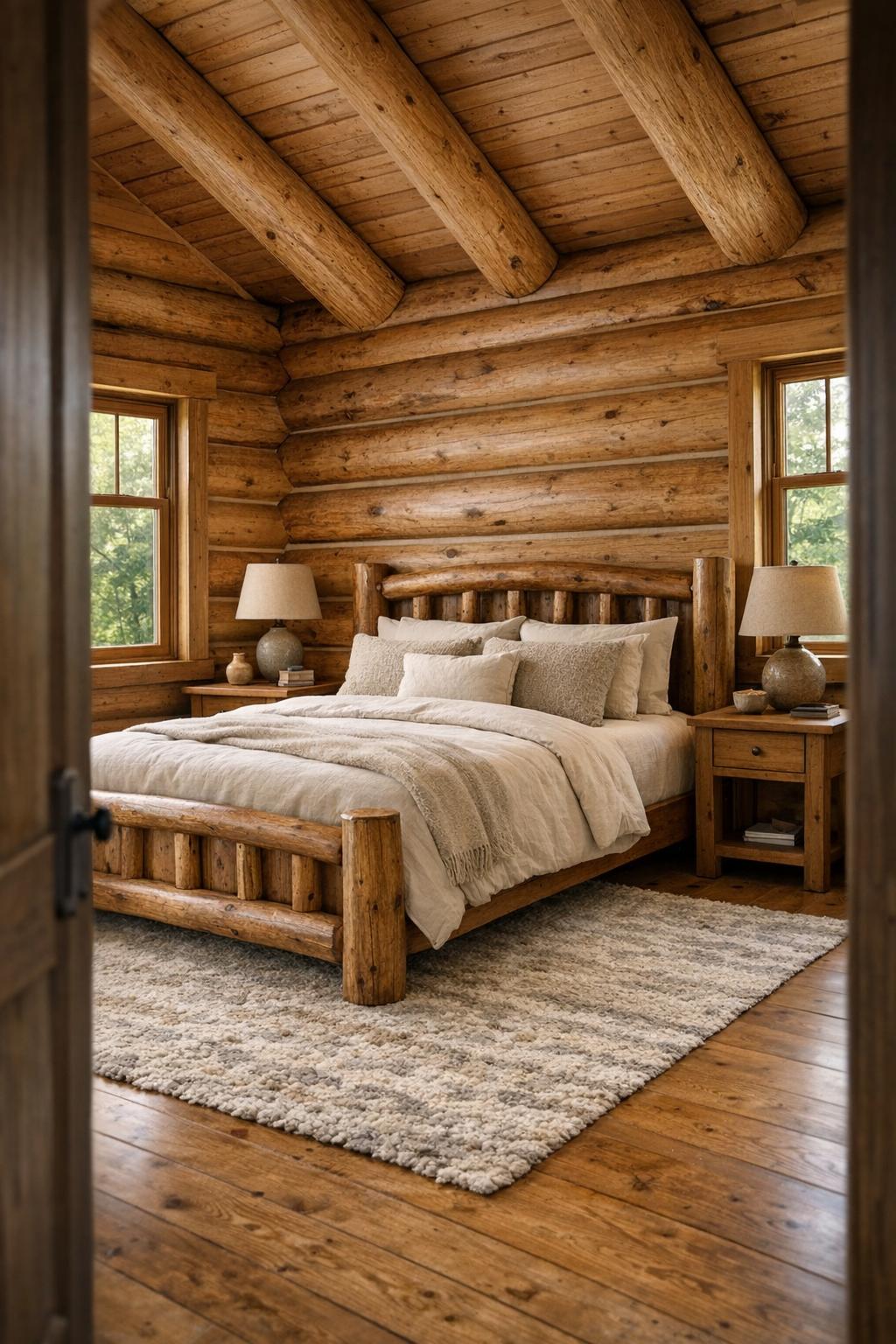
The bedroom takes the home’s rustic language and softens it into something deeply restful. Log walls remain visible, of course, but here they’re balanced by quieter textiles and gentler color shifts—cream bedding, oatmeal linen, a woven bench at the foot of the bed, and perhaps a muted plaid or quilt that nods to tradition without becoming overly thematic. The bed itself would likely be a substantial handcrafted wood frame, with matching nightstands and a dresser that echo the same disciplined joinery found elsewhere in the home.
I’m especially drawn to the likely use of natural light in this room. Windows framed in wood would bring in soft morning sun, while layered drapery helps temper the visual weight of the logs. A wool rug underfoot adds warmth and a quieter texture, and bedside lamps with parchment or linen shades keep the evening atmosphere low and flattering. Rather than feeling rustic in a rough way, the room feels composed, handmade, and deeply peaceful—the sort of bedroom that genuinely encourages rest.
Bathroom
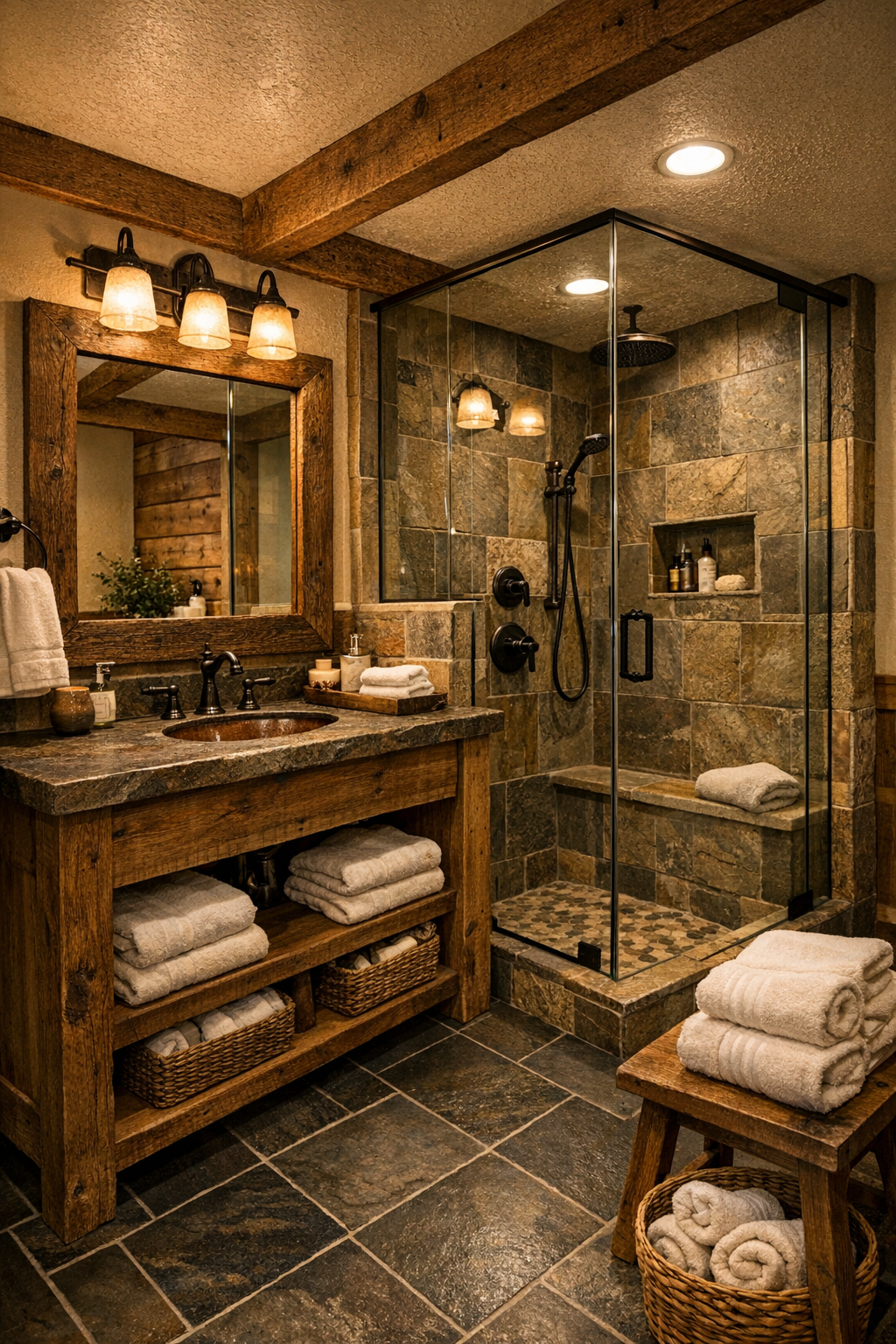
The bathroom brings a welcome shift in temperature and texture while still feeling true to the rest of the house. I imagine a handcrafted wood vanity, perhaps in a slightly deeper stain, topped with honed stone and paired with simple undermount sinks. The mix of wood and stone feels especially right in a log home because it keeps the room connected to the architecture while introducing a cleaner, more spa-like mood. Tile underfoot, likely in slate tones or a soft earthy porcelain, provides a practical break from all the timber.
A walk-in shower with clear glass and stone or subway tile walls would keep the room open, and I’d love to see a freestanding soaking tub placed near a window if the footprint allows. Lighting would be warm but crisp enough for daily routines, with metal fixtures that echo the black or bronze details used elsewhere. Plush cotton towels, a framed mirror in solid wood, and maybe a small stool or storage cabinet complete the picture. It feels sturdy, calm, and thoughtfully built—the kind of bathroom that ages gracefully.
Other Areas
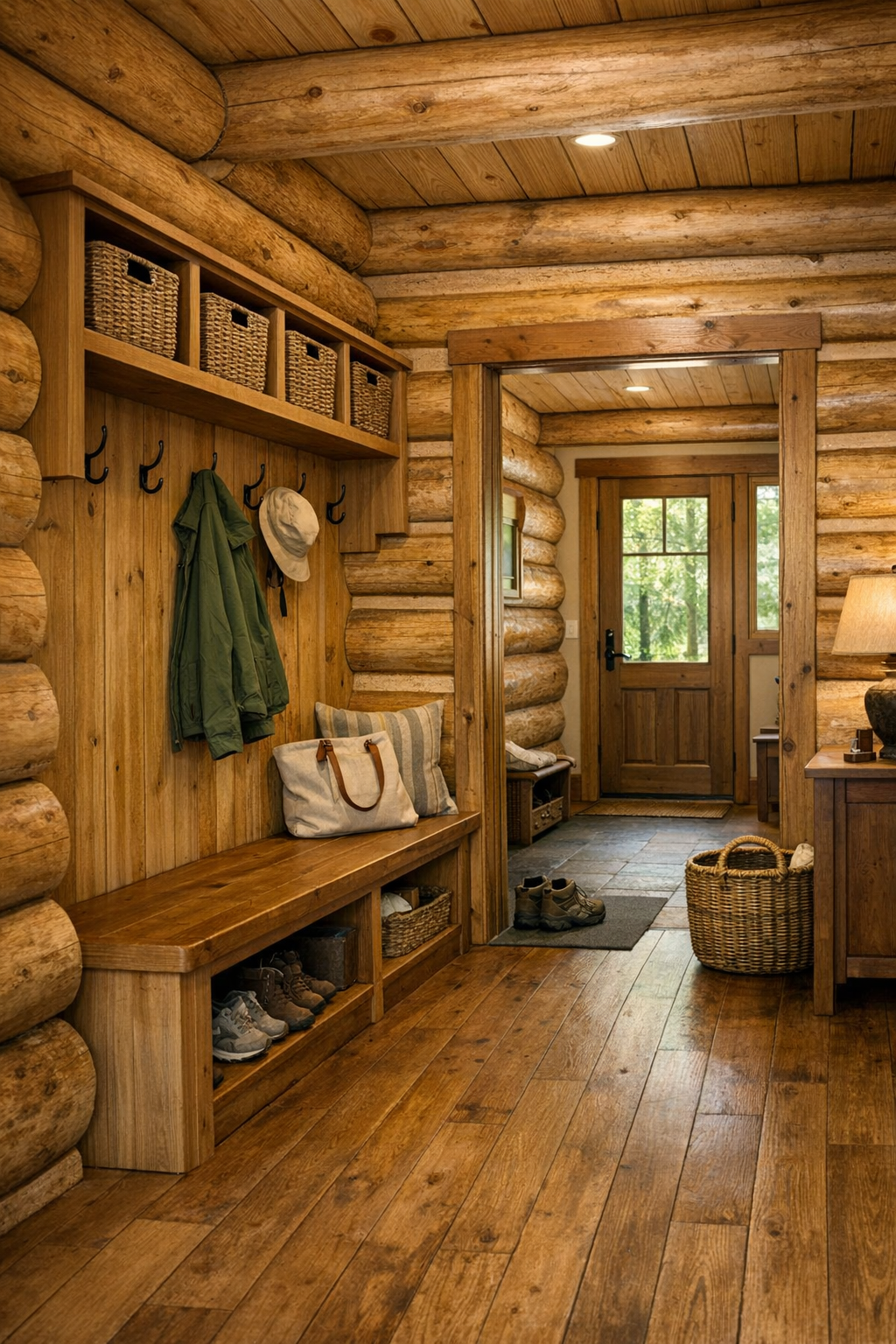
In a home like this, the supporting spaces can be just as satisfying as the main rooms. Hallways become galleries for craftsmanship, with plank floors, log walls, and trim details that reveal a steady hand and a patient eye. I can imagine a mudroom or entry passage fitted with built-in benches, cubbies, and pegs in the same carefully matched wood species, making the transition from outdoors to indoors feel seamless. Even a laundry room here would likely be elevated by custom cabinetry, durable counters, and thoughtful storage that keeps daily life organized without sacrificing beauty.
There’s also something special about how single-level living improves circulation and comfort in these in-between spaces. Wider doorways, uninterrupted sightlines, and consistent flooring make the house feel open and easy to navigate. A reading nook, office corner, or window seat tucked along one of the quieter walls would fit naturally into the plan, especially if framed by shelving or cabinetry made by the same skilled makers. These areas don’t feel like leftovers; they feel integrated, useful, and quietly luxurious in the most practical sense.
Why You'd Live Here
You’d live here because it offers something increasingly rare: a home that feels genuinely made rather than merely assembled. The single-level plan promises ease, the cedar structure brings warmth, and the Amish craftsmanship gives every room an uncommon sense of integrity. Nothing seems excessive, yet nothing feels overlooked. That balance is hard to achieve, and it’s exactly what makes the house so compelling.
For me, the strongest appeal is how comfortably this home supports everyday rituals. It’s easy to imagine cooking for hours in the kitchen, setting a generous table, then winding down beside the fireplace or retreating to a quiet bedroom that actually feels restful. The materials are timeless, the layout is practical, and the atmosphere is steady in the best possible way. This is a home that doesn’t just photograph well; it feels as though it would live beautifully, too.