This single-level log home has the kind of calm, grounded presence I always notice first in a house that truly understands its setting. Wrapped in warm praline-toned mountain hemlock logs and shaped with a quiet confidence, it feels tucked naturally into a peaceful landscape, where the light can move slowly across timber, stone, and glass. What stood out to me right away is how the rustic shell is softened by thoughtful Amish design details that bring order, craftsmanship, and a lovely sense of restraint.
Even as a concept design, it feels deeply livable to me in all the ways that matter most. The home balances sturdy natural materials with a gentle, family-centered warmth, so nothing feels too precious or overdone. I can easily imagine muddy shoes by the door, supper on the stove, and a house full of conversation, all while the interiors stay beautifully composed through simple joinery, honest finishes, and rooms that seem made for daily rituals.
Exterior
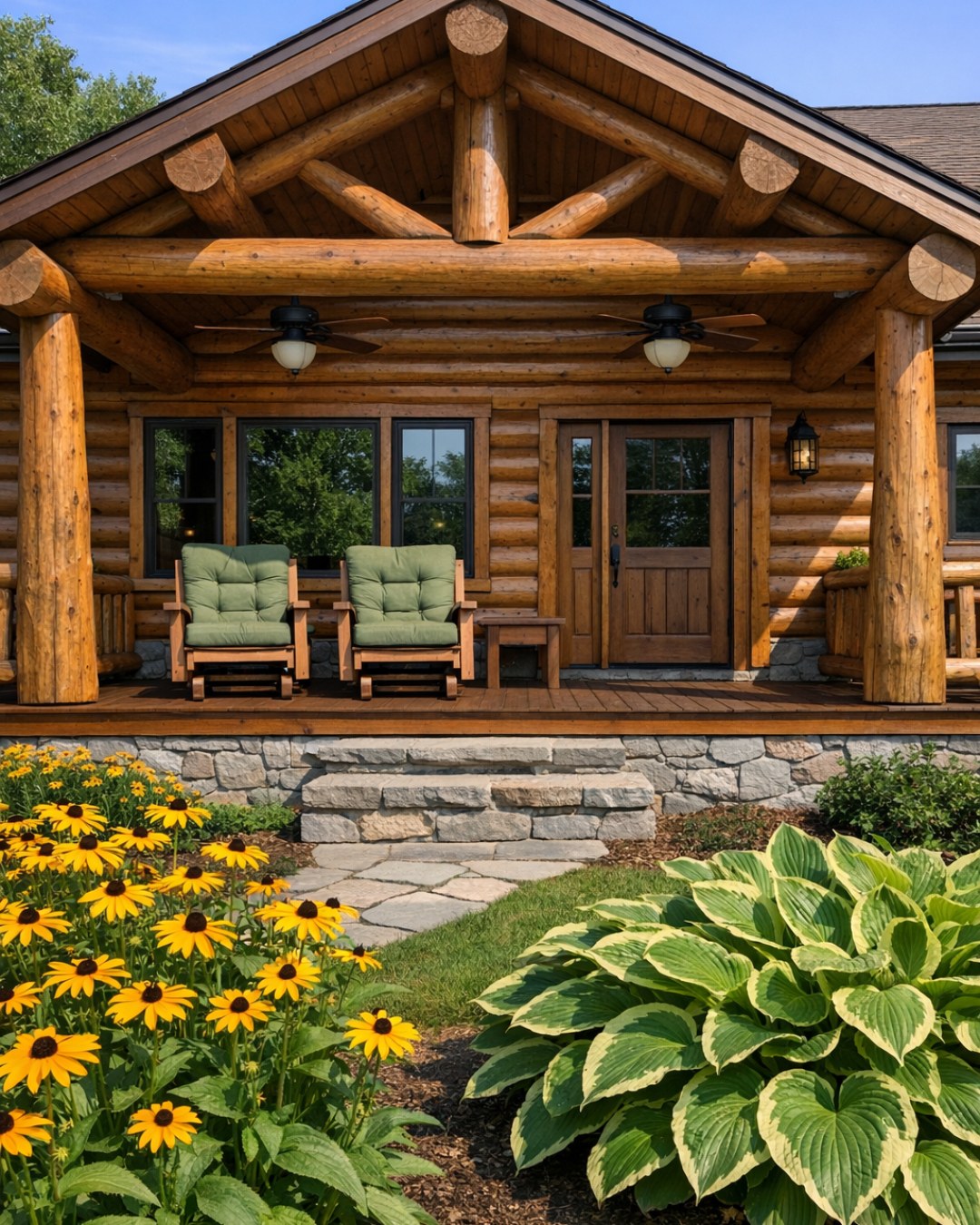
From the outside, the home reads as timeless without slipping into nostalgia. The mountain hemlock logs have a rich praline cast that gives the façade a mellow sweetness rather than a heavy, dark lodge look, and that choice makes all the difference. Low rooflines stretch the house comfortably across the site, emphasizing its single-level ease, while deep eaves and sturdy timber supports create shade, shelter, and a welcoming rhythm along the front elevation. I especially like the way stone at the foundation visually anchors all that warm wood, giving the home a sense of permanence.
The detailing is where the exterior becomes especially memorable. Windows are placed generously but carefully, framed to pull in views and daylight without breaking the calm repetition of the logs. Doors feel substantial, likely built in solid wood with simple inset panels and black iron hardware that nods to Amish workmanship without feeling theatrical. Altogether, the effect is peaceful and practical, like a home designed to weather every season gracefully while still feeling inviting when the porch light comes on at dusk.
Living Room
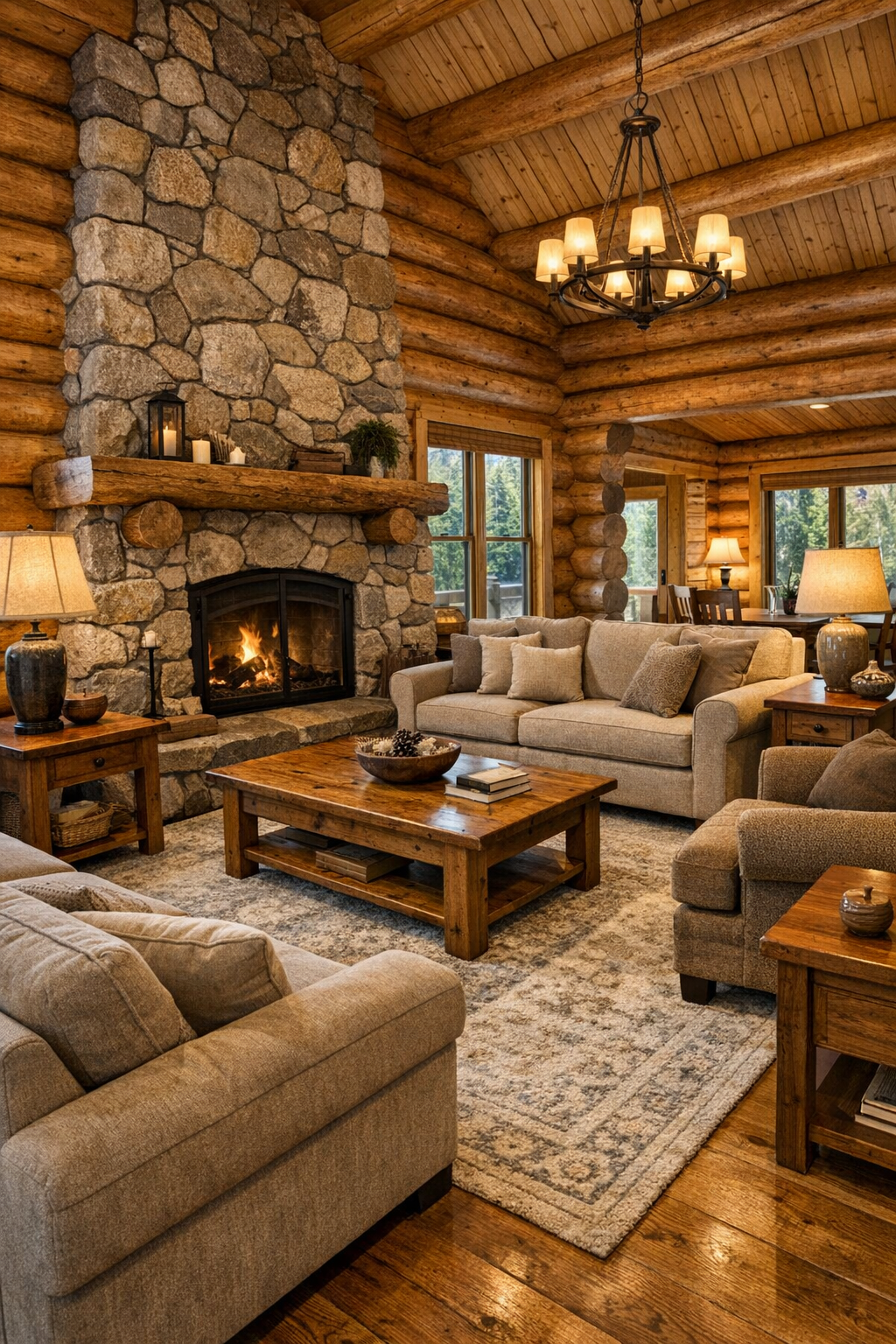
The living room centers the home with a warmth that feels immediate and unforced. Hemlock log walls bring a soft caramel-praline glow, and I would lean into that by keeping the larger upholstery pieces in oatmeal, flax, and warm taupe so the wood remains the star. A substantial area rug in a muted wool weave helps quiet the room visually and acoustically, while a stone fireplace adds just enough rustic texture to keep the space from becoming overly polished. The Amish influence shows up beautifully in the furniture profiles: clean-lined wood tables, careful joinery, and pieces that feel built to be passed down rather than replaced.
What makes the room especially successful is its easy layout. Seating is arranged close enough for conversation, with a sofa and a pair of generously scaled chairs angled toward both the fire and the windows, which is always my favorite kind of practical planning for family life. Layered lighting keeps the room flexible: a forged-iron chandelier overhead, shaded table lamps for evening, and maybe a discreet picture light over a built-in shelf or mantel. I can picture baskets for extra throws, a sturdy coffee table that can handle board games or snack plates, and enough softness in the textiles to make the timber surroundings feel nurturing rather than austere.
Dining Room
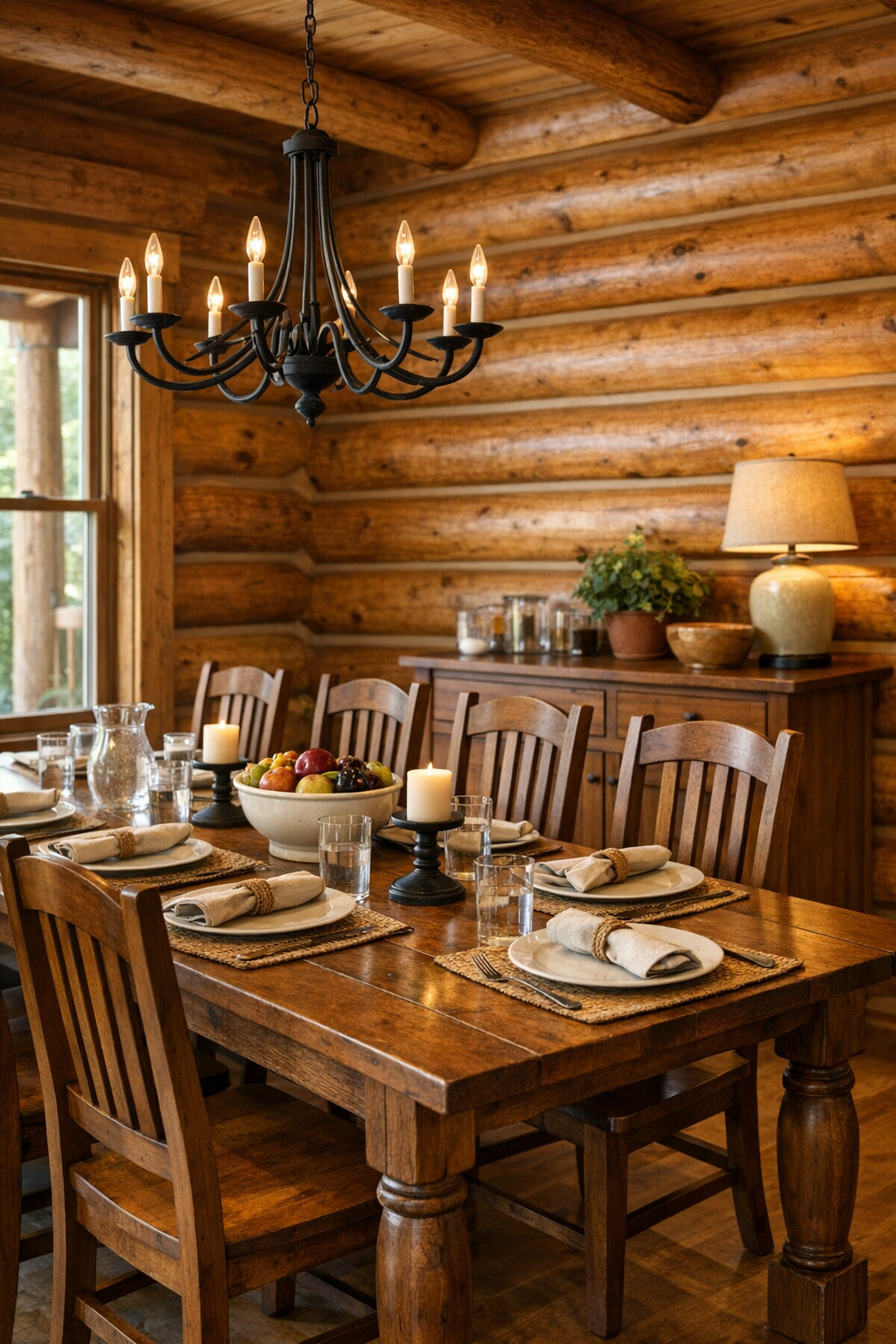
The dining room feels like the emotional heart of the house to me, especially in a home where craftsmanship matters this much. I imagine a long solid-wood table with a hand-rubbed finish, surrounded by ladder-back or gently curved chairs that reflect Amish traditions in a way that feels refined and useful. The wood tones would stay warm but slightly varied, so the table doesn’t disappear against the log walls, and I’d bring in a natural fiber runner or a simple sideboard with inset panel doors to add function without clutter. This is the kind of room that doesn’t need much decoration because the grain, joinery, and proportions already do so much of the work.
For families, I always think the best dining rooms are the ones that can shift from everyday supper to holiday pie without any fuss, and this one absolutely could. A wrought-iron or matte-black linear chandelier would define the table from above, while nearby windows keep the room bright during the day. If you have picky eaters at your table like I sometimes do at mine, a room like this helps by making meals feel calm instead of pressured; everything about it suggests lingering, passing bowls, and giving everyone a comfortable place to settle in. The overall feeling is orderly and welcoming, with enough breathing room around the furniture that the space stays graceful even when it’s full.
Kitchen
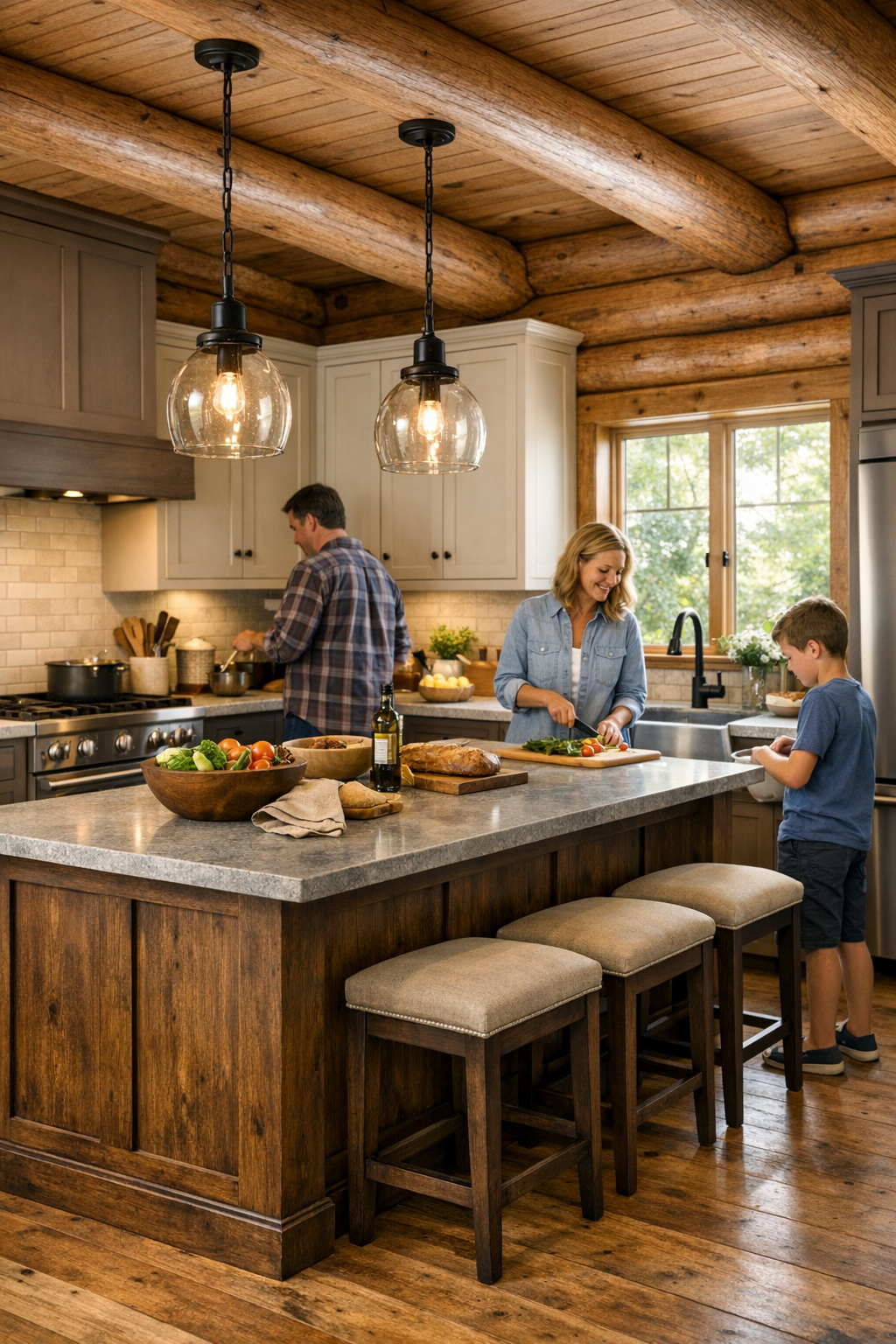
The kitchen is where this house really wins me over, because it pairs handcrafted beauty with the kind of hardworking layout that makes daily life smoother. I picture custom cabinetry in a painted mushroom or soft cream finish, balanced by butcher-block accents or a darker stained island that ties back to the wood architecture. Countertops in honed quartz or soapstone would add durability and a matte softness, while a tile backsplash in a handmade look keeps the room feeling rooted and unfussy. Those Amish design details could come through in inset cabinet doors, exposed hinges, deeply practical drawers, and a built-in hutch or pantry wall that feels as if it was designed with generations of home cooking in mind.
As someone who loves feeding family and friends, I appreciate a kitchen that creates little zones for everyone to gather without getting underfoot. An island with comfortable overhang seating would be perfect for homework, cookie decorating, or setting out toppings when you need a simple dinner variation for picky eaters. Good pendant lighting over the island, under-cabinet illumination for prep, and daylight pouring in over the sink would make the whole room feel cheerful and capable from morning coffee through evening cleanup. It’s rustic, yes, but more importantly it feels organized, generous, and truly built for use.
Bedroom
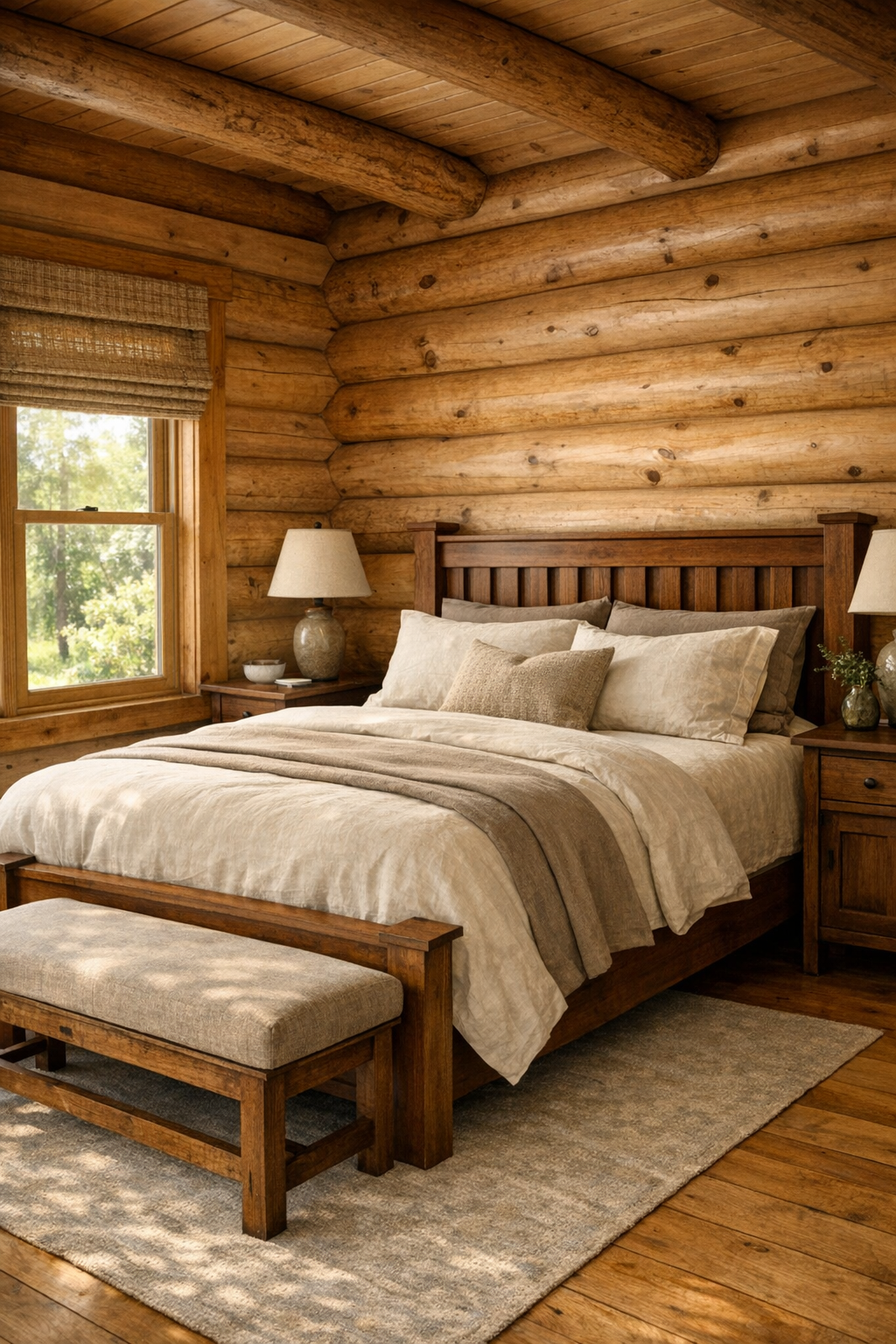
The bedroom takes all that rich wood and quiets it down into something deeply restful. Instead of fighting the natural warmth of the logs, I’d echo it with soft neutrals, washed linen bedding, and a mix of textures that feel breathable and light. An Amish-crafted bed frame in oak or walnut would become the anchor, likely with beautifully simple lines and impeccable joinery, while matching nightstands keep the room symmetrical without feeling stiff. I love bedrooms like this that rely on material honesty rather than lots of ornament, because they age so well and always feel sincere.
Lighting and scale are especially important here. A pair of understated bedside lamps, maybe with ceramic or forged-metal bases, would bring a cozy evening glow, while large windows dressed in soft woven shades or lined drapery would make the room feel private but never dark. A bench at the foot of the bed, a braided or flatweave rug underfoot, and perhaps a chest or wardrobe with handcrafted details would complete the space without crowding it. The whole room seems designed to help you exhale, which is exactly what I want from a bedroom after a busy day.
Bathroom
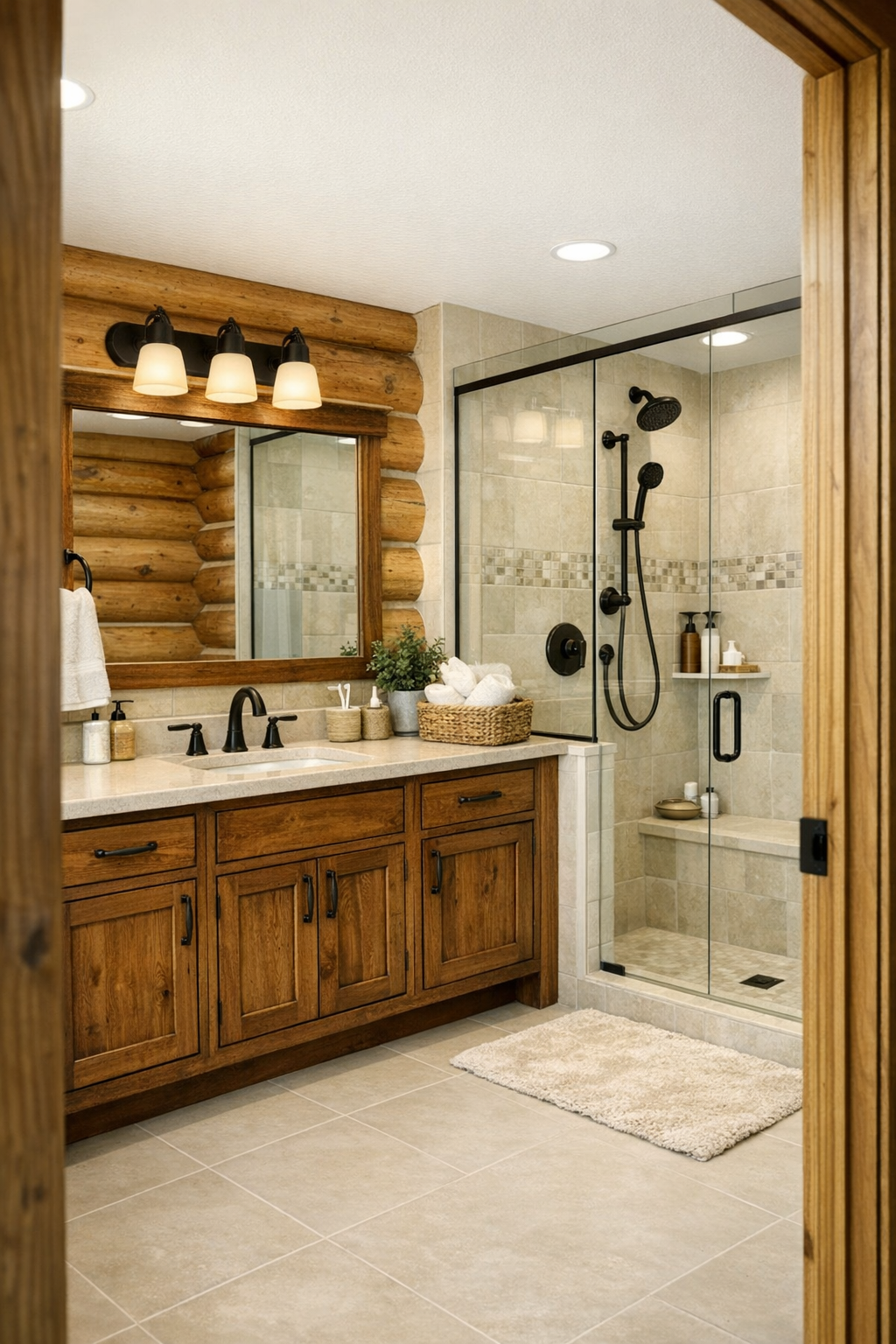
The bathroom carries the same handcrafted spirit but shifts toward a cleaner, spa-like expression. I imagine a vanity in stained wood with inset doors and drawers, topped with a pale stone counter that brightens the room against the warmth of the logs or wood trim. Tile becomes especially important here, and I’d use it to create relief: perhaps soft ivory walls in the shower, a pebble or matte porcelain floor, and black metal fixtures for contrast. The balance of rustic wood and crisp surfaces would keep the room feeling fresh rather than heavy.
Functionally, this is the sort of bathroom that understands everyday routines. A wide mirror, good sconces at face level, and generous storage would make busy mornings easier, while a glass-enclosed shower and a deep soaking tub would add that little bit of retreat. I also like the thought of plush cotton towels, a wood stool, and a few practical hooks instead of too many decorative moments. In a home like this, the bathroom doesn’t need to announce itself loudly; it just needs to feel warm, capable, and beautifully made.
Other Areas
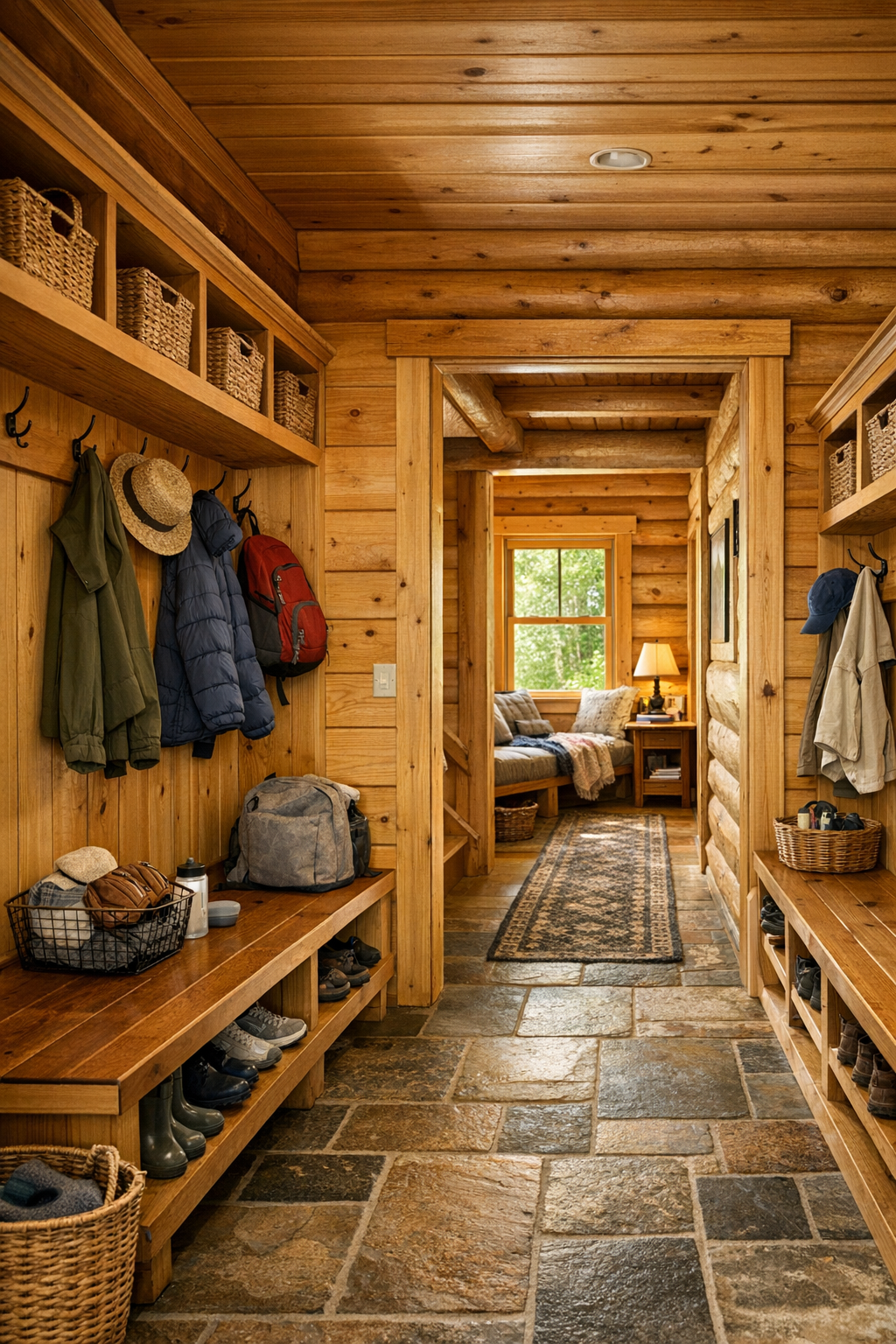
What I appreciate most in the secondary spaces is how much they contribute to the home’s comfort. In a single-level plan, hallways, entry moments, and utility zones matter because they’re part of the daily flow, and here I imagine them being handled with unusual care. A mudroom with built-in benches, cubbies, and sturdy hooks would be a gift for real family life, especially in a home connected to the outdoors. The laundry area could continue the same cabinetry language as the kitchen, making even practical rooms feel integrated rather than forgotten.
I can also see charming transition spaces that make the house feel personal: a reading nook under a window, a corridor lined with simple framed art, or a built-in desk for bills, recipes, and school forms. Amish design often shines brightest in these quieter places, where a well-made bench, cabinet, or shelf can elevate an ordinary task. Those moments are what make a home feel truly supportive, and in this one they would turn circulation space into something useful, peaceful, and genuinely pleasant to live with.
Why You'd Live Here
You’d live here because it offers something many homes try for and never quite achieve: real warmth without clutter, craftsmanship without stiffness, and rustic character without heaviness. The praline-toned mountain hemlock gives every room a soft glow, while the Amish-inspired detailing brings discipline and beauty to the places you use every day. It feels rooted, dependable, and peaceful in a way that would only get better with time.
More than that, this is a house that understands family rhythms. It makes room for cooking, gathering, retreating, and the little adjustments that keep a household running smoothly, whether that means setting out a simple weeknight meal or making space for everyone to linger after dessert. To me, that’s the real luxury here: not just handsome materials, but a deeply comforting sense that life would be well held within these walls.