There is something instantly grounding about a single-level log home done this thoughtfully. From the first impression, this one feels calm, rooted, and deeply warm, with nutmeg-toned tamarack logs wrapping the house in a color that reads richer than honey but softer than walnut. Set against a quiet natural landscape, the home carries that classic lodge comfort I always love, but in a cleaner, more refined way that makes everyday living feel easy rather than overly rustic. As a concept design, it imagines the best version of that balance.
What really sets it apart for me is the sense of craftsmanship woven through every space. The Amish influence shows up not as decoration, but as discipline: carefully fitted joinery, substantial woodwork, practical built-ins, and furniture that feels made to last for generations. The whole house has a steady, unhurried mood, and I can easily picture it supporting real life beautifully, from busy weekday mornings to the kind of slow weekend cooking sessions I always look forward to.
Exterior
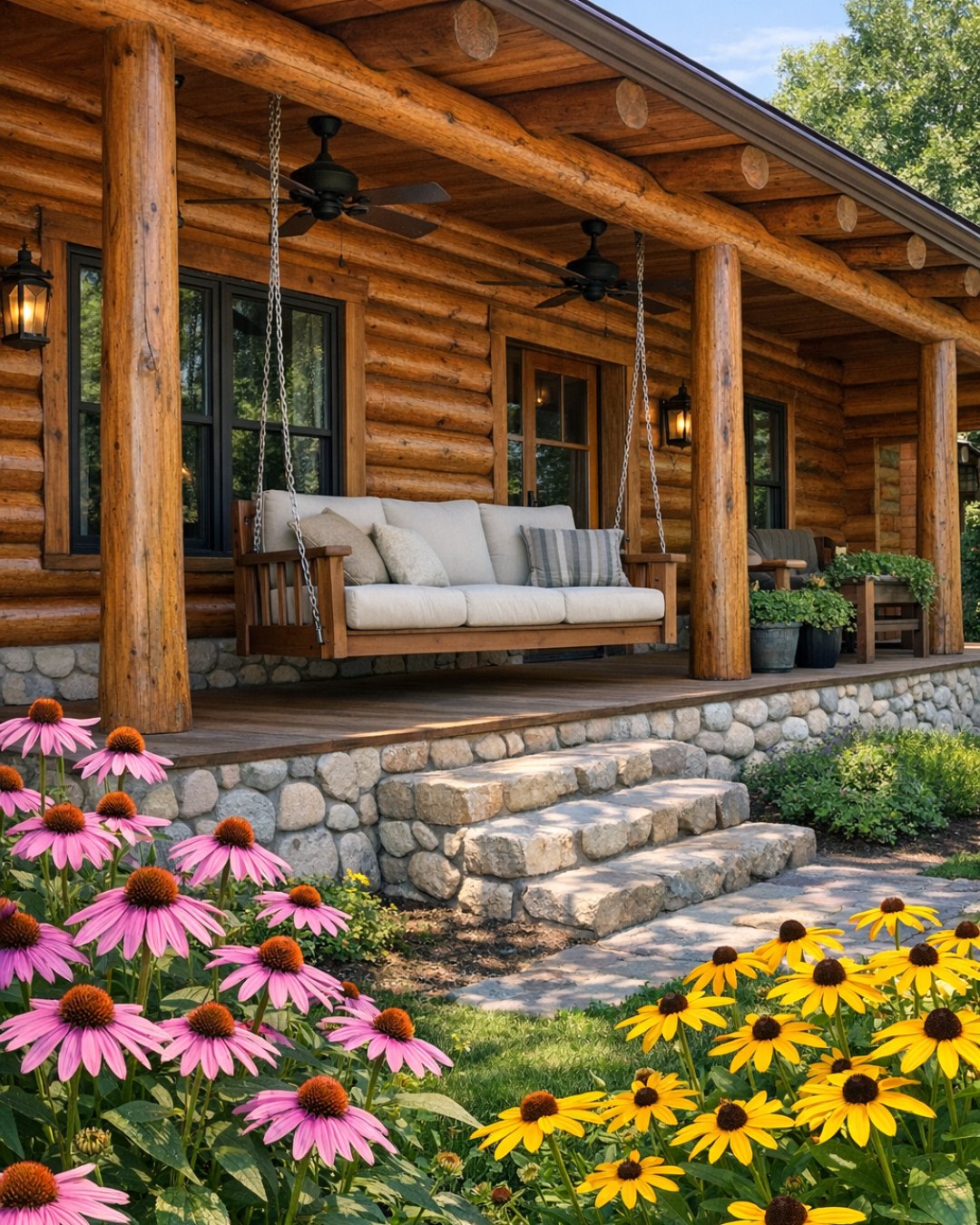
The exterior is all about the beauty of material done honestly. Those warm tamarack logs give the home a mellow nutmeg tone that glows especially well in natural light, and because the house stays single-level, the long horizontal lines make it feel welcoming rather than imposing. A low-pitched roof, deep overhangs, and a broad covered porch reinforce that relaxed profile, while thick timber posts and neatly detailed railings add a handcrafted rhythm across the façade.
I like that the rustic character is kept tidy and intentional. The stone foundation and chimney base anchor the house visually, giving the logs a sturdy counterpart in gray and taupe tones, while dark bronze window frames sharpen the whole composition. The landscaping would be simple and regional rather than fussy—native grasses, gravel paths, maybe a few evergreen shrubs—so the architecture stays the focus. It feels like a home that belongs to its setting and ages gracefully with it.
Living Room
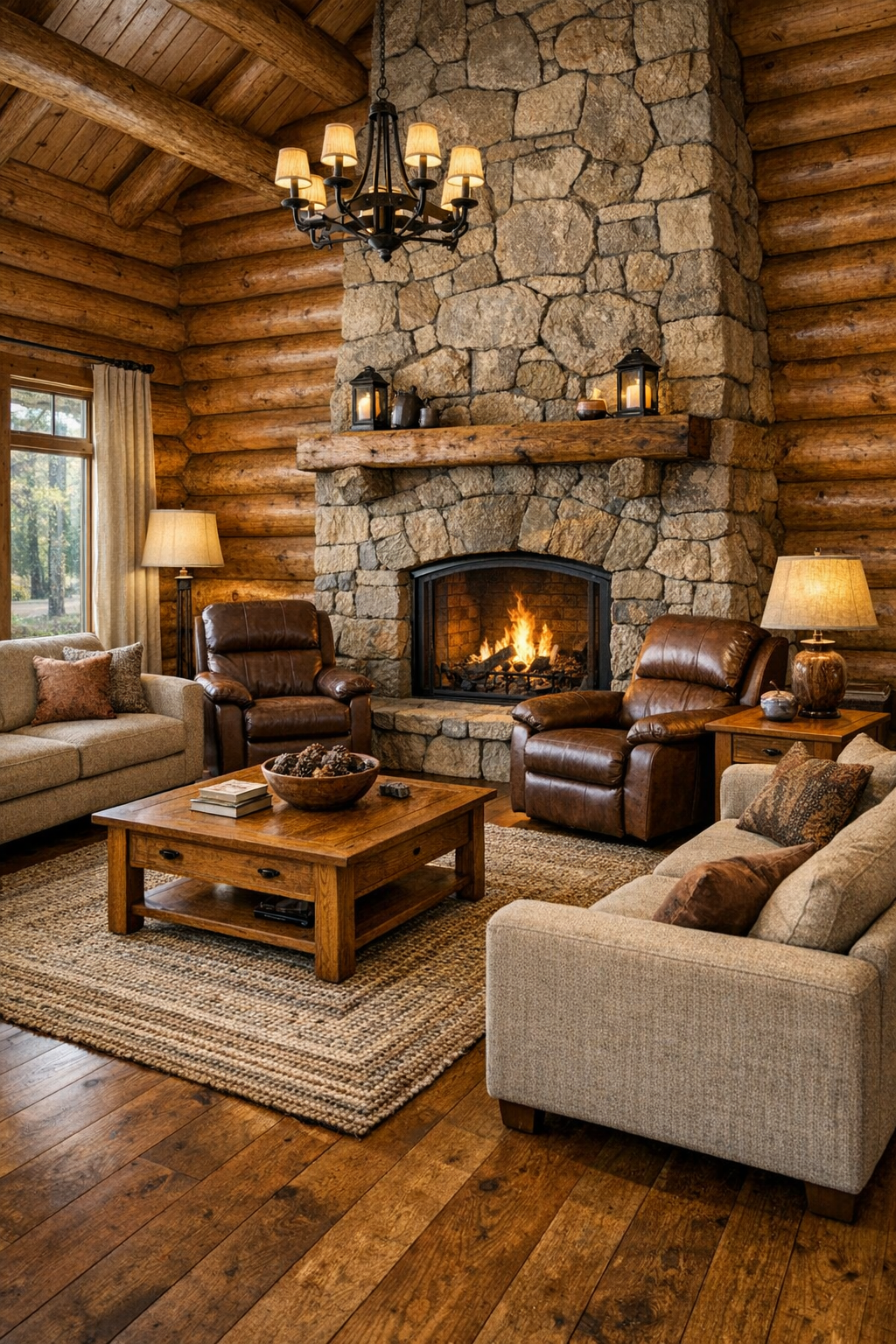
The living room centers the house with that unmistakable log-home warmth, but it avoids feeling heavy by using scale and light carefully. Nutmeg-toned log walls are paired with a lighter plank ceiling and wide wood floors in a matte finish, so the room still breathes. A substantial stone fireplace naturally becomes the anchor, with a thick reclaimed timber mantel and built-in cabinetry on either side that looks hand-fitted rather than factory made. I can already imagine tossing a blanket over the arm of the sofa here after a long workday and instantly feeling my shoulders drop.
Furniture leans classic and durable: deep upholstered sofas in oatmeal and warm flax, a pair of leather club chairs in a weathered saddle tone, and a hefty oak coffee table with visible joinery. The lighting is layered in a way I always appreciate in homes like this—iron sconces for glow against the logs, a central fixture with clean-lined lantern styling, and warm table lamps to soften the corners at night. Textures do a lot of work too, with woven wool rugs, nubby linen pillows, and simple cotton drapery that keeps the room polished without taking away from the wood.
Dining Room
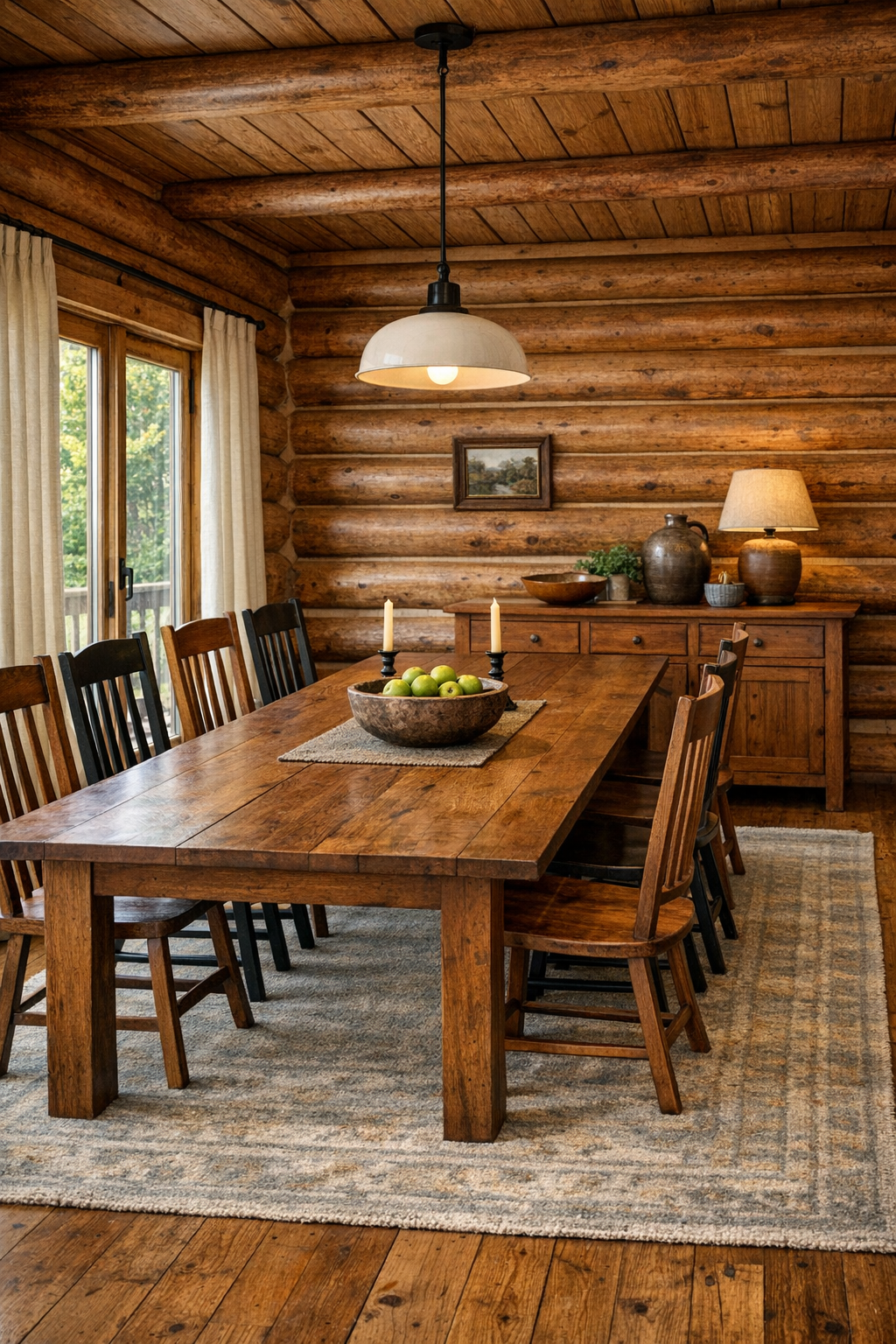
The dining room feels like it was designed for actual gathering, not just display, and that matters to me. At the center is a long solid-wood table with a beautifully rubbed finish, the kind of piece that can handle holiday meals, weeknight takeout, and a weekend baking project without losing its dignity. High-back dining chairs with simple spindle or slat detailing bring in that Amish clarity of line, and I love the way the room would likely stay visually open to the main living space while still feeling defined by a statement light fixture overhead.
The palette stays warm and natural, but with enough contrast to keep it interesting. A darker wood tone on the table can ground the room against lighter log walls, while a wool area rug beneath softens sound and adds pattern in a very understated way—maybe a muted stripe or small-scale geometric. A sideboard with inset-panel doors provides both storage and another opportunity to show off fine craftsmanship. This is the sort of room where serving a big pot of soup or setting out muffins for brunch would feel especially right, because the space itself invites people to linger.
Kitchen
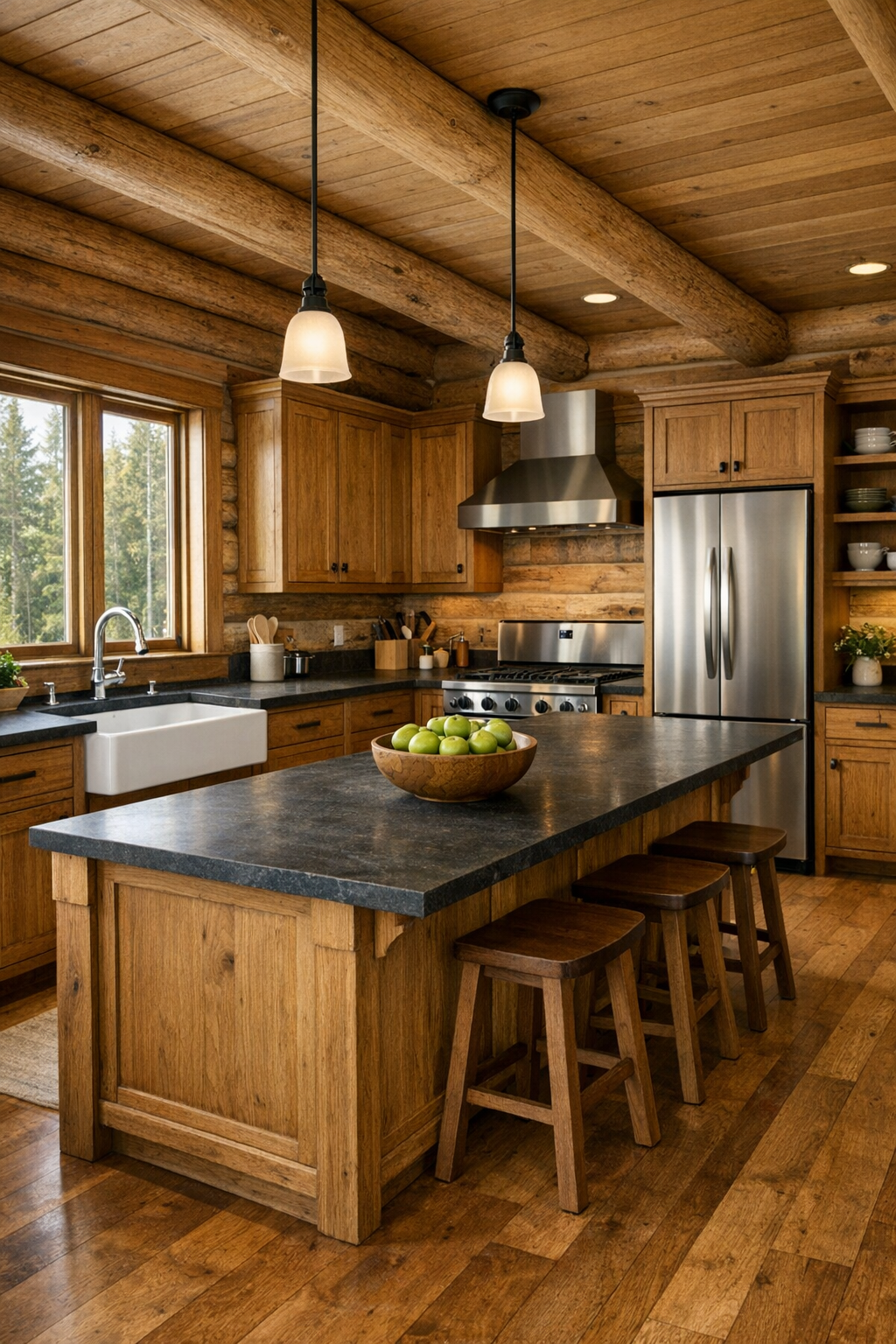
The kitchen is probably where I would fall hardest for this home, because it blends old-world craftsmanship with the kind of function a busy week actually needs. Custom wood cabinetry, likely in quartersawn oak or maple with a hand-finished stain, would bring that unmistakable furniture-quality look, while inset doors, exposed hinges, and carefully built drawers nod to Amish traditions without becoming overly formal. I picture a large central island with a thick butcher-block or honed stone top, enough room for meal prep, casual breakfasts, and that inevitable moment when everyone gathers in the kitchen no matter how much seating you planned elsewhere.
What keeps the room feeling current is the balance of texture and utility. Soapstone or leathered granite countertops would pair beautifully with the logs, and a white fireclay apron-front sink would lighten the visual weight of all the wood. Under-cabinet lighting, schoolhouse-style pendants, and maybe even glass-front uppers in select spots would stop the kitchen from reading too dark. I always think a great kitchen should make dinner feel less hectic, and this one really seems built for that, with generous pantry storage, broad work surfaces, and finishes that would only look better with use.
Bedroom
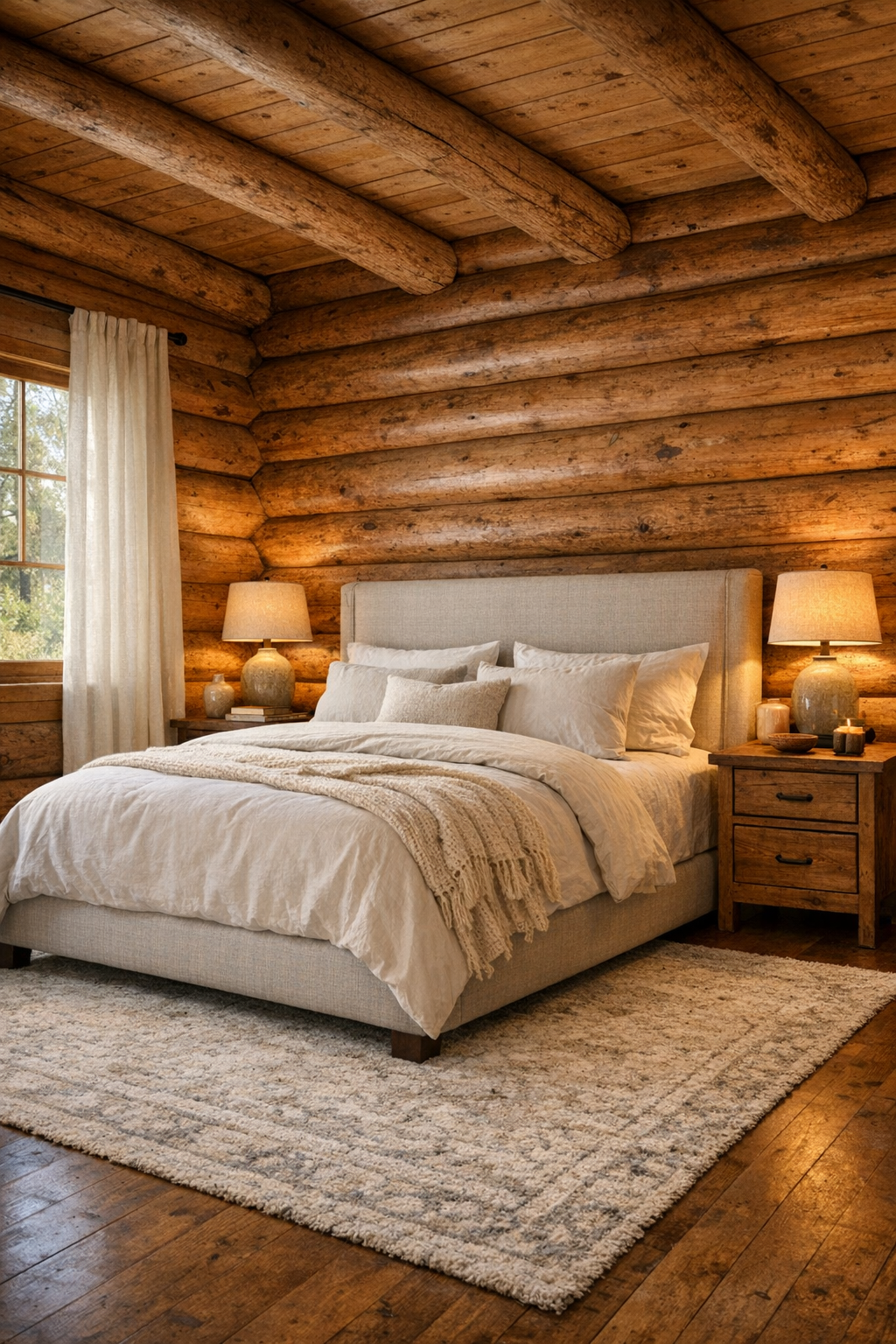
The bedroom takes the home's strongest materials and softens them into something deeply restful. Log walls remain visible, of course, but here they are balanced with a upholstered bed, crisp bedding in ivory and oat tones, and bedside tables with restrained handcrafted detailing. A plank ceiling, soft drapery, and a large area rug underfoot help quiet the room visually and acoustically, which is especially important in a wood-rich interior. The effect is cocooning without being dark, more like a retreat than a rustic theme.
I would keep the furniture simple and substantial: a well-made dresser, a bench at the foot of the bed, and perhaps a reading chair near a window if space allows. Lighting should stay warm and low-glare, with shaded bedside sconces or lamps that make the room feel relaxed at the end of the day. This is one of those bedrooms that reminds me good design is not always about adding more; sometimes it is about choosing fewer, better pieces and letting the craftsmanship speak. In a house like this, sleep would probably come pretty easily.
Bathroom
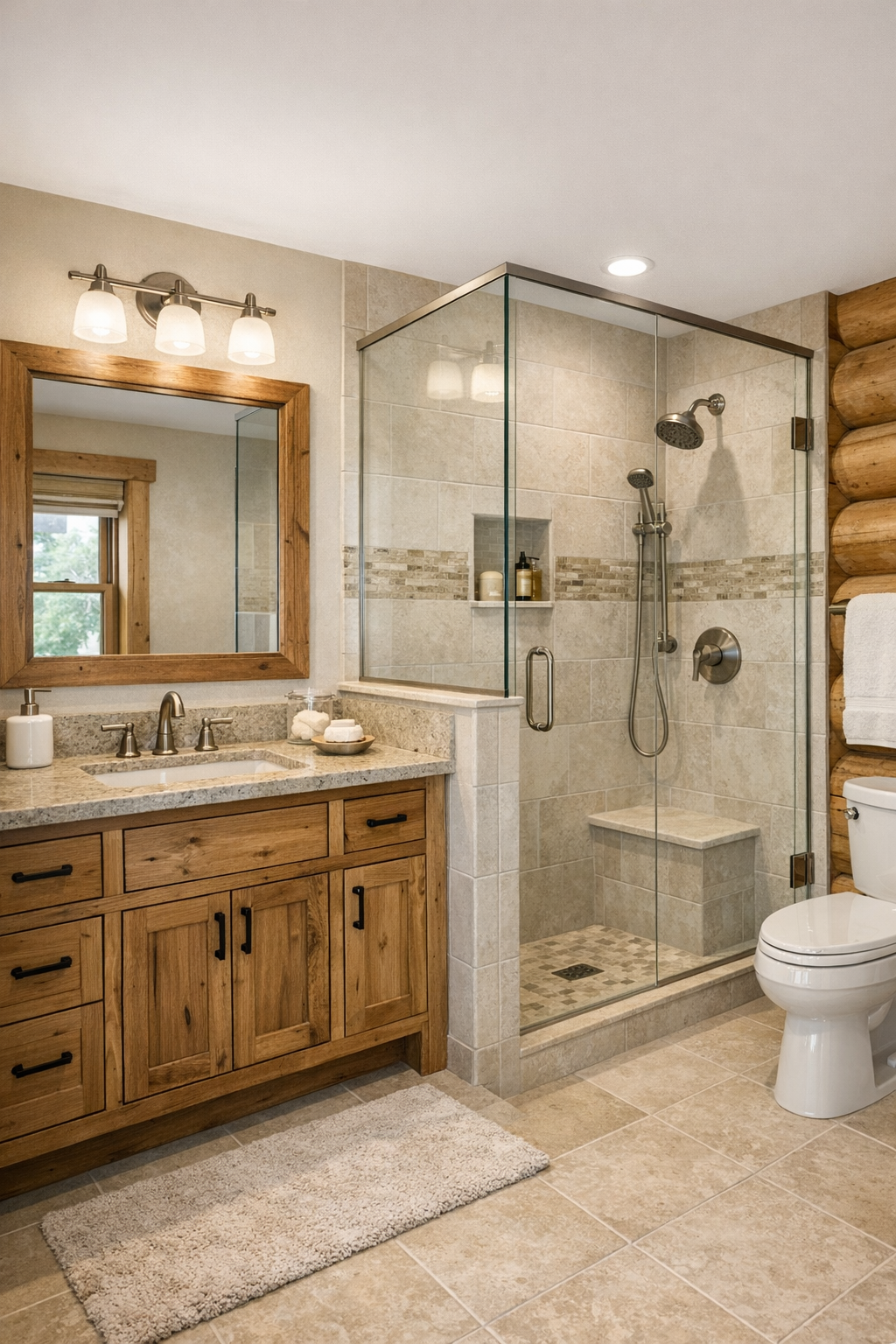
The bathroom continues the home's grounded, handcrafted approach, but with a slightly fresher, lighter touch. I imagine a vanity built like a fine piece of furniture, with paneled doors, sturdy drawers, and a stone countertop that can stand up to daily life while still looking elegant. The wood tones would be balanced by creamy wall finishes, brushed metal fixtures, and plenty of soft white in the tile, so the room feels clean and calming rather than overly cabin-like.
A walk-in shower with clear glass and large-format tile would help keep the space open, while details like a framed mirror, warm sconces, and neatly folded natural-fiber towels would add just enough softness. If there is a soaking tub, it should feel simple and architectural rather than ornate. I always notice when a bathroom feels easy to maintain and easy to use, and this one seems to understand that luxury can come from good proportions, durable materials, and a quiet sense of order.
Other Areas
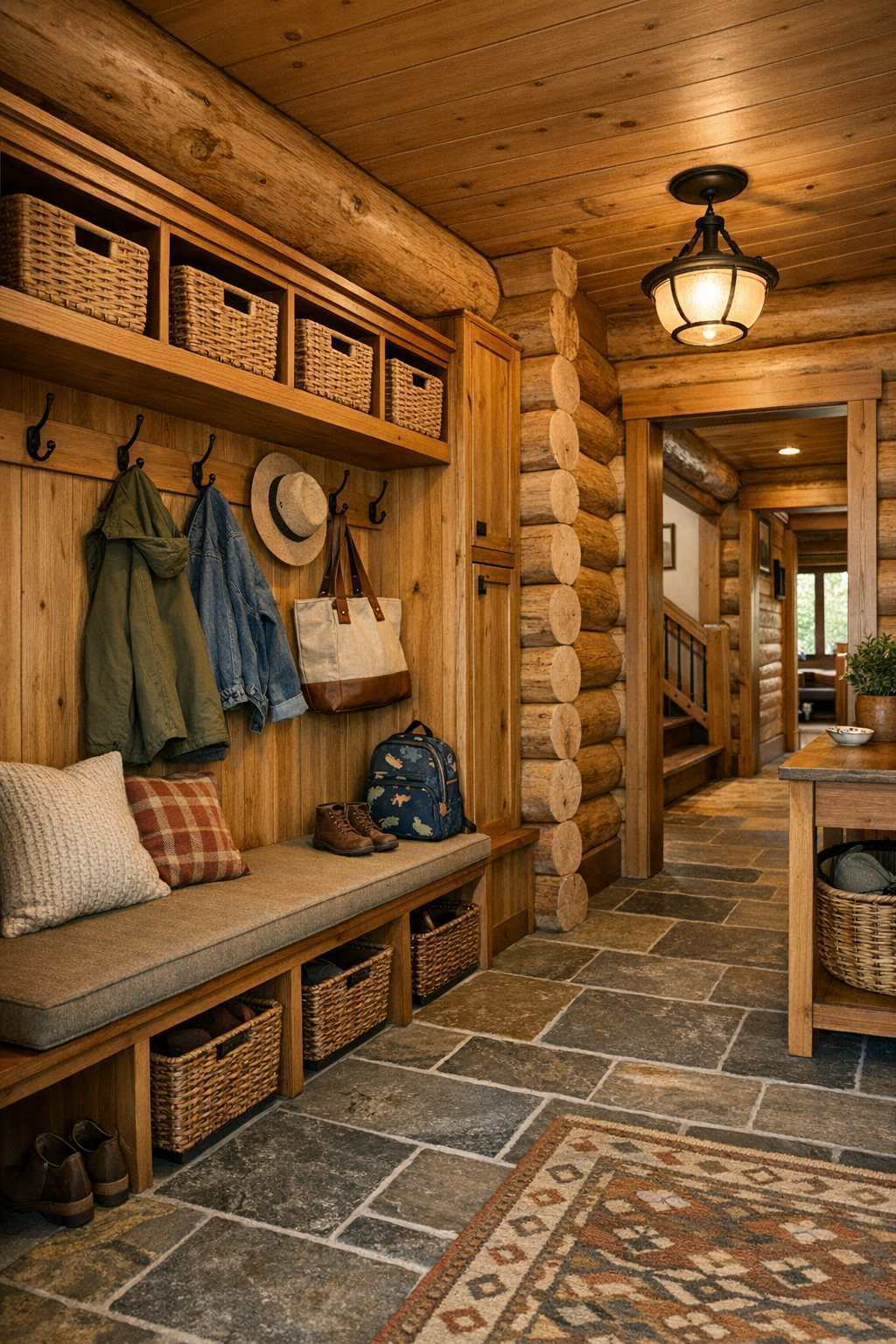
Because the home is single-level, the transitional spaces matter even more, and I love the opportunity that gives for thoughtful built-ins. Hallways can become moments of craftsmanship with pegged coat racks, linen storage, window seats, or low bookcases tucked beneath art and soft lighting. A mudroom near the entry would be especially practical here, with sturdy bench seating, cubbies, and easy-care flooring that can handle real Midwest weather. That kind of space always wins me over because it helps the rest of the house stay calm.
If there is a study nook, laundry room, or covered porch connection, I imagine each one carrying the same visual language: simple joinery, honest materials, and warm, useful light. Even a small laundry room could feel elevated with wood cabinetry, a folding counter, and black iron hardware, while a reading corner would only need a good chair, a lamp, and a view to feel complete. These supporting spaces are where a home quietly proves how well it understands daily life, and this one seems to do that beautifully.
Why You'd Live Here
You would live here for the warmth, of course, but also for the discipline behind that warmth. This home understands that beauty is not just about appearance; it is about usefulness, durability, and the feeling that every piece has been considered. The Amish artistry gives the house integrity, while the single-level layout makes it feel accessible, comfortable, and easy to inhabit every day.
For me, the real appeal is how effortlessly it supports a full life. It is polished without being precious, rustic without being rough, and timeless without feeling stuck in the past. I can picture coming home after a long day, setting groceries on that kitchen island, lighting a lamp in the living room, and feeling instantly settled. That is the kind of design that stays with you.