There’s a certain kind of peace a log home can offer before you ever set a pie plate on the counter or pull up a chair, and this single-level retreat understands that beautifully. Set against what feels like a quiet edge of meadow and timber, the house brings together warm subalpine fir logs, a long covered porch, and the sort of grounded proportions that make a place feel settled from the start. It has a calm, mountain-country dignity to it, but the heart of it is familiar rather than grand, with rooms that feel built for real living, shared meals, and the unhurried rhythm of home.
What makes this place special to me is the way its Amish craftsmanship softens the ruggedness of the log shell, giving the whole home a finer grain and a deeply human touch; even as a concept design, it feels rooted in memory. I can almost imagine the sound of a screen door, boots left by the threshold, and lamplight warming the wood at dusk. Nothing here chases fashion. Instead, every finish and furnishing seems chosen for honesty, comfort, and the kind of beauty that improves with use.
Exterior
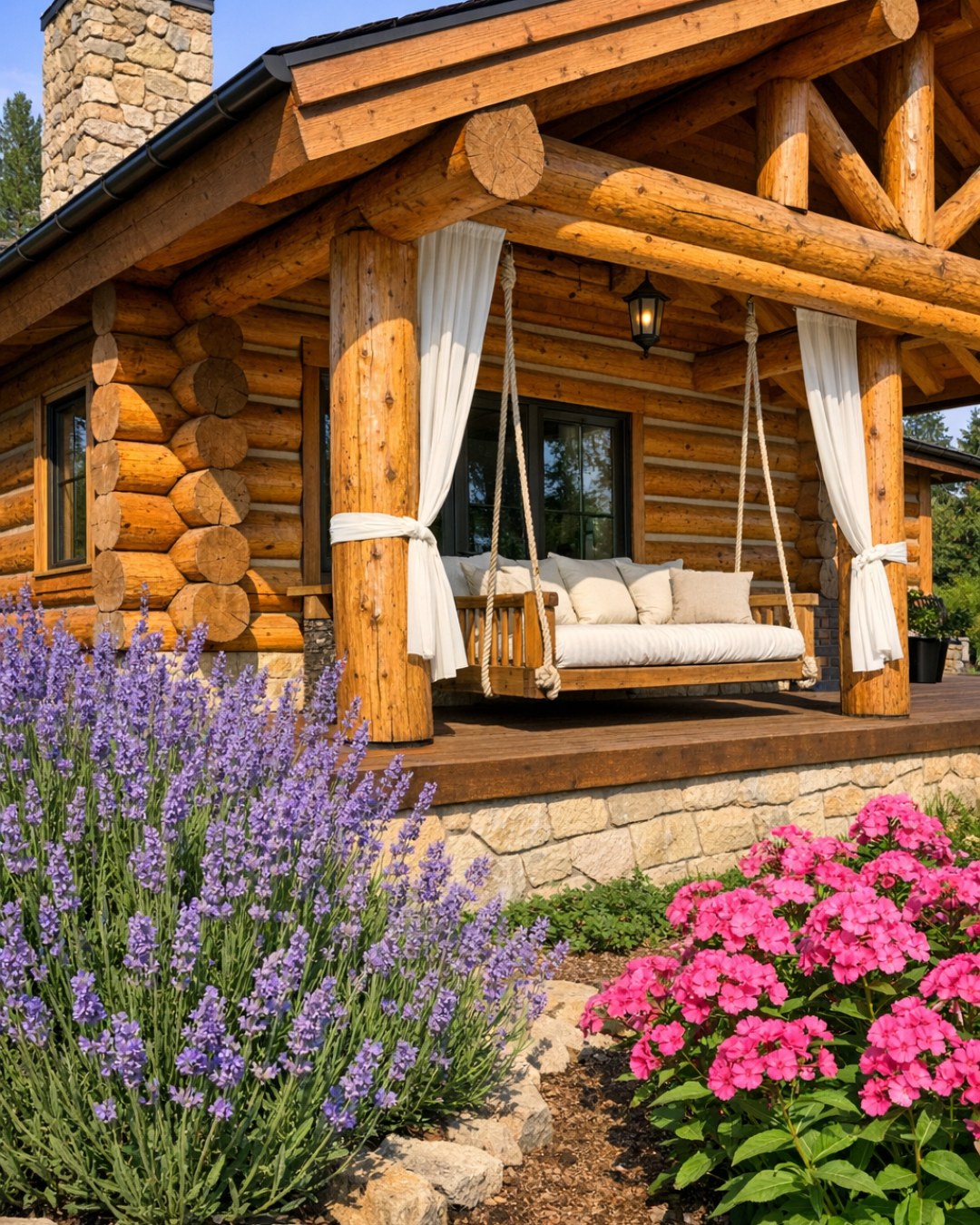
The exterior has that steady, reassuring presence I always admire in a well-composed log home. The subalpine fir logs glow in a honeyed range of tones, from pale wheat to deeper amber, and the chinking is kept neat and understated so the natural character of the wood stays front and center. A broad, extended covered porch stretches the face of the house and immediately changes the mood from simple shelter to true welcome. Thick timber posts, stone-based piers, and a gently pitched roofline give the façade weight and balance, while the single-level form keeps everything feeling accessible, practical, and close to the land.
I especially like the way the porch likely acts as an outdoor room, not just an architectural detail. With room for a pair of rockers, a porch swing, and a long bench near the entry, it invites the kind of daily life that spills naturally outside. Dark metal lanterns, sturdy wood doors, and divided-light windows bring just enough refinement to contrast with the rugged logs. The overall palette stays true to nature: warm wood, weathered stone, charcoal roofing, and a little black iron here and there. It’s a home that would look handsome in every season, from green summer mornings to the first hard frost.
Living Room
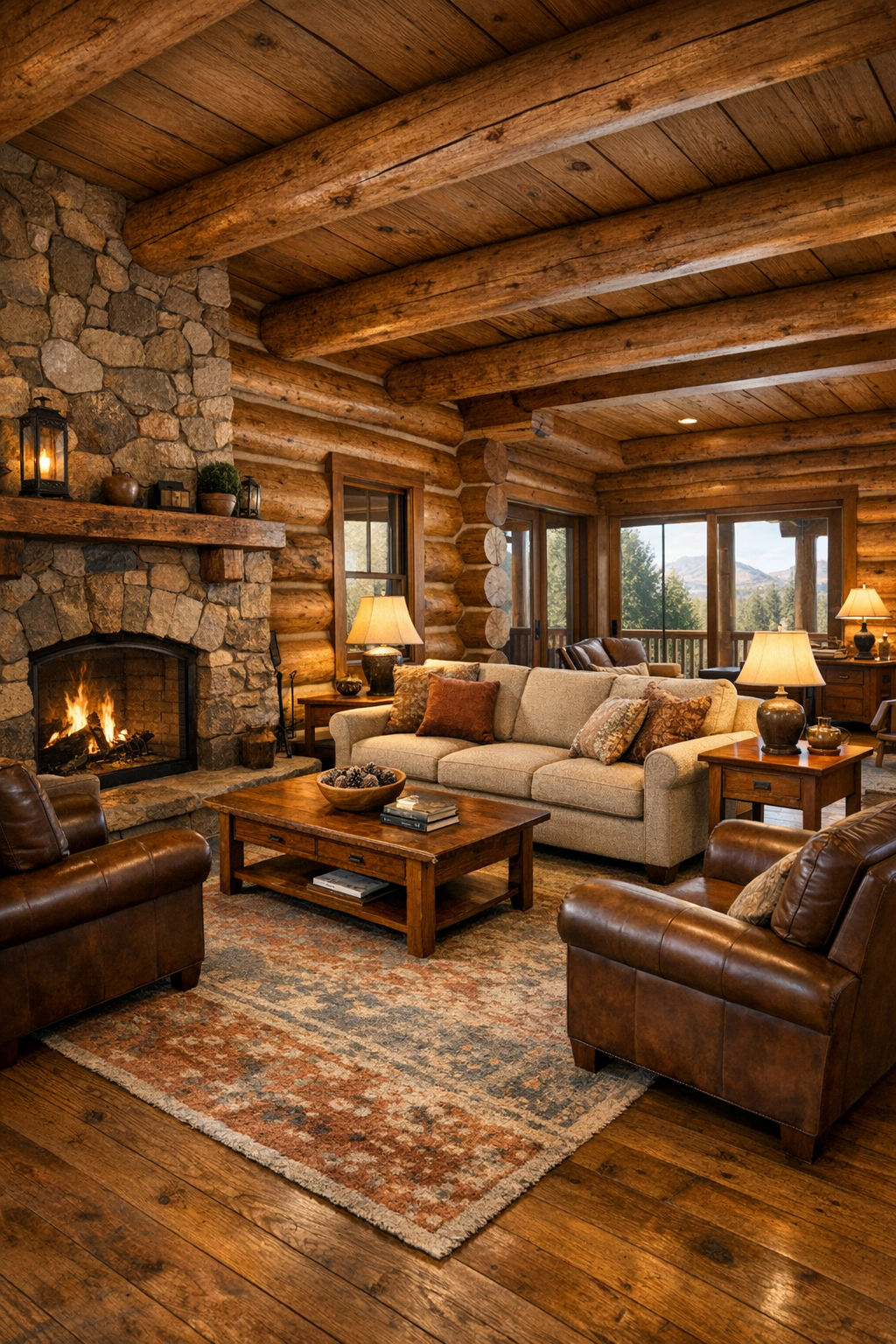
The living room feels like the natural center of the home, arranged for conversation, quiet evenings, and the kind of comfort that doesn’t need fuss. I picture exposed log walls paired with a plank ceiling and substantial hand-finished beams, all softened by Amish-built furniture in oak and cherry with a satin sheen. The seating would be generous but structured: a deep upholstered sofa in a flax or oatmeal fabric, a pair of leather chairs with simple lines, and a solid wood coffee table broad enough for books, mugs, and a plate of something fresh from the oven. Underfoot, a wool rug in muted rust, cream, and faded blue gathers the room and keeps all that wood from feeling too heavy.
Lighting matters in a room like this, and here it would be warm and layered rather than dramatic. I imagine iron chandeliers with amber glass, shaded table lamps on mission-style side tables, and daylight pouring in from well-placed windows that frame the landscape like paintings. A stone fireplace would anchor one wall, with a thick timber mantel displaying a few thoughtfully chosen pieces rather than clutter. The effect is sturdy, restful, and deeply welcoming, a room that honors craftsmanship without ever becoming stiff.
Dining Room
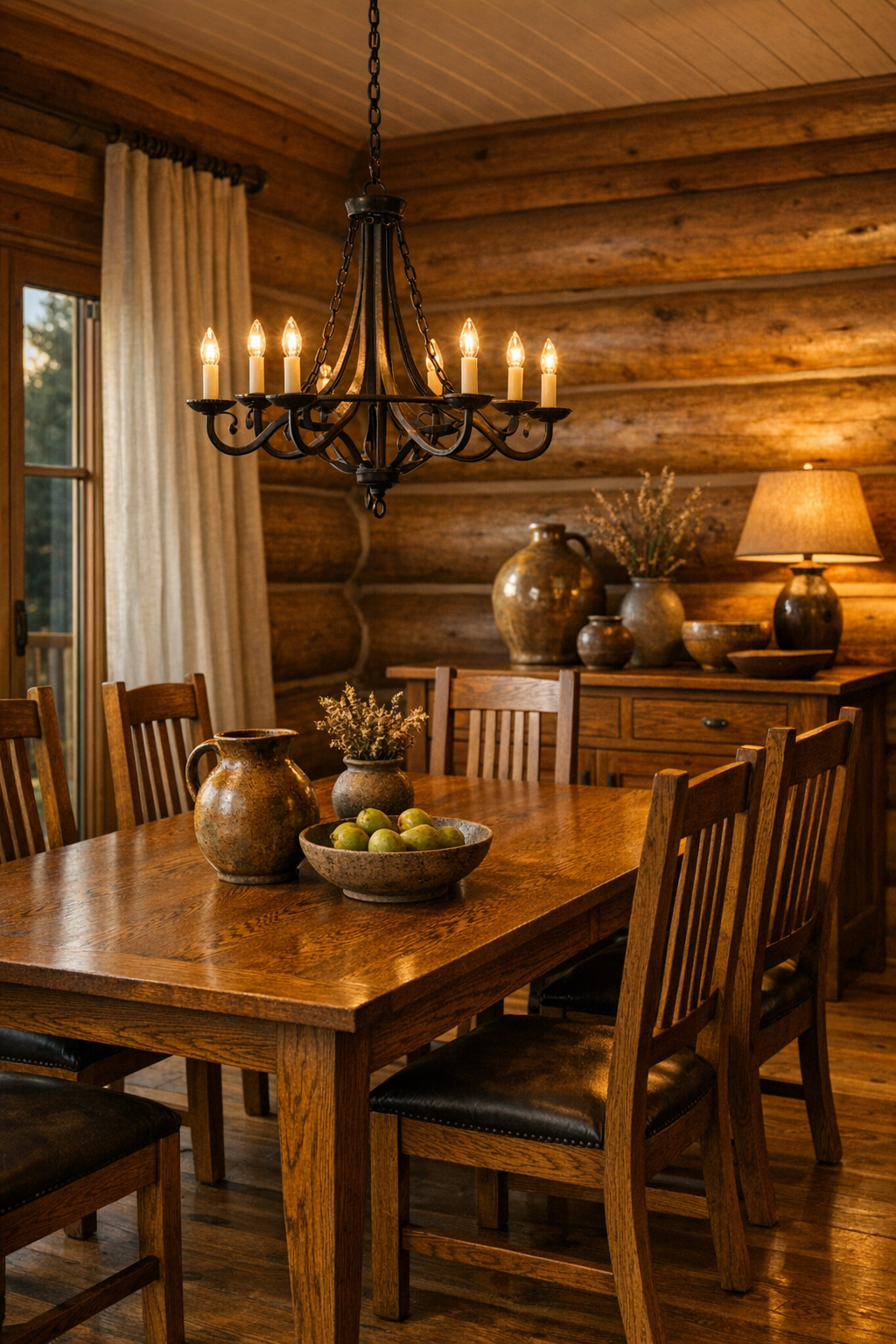
The dining room carries the same sense of permanence, but with a slightly more ceremonial feeling, the way a good dining space should. At its center, I see a substantial Amish-made table, probably in quarter-sawn oak, with breadboard ends and a finish that lets the grain do the talking. High-back chairs with shaped slats and simple upholstered seats keep it comfortable for long suppers and holiday meals alike. If the room sits between the kitchen and living areas, as I suspect it would in a sensible single-level layout, it likely benefits from easy flow while still feeling distinct through a hanging fixture, perhaps an iron chandelier centered over the table.
What would make this room sing is restraint. The log walls and wood trim already offer richness, so the supporting elements can stay quiet: linen drapery in natural tones, a sideboard with hand-planed detailing, and maybe a pottery bowl or vase of branches as the table’s only adornment. The light here would be golden and flattering, especially in the evening, when wood tones deepen and the room begins to feel almost like an heirloom itself. It’s the kind of dining room that asks people to linger, pass another helping, and tell one more story before getting up.
Kitchen
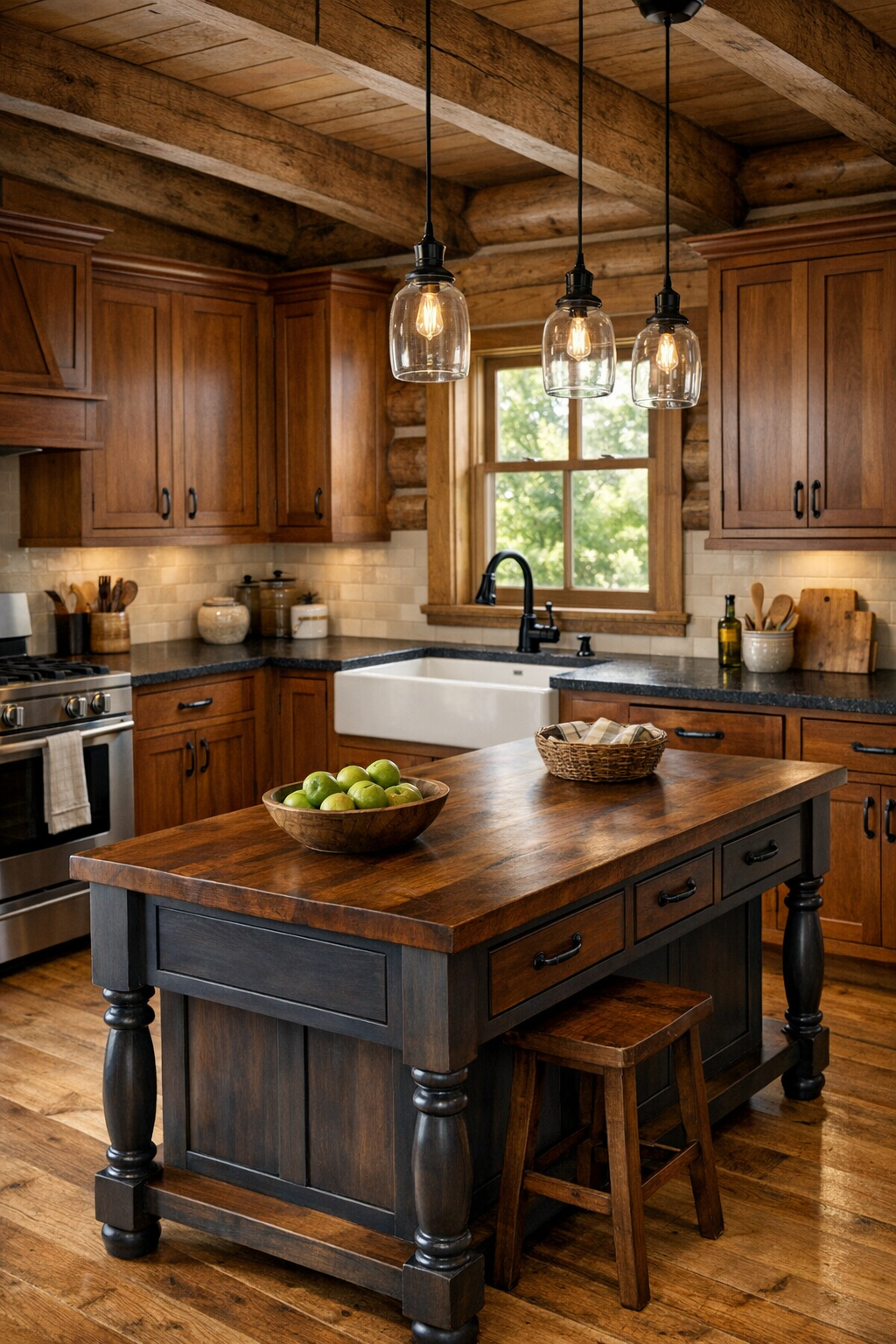
Now this is where my eyes go first, every time. A kitchen in a home like this ought to feel hardworking, generous, and beautifully made, and this one does. I imagine custom Amish cabinetry in stained maple or cherry, with inset doors, sturdy face frames, and old-fashioned hardware in oil-rubbed bronze or black iron. The countertops might be a mix of honed dark stone and butcher block, which would suit the house wonderfully and keep the room from feeling too polished. Open stretches of counter space, deep drawers, a proper pantry, and a farmhouse sink under a window would make the kitchen as useful as it is handsome.
The color palette would stay close to the home’s natural materials: warm wood, creamy walls or backsplash tile, and touches of charcoal, iron, and soft green. I’d love to see a central island with turned legs or a furniture-style base, something that echoes freestanding worktables from older homes. Pendant lights with simple glass shades could hang overhead, while under-cabinet lighting keeps prep areas practical. Altogether, it feels like a kitchen where bread could rise, soup could simmer, and every drawer and cupboard would open with that satisfying confidence of true craftsmanship.
Bedroom
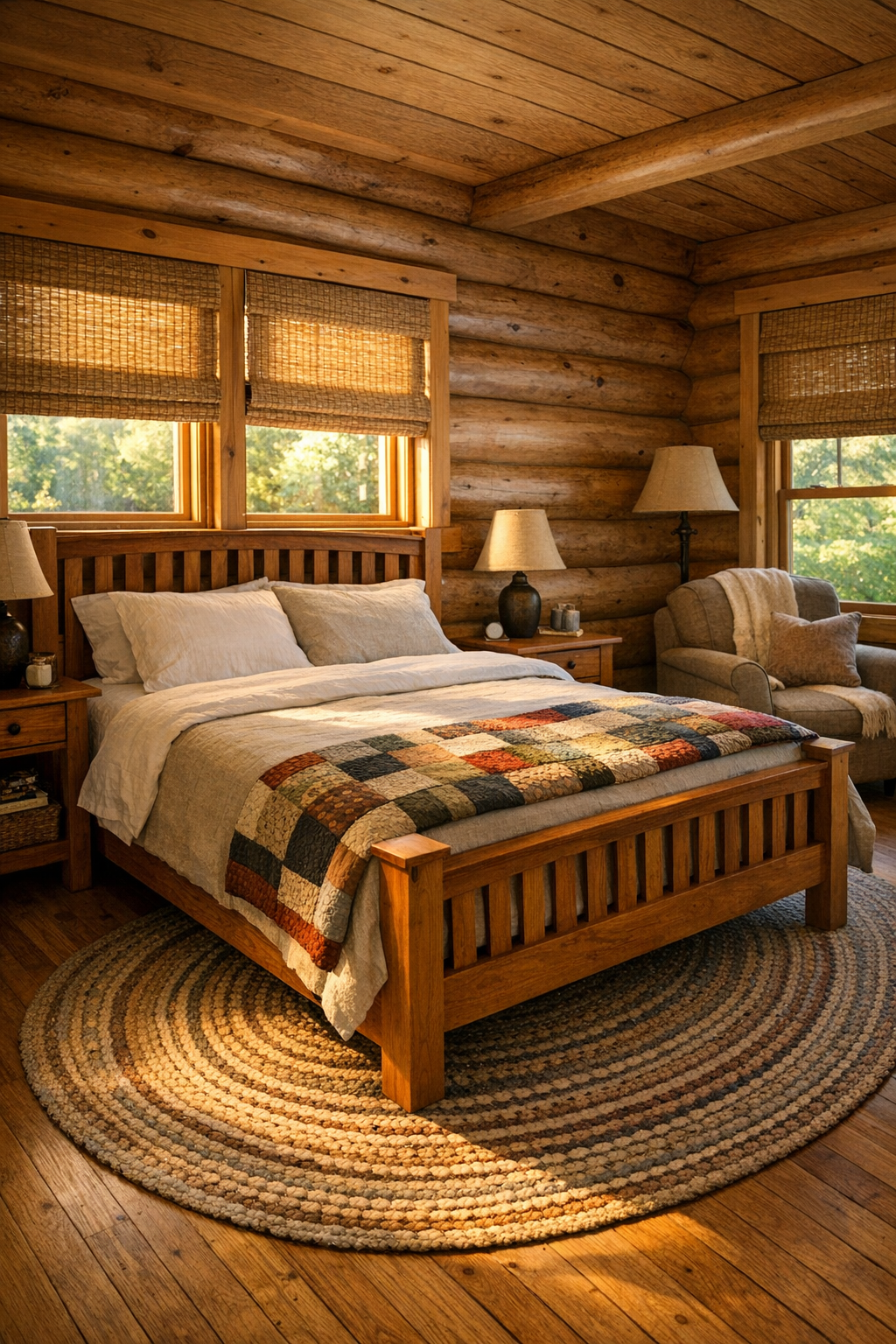
The bedroom, in my mind, would be one of the quietest and most soothing rooms in the house. With all the texture in the logs, the best approach is a softer hand: a handcrafted bed frame in cherry or oak, white or flax linen bedding, and a quilt folded at the foot for a touch of color and memory. I can almost see a patchwork pattern there, something subtle in blue, red, and cream, the sort of thing that nods to tradition without turning sentimental. Matching bedside tables, a tall dresser, and perhaps a small upholstered bench would furnish the room without crowding it.
Light would be filtered and gentle, coming through woven shades or simple drapery panels that keep the mood restful. The wood ceiling overhead could be left natural, while the floor might be softened by a braided rug or low-pile wool carpet near the bed. A reading chair in one corner and a modest lamp nearby would make the room feel lived in rather than staged. This is the sort of bedroom that lowers your shoulders the minute you walk in, a room that understands rest as a real necessity, not a luxury.
Bathroom
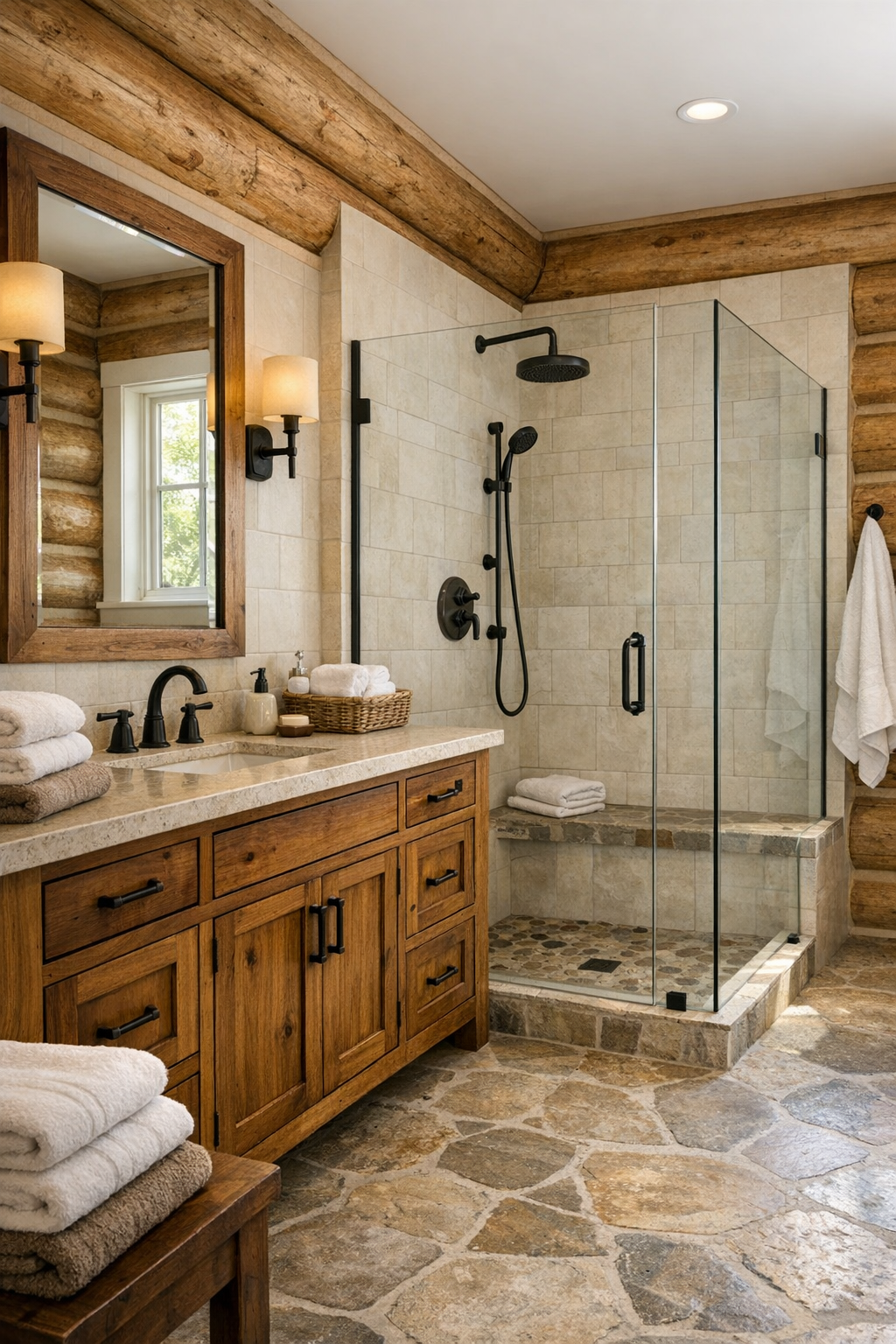
The bathroom would need to balance rustic character with plain good sense, and I think it would do that beautifully. Rather than leaning too lodge-like, I’d expect a cleaner, more tailored approach: a solid wood vanity with recessed-panel doors, stone or quartz counters, and wall-mounted sconces that cast flattering light. The wood tones would relate back to the rest of the house, while painted surfaces in warm cream or pale greige keep the room fresh. If there’s tile, I imagine it in simple forms such as subway, square, or small hex, with natural stone underfoot adding just enough texture.
A walk-in shower with clear glass would preserve the openness of the room, and a soaking tub tucked near a window would make the most of the home’s serene setting. Black or oil-rubbed bronze fixtures would give the space definition without overpowering it. Plush towels, a woven basket, and perhaps a small wooden stool for practical charm would finish things off. It’s a bathroom that feels honest and restorative, polished in the best sense, and very much in keeping with the home’s handmade spirit.
Other Areas
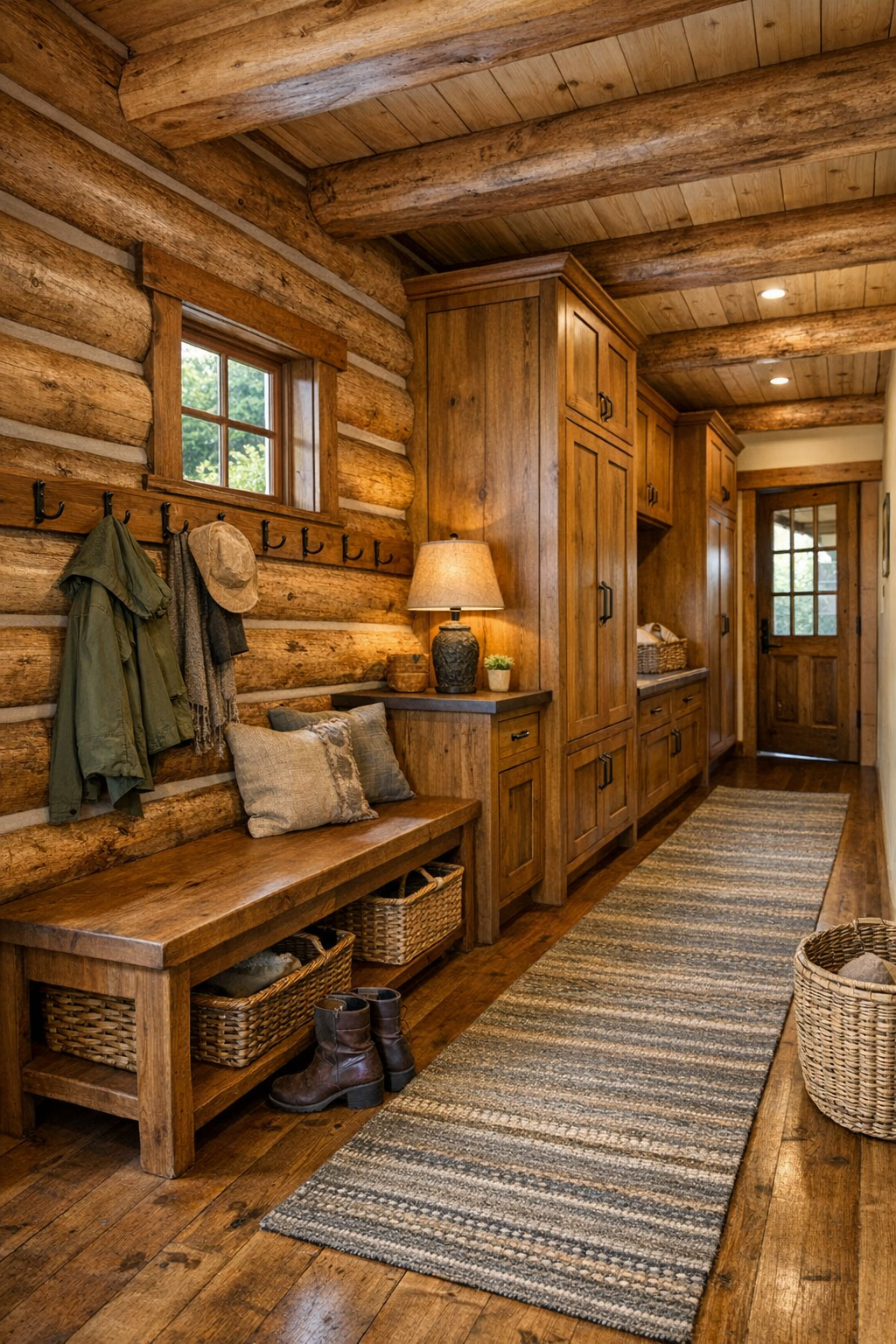
What often makes a single-level home truly successful are the in-between spaces, and I suspect this house handles them with a great deal of care. A front entry with a stout bench, pegs for coats, and a durable runner would set the tone right away. Hallways would likely be kept wide enough to feel gracious, with the same quality millwork and log detailing continuing throughout so nothing feels secondary. If there’s a mudroom or utility space, I’d want to see built-in cabinetry, a deep sink, and maybe cubbies or baskets, all done with the same thoughtful Amish precision as the main rooms.
There may also be a breakfast nook, reading corner, or small office area tucked beside a window, each one modest in scale but rich in usefulness. I always appreciate when these quieter zones receive proper lighting and good furniture instead of leftovers, and this home feels like it would understand that principle. A narrow console, a ladder-back chair, a built-in bookcase, or even a simple chest beneath a window could be enough to make these spaces feel finished. They round out the house with practicality and grace, proving that craftsmanship matters just as much in the everyday corners as it does in the showpiece rooms.
Why You'd Live Here
You’d live here because it offers something that’s getting harder to find: a home that feels sturdy, sincere, and deeply comforting without sacrificing beauty. The single-level layout makes daily life easier, the covered porch extends living outdoors in the gentlest way, and the subalpine fir logs give every room a natural warmth that can’t be manufactured. Most of all, the Amish craftsmanship lifts the house beyond rustic fashion into something enduring, where joinery, proportion, and material all work together quietly.
To me, this home feels like a place where life would settle into good habits. You could cook here, host here, rest here, and watch the seasons turn from that porch with a cup in your hand. It honors tradition without becoming trapped in it, and that’s a rare balance. In all the best ways, it seems built not just to impress for an afternoon, but to hold a lifetime of ordinary, lovely days.