This single-level log home wraps you in warmth before you even cross the threshold. Built around rich ponderosa pine logs and shaped by the quiet confidence of Amish craftsmanship, it feels rooted, honest, and deeply comforting. Set against a peaceful natural backdrop, the house has that rare quality I always hope for in a family home: it feels sturdy and welcoming at the same time, with every beam, board, and built-in detail working together to create a calm, grounded mood.
What makes this home especially memorable is the way it balances rustic character with everyday ease, all within a thoughtful concept design. I can picture muddy boots by the door, a pot of soup simmering in the kitchen, and a dining table full of people lingering long after dessert. There is nothing flashy here, and that is exactly the point—the beauty comes from natural materials, handcrafted details, and rooms that seem made for real life.
Exterior
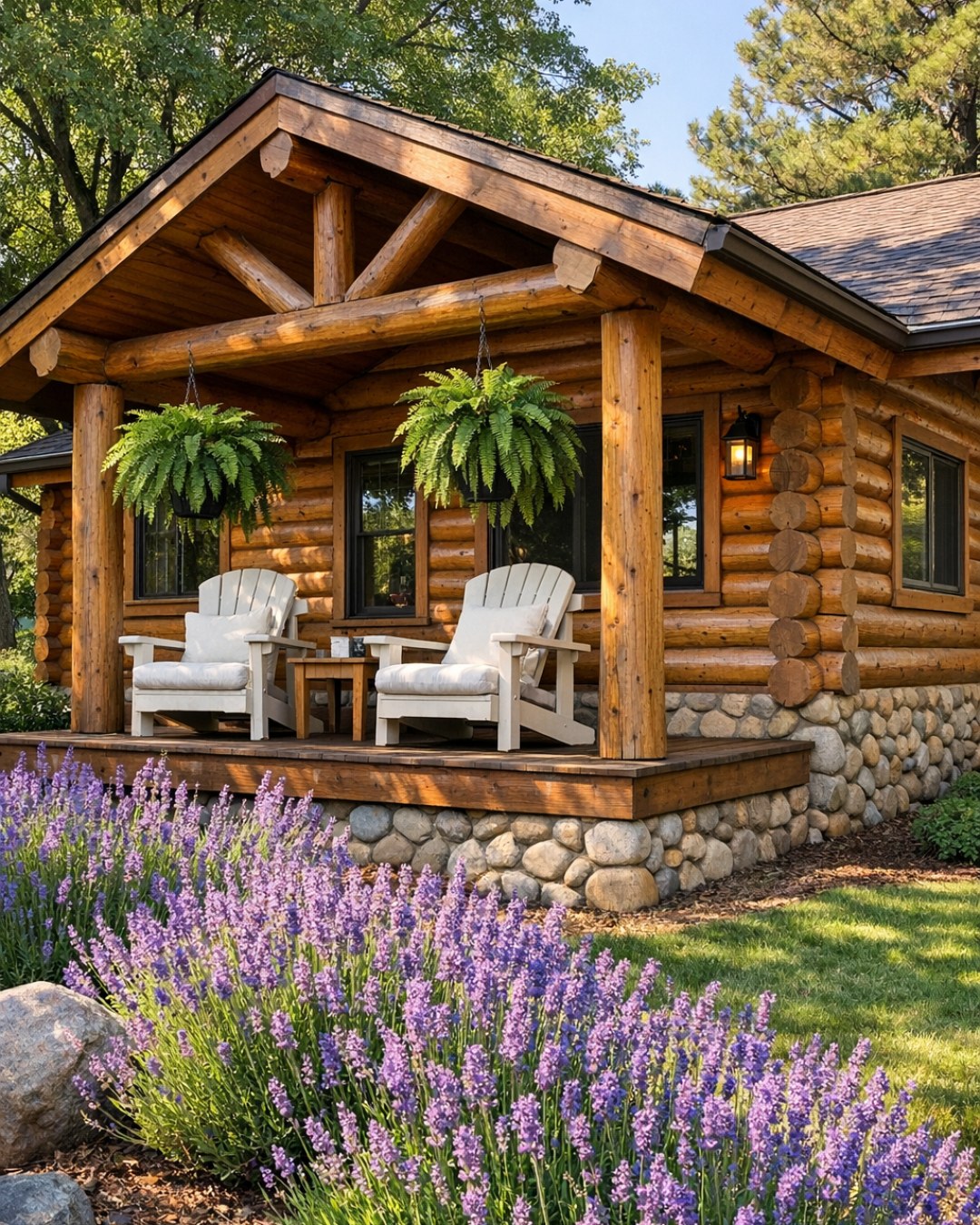
From the outside, the home has that timeless log-cabin silhouette, but it feels more refined than rugged. The warm ponderosa pine logs have a honeyed tone that glows beautifully in changing light, and the careful joinery gives the whole structure a tailored, handcrafted look. A low, single-level profile keeps the house feeling approachable and easy to live in, while a broad front porch softens the facade and adds the kind of everyday charm that invites a pair of rocking chairs and a basket of blankets.
Stone accents at the foundation and chimney ground the wood-heavy exterior with a sense of permanence, and the roofline is simple and sheltering rather than dramatic. Dark window trim adds gentle contrast, helping the glass stand out against the golden logs, and the entry door feels substantial in the best way—solid, welcoming, and made to last. I especially love how the home avoids overcomplicating the rustic style; it lets the grain of the wood, the depth of the logs, and the craftsmanship do all the talking.
Living Room
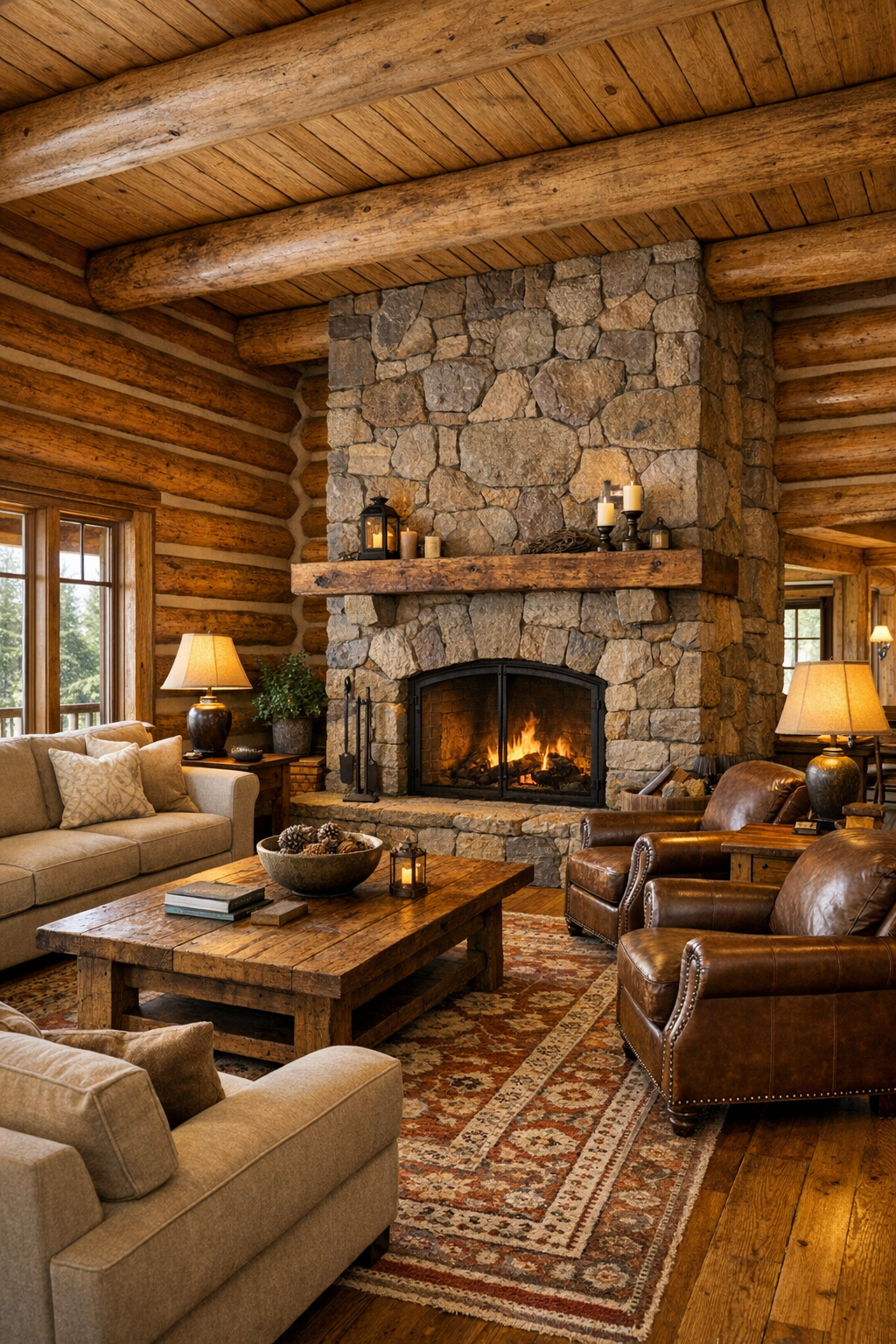
The living room is the heart of the house, with exposed log walls, substantial ceiling beams, and a stone fireplace that immediately becomes the natural gathering point. The palette stays warm and easy on the eyes: caramel wood tones, soft oatmeal upholstery, muted plaid accents, and a few leather pieces that add depth without making the room feel formal. A large area rug in a faded pattern helps quiet all that wood and gives the seating arrangement a softer, more settled feeling underfoot.
I can imagine this room working beautifully for both busy family nights and slower weekends. Deep sofas and generous armchairs are arranged close enough for conversation, with sturdy wood side tables perfect for mugs of cocoa, board games, or a plate of cookies. The lighting is layered in a very livable way—an iron chandelier overhead, warm-shaded table lamps near seating, and the flicker of firelight reflecting off the pine walls. For families with picky eaters or kids who like to snack while everyone watches a movie, I would absolutely want an oversized coffee table here with room for little trays and easy cleanup.
Dining Room
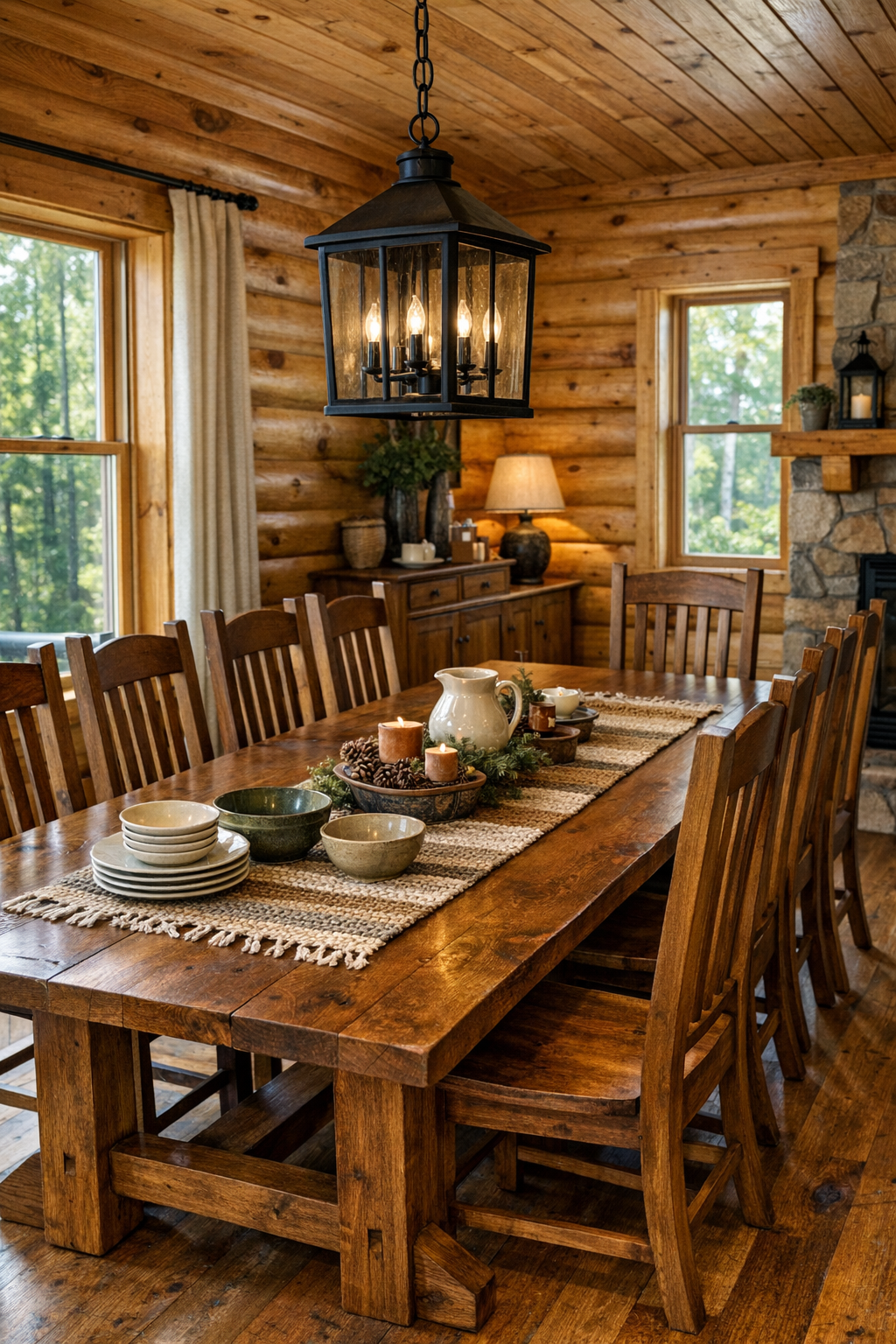
The dining room carries the same handmade spirit, and to me it feels like a room designed for long meals and second helpings. A substantial Amish-crafted wood table anchors the space, likely in a medium-stained oak or maple finish that complements the pine around it without disappearing into it. High-back chairs with simple lines keep the room classic, while a woven runner, ceramic serving pieces, and a softly textured rug underneath make it feel cared for rather than staged.
What I appreciate most is the room's sense of closeness without crowding. There is enough breathing room to move around the table comfortably, bring dishes in from the kitchen, and pull up an extra chair when needed. Overhead, a modest iron or lantern-style fixture casts a warm pool of light that would make even a simple weeknight meal feel special. If I were serving a mixed crowd here, I would already be thinking about a build-your-own dinner setup at the table—something cozy and flexible that suits both adventurous eaters and the ones who just want the buttered noodles.
Kitchen
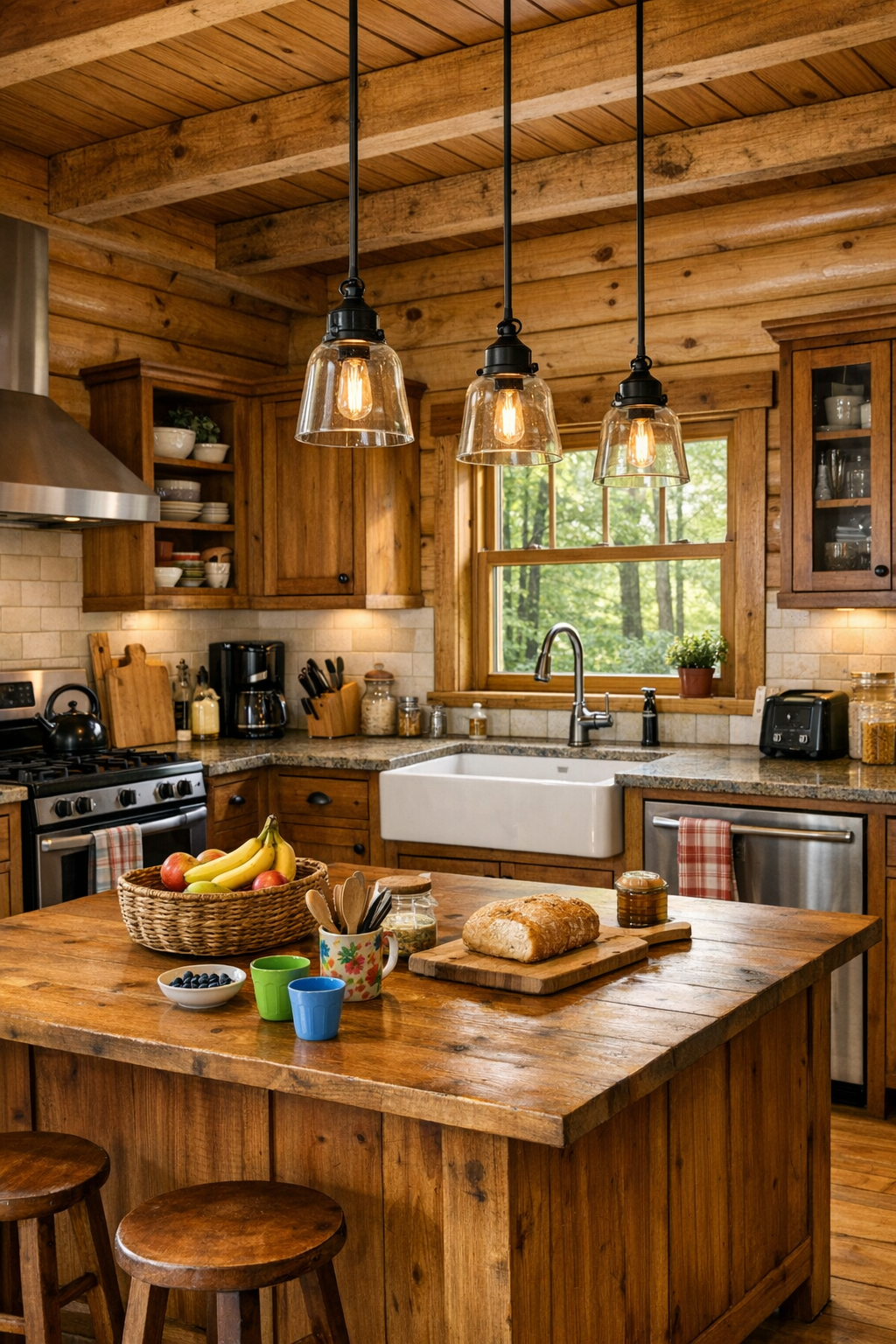
The kitchen is where this home really wins me over. It blends practical family function with beautiful workmanship, using solid wood cabinetry, likely custom built, with simple panel fronts and a finish that highlights the natural grain. Stone or soapstone-style countertops add a slightly cooler note against all the warm wood, and a classic tile backsplash keeps the room clean and timeless. Open stretches of counter space matter in a house like this, especially if you are rolling dough, setting out toppings, or trying to keep one meal simple while making a small variation for a picky eater.
The layout feels efficient and welcoming, with an island or peninsula creating a natural place for conversation while someone cooks. I can picture pendant lighting with metal shades above the work area, a deep farmhouse sink under a window, and sturdy hardware that feels good in your hand. The appliances are likely integrated in a way that does not interrupt the rustic character, which I always think is the right move in a log home. This is the kind of kitchen where a simmering stew, fresh bread, and a plate of cut fruit could all live happily side by side without the room feeling busy.
Bedroom
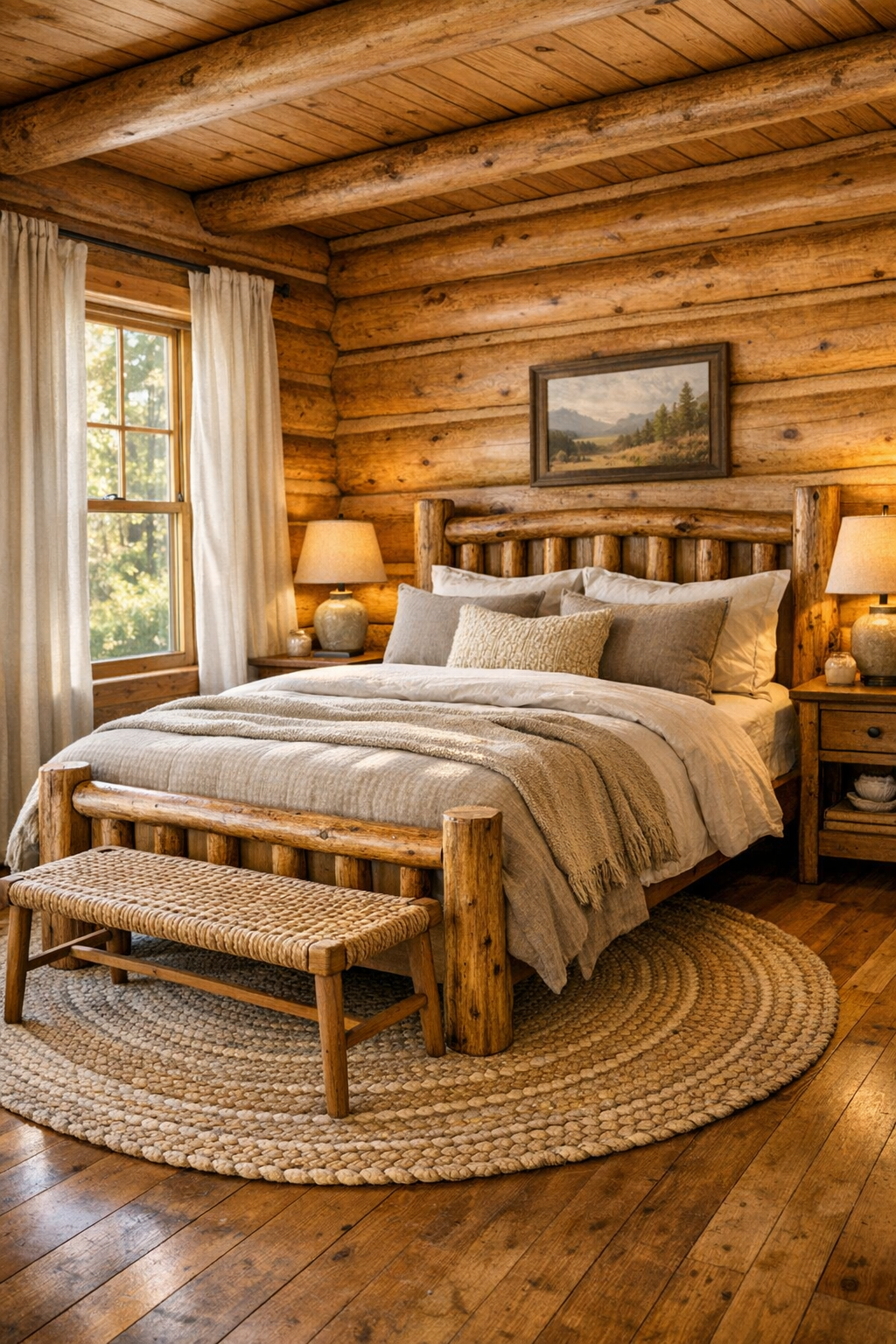
The bedroom takes the home's rustic language and quiets it down in the loveliest way. The log walls remain a strong visual element, but softer textiles help the room feel restful rather than heavy. A substantial wood bed frame, likely handmade to match the home's other millwork, is dressed in layered neutral bedding—cream, sand, and soft gray—with maybe a quilt folded at the foot for that extra note of comfort. Bedside tables are simple and sturdy, and the lighting stays gentle with warm lamps rather than anything too bright or modern.
I like that this room does not try too hard. It relies on texture more than decoration: linen, wool, cotton, smooth wood, and perhaps a braided rug or woven bench to break up the wood floor. Window treatments in a natural fabric filter the light instead of blocking it harshly, giving the whole room a hushed, early-morning glow. In a home with so much character, this kind of restraint is smart—it lets the craftsmanship shine while still making the bedroom feel like a true retreat at the end of a full day.
Bathroom
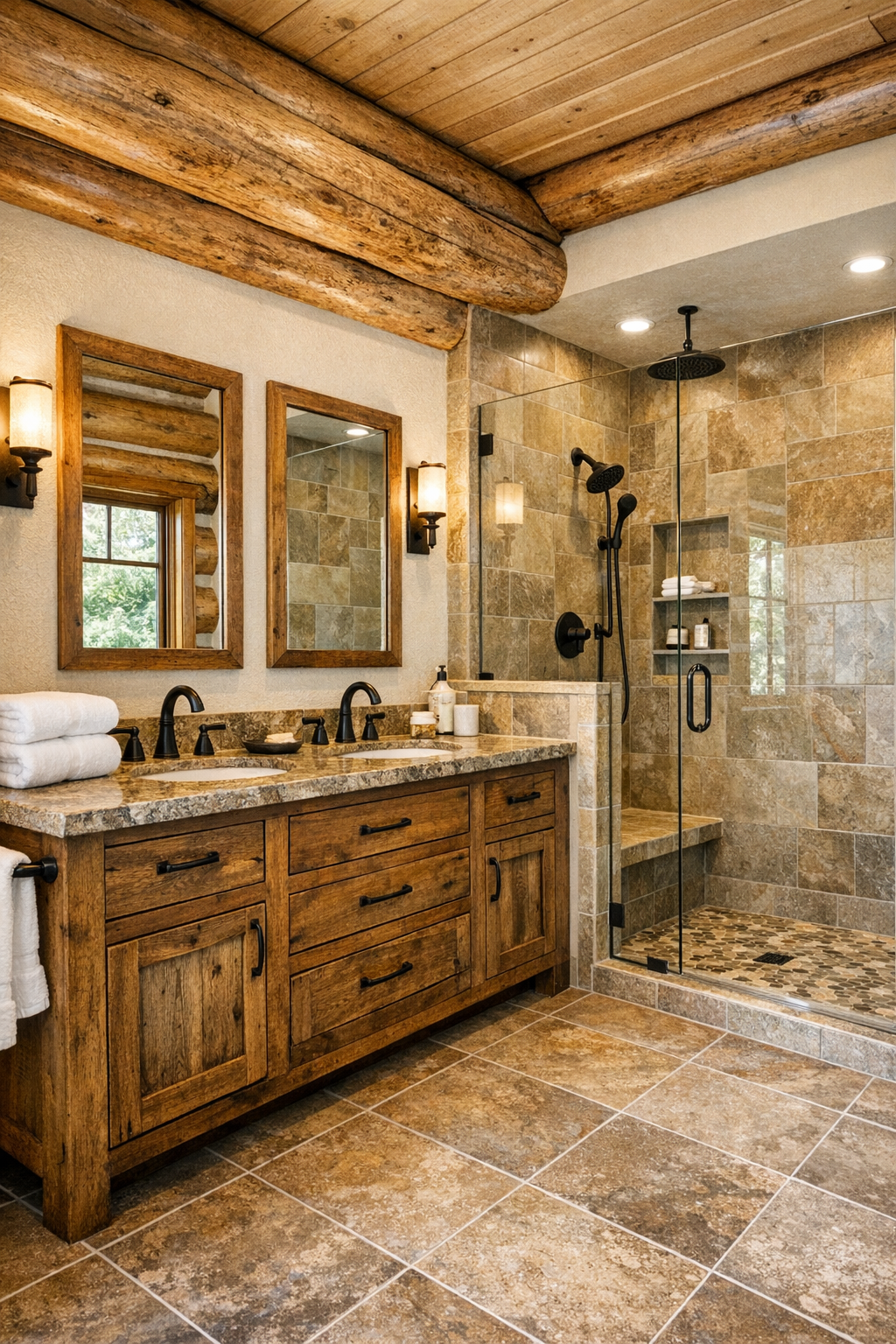
The bathroom continues the home's warm, handmade atmosphere but introduces a little more contrast and polish. Wood cabinetry or a custom vanity brings in that familiar crafted feel, while stone counters, matte metal fixtures, and tiled surfaces give the room a cleaner, more tailored edge. I can easily picture a walk-in shower lined in soft earth-toned tile, maybe with a built-in niche and a glass enclosure that keeps the room open instead of chopping it up visually.
What keeps it from feeling too rustic is the balance of textures. Smooth stone, crisp white towels, and simple mirrors help freshen the heavier wood tones, and good lighting around the vanity would make everyday routines easier. If there is a soaking tub, it would feel especially inviting tucked near a window, with enough ledge space for a candle or a folded hand towel. It is the sort of bathroom that feels practical first, but still soothing enough to make a quick evening reset feel like a treat.
Other Areas
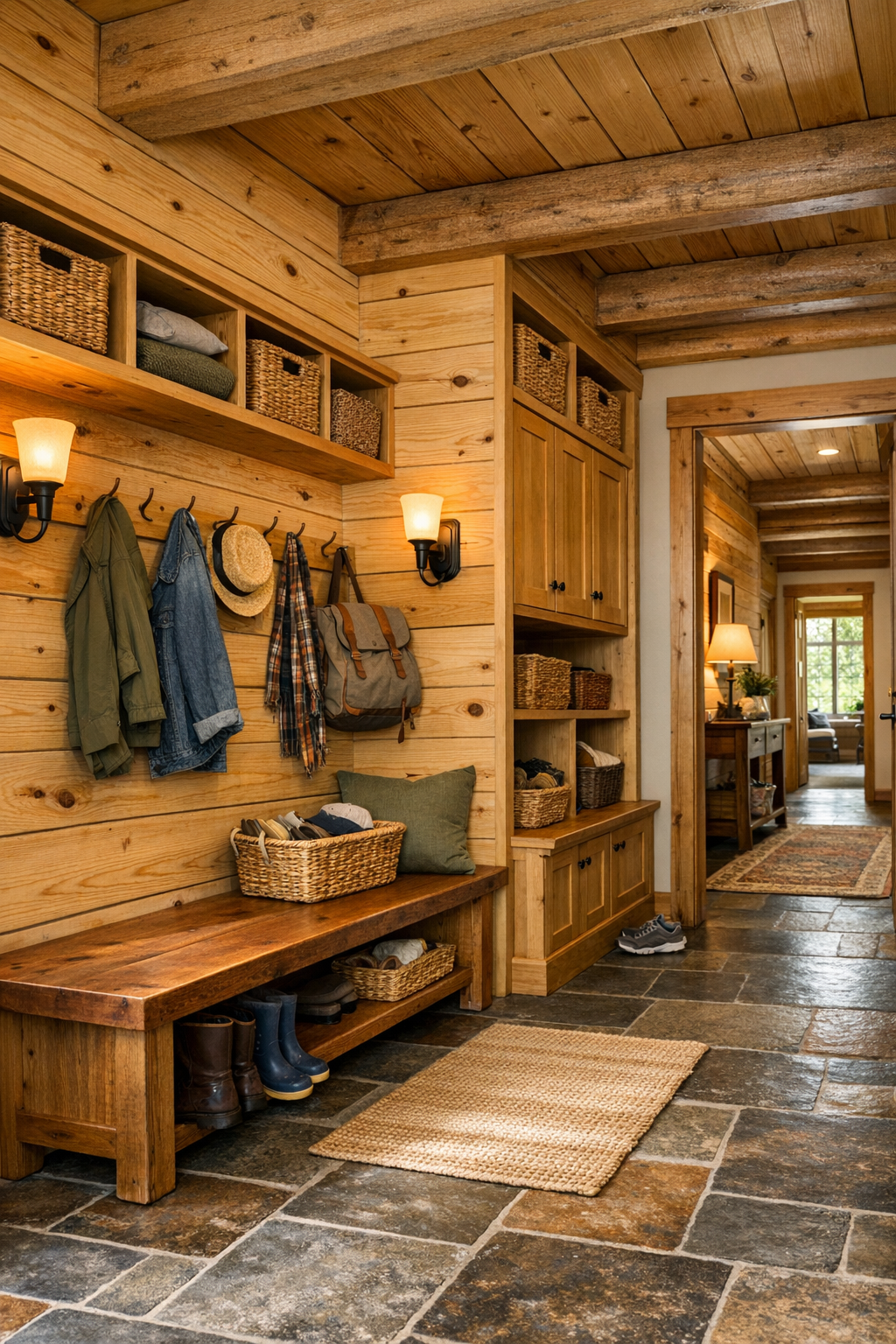
In a home like this, the supporting spaces matter just as much as the main rooms, and I imagine they are handled with equal care. A front entry or mudroom would be especially important, with built-in benches, pegs, and cubbies crafted in solid wood to keep coats, boots, and market bags neatly contained. Hallways would likely be wider than expected, with more handcrafted trim, well-placed sconces, and enough wall space for family photos, baskets, or a narrow console table that adds charm without clutter.
I would also hope for a small laundry area or pantry space that carries the same thoughtful detailing as the rest of the home. Even practical corners can feel lovely when the materials stay consistent—wood cabinetry, simple hardware, durable flooring, and smart storage that helps a household run smoothly. These are the spaces that often make daily life easier, and in this home they would not feel like afterthoughts. They would feel integrated, useful, and quietly beautiful, which is exactly what I want in a house meant for real living.
Why You'd Live Here
You would live here because it offers something many homes try for but few achieve: genuine comfort with real craftsmanship behind it. The ponderosa pine logs bring warmth and character, while the Amish-made details add honesty, durability, and a sense that every inch was created with care. It is rustic, yes, but never rough around the edges. Instead, it feels settled, useful, and deeply inviting.
I think this home would especially appeal to anyone who wants beauty woven into ordinary life. It is easy to imagine family dinners, holiday baking, overnight guests, quiet mornings, and all the small routines that slowly turn a house into a haven. For me, that is the true success of this design—it does not just look cozy. It supports the kind of living that makes people want to stay awhile.