This single-level log home has the kind of warmth I always notice first in a place: not just visual warmth from the rich tone of eastern red cedar, but that deeper feeling that a house is ready to hold real life. From the outside in, the design leans rustic without feeling heavy, with handcrafted details, thoughtful proportions, and a calm, grounded mood that makes the whole home feel settled into its setting. Even as a concept design, it feels wonderfully livable, the sort of home I can picture welcoming muddy boots, holiday pies, and slow Sunday mornings with equal grace.
What makes it special to me is how the craftsmanship does so much of the decorating. The cedar logs, the joinery, the natural stone, and the honest wood finishes give every room a sense of purpose, so the spaces do not need much fuss to feel complete. It is a home that balances beauty with ease, and as someone who loves gathering family and friends around a table, I can immediately see how the layout and materials would support both everyday routines and those extra-special meals that turn into long conversations.
Exterior
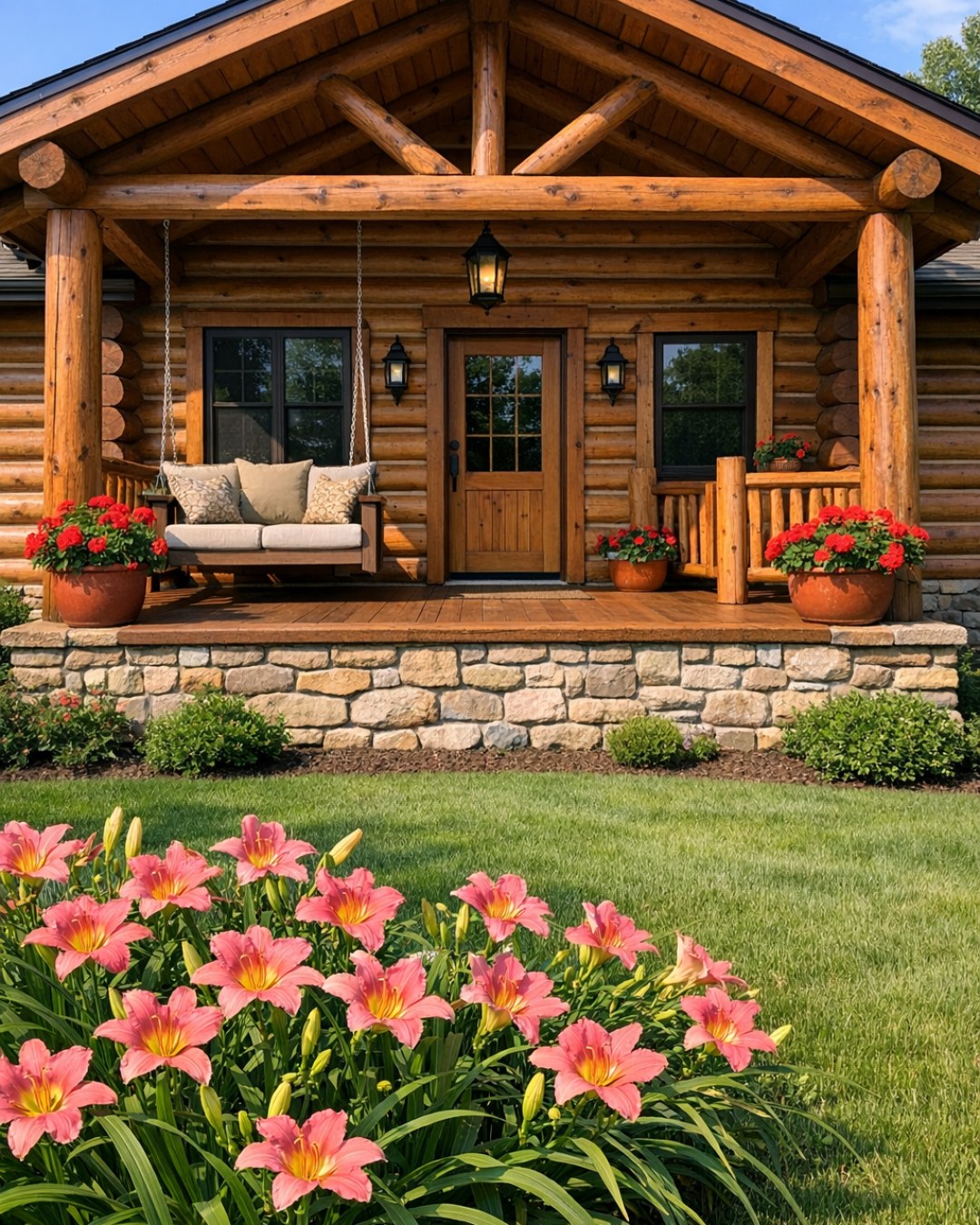
The exterior has that timeless log-home presence, but it is handled with a lighter touch that keeps it welcoming instead of imposing. The eastern red cedar logs bring beautiful variation in tone, from cinnamon and russet to softer honeyed browns, and those natural shifts in color give the facade plenty of character before you even notice the handcrafted trim. A low, single-level profile helps the house feel approachable, while a broad front porch and deep overhangs soften the mass of the structure and create those sheltered edges every family seems to use constantly.
I love the way stone accents would anchor the cedar, especially around the foundation, porch piers, and chimney, giving the home a sturdy, rooted quality. The roofline is simple and practical, which suits the straightforward charm of the house, and the windows feel generously sized without breaking the cozy rhythm of the log walls. Altogether, it has the kind of curb appeal that does not shout for attention; it just quietly promises comfort, good meals, and a front door that is opened often.
Living Room
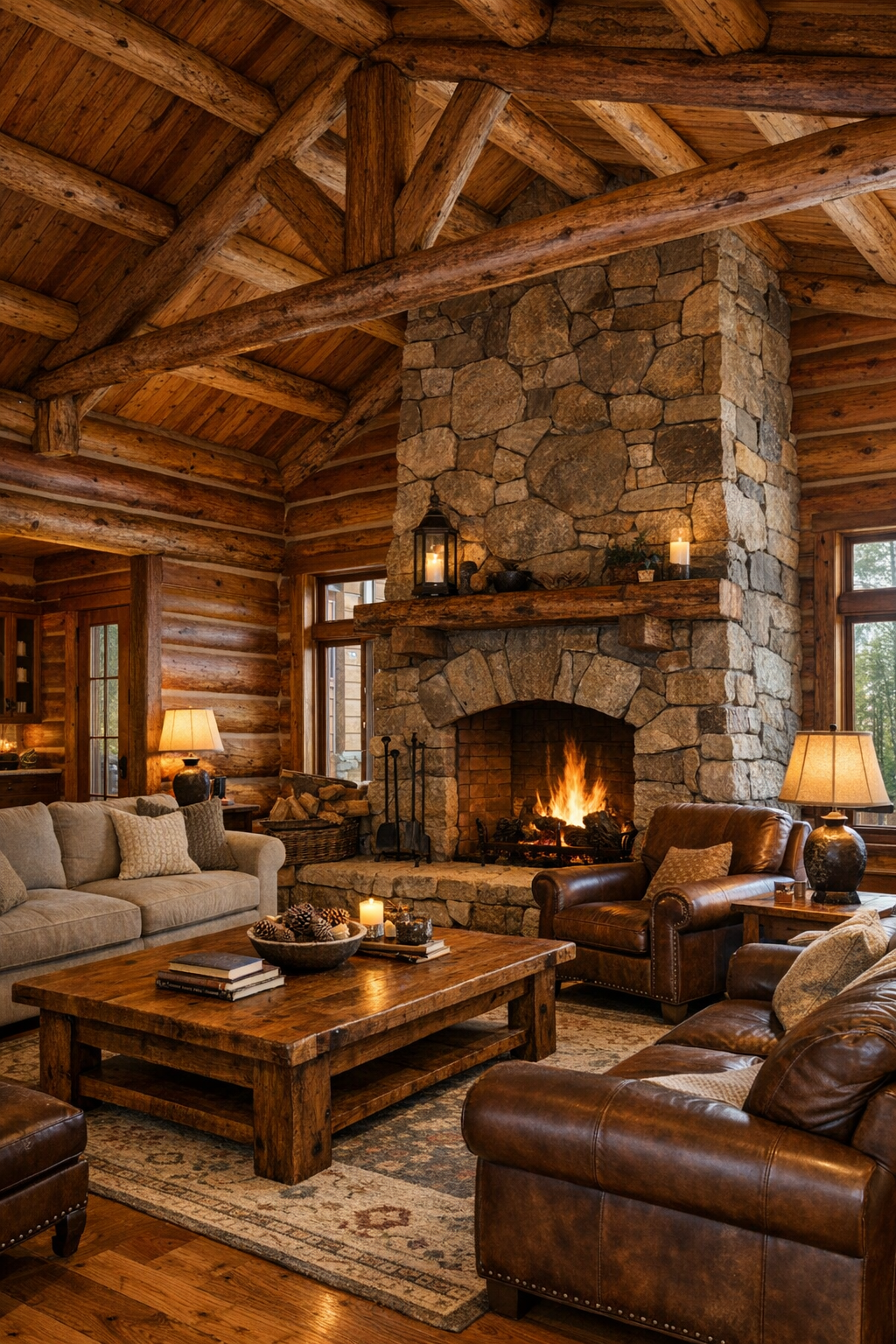
The living room is exactly where I would expect the handcrafted nature of the home to shine. Exposed cedar walls wrap the space in warmth, while a vaulted ceiling with thick timber beams opens it up and keeps it from feeling at all confined. I imagine a substantial stone fireplace as the heart of the room, with a chunky wood mantel that looks made for seasonal greenery, family photos, and the little handmade decorations children always seem proudest of. The color palette stays close to nature: warm browns, oatmeal, charcoal, muted forest green, and creamy linen tones that let the wood remain the star.
Furniture here would work best if it felt generous and durable, the kind you can really sink into at the end of the day. I see deep upholstered sofas in textured neutral fabric, leather accent chairs that gain character with age, and a solid wood coffee table with enough surface for cocoa mugs, board games, and a tray of snacks when company comes by. Lighting would matter so much in a room like this, so I would layer it with an iron chandelier, shaded table lamps, and perhaps a floor lamp near a reading chair to keep the space cozy after sunset instead of overly dramatic.
Dining Room
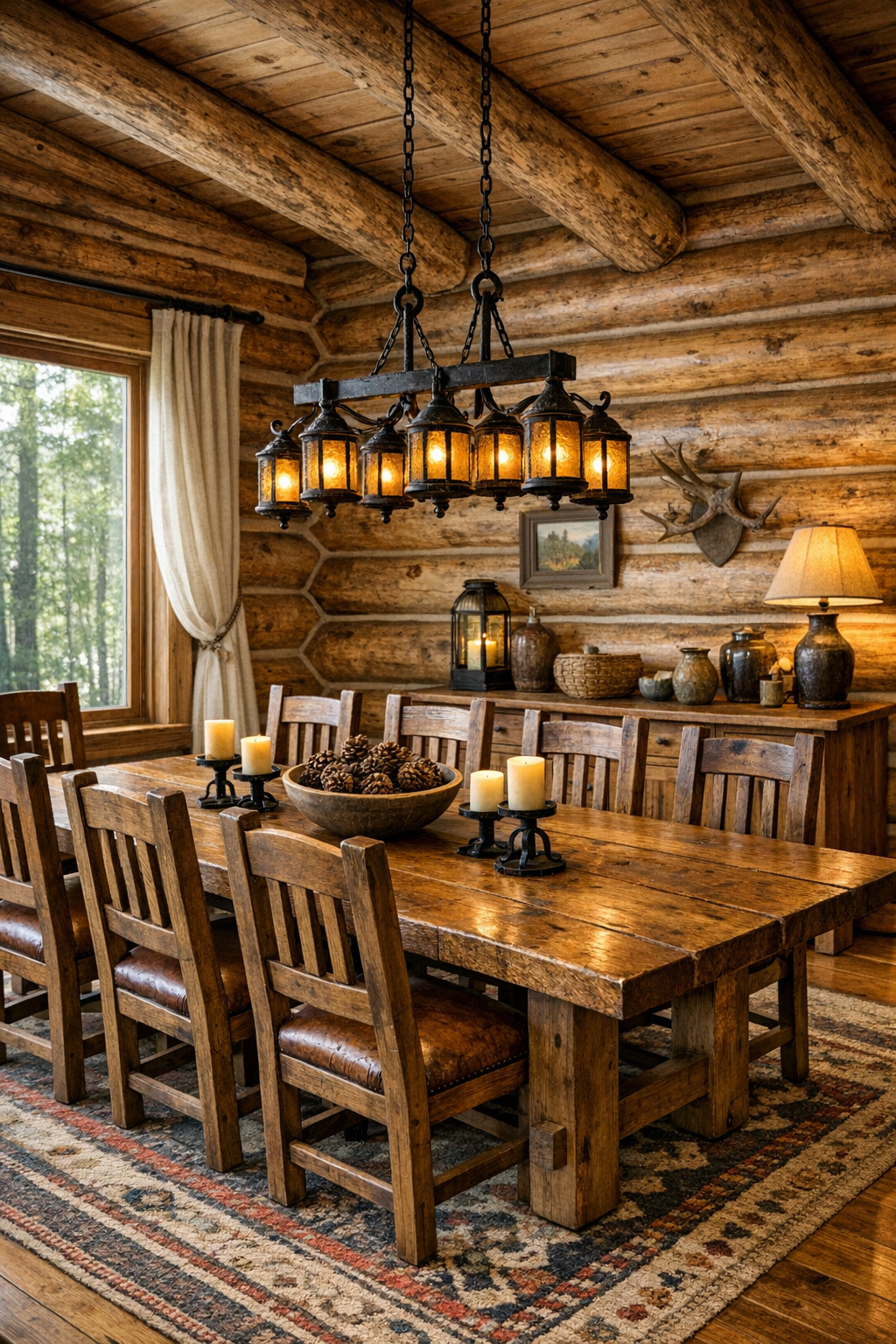
The dining room feels like it was designed for lingering, and I always appreciate that in a home. Rather than treating it as a formal showpiece, this space would be most beautiful when it is rooted in daily use, with a long handcrafted wood table, sturdy chairs, and perhaps a built-in hutch or sideboard that carries the same artisan quality as the rest of the home. The cedar backdrop adds instant richness, so even simple table linens and everyday dishes would look lovely here. If you are serving a mixed group, this is exactly the kind of room where a big pot of chili, a pan of cornbread, and a fresh salad can feel just as special as a holiday spread, and for picky eaters I can already picture a simple plate of buttered noodles or roasted potatoes fitting right in.
Visually, I would keep the room grounded with a woven rug under the table to soften all the wood and help define the area. A wrought-iron or antler-inspired light fixture could hang overhead, but I would want it scaled carefully so it feels warm and rustic, not theme-y. The best dining rooms always have a little breathing room around them, and here I imagine easy circulation to both the kitchen and living area, making the whole home feel connected during meals, celebrations, and those everyday evenings when everyone drifts to the table at different times.
Kitchen
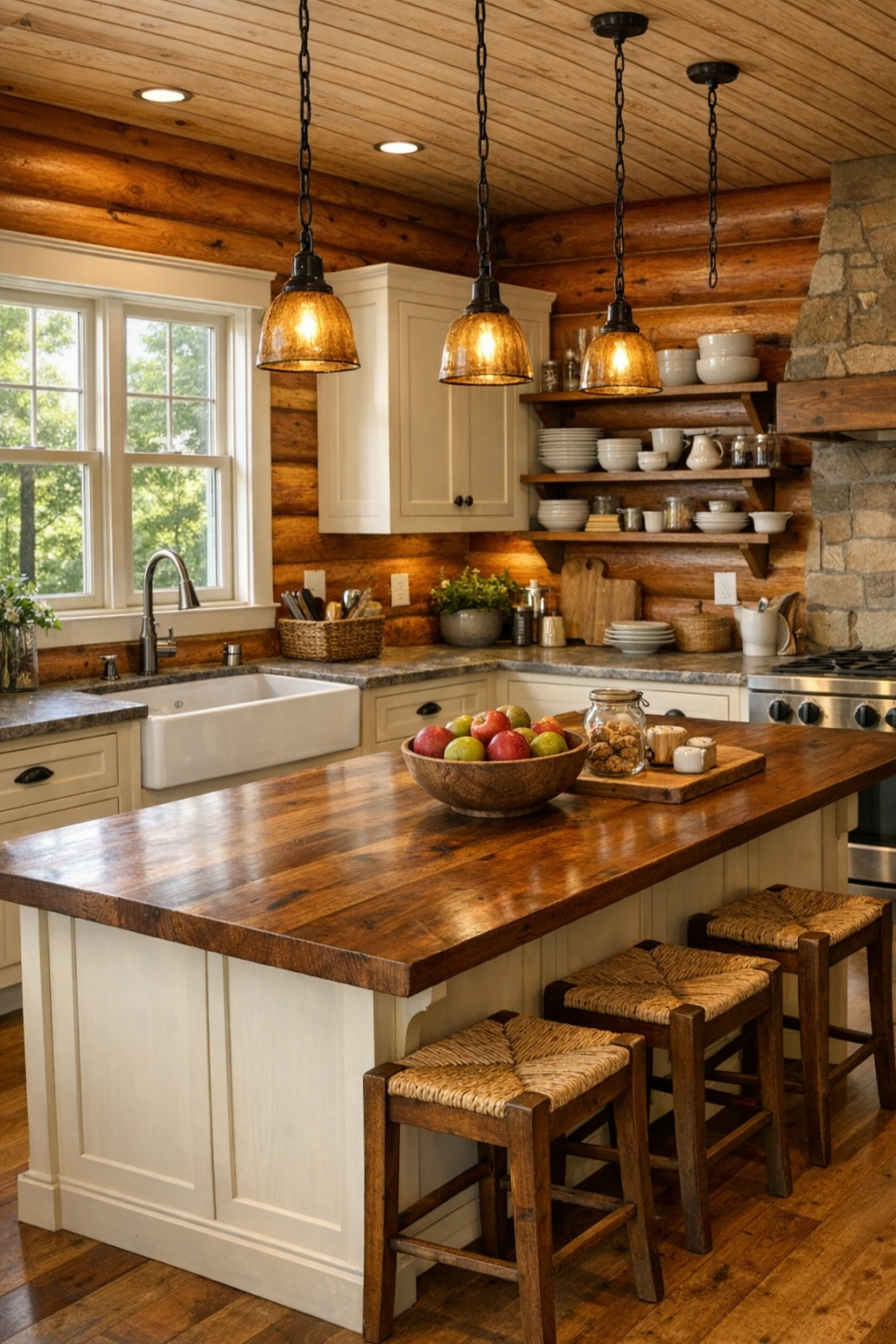
The kitchen is where this home would absolutely win me over. In a house with so much wood, the smartest move is to balance the cedar with painted cabinetry or softer stone surfaces, and I can see that working beautifully here with warm cream cabinets, soapstone or honed granite counters, and a generous island topped with butcher block or a subtly veined natural stone. Open shelving in a few strategic places would let handmade pottery, mixing bowls, and everyday glasses become part of the visual texture, while still leaving plenty of closed storage for the practical tools family cooking always requires.
Layout matters so much in a kitchen, and this one would feel best with room for more than one person to work without bumping elbows. I picture a broad island with seating for casual breakfasts, homework, or keeping the cook company, plus a deep farmhouse sink beneath a window and good task lighting over every key surface. This is the kind of kitchen that invites people in, and I love that. For family meals, I can imagine setting out taco fillings, baked potato toppings, or a little pasta bar on the island so everyone can build their own plate, which is one of my favorite tricks for feeding both adventurous eaters and cautious ones without making anyone feel left out.
Bedroom
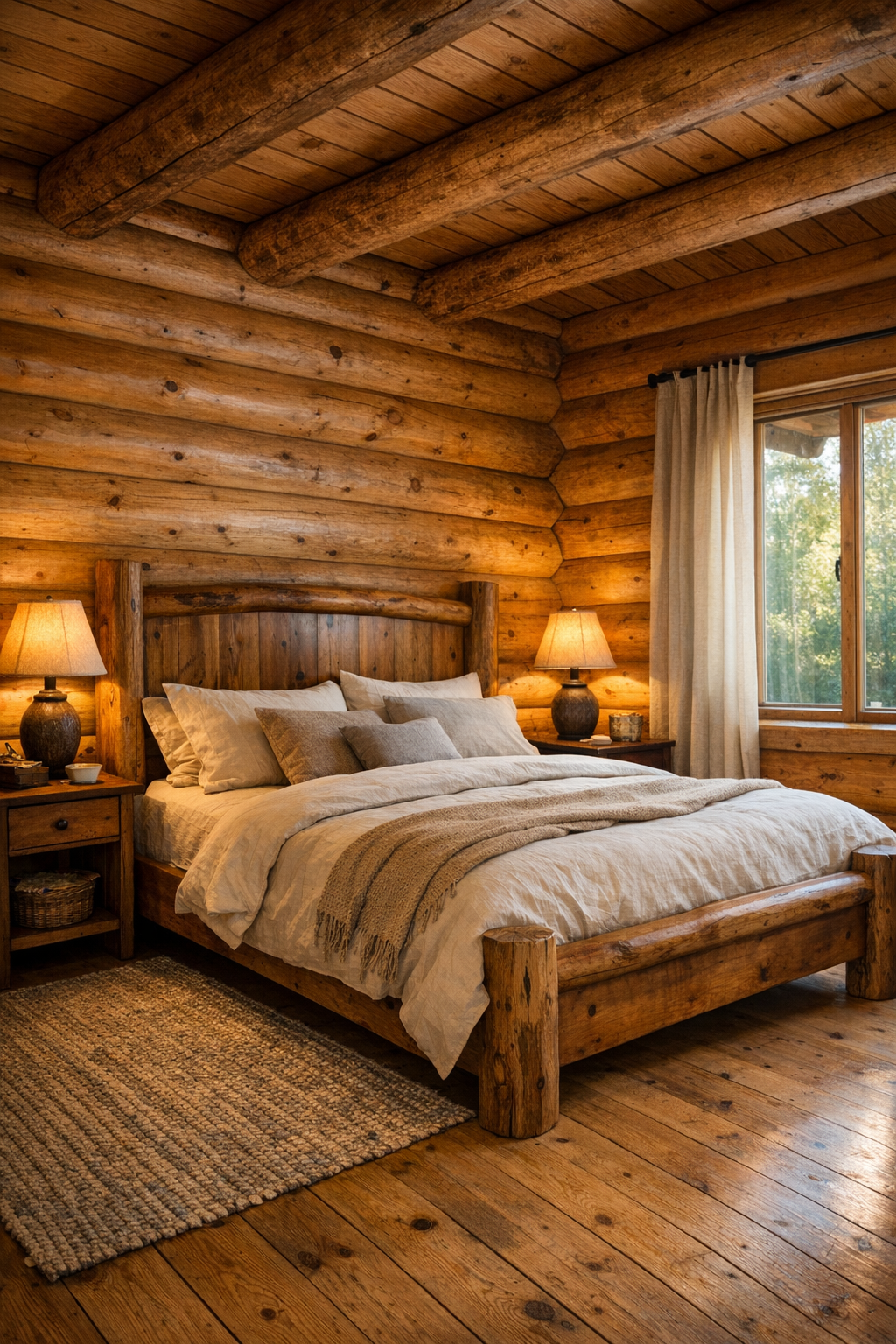
The bedroom would take all the richness of the cedar and quiet it down into something especially restful. Because log walls already bring so much texture, I would keep the furnishings simple and substantial: a solid wood bed, tailored bedding in soft ivory or flax, and layers of texture through a quilt, knit throw, and a padded bench at the foot of the bed. A muted palette of linen, taupe, sage, and warm gray would help the room feel calm, while still staying in conversation with the red undertones of the cedar.
Good bedroom design is often about restraint, and this space would benefit from that. Rather than crowding it with too much furniture, I would focus on a pair of bedside tables, soft reading lamps, and maybe one comfortable chair in a corner near a window. If the room includes exposed beams overhead, I would want the bedding and window treatments to be especially gentle in texture to create balance. The overall feeling is cozy, private, and deeply comfortable, the kind of room where you really can imagine turning in early on a winter night and not feeling the least bit deprived.
Bathroom
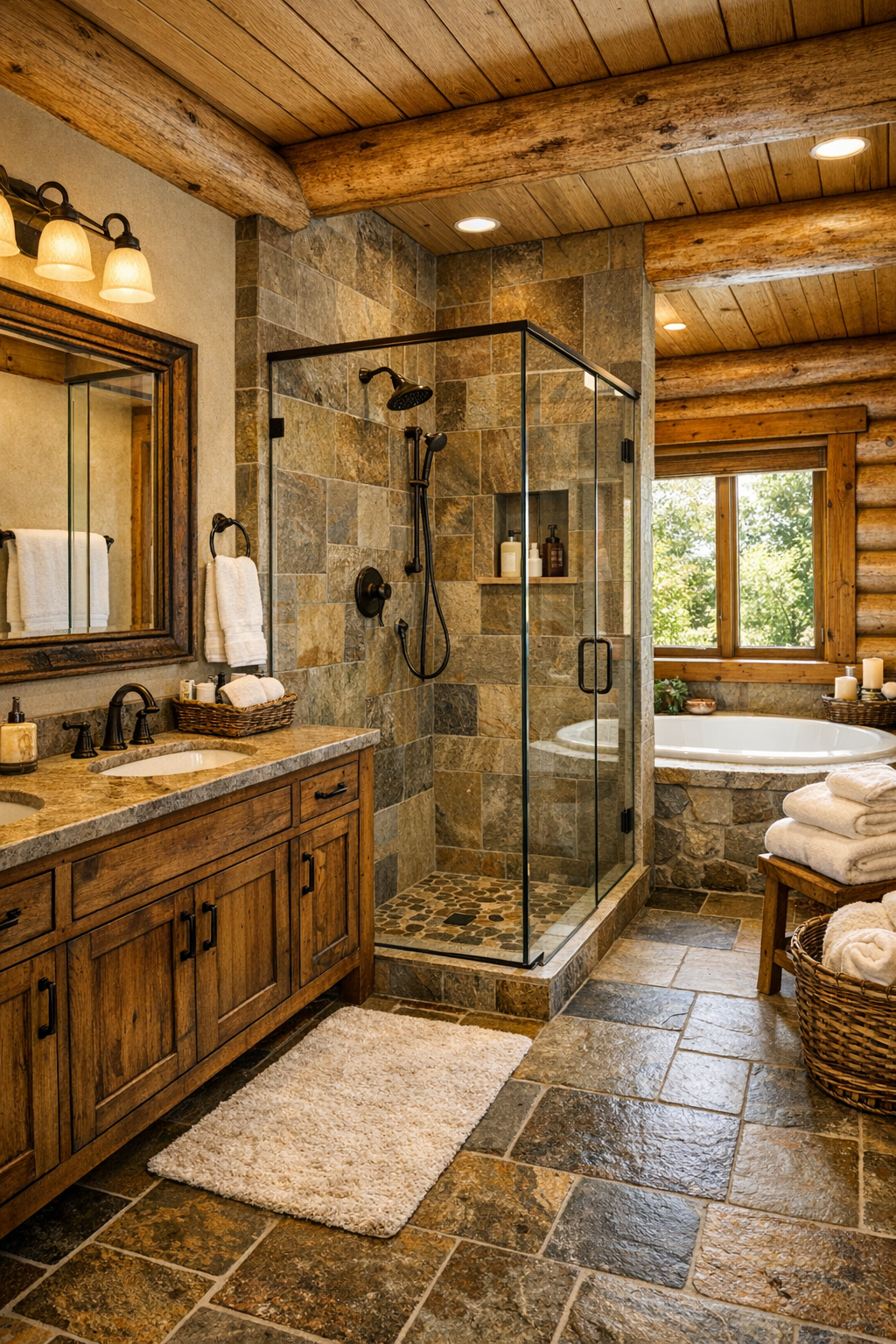
The bathroom is where I would lean into contrast a bit more, just to keep all the natural wood from feeling too visually continuous. Stone or slate-look tile underfoot would be a beautiful starting point, paired with a wood vanity that echoes the rest of the home without matching it too exactly. I can see a countertop in creamy quartz or honed granite, oil-rubbed bronze fixtures, and a framed mirror that has a handmade feel. The combination would feel rustic, yes, but also clean and practical, which I think matters more than ever in spaces we use every day.
If there is room for a walk-in shower with clear glass and softly textured tile, that would be my choice over anything overly ornate. A soaking tub near a window would also fit naturally here, especially if it is surrounded by simple finishes and a small wooden stool for towels or bath essentials. Soft white towels, a linen shower curtain if needed, and warm layered lighting would keep the room from feeling cold. It is a bathroom that would age beautifully because the materials are honest and sturdy, not trend-chasing.
Other Areas
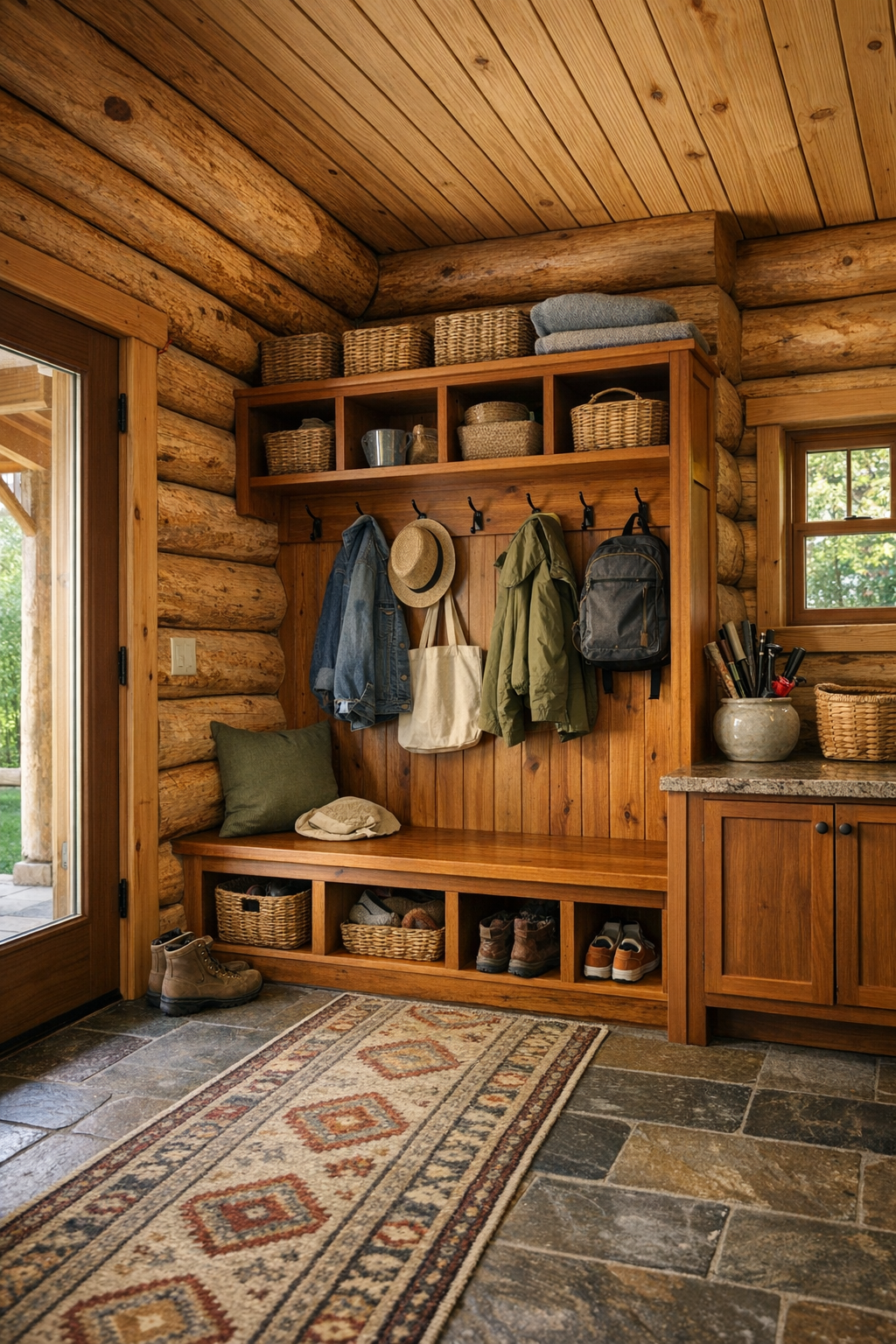
In a single-level home like this, the in-between spaces matter just as much as the main rooms because they shape how the whole house lives day to day. I imagine a welcoming entry with a built-in bench, sturdy hooks, and cubbies for coats and bags, all in wood that feels like it belongs to the architecture rather than added on later. Hallways would be kept wide enough to feel gracious, with simple lighting, framed nature prints, and perhaps a runner to soften footsteps. A mudroom or utility space would be especially valuable here, giving the household a hardworking drop zone that protects all the beauty elsewhere in the home.
If the plan allows for a small reading nook, office corner, or covered back porch connection, those areas would only deepen the sense that this house understands real family life. I am especially fond of homes that make room for practical rituals, whether that is a bench where kids can pull off boots, a cabinet for serving platters, or a quiet chair where someone can sit with coffee before the day gets busy. These supporting spaces may not be the showiest, but they are often what make a home feel thoughtful, and in this design they would carry the same handcrafted spirit as every main room.
Why You'd Live Here
You would live here because it offers something many homes try for and never quite achieve: true comfort with real character. The eastern red cedar logs give it beauty from the start, but it is the handcrafted details and sensible single-level layout that make it feel enduring. Nothing about it seems overly precious, and that is part of its charm. It is polished enough to feel special and relaxed enough to support ordinary life, which is a balance I think a lot of families are quietly looking for.
I would also choose this home for how naturally it encourages togetherness without sacrificing calm. The kitchen invites gathering, the dining room welcomes long meals, the living room centers everyone around warmth, and the private rooms still feel soothing and tucked away. It is a home that seems ready for soup simmering on the stove, extra chairs pulled up to the table, and evenings that unfold a little slower than expected. To me, that is always a sign of a house designed not just to be admired, but to be lived in and loved well.