There is something instantly comforting about a single-level log home, and this one leans all the way into that feeling with warm tamarack walls, a deep shaded porch, and a calm, tucked-into-the-trees kind of presence. I can picture pulling into the drive after a long workday, laptop bag in one hand and grocery tote in the other, and feeling my whole mood shift before I even reach the front door. This concept design feels rooted in traditional cabin character, but it is polished in a way that makes everyday life look beautifully manageable.
What makes it special to me is the balance between handcrafted detail and practical livability. The Amish craftsmanship shows up in the joinery, the built-ins, and the steady honesty of the materials, while the single-level layout keeps everything easy, connected, and welcoming. It has that rare mix I always notice in homes I love most: it is cozy without being dark, rustic without feeling heavy, and thoughtfully designed for real routines like cooking, hosting, and slowing down at the end of the day.
Exterior
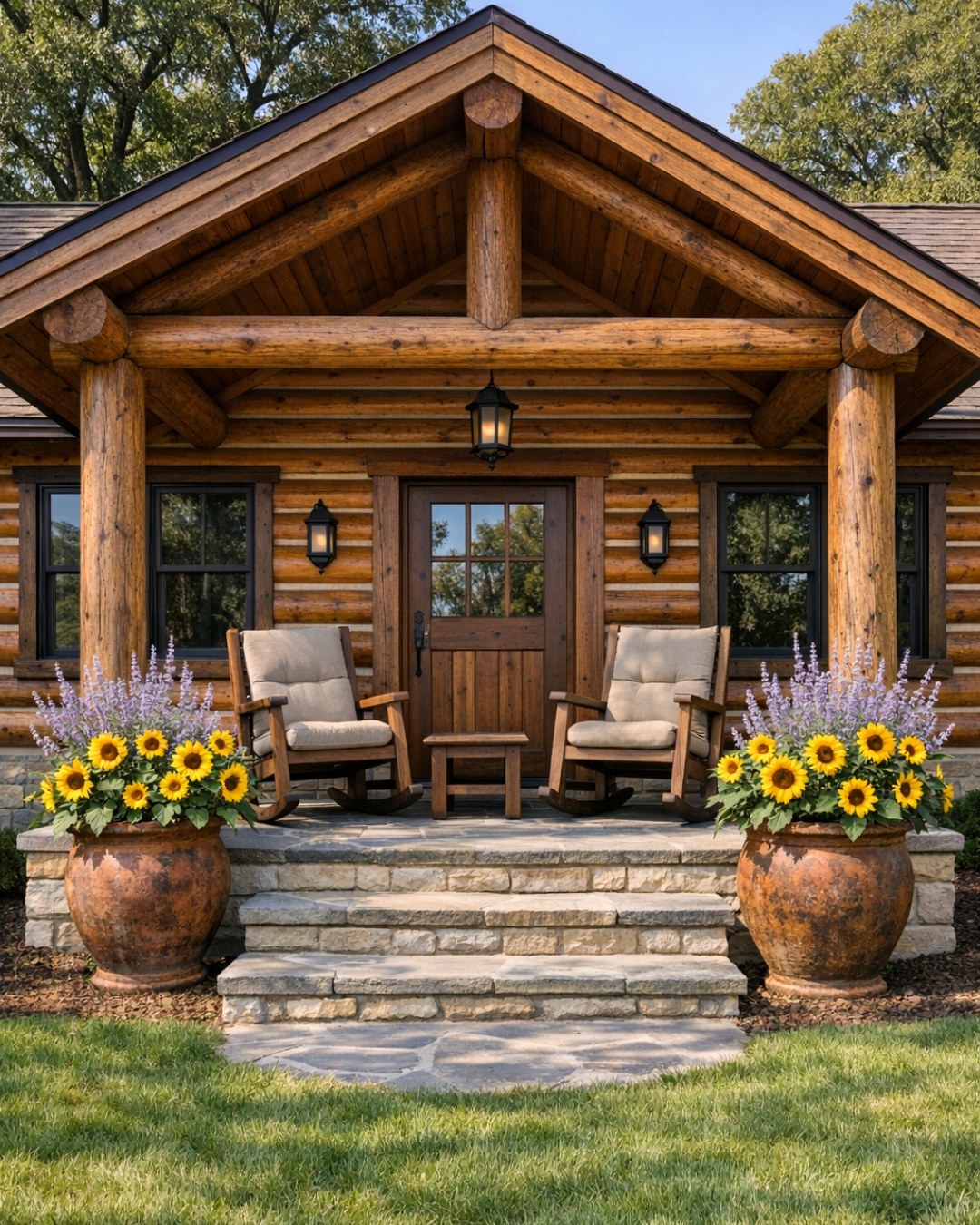
From the outside, the home has the kind of quiet confidence that does not need much embellishment. The tamarack logs bring a naturally golden-brown tone that glows against stone skirting and a darker roofline, and the shaded porch stretches across the front like an invitation to stay awhile. I love how the proportions feel low and grounded, especially for a single-level home; it gives the whole structure a relaxed, settled look that feels right at home in a wooded or semi-rural setting.
The details are what really carry the charm here. Thick timber posts, simple black metal lanterns, and a solid wood front door create a look that is rustic but tidy, not overly themed. I can imagine a pair of rocking chairs, a durable woven outdoor rug, and a few planters softening the edges without competing with the craftsmanship. The overall effect is warm and shaded rather than showy, which honestly makes the house feel even more inviting.
Living Room
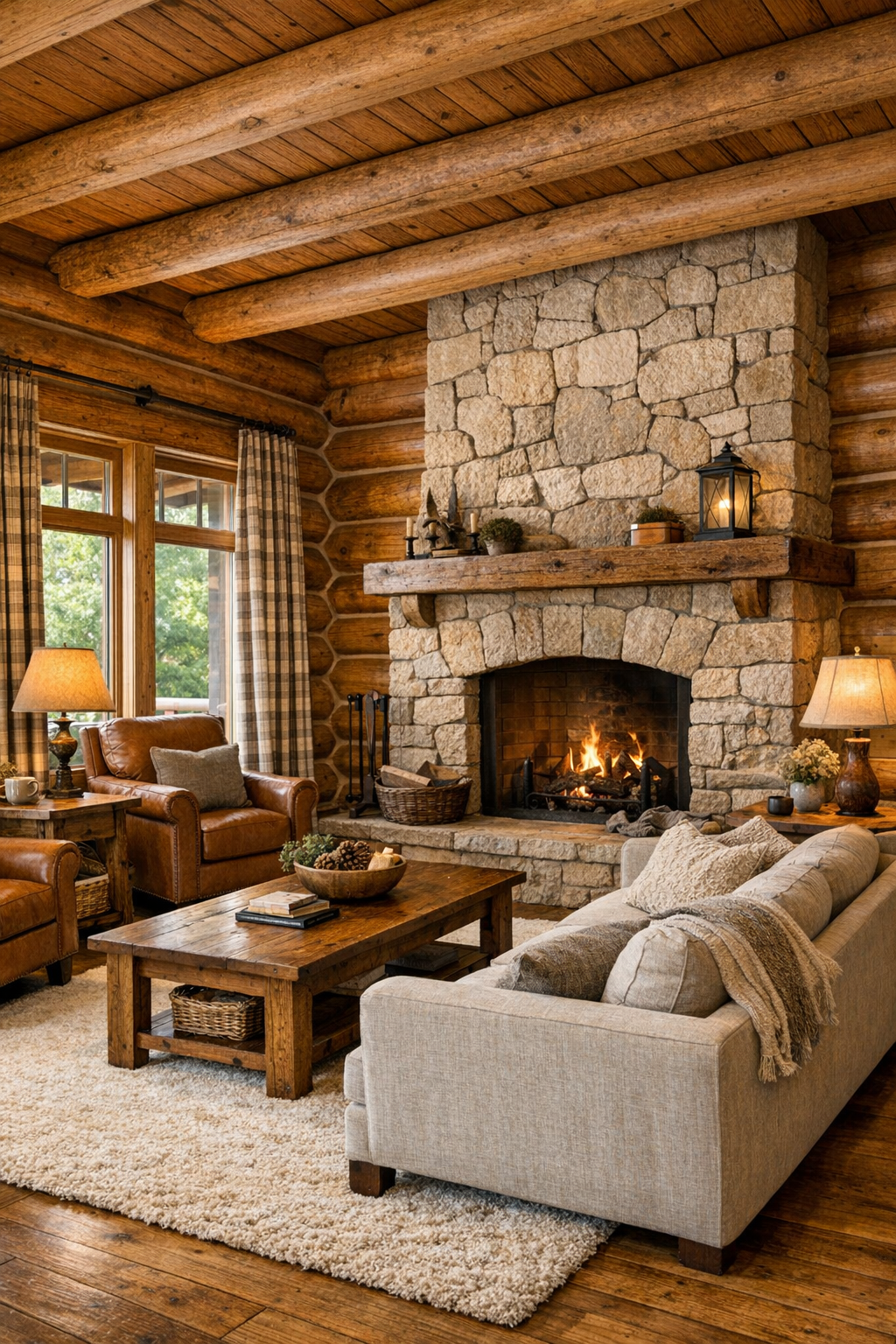
The living room is where the home’s craftsmanship really starts to speak. Tamarack log walls wrap the space in warmth, while a plank ceiling with exposed beams keeps the room feeling substantial and finished. I would anchor the seating area with a large wool rug in soft cream and muted rust tones, then layer in a deep linen-blend sofa, two caramel leather chairs, and a substantial wood coffee table with visible grain and hand-finished edges. It feels like the kind of room where everything gets better with use.
Because log interiors can sometimes read a little dark, I like that this room would benefit from thoughtful contrast: lighter upholstery, natural daylight, and a stone fireplace in creamy gray and warm taupe rather than very dark fieldstone. Table lamps with linen shades, a wrought-iron chandelier, and a few carefully placed sconces would keep the lighting gentle in the evening. The layout would stay open and conversational, with furniture arranged to face both the fire and the views, which is exactly how I want a cozy room to function.
Dining Room
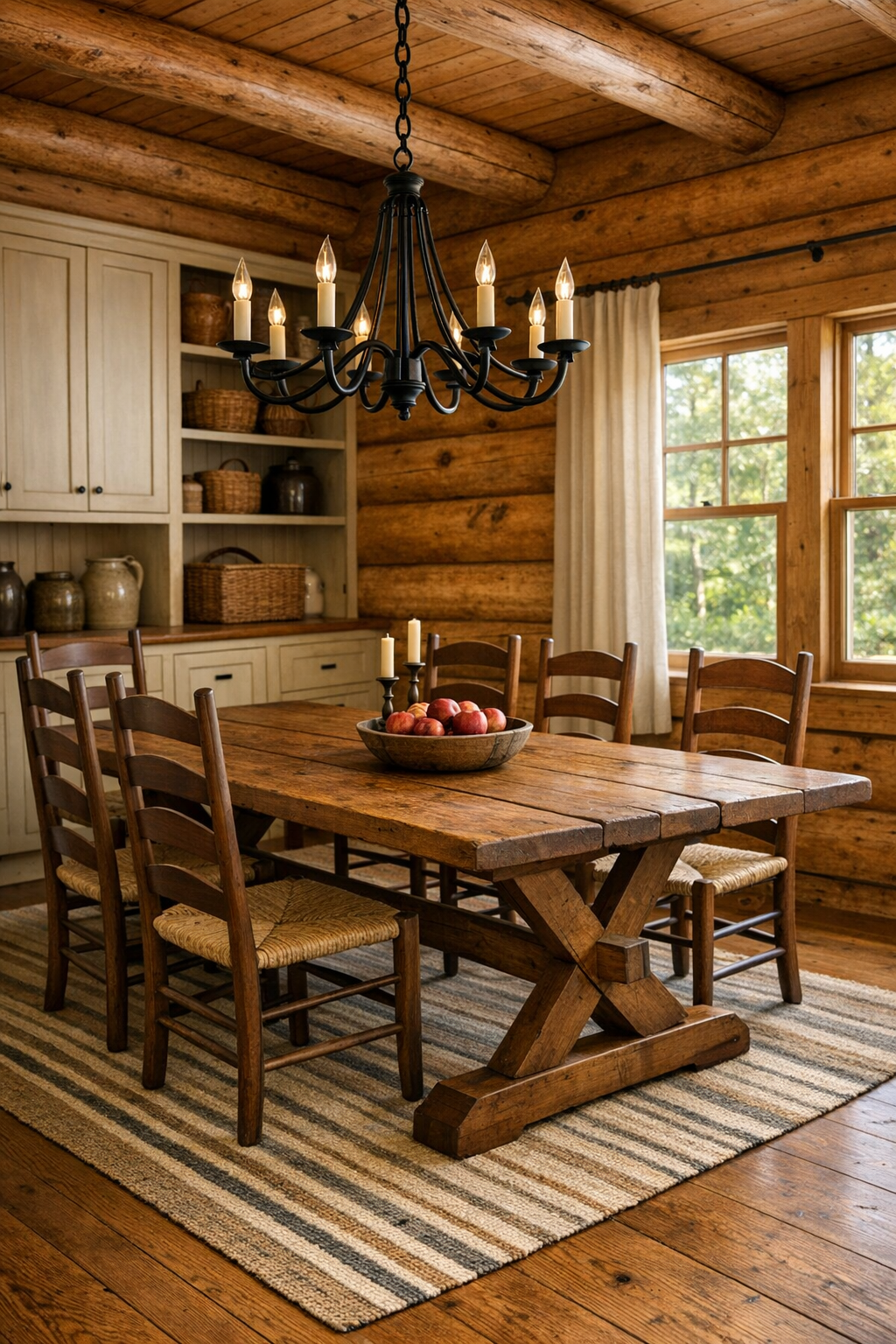
The dining room feels like a natural extension of the living space, which is ideal if you are the type of person who is always carrying food from the kitchen while trying to keep a conversation going. I can see a long Amish-built trestle table in a medium walnut stain sitting at the center, surrounded by ladder-back chairs with simple woven seats. The beauty here would be in the restraint: solid wood, honest lines, and enough room around the table that family dinners and casual weekend breakfasts both feel easy.
To keep the room from becoming visually too wood-heavy, I would bring in contrast through textiles and lighting. A soft runner under the table in a durable flatweave, creamy painted trim around the windows, and a black iron chandelier overhead would all help break up the timber tones while staying true to the home’s character. If there is a built-in sideboard or hutch, even better, because that is the kind of detail I always appreciate when I am thinking about where serving platters, table linens, and holiday dishes will actually live.
Kitchen
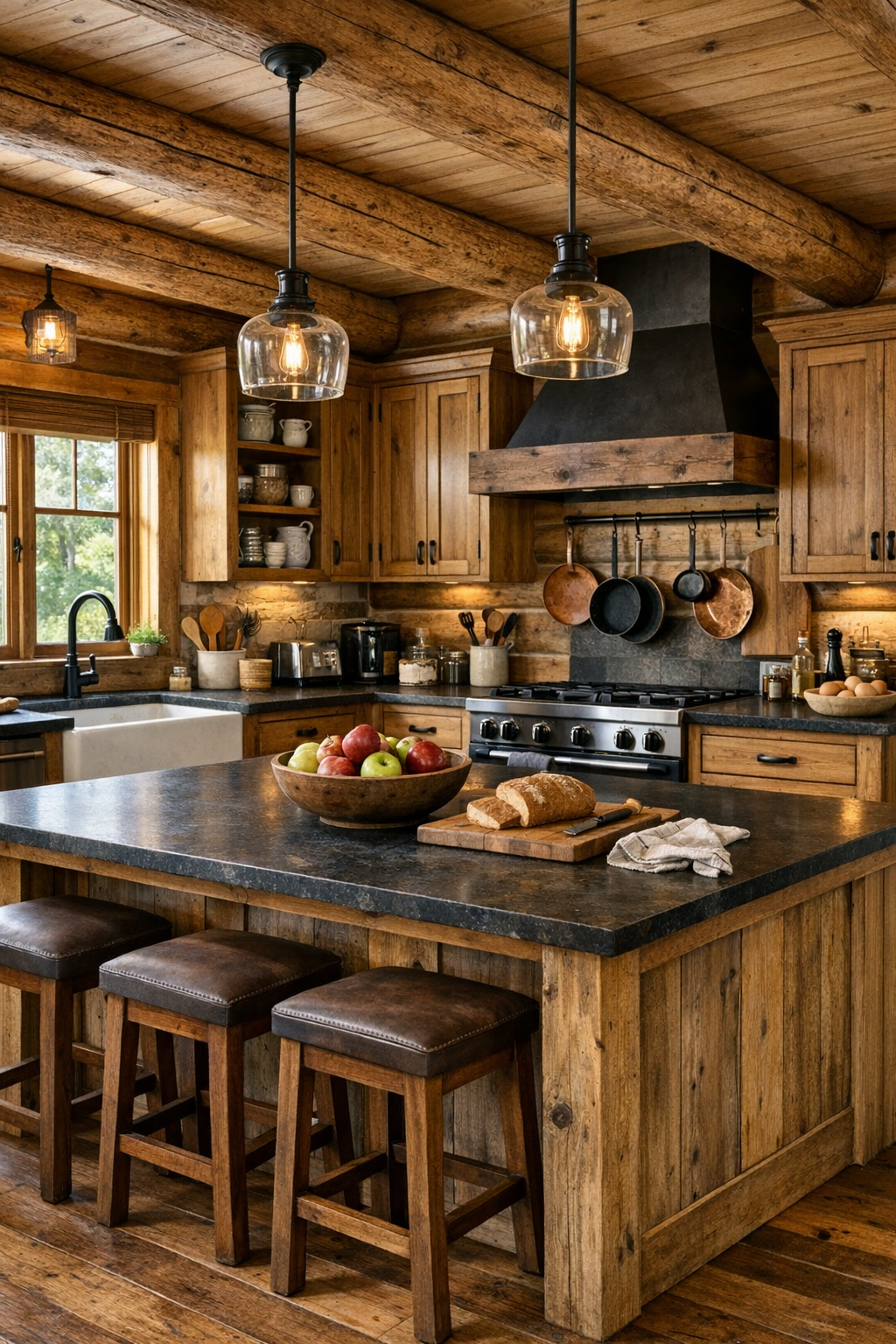
This kitchen is probably where I would linger longest, because it seems made for real cooking rather than just looking pretty in photos. The cabinetry would be classic Amish-made woodwork, likely in a clear or lightly stained finish that lets the grain shine, paired with soapstone or leathered granite countertops for a slightly deeper, grounded contrast. I love the idea of a generous island in the middle with room for prep, baking, and maybe one person sitting there chatting while dinner comes together.
The best part is how the rustic shell can still support a very practical workflow. A white farmhouse sink under a window, simple matte black hardware, open shelves for everyday bowls and cutting boards, and warm under-cabinet lighting would make the whole room feel efficient without losing its charm. If I were planning my week in this kitchen, I would immediately start mentally assigning spots for meal prep containers, pantry staples, and the Dutch oven that somehow never makes it fully back into the cabinet because I use it too often.
Bedroom
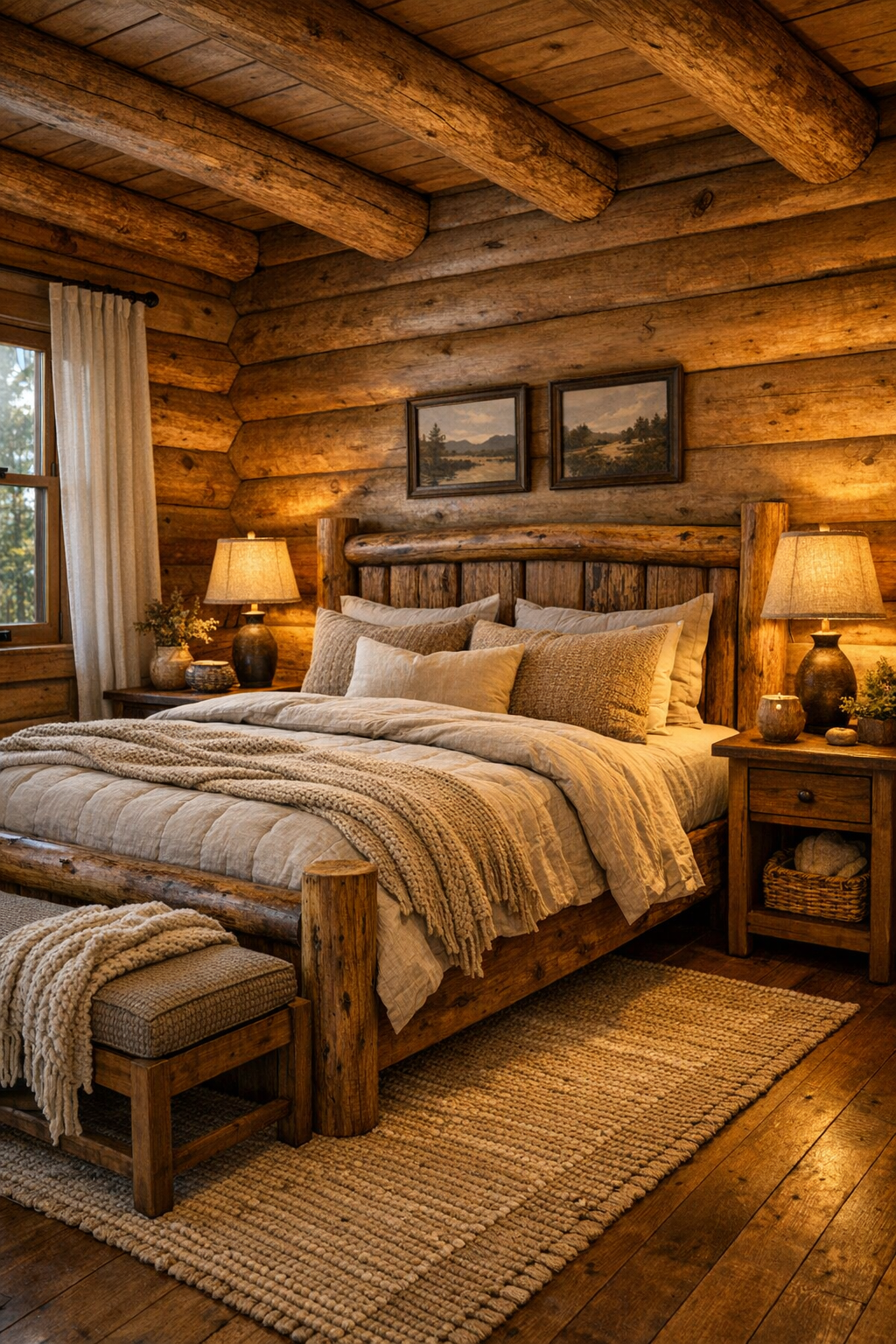
The bedroom takes the home’s rustic language and softens it into something restful. Log walls and a wood ceiling remain part of the story, but I would want the palette here to shift lighter with oatmeal linens, a quilted coverlet, soft taupe drapery, and a substantial bed frame that feels handcrafted rather than ornate. A pair of nightstands in matching wood, ceramic lamps with fabric shades, and maybe a bench at the foot of the bed would keep the room feeling balanced and grounded.
What I like most is the potential for this space to feel cocooning without becoming visually busy. The craftsmanship can stay front and center, while texture does the work of adding comfort: woven wool, crisp cotton, brushed wood, and a braided rug underfoot. If there is a window facing trees or the porch, even better, because that connection to the outdoors makes a rustic bedroom feel especially calm. It is the kind of room where turning in early would actually sound appealing.
Bathroom
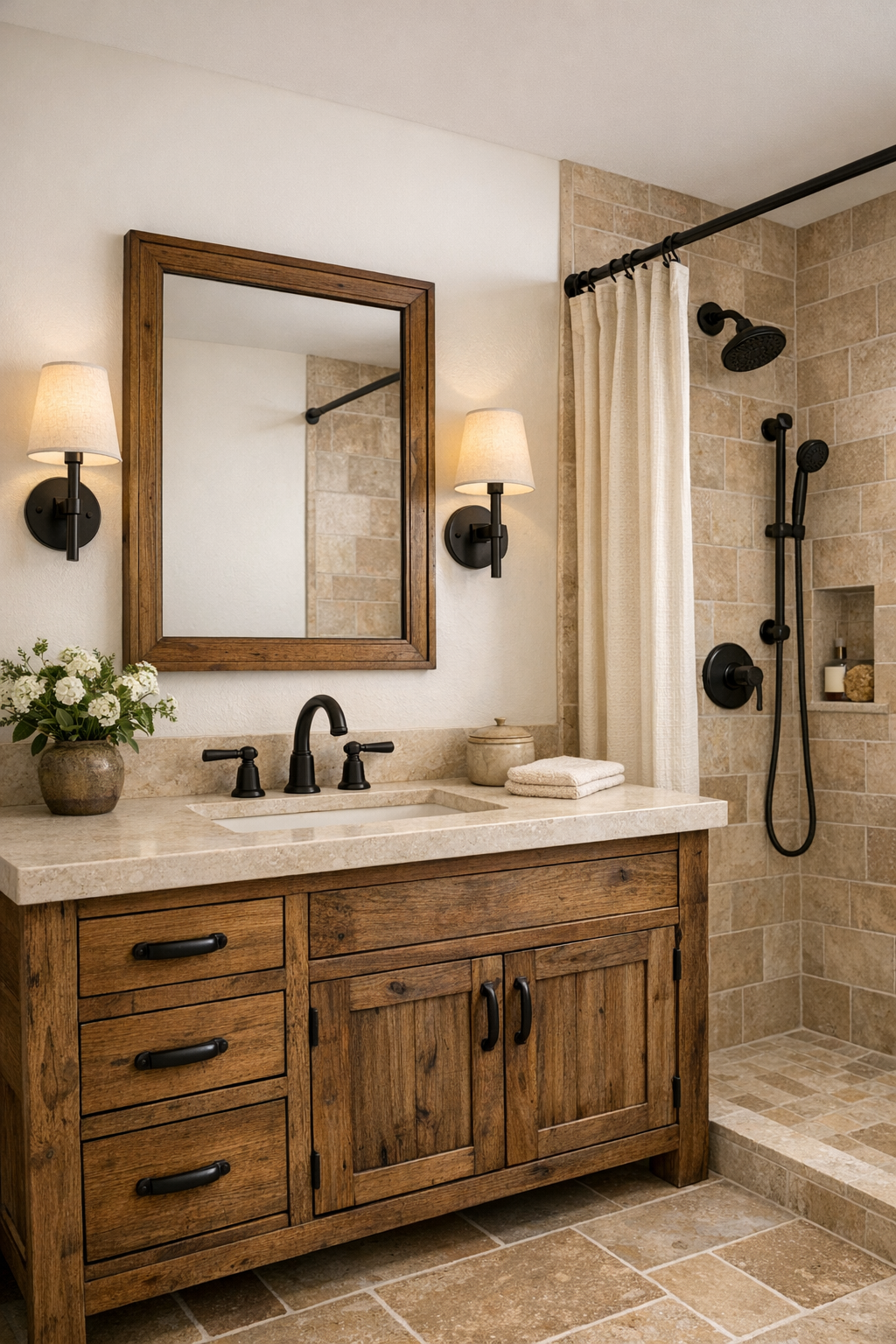
The bathroom would be a beautiful place to lean into natural materials while still keeping everything bright and usable. I picture a handcrafted wood vanity topped with a pale stone counter, black metal fixtures, and a framed mirror that feels substantial enough to match the rest of the house. The wall surfaces could mix painted paneling or smooth plaster with touches of wood, which would help the room feel fresh instead of overly rustic.
For the shower or tub area, I would go with simple stone-look tile in warm gray or sandy beige, maybe with a niche for soaps and a glass enclosure that keeps the room visually open. Good lighting matters so much in a bathroom, especially in a log home, so sconces on either side of the mirror and soft overhead illumination would make the space feel clean and flattering. It has the look of a bathroom that would hold up beautifully to daily life while still feeling quietly special.
Other Areas
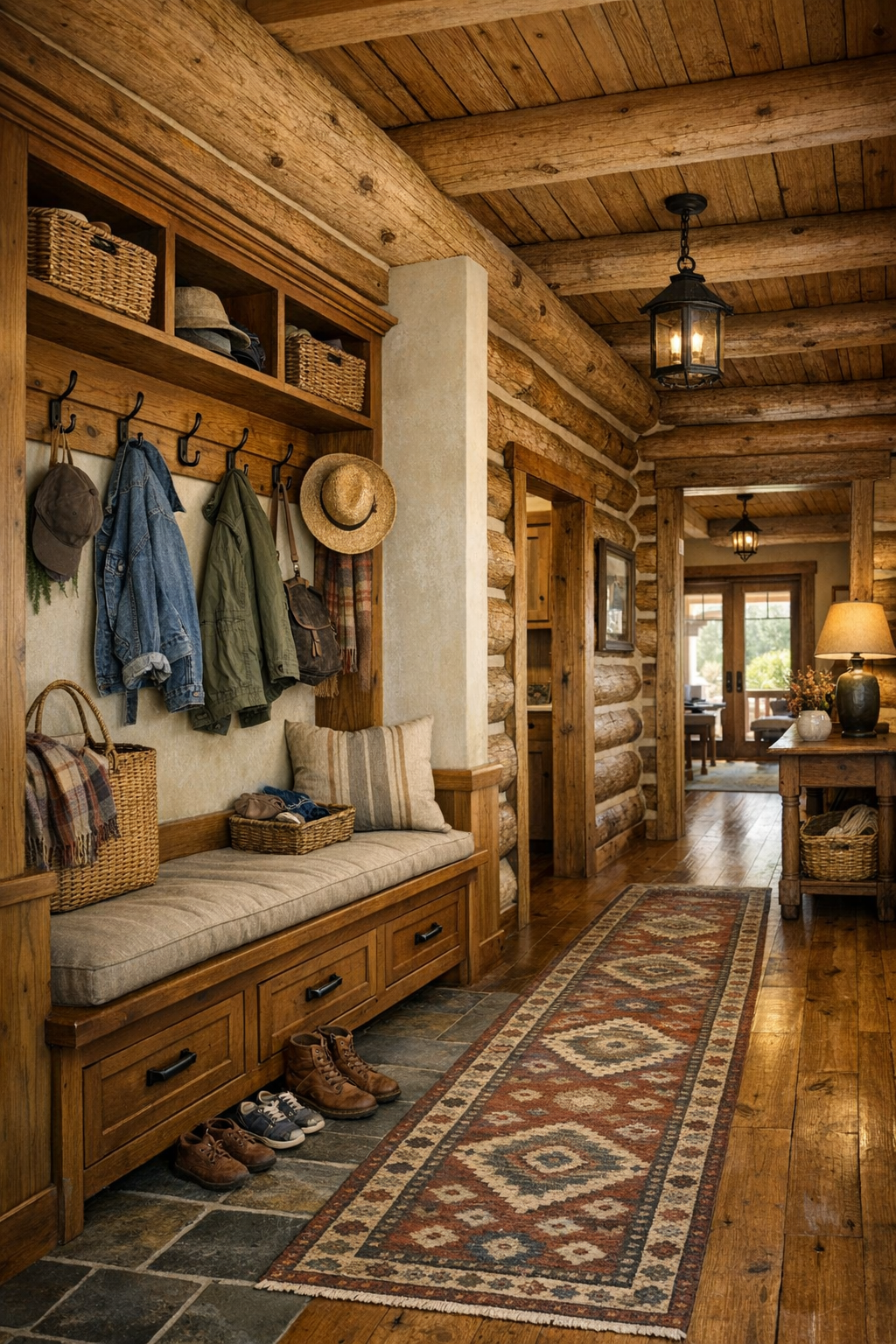
In a home like this, the supporting spaces matter just as much as the main rooms. I would love to see a practical mudroom or entry zone with built-in benches, wood pegs, and storage drawers made by the same Amish craftsmen, because that continuity makes the whole house feel intentional. A laundry area with sturdy cabinetry, folding counter space, and easy-clean flooring would also go a long way toward making the home function beautifully for everyday routines.
Hallways, reading corners, and even small transition spaces could become some of the coziest moments in the house if they are treated with care. A narrow console, a simple shaker-style built-in, warm wall lighting, and a runner with subtle pattern would make those in-between areas feel finished instead of forgotten. I always think those are the details that make a home easier to live in day after day, especially when life gets busy and you really need your spaces to work for you.
Why You'd Live Here
You would live here because it offers comfort in the most genuine sense of the word. The materials are warm, the layout is easy, and the craftsmanship gives every room a sense of permanence that is hard to fake. It feels like a home that supports both quiet nights and busy mornings, where you can host a casual dinner, bake all afternoon, or simply sit on the porch and let the day slow down.
For me, the biggest draw is how beautifully it blends charm with usefulness. This is not rustic style for show; it is rustic style shaped around daily life, with smart flow, hardworking finishes, and spaces that invite you to settle in. If you love homes that feel welcoming the minute you walk in and still practical once real life starts happening, this one absolutely gets it right.