This single-level log home has the kind of quiet presence I always admire: rustic at first glance, yet refined once you begin noticing the details. Built around warm toffee-toned Engelmann spruce logs, the house feels grounded in its wooded setting, with a soft, honeyed palette that catches light beautifully and turns every surface into part of the atmosphere. It reads as a retreat, but not in a precious way; it is practical, welcoming, and carefully composed, which to me is often the most lasting kind of luxury.
What makes this home especially memorable is the craftsmanship threaded through every room, from the joinery and millwork to the way stone, wood, and metal are balanced without visual noise. Even as a concept design, it feels entirely believable because the spaces are scaled for real living: easy circulation, comfortable furnishings, durable finishes, and a warmth that would make anyone want to linger a little longer over coffee or dinner.
Exterior
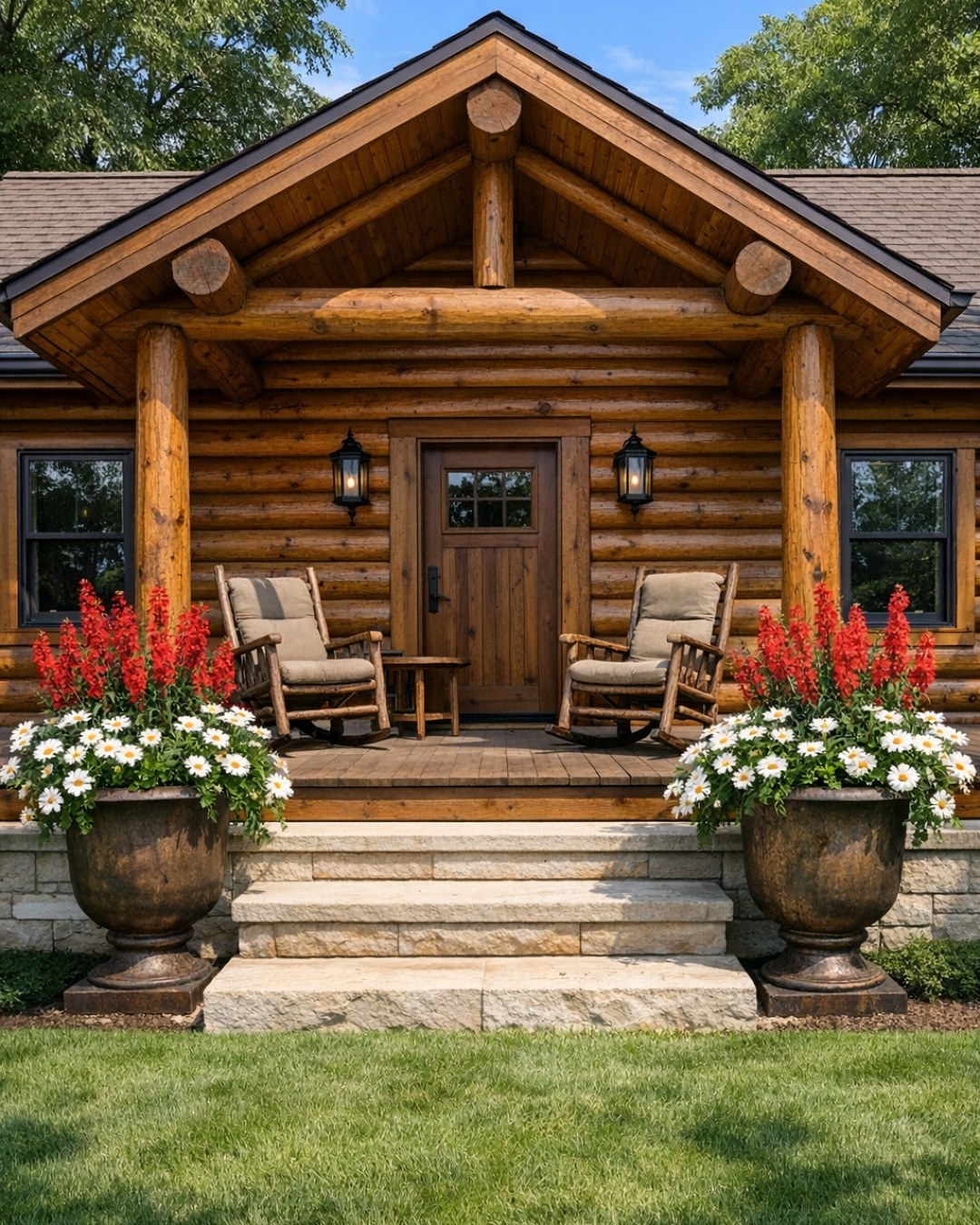
From the outside, the home presents a classic log silhouette, but with a cleaner, more tailored profile than many rustic houses lean on. The toffee-toned Engelmann spruce gives the façade a mellow richness rather than a heavy, dark lodge look, and that choice changes everything. Deep roof overhangs, dark-framed windows, and a low, spreading footprint help the house sit gently on the land, while a stone chimney and carefully proportioned porch posts add weight and permanence.
I like how the materials appear to age well even in the imagination: natural stone at the base, matte black metal accents, and substantial timber details that would only gain more character over time. The entry sequence feels especially inviting, with a covered porch large enough for a pair of chairs and a boot bench, signaling that this is a home meant to be used comfortably through every season. Nothing feels overdone, and that restraint lets the quality of the woodwork speak for itself.
Living Room
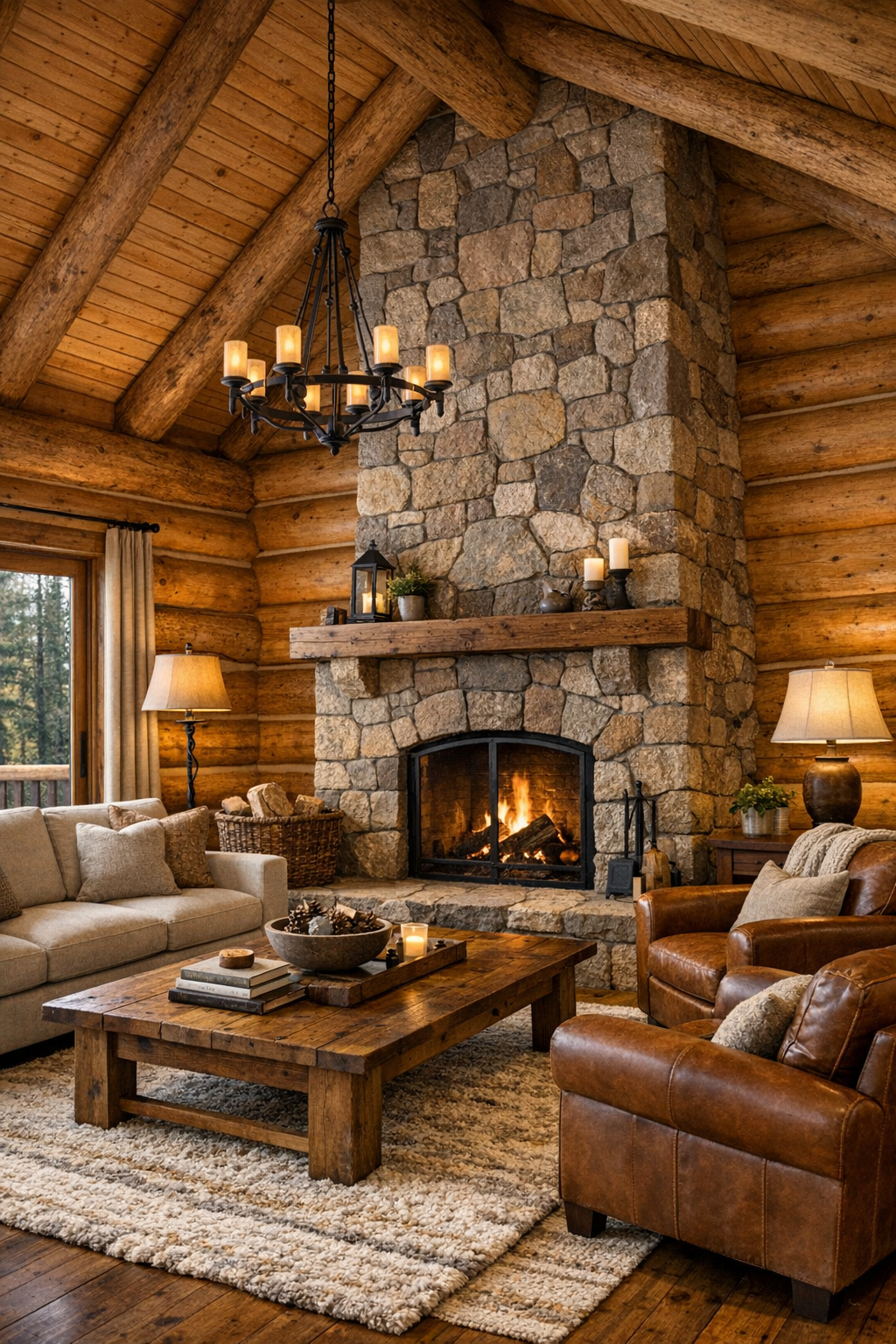
The living room centers on the visual warmth of the spruce logs, which wrap the space in a rich caramel glow without making it feel dim. A vaulted ceiling with exposed beams lifts the room, while a full-height stone fireplace anchors it with texture and a sense of ritual. I would imagine a seating arrangement in soft oatmeal, tobacco, and rust tones here: a deep linen sofa, two worn leather club chairs, and a substantial wood coffee table with enough surface area for books, mugs, and a generous snack spread when friends gather.
Lighting is handled in layers, which is exactly right for a log interior. During the day, large windows pull in natural light that plays across the grain of the walls; in the evening, wrought-iron sconces, a simple antler-free chandelier, and table lamps with warm parchment shades keep the room feeling intimate rather than themed. A hand-knotted wool rug, nubby throws, and a few matte ceramic pieces soften all that timber and stone, so the room reads as polished and deeply comfortable instead of rugged for ruggedness' sake.
Dining Room
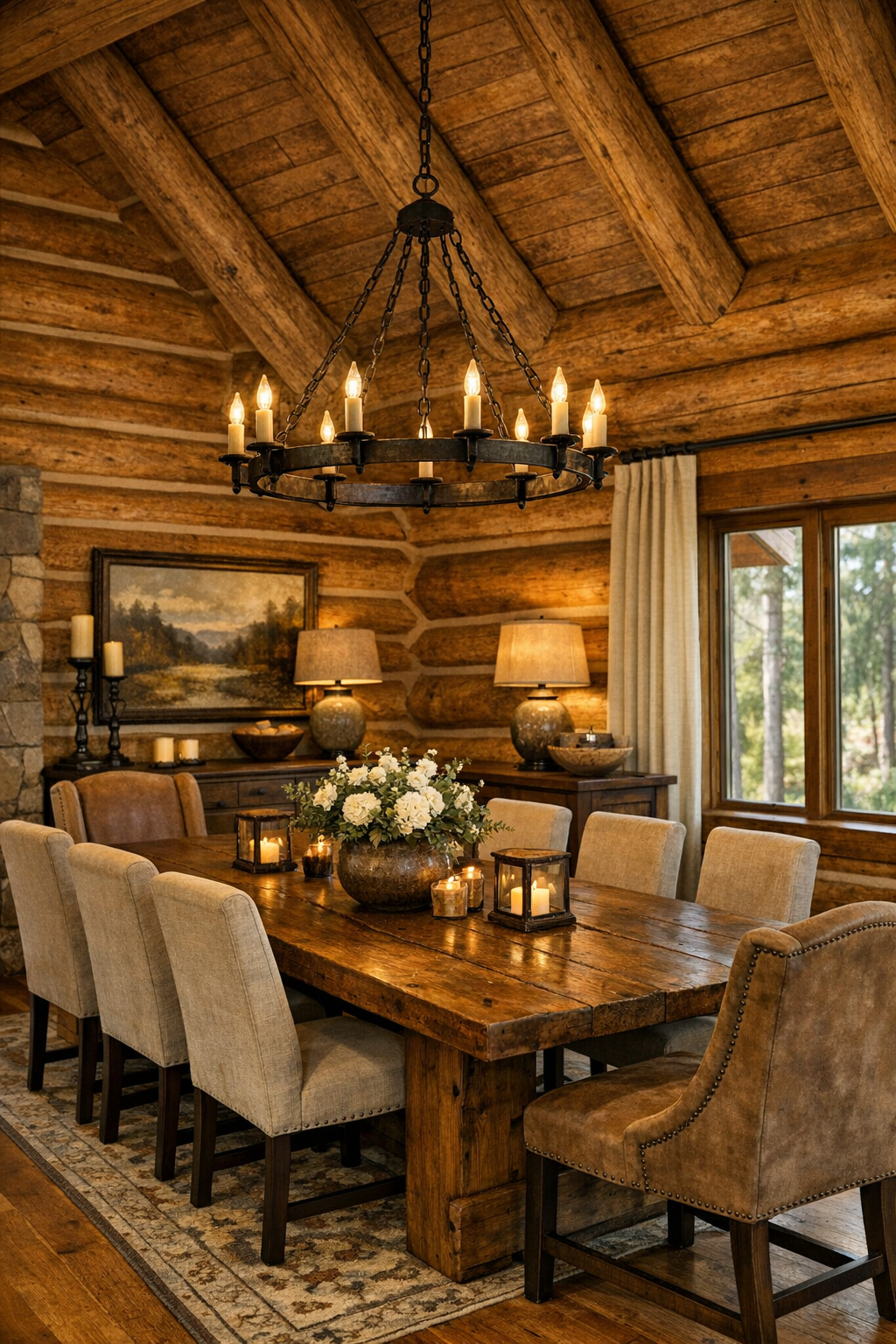
The dining room feels like an extension of the living space, but with a slightly more deliberate formality that still stays relaxed. I picture a long solid-wood table, likely in a medium walnut or smoked oak finish, surrounded by upholstered dining chairs that soften the visual weight of the log walls. The proportions matter here: enough room to move around the table easily, enough scale in the furniture to stand up to the architecture, and enough openness to make family-style meals feel effortless rather than crowded.
What appeals to me most is how naturally this room would support the rhythms of real entertaining. A sideboard with simple paneled fronts could hold serving pieces and linens, while a linear iron chandelier above the table would give the room a warm, focused glow. With windows bringing in daylight and the wood surfaces reflecting that amber tone back into the space, the dining room would feel especially beautiful in the early evening, when dinner stretches a little longer and no one is in a rush to leave the table.
Kitchen
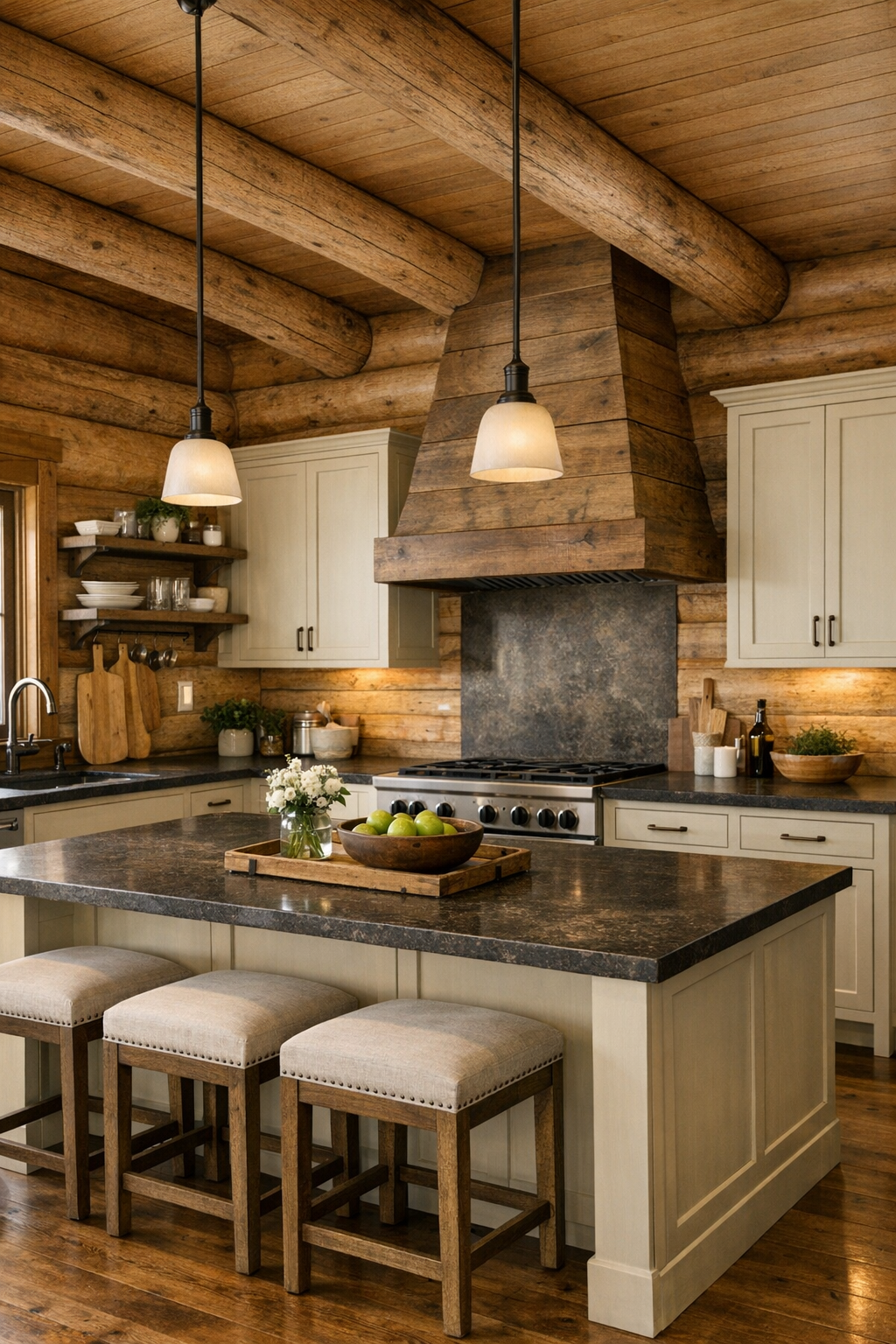
As someone who spends a lot of time thinking about how kitchens actually work, this one makes immediate sense to me. The layout appears designed for flow, with generous counters, clear prep zones, and an island that functions as both workstation and gathering place. Cabinetry in a muted painted finish, perhaps a warm cream or soft mushroom, keeps the room from becoming too wood-heavy, while soapstone or honed granite counters introduce a deeper note that balances the golden cast of the logs.
The craftsmanship would be especially rewarding up close: inset cabinet doors, sturdy drawer pulls in aged bronze, open shelves for everyday ceramics, and a vent hood clad in wood that ties the whole composition together. I can easily imagine excellent task lighting here, from understated pendants above the island to under-cabinet illumination that makes chopping, kneading, and late-night tea far more pleasant. It is a kitchen that seems ready for serious cooking but never loses the warmth that makes people want to drift in and stay awhile.
Bedroom
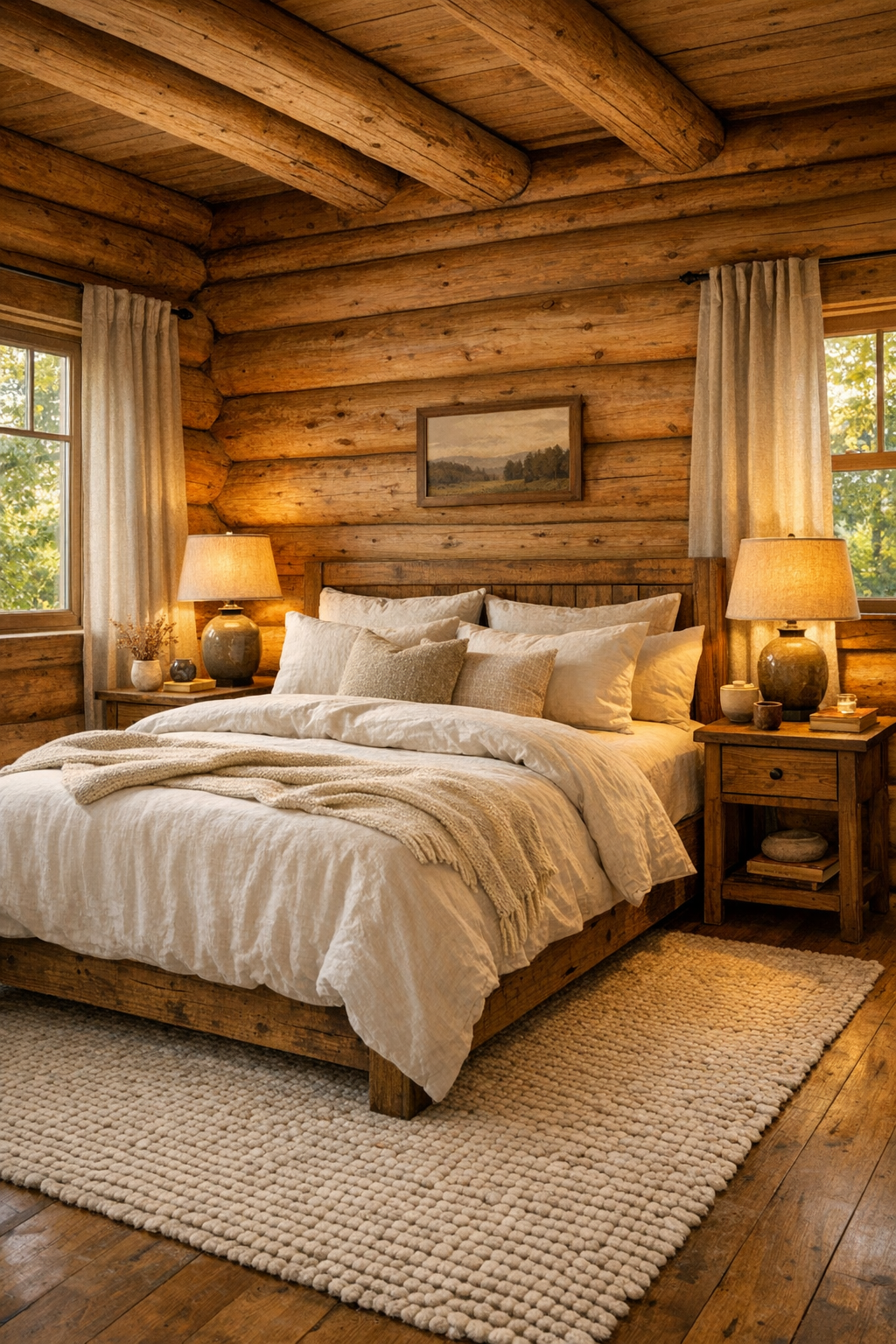
The bedroom takes the home's rustic language and quiets it down, which is exactly what I want in a sleeping space. The log walls remain a feature, of course, but the palette shifts softer through textiles: layered ivory bedding, a wool throw at the foot of the bed, and drapery in a muted flax tone that filters light gently. A substantial bed frame in wood or upholstered linen would hold the room visually, while matching nightstands and understated lamps keep the symmetry calming rather than stiff.
I also appreciate the likely restraint in decorative choices here. Instead of filling the room, the design lets material quality do the work: smooth wood grain, brushed metal hardware, crisp linens, and a rug underfoot that takes the chill off the floor first thing in the morning. If there is a reading chair near a window and a bench at the foot of the bed, all the better; those pieces make the room feel lived in and useful, not merely staged for effect.
Bathroom
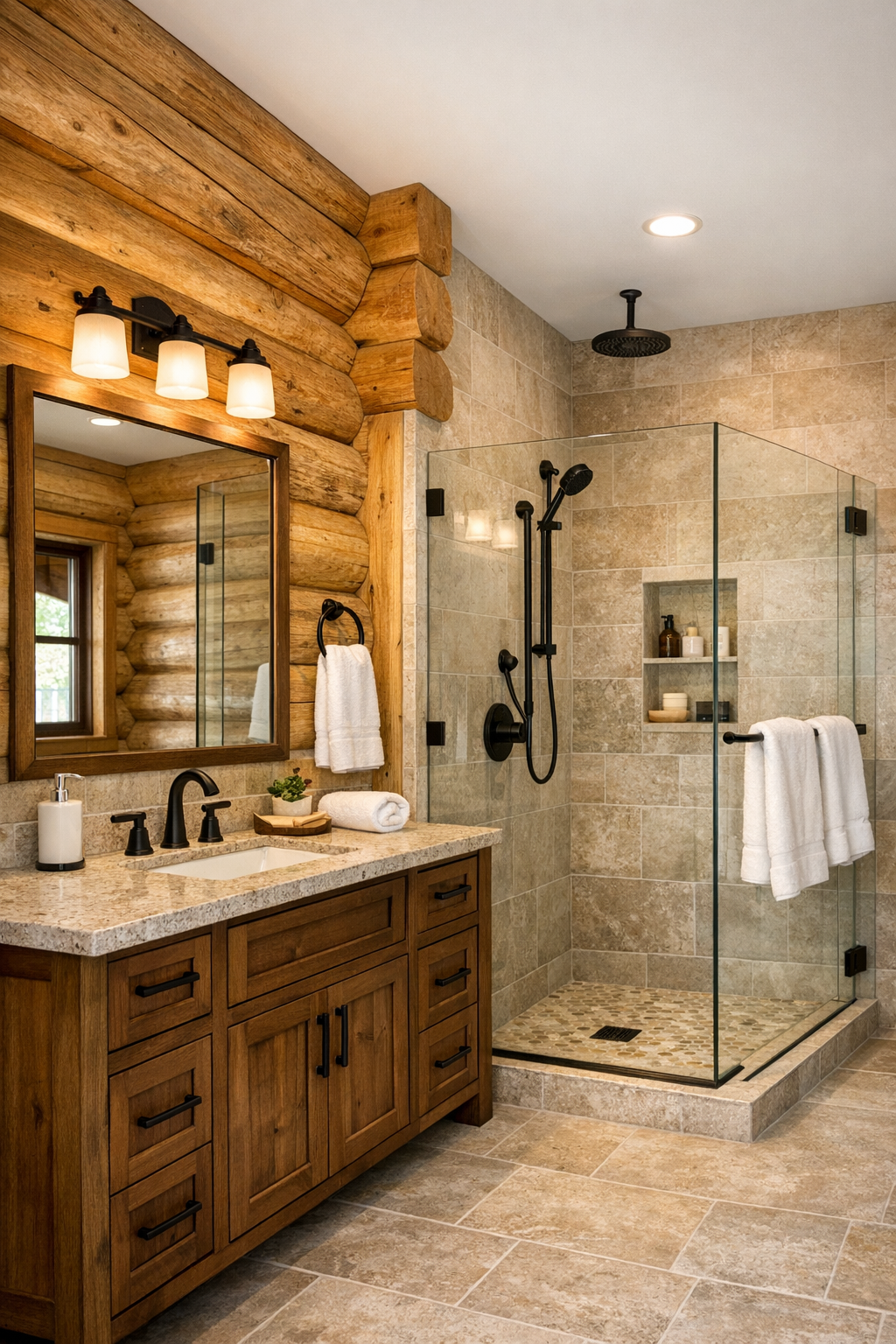
The bathroom carries the same handcrafted spirit but with a cooler, cleaner material mix that keeps it feeling fresh. Stone or porcelain tile in soft gray-beige tones would pair beautifully with the warmth of the logs, and I can see a wood vanity with a lightly aged finish topped in pale quartz or marble. That contrast between rustic structure and smoother, more tailored surfaces is what gives a room like this its balance.
In practical terms, the space seems designed for comfort: a generous walk-in shower with clear glass, a deep soaking tub if square footage allows, and good lighting at the mirror that does not flatten the room. I would expect details like black or oil-rubbed bronze plumbing fixtures, neatly framed mirrors, and thick white towels to sharpen the overall look. It is the kind of bathroom that feels restorative without becoming spa cliché, which is a hard line to walk and a satisfying one when done well.
Other Areas
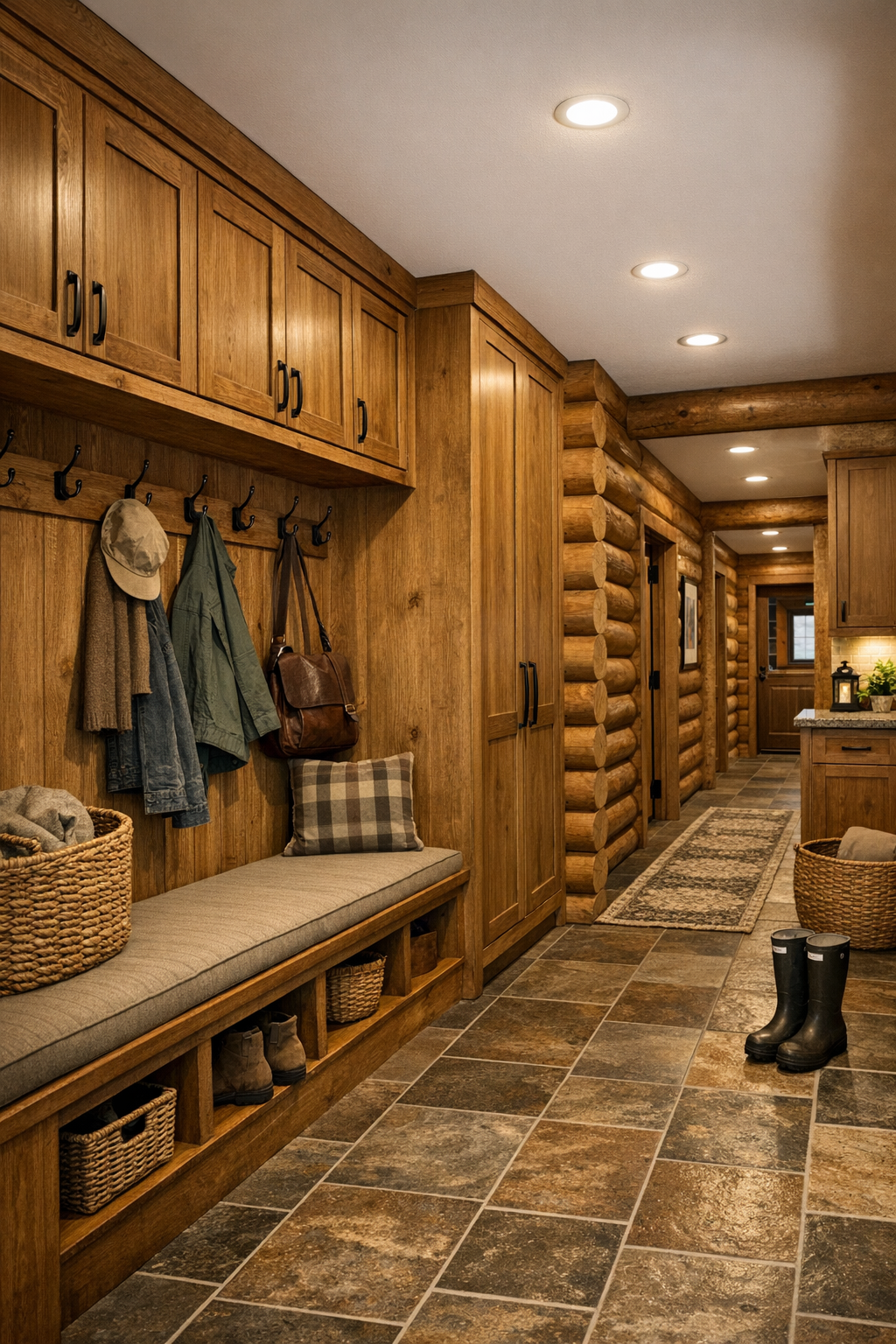
In a home like this, the secondary spaces are often where thoughtful design really proves itself. I imagine a mudroom with built-in benches, pegs, and closed storage to manage coats, boots, and the everyday clutter that comes with country living; perhaps a compact laundry area nearby with durable tile and practical folding space. Hallways would not be wasted square footage either, but opportunities for more custom millwork, art lighting, and the occasional console or bookcase that gives even transition zones some purpose.
If there is a small office nook, reading corner, or covered back porch connection, those spaces would only deepen the home's livability. This is where the single-level plan becomes especially appealing, creating an easy rhythm from room to room without stairs interrupting the flow. I always notice when a house understands daily life beyond the showpiece rooms, and here those supporting areas seem every bit as considered as the kitchen or living room.
Why You'd Live Here
You would live here for the warmth, certainly, but also for the discipline behind it. This home understands that rustic design works best when it is edited carefully, with strong materials, comfortable scale, and details that support daily use. The Engelmann spruce logs provide character from the start, yet it is the restraint in the furnishings, the balance of stone and metal, and the attention to craftsmanship that keep the house from slipping into nostalgia.
For me, the real charm is that it feels equally suited to a quiet weeknight and a table full of people. It is easy to picture soup simmering in the kitchen, a fire going in the living room, muddy boots lined up in the entry, and every room still looking beautiful by the end of the day. That combination of practicality and polish is rare, and in a home this thoughtfully imagined, it is exactly the reason I would want to stay.