There’s a special kind of comfort that settles over a home built in logs, and this single-level retreat has it in spades. From the warm tone of the ponderosa pine to the deep shade of the porch, the whole place feels grounded in the landscape, the sort of home that seems to welcome you before you’ve even stepped through the door. I’m especially taken with the honesty of it all: sturdy materials, generous proportions, and a straightforward beauty that doesn’t need fuss to make an impression.
Inside, the mood shifts from rustic to quietly refined, thanks to Amish craftsmanship that gives every surface a sense of care and permanence. Though this is a concept design, it feels deeply lived-in in the best imaginative way, with handcrafted woodwork, practical layouts, and a softness in the finishes that reminds me of old Midwestern homes where every room had a purpose and every detail was meant to last.
Exterior
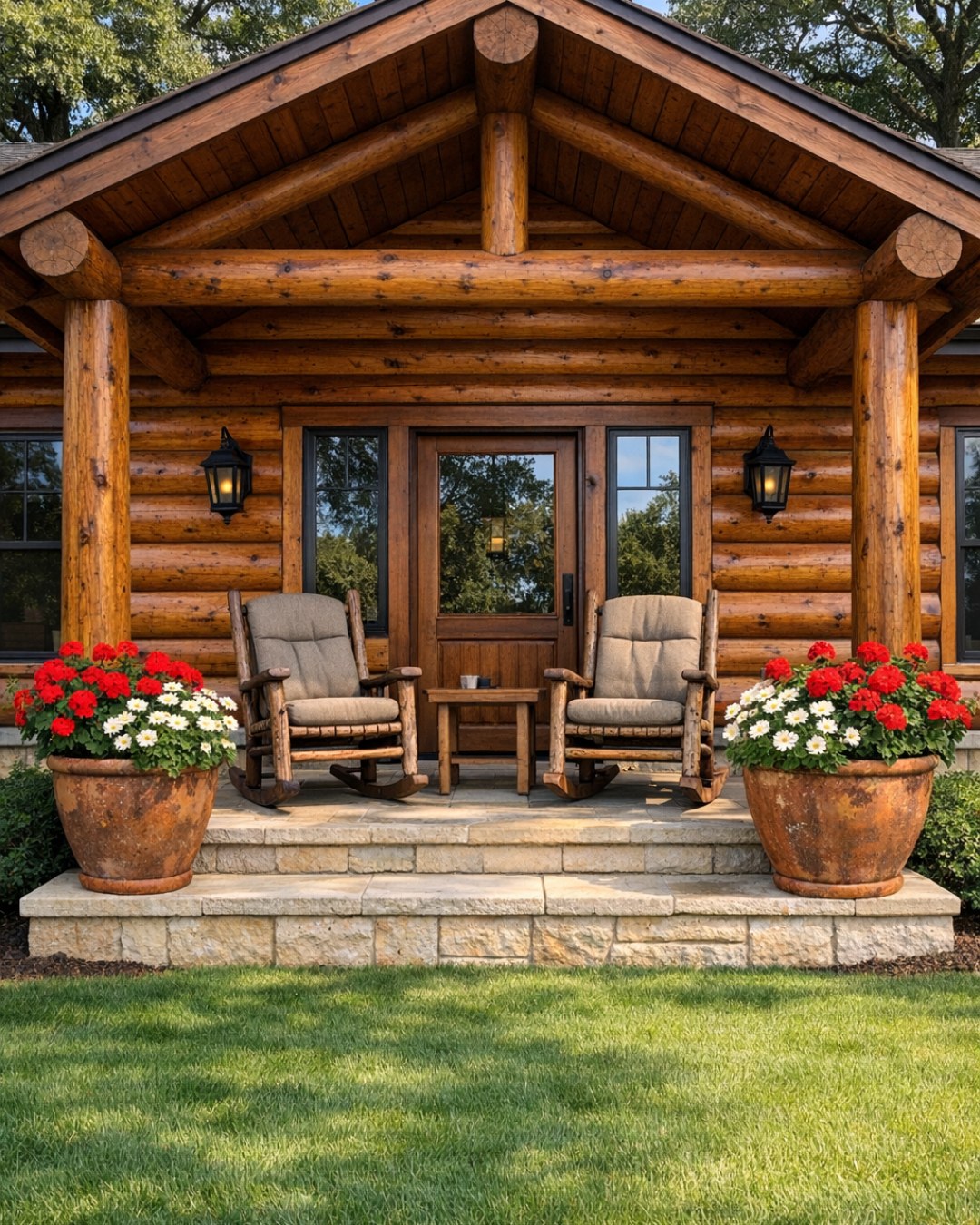
The exterior has the hearty, time-tested character I always associate with homes that are meant to weather seasons gracefully. Ponderosa pine logs bring a mellow honey-brown color to the facade, with visible grain and rounded profiles that catch light in a way that feels both rugged and inviting. The single-level footprint keeps the house low and easy in the landscape, while the shaded porch stretches its welcome outward, offering a cool transition between open air and indoor warmth. Stout timber posts, dark metal hardware, and simple stone skirting at the base add just enough visual weight to anchor the structure.
What I love most is the balance between shelter and openness. The roofline is broad and practical, with generous overhangs that cast protective shadows and make the porch feel usable all day long. Windows are trimmed in richly stained wood, set thoughtfully to pull in natural light without disturbing the home’s calm, grounded appearance. Nothing about the exterior feels showy. Instead, it has that deeply satisfying look of craftsmanship you can trust, like a well-built barn or an old family farmhouse updated with a little more polish.
Living Room
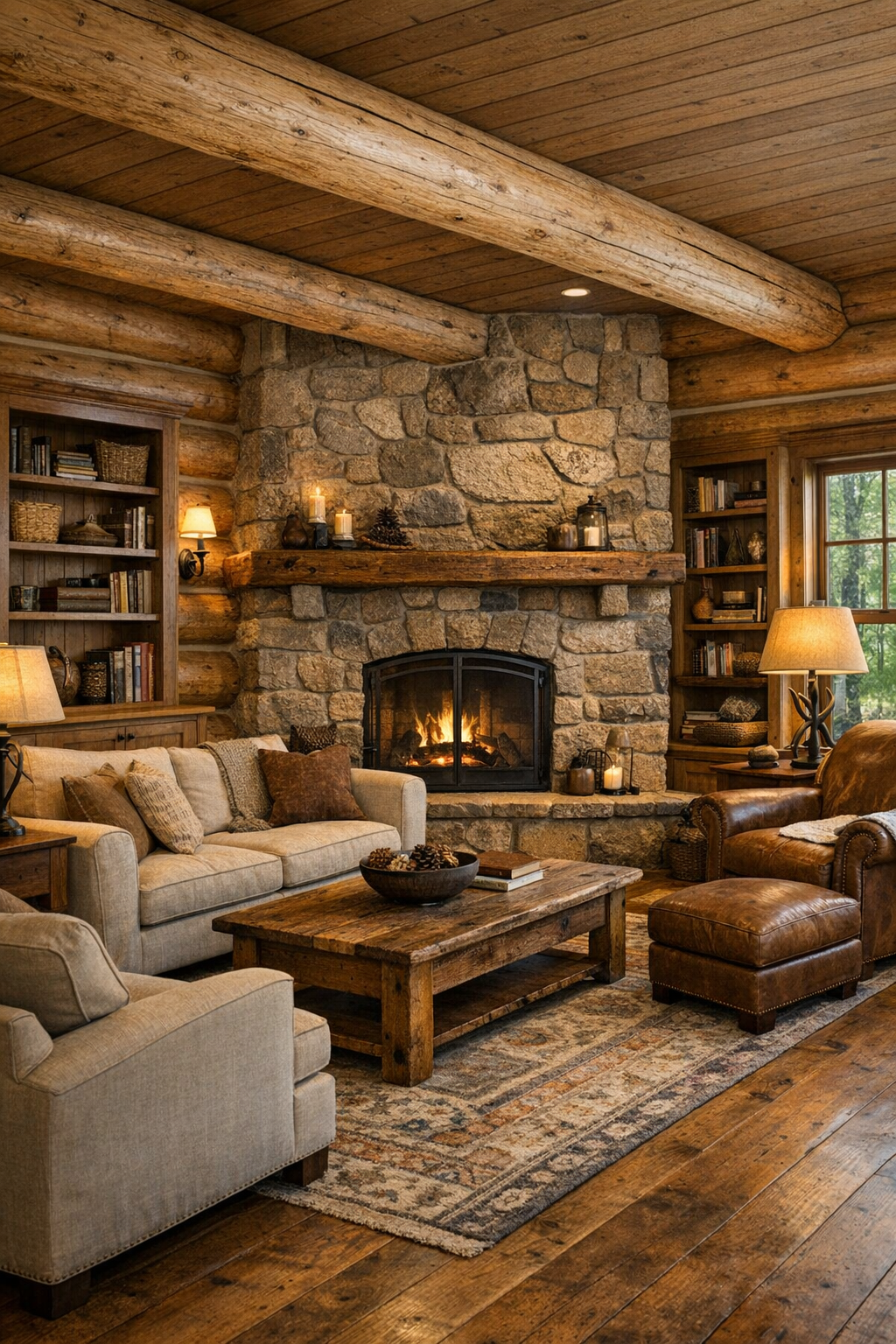
The living room is where the home’s materials really begin to sing together. Log walls wrap the room in warmth, but the Amish-made millwork keeps it from feeling heavy, introducing refined lines in built-in shelving, window trim, and a substantial mantel. I picture wide-plank hardwood floors underfoot in a medium walnut finish, softened by a braided wool rug in oatmeal, rust, and muted green. The furniture is comfortable and unpretentious: a deep sofa in warm flax linen, leather armchairs with a gently worn patina, and a solid wood coffee table that shows off the natural knots and grain rather than hiding them.
Lighting here would need to work like lamplight at the end of a long day, and this room seems designed with that kind of comfort in mind. Iron sconces, a simple wagon-wheel chandelier, and table lamps with linen shades layer the glow so the room feels cozy rather than cavernous. The layout is conversational, centered around a stone fireplace and angled to take in the view from the windows. It’s the kind of room where I can almost hear the old stories coming out after supper, with the fire going low and everyone reluctant to be the first to leave.
Dining Room
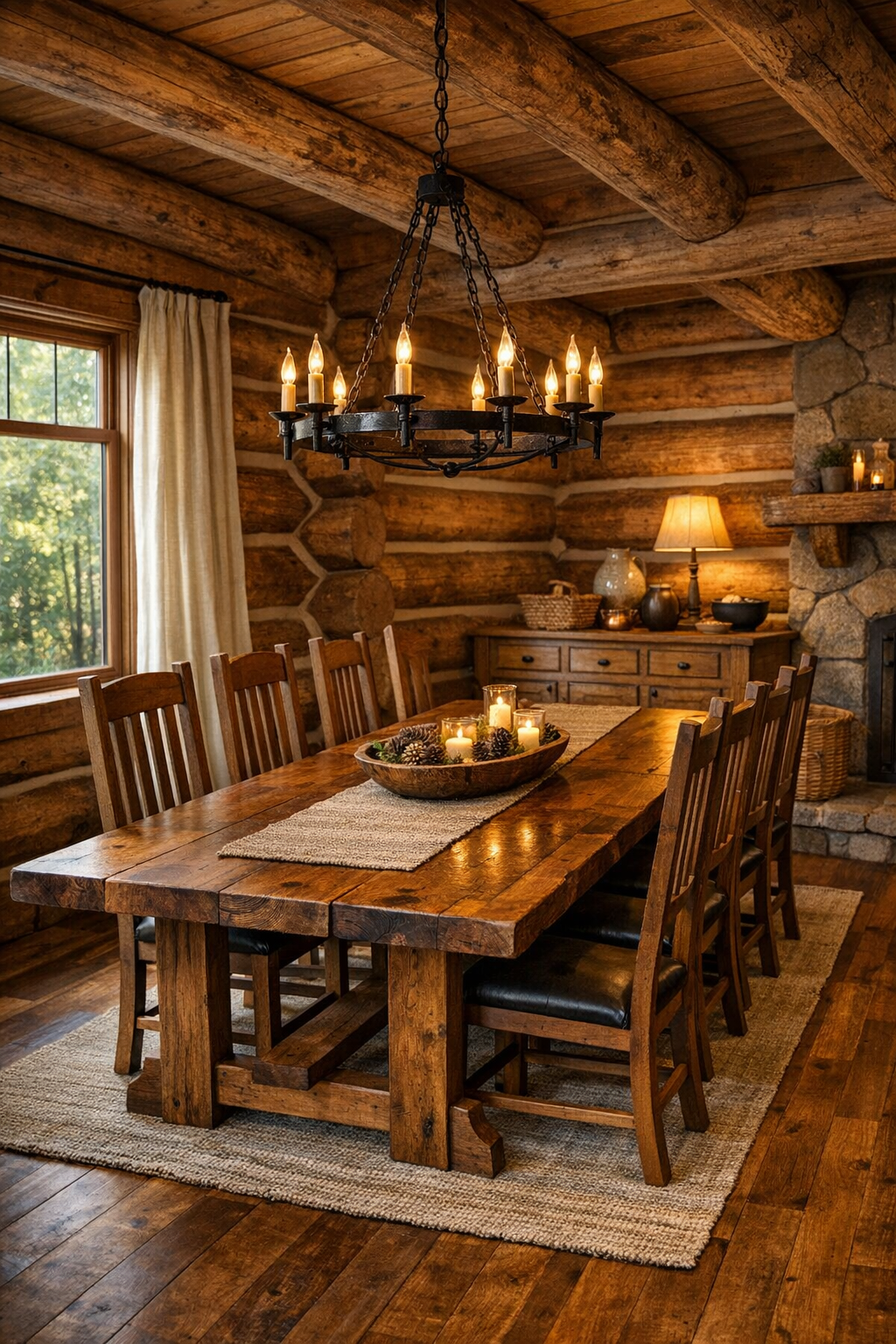
The dining room carries that same sense of quiet permanence, but with a little more ceremony to it. A long, handmade dining table in solid oak or cherry stands at the center, its surface smooth and substantial, the kind of table that only gets prettier with years of use. High-back chairs with simple joinery and gently curved rails speak to Amish traditions without becoming overly formal. Above, I’d expect a handsome iron fixture with candle-style bulbs, scaled generously enough to hold its own against the timber architecture.
Color in this room stays close to nature: amber wood, cream walls where needed between log surfaces, and textiles in muted reds, wheat, and moss. A sideboard or hutch provides both storage and display, perhaps with seeded-glass doors or open shelving for stoneware and serving pieces. The room feels built for gathering, for platters passed hand to hand and pie set out before coffee, and that emotional usefulness is what gives it so much charm. It doesn’t simply look good; it invites tradition.
Kitchen
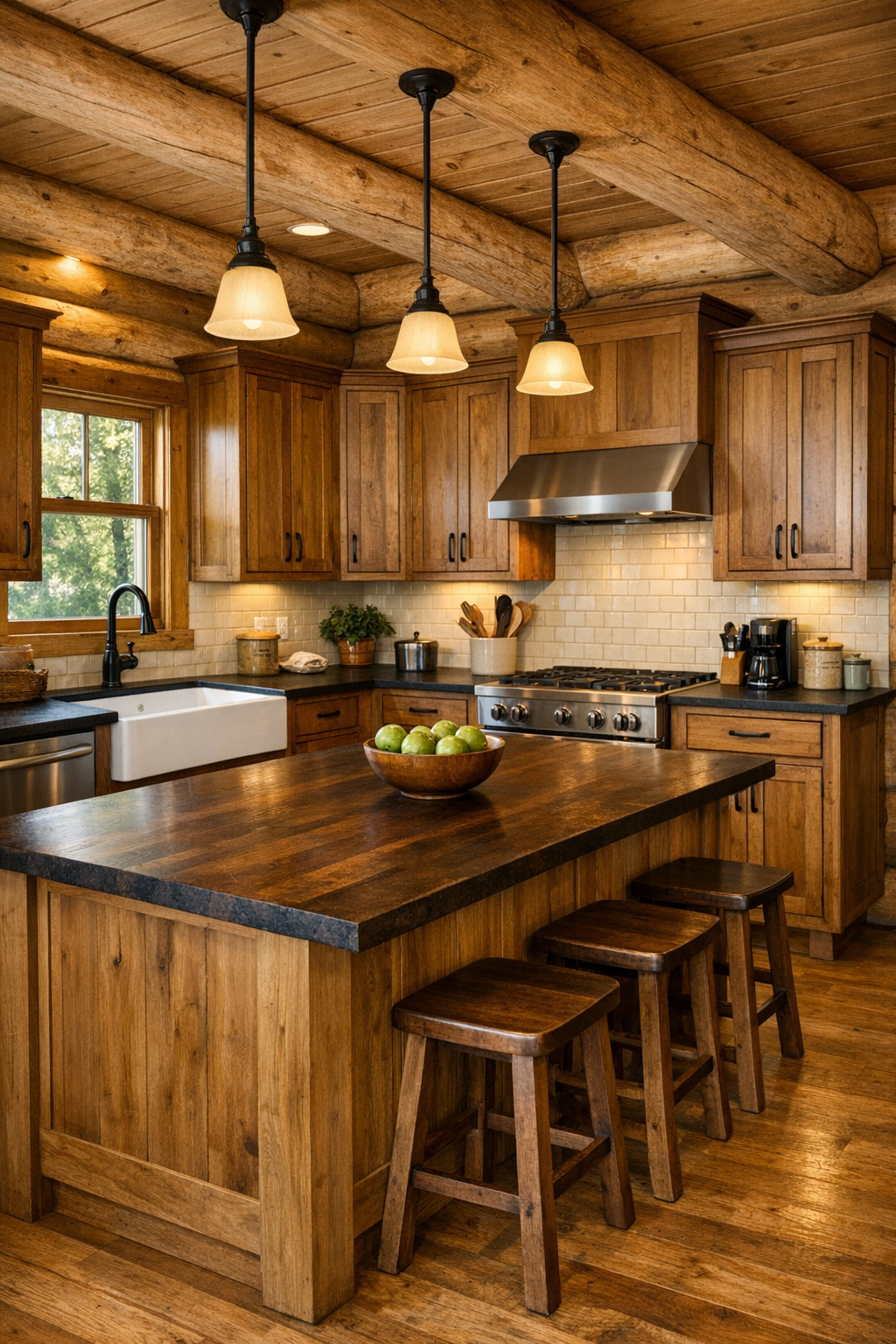
The kitchen is, to my eye, the heart of this home, and it’s been imagined with exactly the sort of hardworking beauty I admire. Custom Amish-built cabinetry would be the star, likely in stained maple or quarter-sawn oak, with inset doors, sturdy drawers, and modest hardware in oil-rubbed bronze or black iron. Countertops might be a honed dark granite or a warm butcher block, giving the room a practical, touchable quality. The backsplash could be simple handmade tile in cream or soft taupe, enough to brighten the space without pulling attention away from the woodwork.
What keeps the kitchen from feeling too dark is the thoughtful use of light and layout. A large central island offers room for baking, chopping, and sitting with a cup of coffee, while pendant lights bring focus without flash. Open sightlines to the dining and living spaces make it easy to imagine family moving in and out of the room all day, and a farmhouse sink set under a window adds both usefulness and a little poetry. This is the kind of kitchen where a kettle is always near the stove, bread cools on the counter, and nothing feels too precious to use.
Bedroom
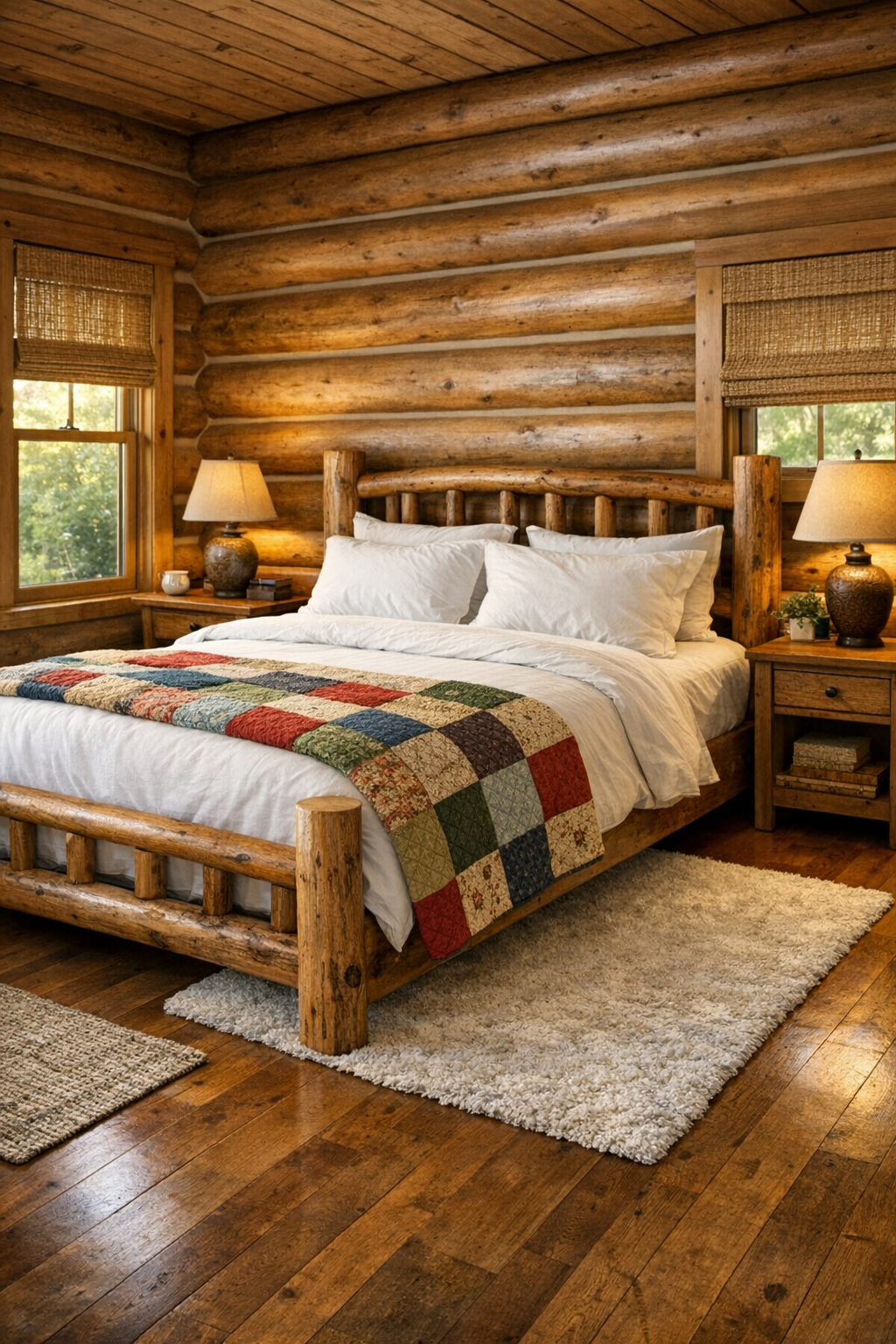
The bedroom has a quieter, gentler expression than the main living spaces, and I think that contrast is exactly right. The log walls remain, of course, but here they’re softened by layered textiles and simpler furnishings. A handcrafted bed frame in stained wood anchors the room, dressed in crisp white bedding, a patchwork quilt, and a folded wool blanket at the foot. Matching nightstands, each with a turned lamp or wall sconce above, reinforce the room’s symmetry and calm. Underfoot, a soft rug in a faded traditional pattern helps take the edge off all that timber.
The palette leans restful: cream, weathered blue, warm brown, and perhaps a touch of sage. Window treatments are modest but substantial, maybe lined linen drapery or woven shades that filter light rather than block it harshly. Storage would likely be built in or thoughtfully crafted, with a dresser and wardrobe that echo the home’s other joinery details. It’s a room that understands rest not as luxury, but as necessity, and there’s something very comforting in that plainspoken elegance.
Bathroom
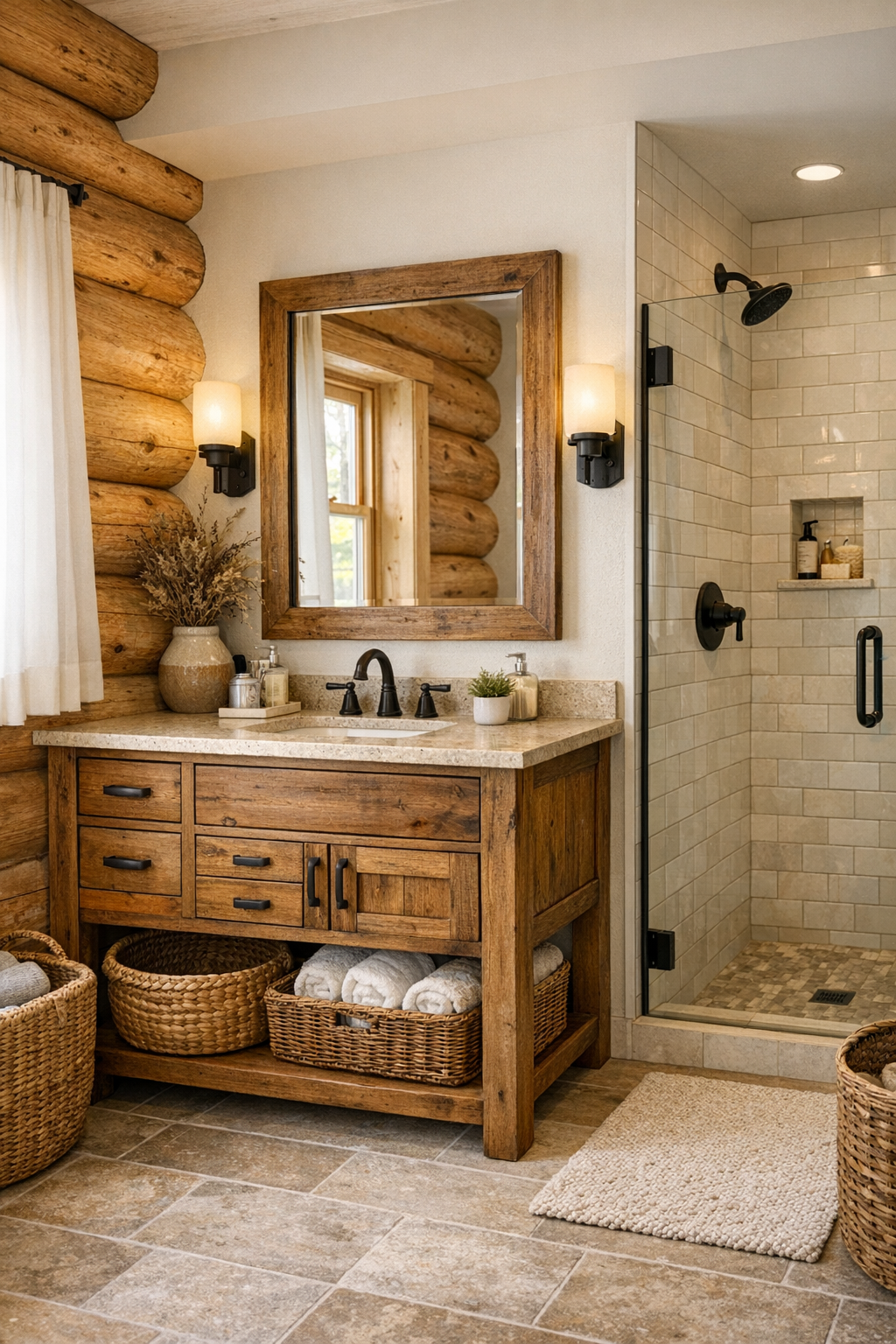
The bathroom takes the home’s rustic language and refines it into something especially soothing. I imagine a stout wood vanity made by hand, topped with a pale stone counter and fitted with classic fixtures in brushed nickel or dark bronze. The wall surfaces might combine painted paneling with areas of log or tile, depending on placement, to keep the room feeling bright and balanced. A large framed mirror with a simple wood surround would tie everything back to the rest of the house while adding depth and light.
If there’s a walk-in shower, it would suit this home best with straightforward tilework in soft grays, creams, or warm stone tones, perhaps with a built-in bench and clear glass enclosure. Plush cotton towels, woven baskets, and a small stool or bench bring in texture without clutter. The feeling is clean, practical, and deeply comfortable, like the sort of bathroom where you can come in from garden work or a cold morning walk and feel restored in short order.
Other Areas
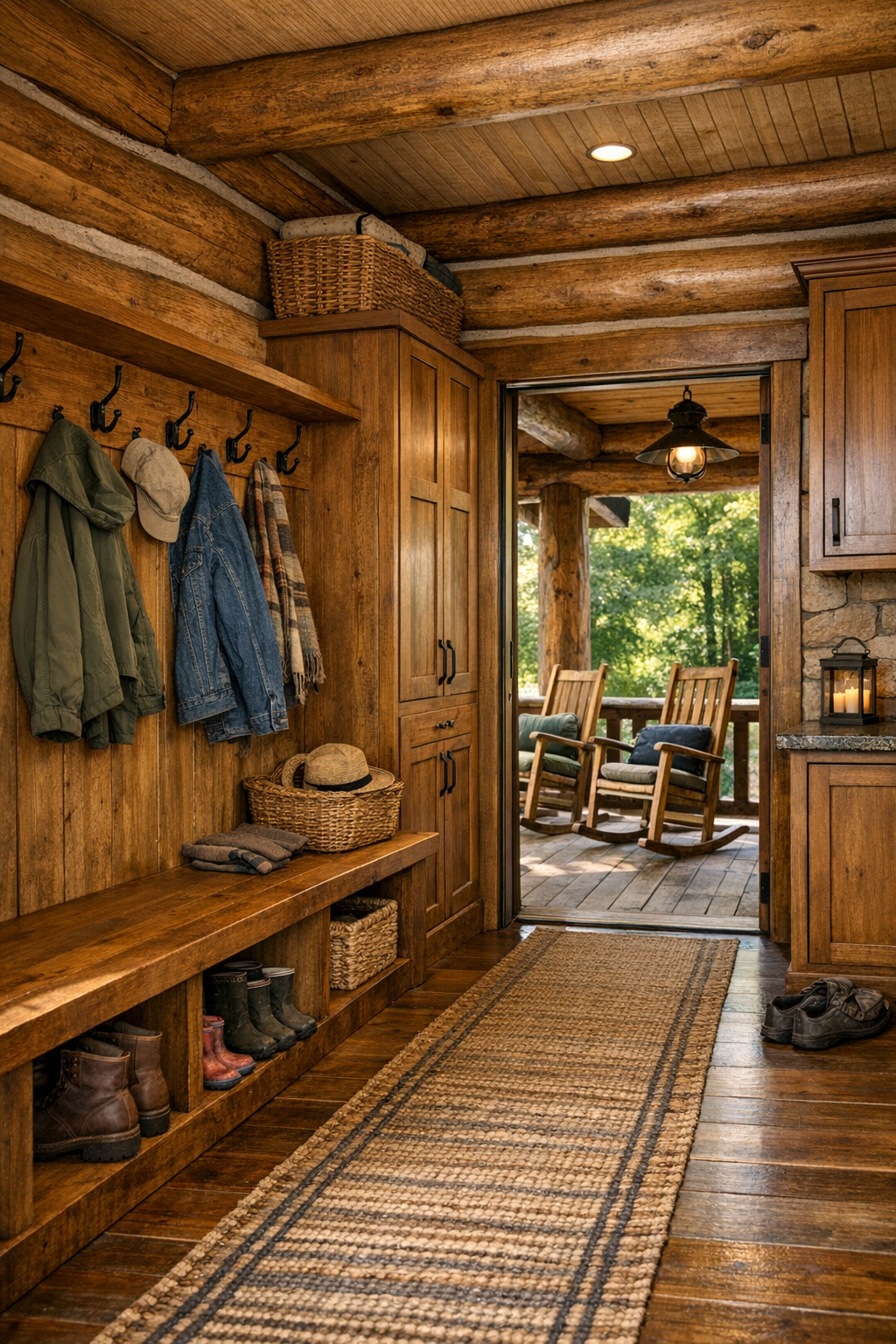
Some of my favorite parts of a home are the in-between spaces, and this one seems especially mindful of them. A front entry with a built-in bench, pegs for coats, and a durable runner would make everyday coming and going feel easy and orderly. Hallways, rather than being overlooked, could be lined with wainscoting, framed artwork, or small console tables that show off the craftsmanship in quieter ways. Even a mudroom or laundry area would likely carry the same thoughtful materials, with sturdy cabinetry, deep utility storage, and surfaces meant to stand up to real use.
The shaded porch deserves mention too, because in a home like this it functions almost as another room. Rocking chairs, a porch swing, and simple lantern-style lighting would turn it into a place for shelling peas, watching a summer storm, or letting the evening stretch out a little longer. These supporting spaces are what complete the home’s story for me. They prove that beauty here isn’t reserved for company; it’s built right into the daily rhythm of life.
Why You'd Live Here
You’d live here because it offers something many homes try for and few truly achieve: comfort with character, and craftsmanship with soul. Every room feels shaped by usefulness, not fashion, and that gives the whole home a sense of trustworthiness. The logs bring warmth, the porch brings ease, and the Amish-made details lend the kind of permanence that makes a house feel like a legacy even before the first family story has had time to settle into it.
For me, the strongest appeal is how naturally this home honors a simpler way of living without giving up beauty. It’s gracious but not grand, refined but never fussy, and deeply connected to the idea that home should support everyday rituals, from morning coffee to Sunday dinner. In a world full of things built to be replaced, this one feels built to be cherished, and that alone is reason enough to linger.